This is just a sample of the many
antique Salesman Samples & Patent Models we have sold.
Click link to see other
Sales Archive Pages on this Site.
We Buy Quality Antique Patent Models &
Salesman Samples
Contact Us at
AntiqBuyer@gmail.com
Special Note Concerning Prices Seen Below:
Most prices seen reflect actual sale results from this website.
Prices seen
span a long time and may not reflect current values. Some are selling
for more, many now sell for less.
On other pieces you will see no price, or a price range,
with or without an explanation. The reasons for that are discussed on the FAQ page.
Our current offering of Antiques for sale are at our sister Website Patented-Antiques.com.
Antique
Patent Models
The
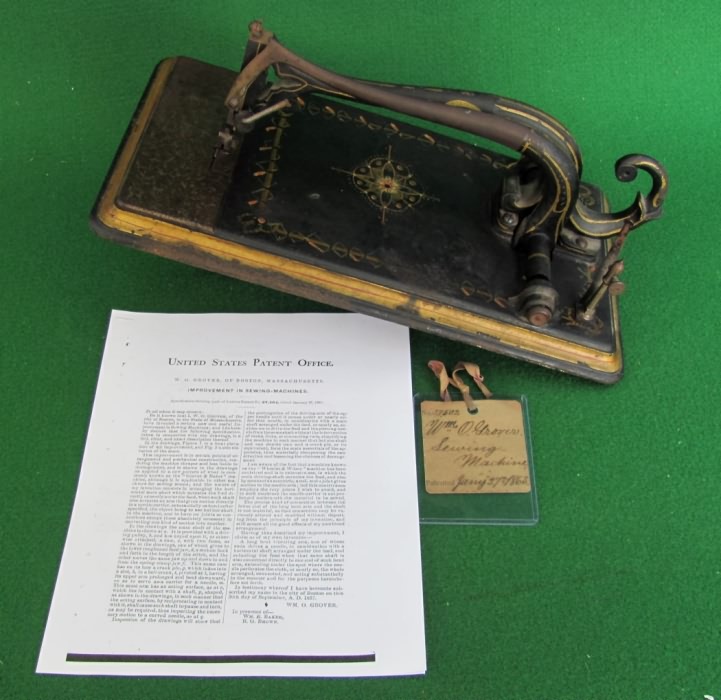 William
O. Grover 1863 Patent Model Sewing Machine The
patent for this early sewing machine was granted on January 27th 1863. The
patent number is 37502. It comes up with a Google search.
Looking at a copy of the patent we see that Baker was a witness.
Grover & Baker were a partnership famous for their line of "portable"
sewing machines which they first started producing in the 1850's.
Those are considered the first real portable sewing machine.
William
O. Grover 1863 Patent Model Sewing Machine The
patent for this early sewing machine was granted on January 27th 1863. The
patent number is 37502. It comes up with a Google search.
Looking at a copy of the patent we see that Baker was a witness.
Grover & Baker were a partnership famous for their line of "portable"
sewing machines which they first started producing in the 1850's.
Those are considered the first real portable sewing machine.This looks to be a sewing machine pulled off the assembly line with a modification or improvement over the prior design. In essence what Grover did here was simplify the earlier design by removing a second drive arm from below the table in order to simplify the mechanism and make it less likely to get out of adjustment. In the write-up he mentions Wheeler & Wilson having a patent for a one arm drive machine, but then differentiates his as needing fewer parts and thus being a better idea. Looks like the Patent Office agreed. It was the design used for most of their machines before dropping out of the competition / race sometime in the 1870's. It is a fine condition example and appears to be complete!! It is a fine condition example and appears to be complete!!
Fine . . . . . . . $1750.00 SOLD!!
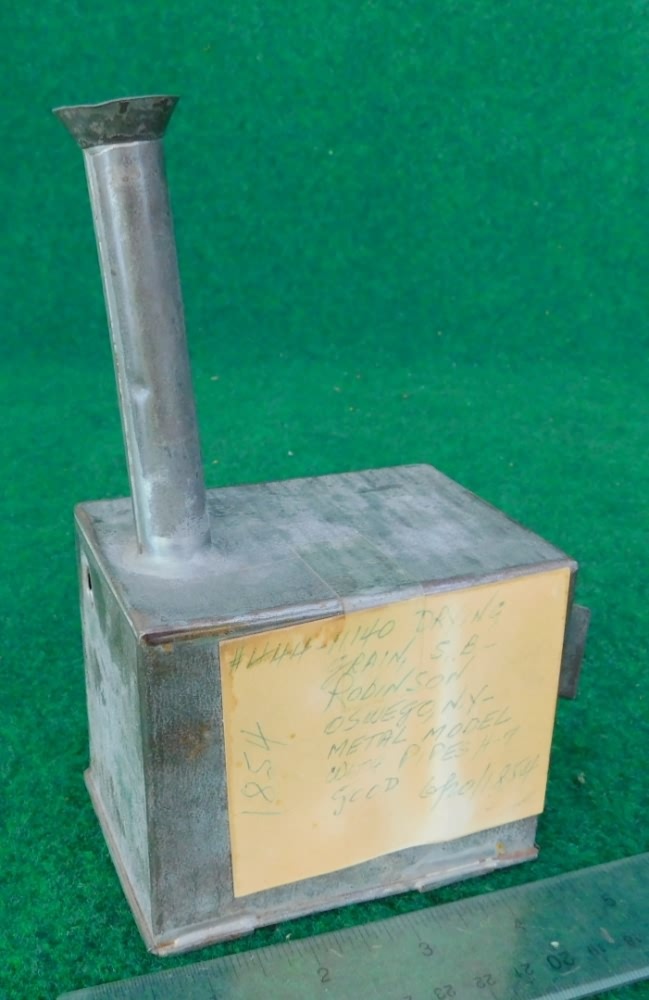 S.
B. Robinson 1854 Grain Drying Patent Model Mr. Robinson hailed from Oswego NY. The original tag is
missing, but it has the info on a piece of card stock attached to the side. The Patent # is 11140 Different and Nice!!.
S.
B. Robinson 1854 Grain Drying Patent Model Mr. Robinson hailed from Oswego NY. The original tag is
missing, but it has the info on a piece of card stock attached to the side. The Patent # is 11140 Different and Nice!!.
Good . . . . . $95.00 SOLD!!
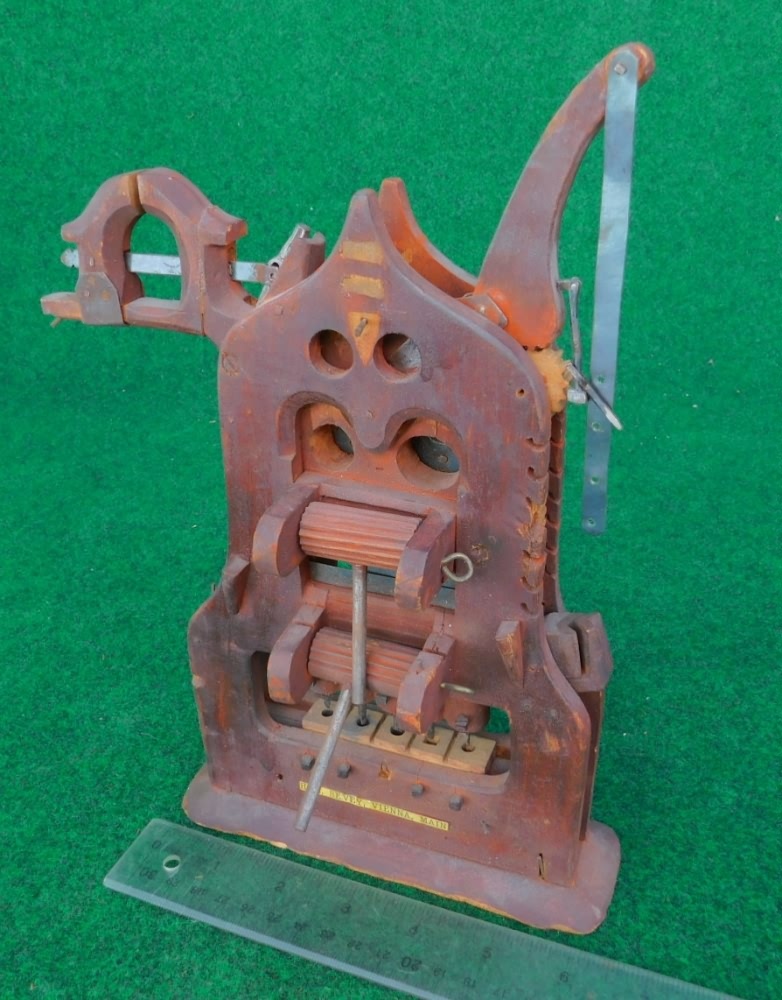 1872
Patent Model of Metal Forming Machine by H.
B. Sevey of Vienna Maine Mr. Sevey held a series of patents for similar machines having to do
with cutting forming, and upsetting metals. This model most
closely resembles his patent from 1872 for Improvement in Machines for Cutting, Punching, and Upsetting Metals. It has numerous
punches at the bottom, and at least three different size or type cutters incorporated into the design
as well as a vice and more. The original tag is missing, but
the Sevey name and Vienna Maine location are on a tag on the base.
Finding his patents with that info was simple. The patents
mention this being for use in making early tires. Different!!
1872
Patent Model of Metal Forming Machine by H.
B. Sevey of Vienna Maine Mr. Sevey held a series of patents for similar machines having to do
with cutting forming, and upsetting metals. This model most
closely resembles his patent from 1872 for Improvement in Machines for Cutting, Punching, and Upsetting Metals. It has numerous
punches at the bottom, and at least three different size or type cutters incorporated into the design
as well as a vice and more. The original tag is missing, but
the Sevey name and Vienna Maine location are on a tag on the base.
Finding his patents with that info was simple. The patents
mention this being for use in making early tires. Different!!
Good . . . . . $200.00 SOLD!!
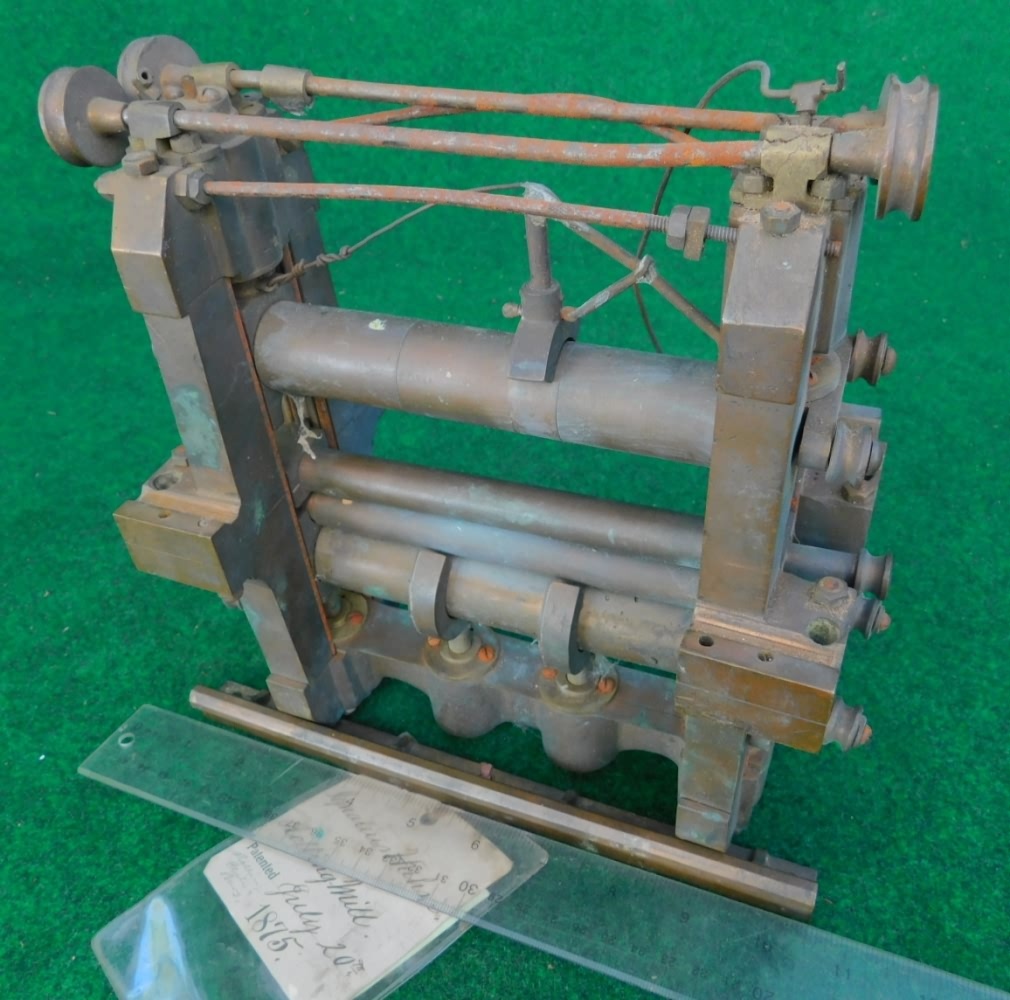 Ignatius
Hahn 1875 Patent Model of Roller Mill
Mr. Hahn was from Pittsburg PA. The original tag is present.
The patent # is 165819 and the patent comes up using Google. This
patent model is very heavy and made entirely of Brass. It has
many parts and there is some damage or missing pieces. Reading
the patent it seems this was for rolling out different metals at
very high pressures. Different!!
Ignatius
Hahn 1875 Patent Model of Roller Mill
Mr. Hahn was from Pittsburg PA. The original tag is present.
The patent # is 165819 and the patent comes up using Google. This
patent model is very heavy and made entirely of Brass. It has
many parts and there is some damage or missing pieces. Reading
the patent it seems this was for rolling out different metals at
very high pressures. Different!!
Good . . . . . $275.00 SOLD!!
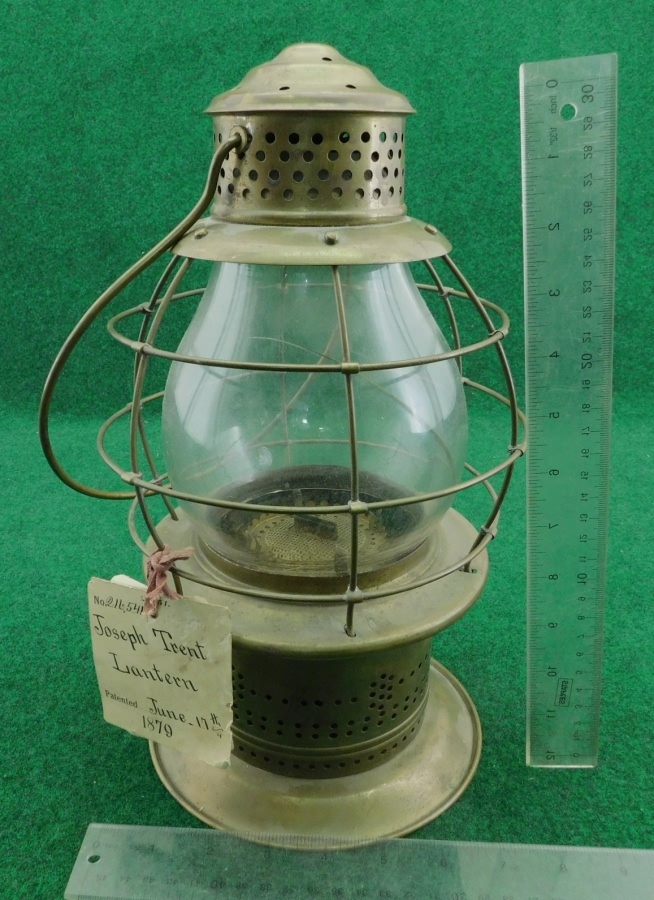 1879
Patent Model - Lantern by Joseph Trent Joseph
Trent of New York was granted 3 patents in numerical order for this lantern or
parts for it or others. 216540, 216541, and 216542. He assigned each
to the Manhattan Burner Co. a little known company in New York. It is not
known if it, or Mr. Trent were in any way associated with the Manhattan Brass
Co, another outfit with the same initials who were well known for their line of
different kerosene bike skaters, and railroad lamps.
1879
Patent Model - Lantern by Joseph Trent Joseph
Trent of New York was granted 3 patents in numerical order for this lantern or
parts for it or others. 216540, 216541, and 216542. He assigned each
to the Manhattan Burner Co. a little known company in New York. It is not
known if it, or Mr. Trent were in any way associated with the Manhattan Brass
Co, another outfit with the same initials who were well known for their line of
different kerosene bike skaters, and railroad lamps. In the patent description Mr. Trent describes different aspects of his lantern and how it works. The perforations served a couple functions. He also mentions a wire screen inside the font. It also features a locking mechanism and a special set up to allow raising the wick without going inside, raising, or tipping the outer glass globe. He mentions its different attributes as being especially well suited for railroad lanterns. It is in overall nice cosmetic condition, noting a sprial crack in the outer globe. It comes from the base and curves up to about halfway and then ends. It is solid - for now.
An interesting piece of Americana lighting history and Railroad memorabilia that will make for a good addition to many collections.
Good + . . . . . $1795.00 SOLD!!
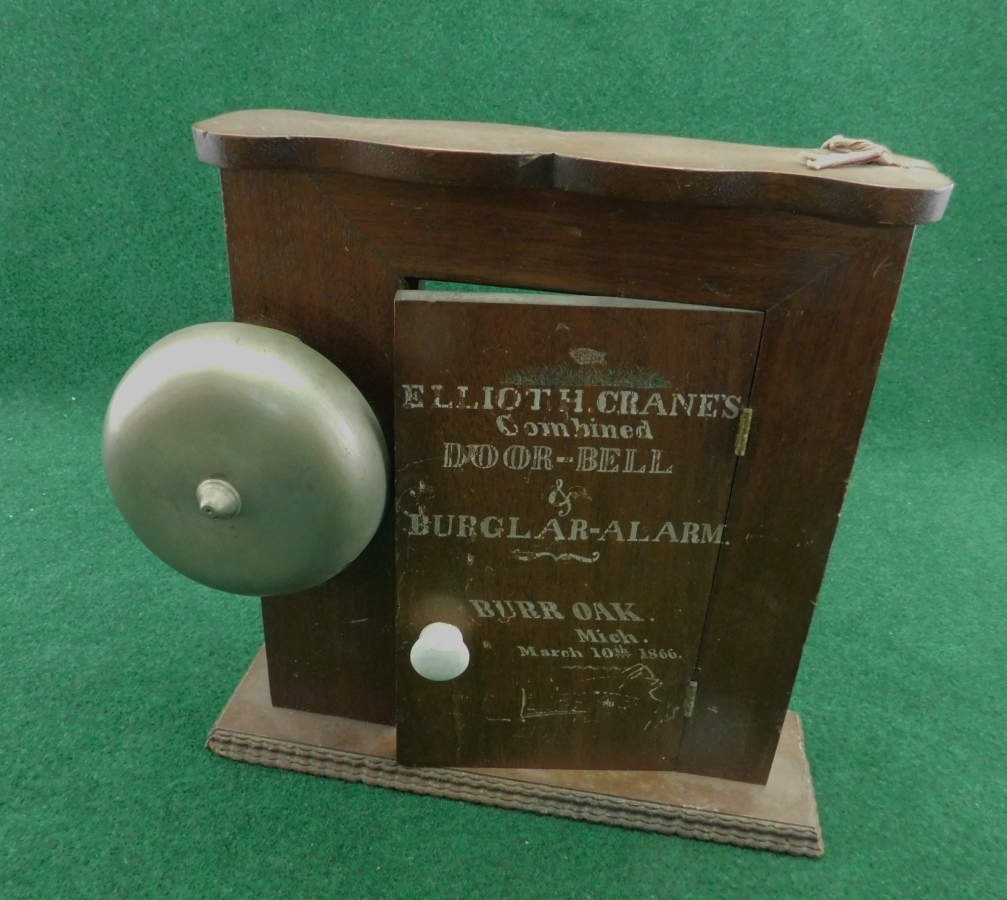 1866
Patent Model - Combined Doorbell / Burglar Alarm by E. H. Crane This
combined Door Bell - Burglar Alarm is in very nice original condition and
comes with its
original tags. Mr. Elliot Crane hailed from St. Joseph County MI and was an
embalmer taxidermist there. He gets a long mention in a recently published
book on the area titled Hidden History of St. Joseph County, Michigan by Kelly Pucci. He also held a patent for an embalming / taxidermy process where you did not
have to remove the flesh.
1866
Patent Model - Combined Doorbell / Burglar Alarm by E. H. Crane This
combined Door Bell - Burglar Alarm is in very nice original condition and
comes with its
original tags. Mr. Elliot Crane hailed from St. Joseph County MI and was an
embalmer taxidermist there. He gets a long mention in a recently published
book on the area titled Hidden History of St. Joseph County, Michigan by Kelly Pucci. He also held a patent for an embalming / taxidermy process where you did not
have to remove the flesh. The idea here was that after mounting the spring loaded bell on the jamb next to the door, you would lift the spring loaded lever up to "lock" the door and set the bell or alarm. Pushing the door open would release the lever and set it off the alarm ringing the bell. Simple efficient, and worthy of patent # 55823 granted in 1866. It is a good number, and the patent comes right up with a Google search.
A neat piece of Americana that will be a good addition to many collections.
Fine . . . . . $695.00 SOLD!!
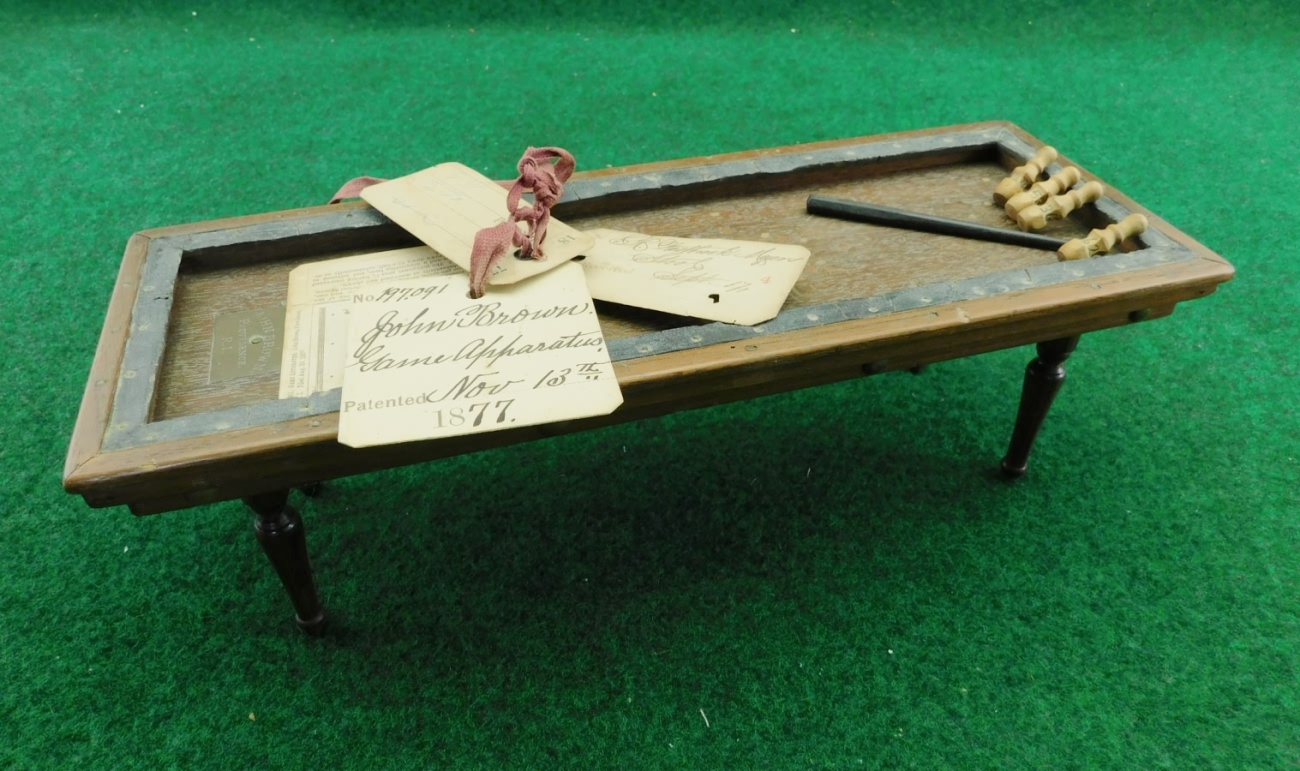 1877
Patent Model - Game Apparatus by John Brown This
game has aspects that combine ideas from several different games
including Billiards, Pool and Bagatelle. The patent calls for multi
sided pins, the use of balls, a "cue
stick" and the billiard or pool like cushioned table.
There
is a brass tag inset into the table top with the inventors name and Providence
RI location. It has its original tags and red ribbon as well. The
patent # is 197,091, and the patent comes up with a Google search.
1877
Patent Model - Game Apparatus by John Brown This
game has aspects that combine ideas from several different games
including Billiards, Pool and Bagatelle. The patent calls for multi
sided pins, the use of balls, a "cue
stick" and the billiard or pool like cushioned table.
There
is a brass tag inset into the table top with the inventors name and Providence
RI location. It has its original tags and red ribbon as well. The
patent # is 197,091, and the patent comes up with a Google search. An interesting note is that there is another version of this patent model in the Cooper-Hewitt Museum in New York. That example is referred to as "improved". I also found reference to that model in a book titled American Enterprise: Nineteenth-Century Patent Models. New York by Post, Robert E.
The patent description explains that the game is similar to billiards, but easier to play, and less expensive. A game for the masses. A neat piece of Americana and gaming history that will be a good addition to many collections.
Good . . . . . $595.00 SOLD!!
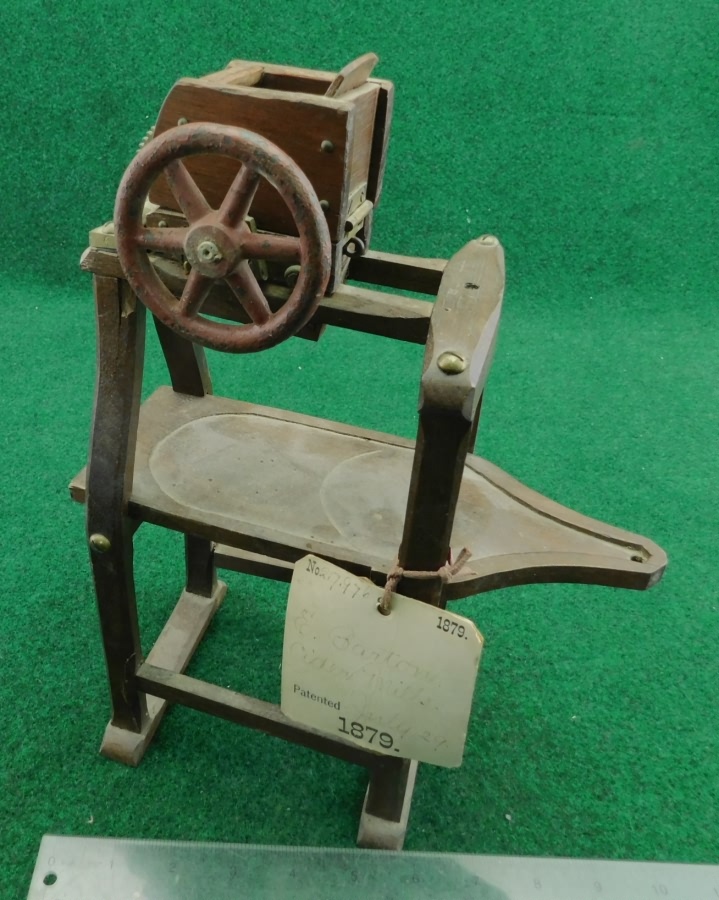 1879
Patent Model - Cider Mill by E. Barton Edmund Barton of Philadelphia PA and was granted patent # 217,976 for his Apple Cider
Mill idea in 1879. The number is good, and the patent is easily viewable
with Google. This model is in nice condition, and has its original
tags.
1879
Patent Model - Cider Mill by E. Barton Edmund Barton of Philadelphia PA and was granted patent # 217,976 for his Apple Cider
Mill idea in 1879. The number is good, and the patent is easily viewable
with Google. This model is in nice condition, and has its original
tags.The design is a simple straight forward plan for what to do with all the extra apples after the pies have been made, and the others good apples or other fruit were peeled, cored and put up for storage and later use. The inventors claim is that this design, a round drum with straight lines of pins to grind the apples down to "pumice" will not clog, need plunging, or other things that other inferior designs required when making cider.
An interesting piece of Americana and early farming history. Apples and apple processing equipment like peelers, corers and slicers hold a special interest with kitchen antique and APES a select group of dedicated collectors of all things apple. The club they formed is called APES, and Apple related tools are such a popular collectible that entire books have been published on the subject. A good nice addition to many collections.
Fine . . . . . $795.00 SOLD!!
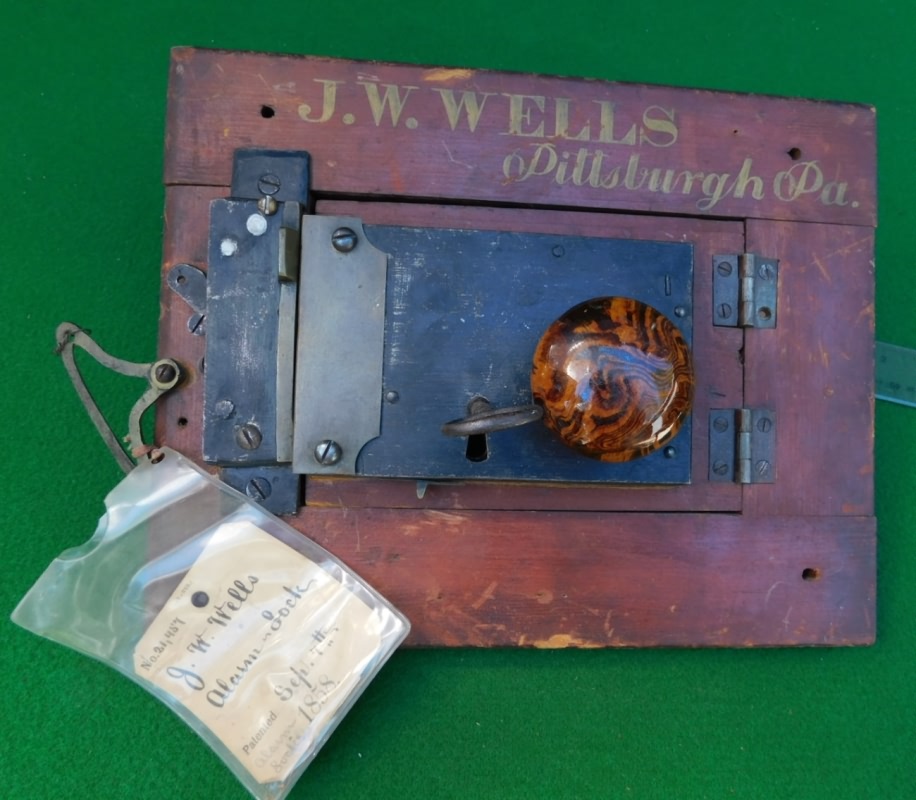 1858
Patent Model Door Alarm Lock by Jonathan Wells
Jonathan Wells of Pittsburg PA was granted a patent for his novel door alarm idea on
September 7 1856. The number is 21457. It is a close match to
the drawing submitted with the model and comes up with a Google search. It measures approx. 13
across by 10" tall. The model has the key and the lock does operate. The idea is that once locked, attempting to unlock
the door would initiate a series of events , a spring loaded gizmo would be
activated, and would move
the pieces seen outside the lock, which in turn would ring the external bell.
The patent states that the bell could be placed in any location, and so one
was not shown in the patent or included w/ the model. It appears to
operate as intended noting the lack of one attaching wire to the outside
swinging arm seen. Interesting!!
1858
Patent Model Door Alarm Lock by Jonathan Wells
Jonathan Wells of Pittsburg PA was granted a patent for his novel door alarm idea on
September 7 1856. The number is 21457. It is a close match to
the drawing submitted with the model and comes up with a Google search. It measures approx. 13
across by 10" tall. The model has the key and the lock does operate. The idea is that once locked, attempting to unlock
the door would initiate a series of events , a spring loaded gizmo would be
activated, and would move
the pieces seen outside the lock, which in turn would ring the external bell.
The patent states that the bell could be placed in any location, and so one
was not shown in the patent or included w/ the model. It appears to
operate as intended noting the lack of one attaching wire to the outside
swinging arm seen. Interesting!! Very Good . . . . . . $500.00 SOLD!!
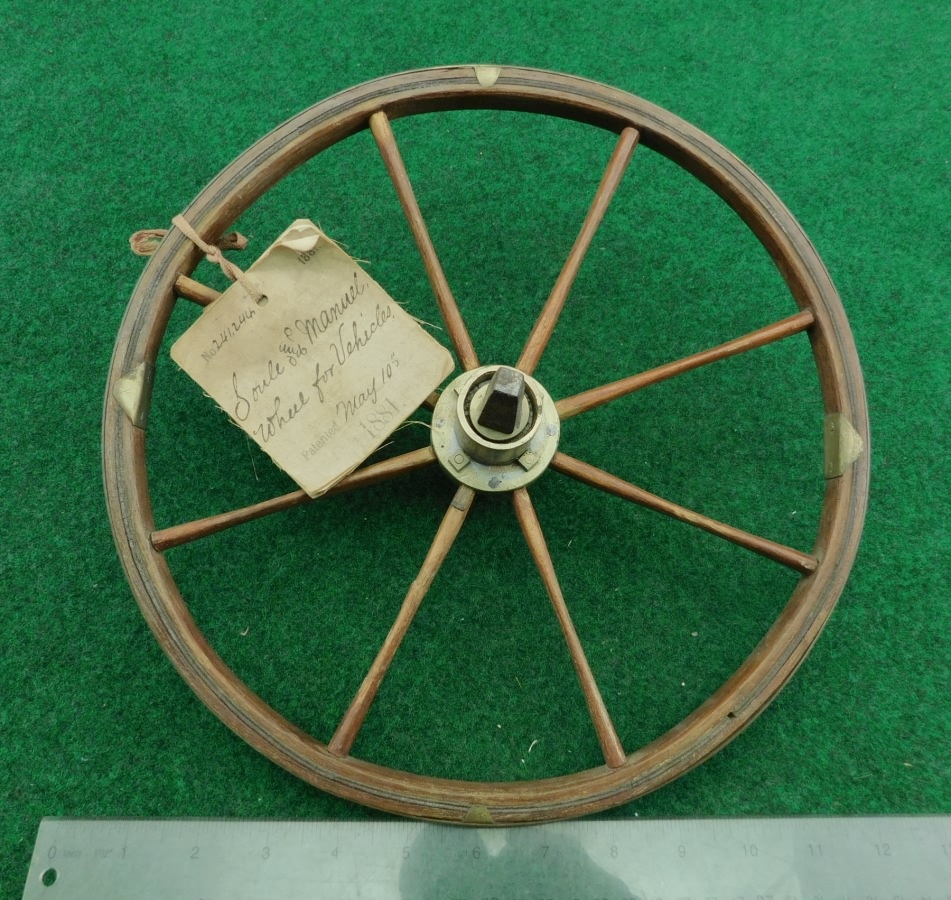 1881 Patent Model - Wheel for Vehicles by Soule & Manuel John
Soule and David Manuel of Hyde Park Mass were granted patent # 241,244 for their
buggy or wagon wheel idea in 1881. It is a good number and closely matches
the patent. Cutting edge technology for the time no doubt. The
patent describes the outer rim being constructed of wood with a layer of
rubber or elastic material sandwiched between layers, so constructed so that the spokes did something, but
not sure what. Te spokes are set at an angle that is mentioned, but not
well explained. It also goes on to describe the roller type bearings in the
hub. That aspect works well, but can only be seen in the drawings.
1881 Patent Model - Wheel for Vehicles by Soule & Manuel John
Soule and David Manuel of Hyde Park Mass were granted patent # 241,244 for their
buggy or wagon wheel idea in 1881. It is a good number and closely matches
the patent. Cutting edge technology for the time no doubt. The
patent describes the outer rim being constructed of wood with a layer of
rubber or elastic material sandwiched between layers, so constructed so that the spokes did something, but
not sure what. Te spokes are set at an angle that is mentioned, but not
well explained. It also goes on to describe the roller type bearings in the
hub. That aspect works well, but can only be seen in the drawings.An interesting piece of Americana and early transportation history.
Fine . . . . . $795.00 SOLD!!
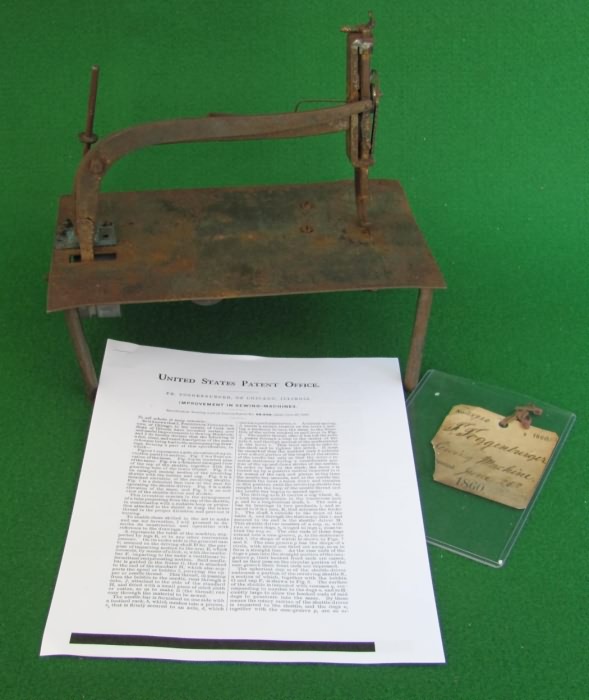 Fredrick
Toggenburger 1860 Patent Model Sewing Machine The
patent for this unusual machine was granted on June 26 1860. The
designs for sewing machines from this early were still evolving and Singer,
or Wheeler & Wilson, or Grover & Baker had not yet firmly established
themselves as the kings of the mountain. There was still room for
different ideas. The
patent number is 28920. It comes up with a Google search. From
reading the patent it seem this fellows better idea was to "grease" the
thread making it easier to pass through the fabric. He called out
Singer and Wheeler & Wilson sewing machines and claims his is a better idea. I guess
the marketplace did not agree as I am pretty sure this design never got much
further than this. Different and nice!!
Fredrick
Toggenburger 1860 Patent Model Sewing Machine The
patent for this unusual machine was granted on June 26 1860. The
designs for sewing machines from this early were still evolving and Singer,
or Wheeler & Wilson, or Grover & Baker had not yet firmly established
themselves as the kings of the mountain. There was still room for
different ideas. The
patent number is 28920. It comes up with a Google search. From
reading the patent it seem this fellows better idea was to "grease" the
thread making it easier to pass through the fabric. He called out
Singer and Wheeler & Wilson sewing machines and claims his is a better idea. I guess
the marketplace did not agree as I am pretty sure this design never got much
further than this. Different and nice!!
Good . . . . . . . $1600.00 SOLD!!
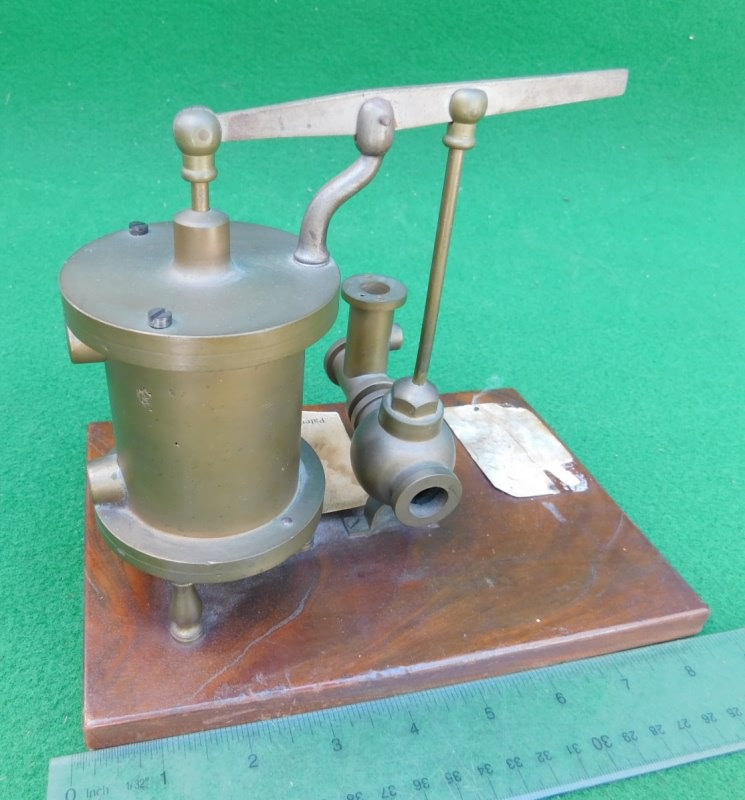 1869
Patent Model Boiler Feeder by T. B. Webster
T. B. Webster was granted a US patent for his "Automatic Boiler Feeder" on
March 23 1869. The number is 88246. It is a close match to
the drawing submitted with the model and comes up with a Google search if
you ad an A. The tags are quite faded, but with a bit of help from
Google I was able to pull up the patent.
1869
Patent Model Boiler Feeder by T. B. Webster
T. B. Webster was granted a US patent for his "Automatic Boiler Feeder" on
March 23 1869. The number is 88246. It is a close match to
the drawing submitted with the model and comes up with a Google search if
you ad an A. The tags are quite faded, but with a bit of help from
Google I was able to pull up the patent.The model is mounted to a wooden board and measures approx. 8" square.The model is constructed almost entirely of brass. It is brass cylinder with a lever operated check valve to control the flow of water into the boiler. The patent claims that this arrangement will take care of most issues involved in both the ins and outs of the water to the boiler. Problems solved. Interesting & Nice!!
Very Good . . . . . . $150.00 SOLD!!
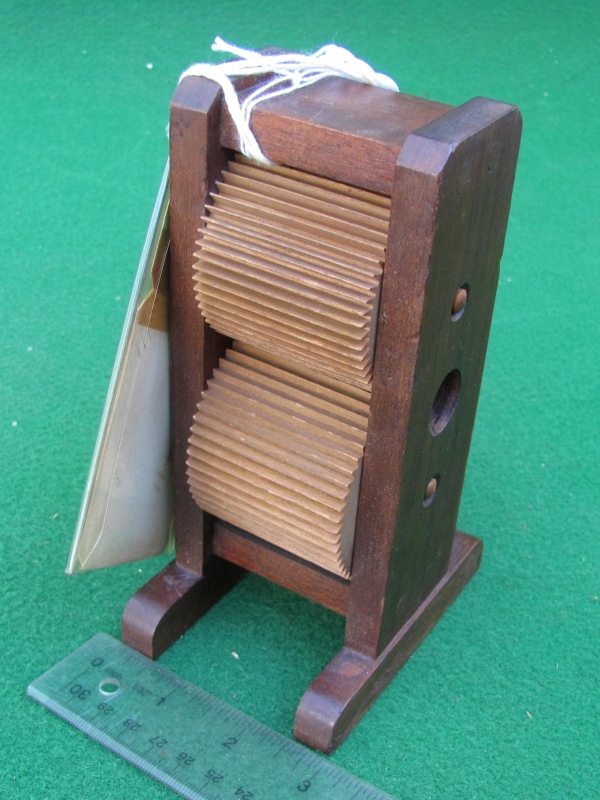 Original USPO Patent Model Fluting Rollers by Thomas Robjohn of New York
This wooden inventor's model was the original model submitted to the US
patent office that accompanied the application requesting a patent. It
stands just 7" tall x 3" across x 2" deep. The
tag says the patent # is 149,526 and that the patent was granted Apr. 7,
1874. Thomas Robjohn held several patents
for different designs of fluting machines, but I could not seem to make this
patent come up looking for it on Google. He also held a patent for an
inkwell. I did find a similar patent under a reissue # that was assigned to
his wife. In that patent it said he was now deceased. It was a
very long and detailed patent description laying out a series of claims.
Patent models are historically significant one-of-a kind antiques!!
Original USPO Patent Model Fluting Rollers by Thomas Robjohn of New York
This wooden inventor's model was the original model submitted to the US
patent office that accompanied the application requesting a patent. It
stands just 7" tall x 3" across x 2" deep. The
tag says the patent # is 149,526 and that the patent was granted Apr. 7,
1874. Thomas Robjohn held several patents
for different designs of fluting machines, but I could not seem to make this
patent come up looking for it on Google. He also held a patent for an
inkwell. I did find a similar patent under a reissue # that was assigned to
his wife. In that patent it said he was now deceased. It was a
very long and detailed patent description laying out a series of claims.
Patent models are historically significant one-of-a kind antiques!! Very Good . . . . . . $595.00 SOLD!!
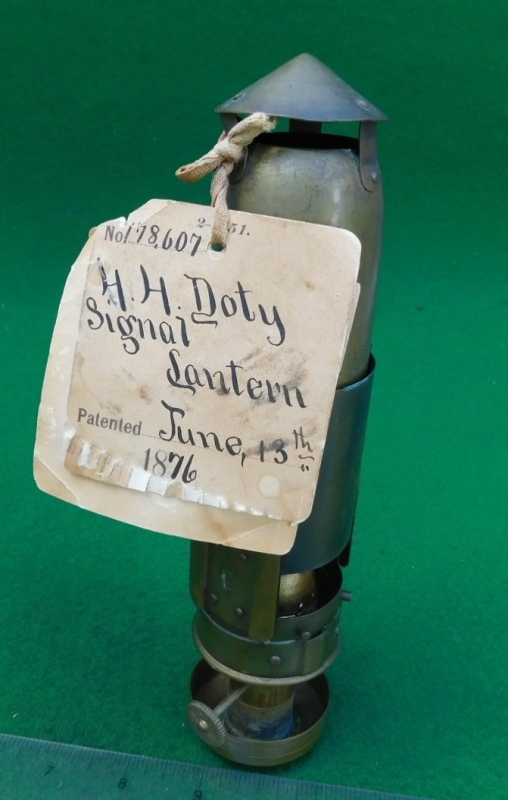 1876
Patent Model Signal Lantern by H. H. Doty
H. H. Doty a citizen of England and resident of London was granted a US patent for this signal lantern on June 13th 1876. The number is
18607. It is a close match to
the drawing submitted with the model and comes up with a Google search.
The opening sentence of the patent calls for it to be used for railroads,
marine applications like lighthouses, or other. Numerous references of
the patent come up with an internet search and it being related to
lighthouses.
1876
Patent Model Signal Lantern by H. H. Doty
H. H. Doty a citizen of England and resident of London was granted a US patent for this signal lantern on June 13th 1876. The number is
18607. It is a close match to
the drawing submitted with the model and comes up with a Google search.
The opening sentence of the patent calls for it to be used for railroads,
marine applications like lighthouses, or other. Numerous references of
the patent come up with an internet search and it being related to
lighthouses. The model measures approx. 2 1/2" dia. by 10" tall.It is constructed almost entirely of brass. It is marked in two places with the Doty name. Interesting, Historic & Nice!!
Very Good . . . . . . $1150.00 SOLD!!
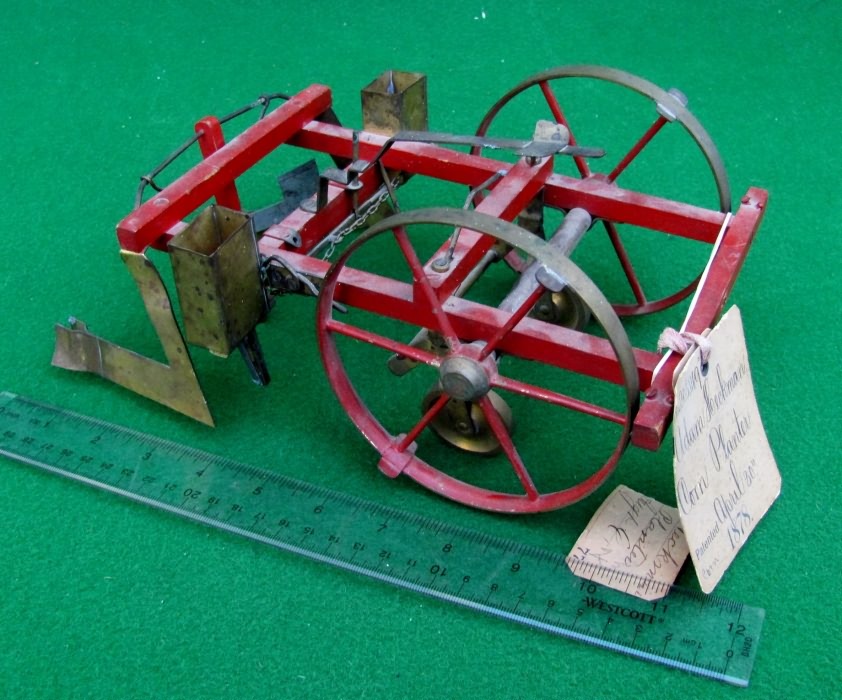 1878
Patent Model of Corn Planter by Adam Heckman The
patent for this corn planter was granted to Adam Heckman on April 30th 1878.
The patent number is 203149. It is viewable on Google. Adam
Heckman hailed from Sterling Illinois which is west of Chicago and in the
heart of corn country.
1878
Patent Model of Corn Planter by Adam Heckman The
patent for this corn planter was granted to Adam Heckman on April 30th 1878.
The patent number is 203149. It is viewable on Google. Adam
Heckman hailed from Sterling Illinois which is west of Chicago and in the
heart of corn country.The patent covers a number of different aspects in the design of improvements for a corn planter. Heckman describes each aspect in some detail in his patent application. The planter has two sets of wheels, one for use when operating the planter, and a second set that would come into play when it was simply being moved. It has two brass seed boxes and the patent describes these, the drop / feed tubes and how they operate. The model has just one of those drop tubes. It goes on to describe the seat, (note loose solder joints,) and the how, why, and when that the second set of wheels would come into play. It also has a feature to cover the seed with dirt after the seed has been dropped in the furrow. There is also a scraper feature that would keep the wheels free of dirt build-up as well.
The overall condition is nice noting some minor missing pieces. One being a plow cutter that is a simple piece of folded galvanized sheet material that would be an easy fix. Very unusual!!
Very Good . . . . . . $750.00 SOLD!!
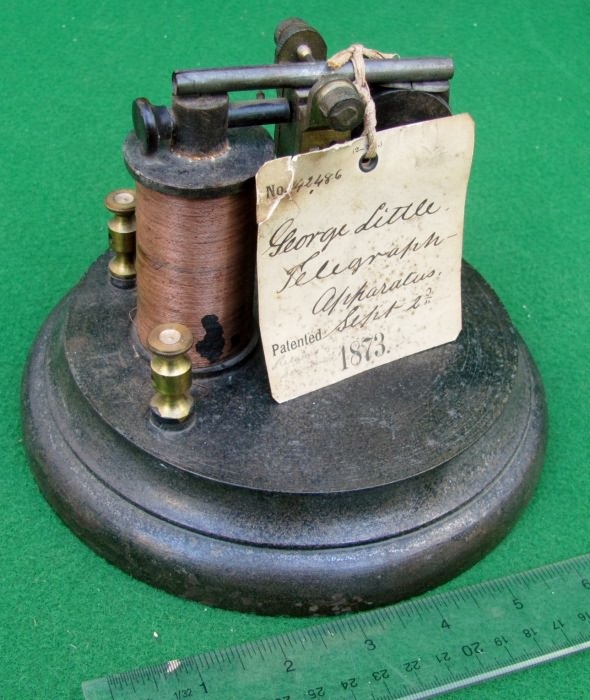 George
Little 1873 Patent Model of Telegraph Apparatus
The model is mounted on a round
cast iron base has its original tag and ribbon. The overall condition
is nice. George Little was granted a patent for this Telegraph Apparatus on
September 2 1873.
The patent number is 142486. It is viewable on Google and is a close
match.George Little hailed from Rutherford Park NJ and was a contemporary and
competitor to Edison, Western Union and others in the early telegraphy
field.
George
Little 1873 Patent Model of Telegraph Apparatus
The model is mounted on a round
cast iron base has its original tag and ribbon. The overall condition
is nice. George Little was granted a patent for this Telegraph Apparatus on
September 2 1873.
The patent number is 142486. It is viewable on Google and is a close
match.George Little hailed from Rutherford Park NJ and was a contemporary and
competitor to Edison, Western Union and others in the early telegraphy
field.George Little was a well known figure in the development of telegraphy. He was issued his first patent back in the 1840's during the infancy of the telegraphic revolution. Google searches turn up reams of info on him and his endeavors. He held several other earlier telegraphy related patents that are mentioned in the patent for this device as well. He also held a patent for a electro magnetic motor. Several references noted that Thomas Edison claimed he could improve on Little's original invention and worked on it.
The patent describes how this design will improve transmission rates and alleviate the problem of the signal becoming garbled or running together in rapid transmissions. George little describes how this is accomplished in some detail that makes little sense to a novice but it was novel or important enough to be granted a patent. A passage found on the internet mentions that Daniel Craig founder of the American Rapid Telegraph Co. in 1879 touted Little's patented telegraph invention as making it possible to send 100 word letters out for a dime, and that later they would charge by the yard. The company went bankrupt in 1884.
An interesting, important & unusual piece of telegraphy and early communication technology!! Opportunity!!
Very Good . . . . . . $1695.00 SOLD!!
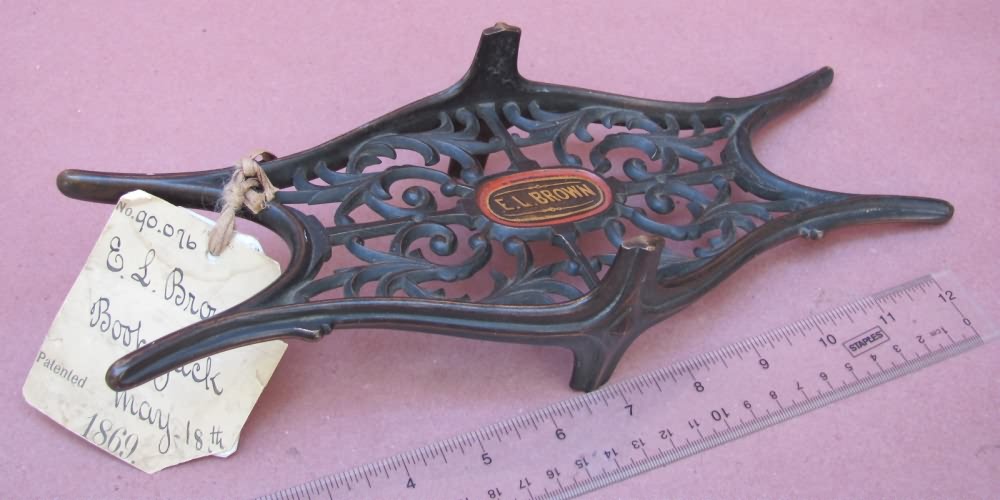 E.
L. Brown 1869 Double End Patent Model
Boot Jack Mr. Edwin Lee Brown of Chicago ILL got the patent for his interesting
style bootjack May 18th 1869.
The patent # is 90076 and the model is very similar to those found that were
produced. There are a couple of variations listed for sale on the
other pages. Not only does e the paten call for this to be a double ender,
it also claims that it is reversible, or can be used when flipped. His
claim was something along the lines of always ready and never out of
adjustment. It is constructed of brass, and the condition is super. This
bootjack has a great look and presence. It will be a key piece in any bootjack
or early Americana collection. As nice as they come!! Recommended!
E.
L. Brown 1869 Double End Patent Model
Boot Jack Mr. Edwin Lee Brown of Chicago ILL got the patent for his interesting
style bootjack May 18th 1869.
The patent # is 90076 and the model is very similar to those found that were
produced. There are a couple of variations listed for sale on the
other pages. Not only does e the paten call for this to be a double ender,
it also claims that it is reversible, or can be used when flipped. His
claim was something along the lines of always ready and never out of
adjustment. It is constructed of brass, and the condition is super. This
bootjack has a great look and presence. It will be a key piece in any bootjack
or early Americana collection. As nice as they come!! Recommended! Fine . . . . . .$995.00 SOLD!!
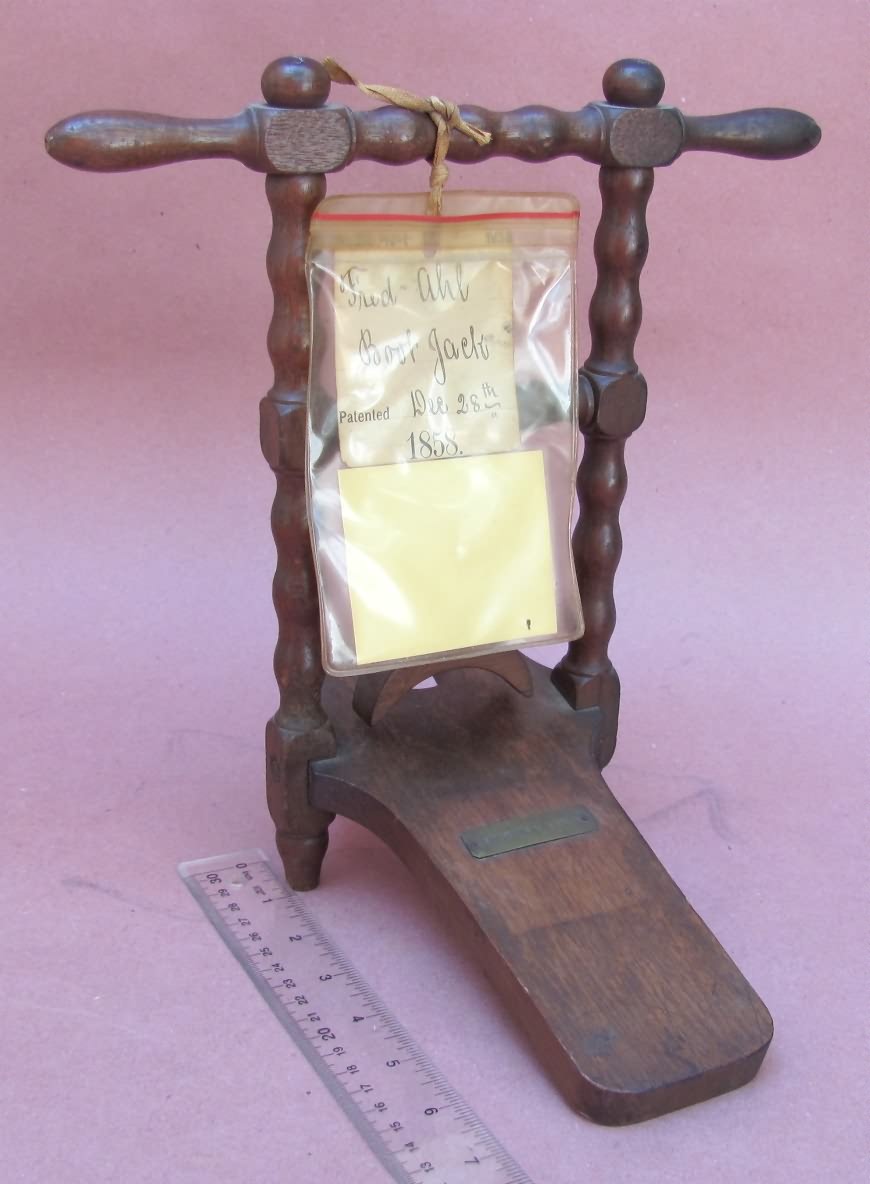 1858
Patent Model
Boot Jack This interesting valet style bootjack was patented
December 28th 1858 by Fred Ahl of West Meriden CT. The patent # is
22404. Fred covered all the bases here, and claimed that this could
also double as a hat rack, or clothes stand. He called the swinging
arm a vibrator, and went on to describe how you could dismantle it should
you want to take it with you on your next outing or trip. This
bootjack has a great look and presence. It will be a key piece in any
bootjack or early Americana collection. As nice as they come!!
Recommended!
1858
Patent Model
Boot Jack This interesting valet style bootjack was patented
December 28th 1858 by Fred Ahl of West Meriden CT. The patent # is
22404. Fred covered all the bases here, and claimed that this could
also double as a hat rack, or clothes stand. He called the swinging
arm a vibrator, and went on to describe how you could dismantle it should
you want to take it with you on your next outing or trip. This
bootjack has a great look and presence. It will be a key piece in any
bootjack or early Americana collection. As nice as they come!!
Recommended! Fine . . . . . .$795.00 SOLD
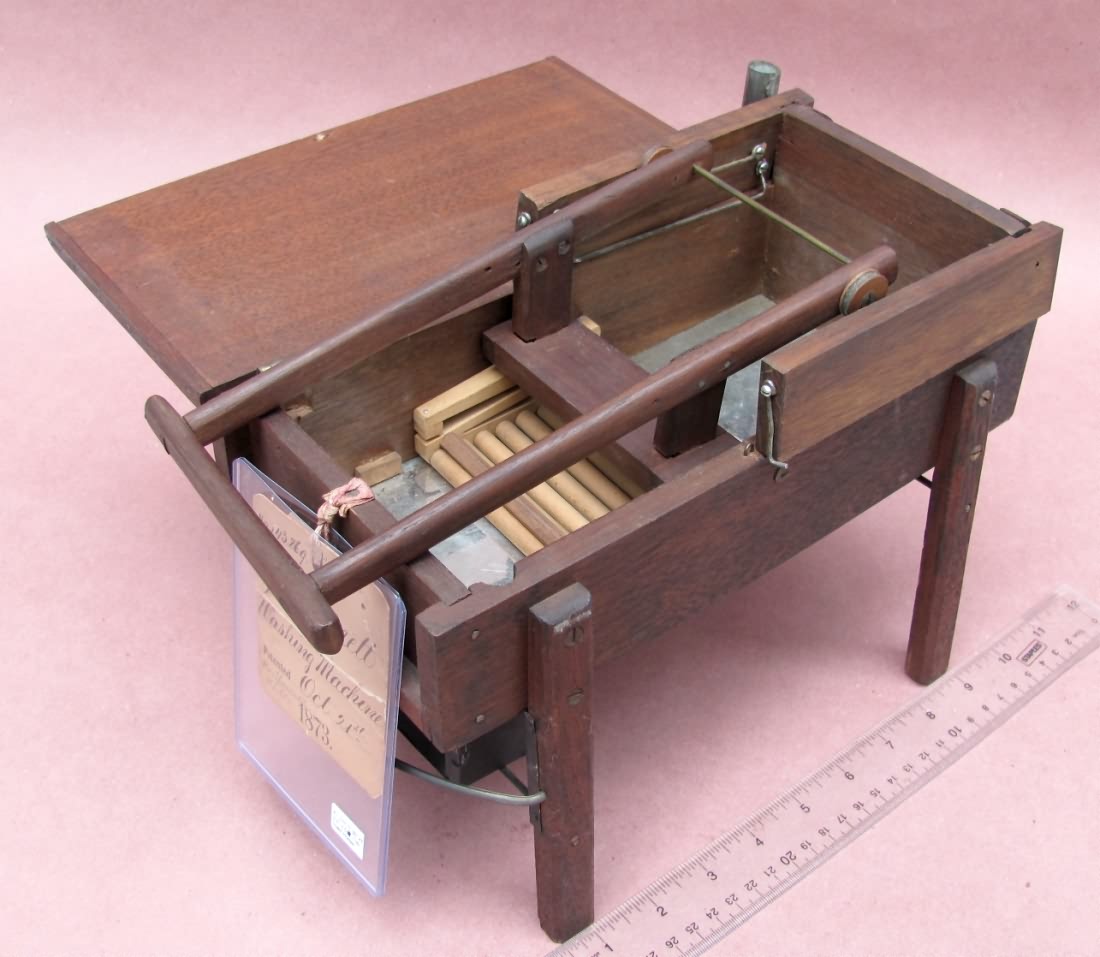 1873
Washing Machine Patent Model by J. Bennett
This washing machine patent model has its original tag. The patent was issued on
October 21st 1873 with the patent # of 143869. This patent model is
approx 10" Long x 8"
or so wide at the widest point with the top / table folded out. The model is a good match to the patent
drawing which can be viewed
using Google Patents search with the number 143869.
1873
Washing Machine Patent Model by J. Bennett
This washing machine patent model has its original tag. The patent was issued on
October 21st 1873 with the patent # of 143869. This patent model is
approx 10" Long x 8"
or so wide at the widest point with the top / table folded out. The model is a good match to the patent
drawing which can be viewed
using Google Patents search with the number 143869.This is one of those patent models that is over designed. To use the first step would be to fire up the boiler built into the base. The entire bottom is a metal firebox that acts as the heat exchanger to warm up the water. The exhaust stack can be seen rising from the rear corner. Next the user would have to assemble the parts that are by design stored inside. The patent claims this as a benefit to keep the user from splashing suds and water around. In the bottom is a roller affair that the upper arm with its "rubber" face works against. First though you have to get this arm correctly positioned into the guides that were attached to the sides you had previously attached. It took me about 10 minutes to figure this all out before I had to go to the instructions. This is one of the more complicated washer models I have ever had, and the first with a provision to be heated with a fire underneath. Neat and Different!!
The condition is excellent!!
Excellent. . . . . .$995.00 SOLD
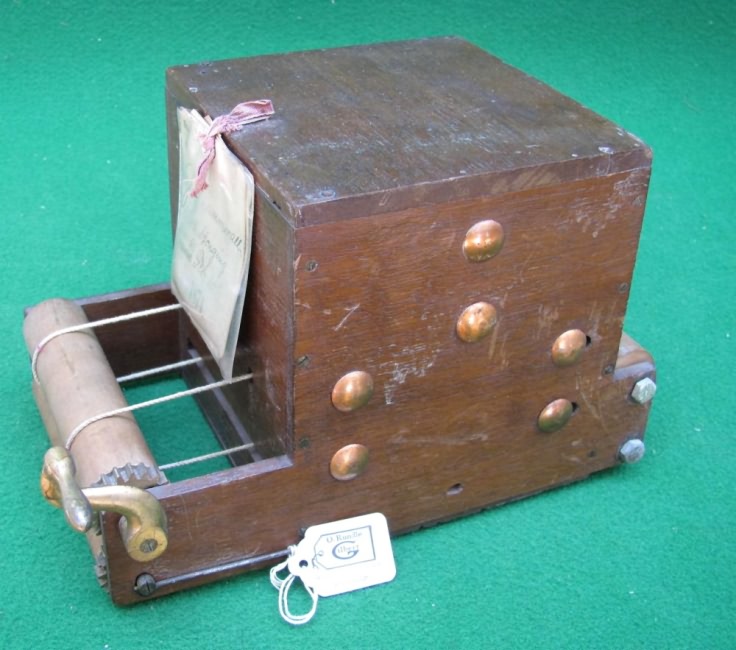 1874
Patent Model of Cloth Sponging Machine James
Dammerall of Boston Mass was granted a patent for his cloth sponging machine
on February 10th 1874.The patent number is 147243. This model came from the Mr. & Mrs. O. Rundell
Gilbert collection and has those tags as well as the original Patent Office
tag.
1874
Patent Model of Cloth Sponging Machine James
Dammerall of Boston Mass was granted a patent for his cloth sponging machine
on February 10th 1874.The patent number is 147243. This model came from the Mr. & Mrs. O. Rundell
Gilbert collection and has those tags as well as the original Patent Office
tag.The idea here is still used today to treat or size fabric. It seems freshly made fabric must be "sponged" as part of the process to keep it from shrinking later on. Basically it is run through a machine with a series of rollers, steam is introduced into the closed chamber, and after being stretched and pulled and rolled around for a while the cloth will come out the other side a finished product. The box is Mahogany and in nice overall condition. The basic form is close to the patent drawing noting that there are no feet or a base as is shown in the dawing. Different!!
Good . . . . . . $295.00 SOLD!!
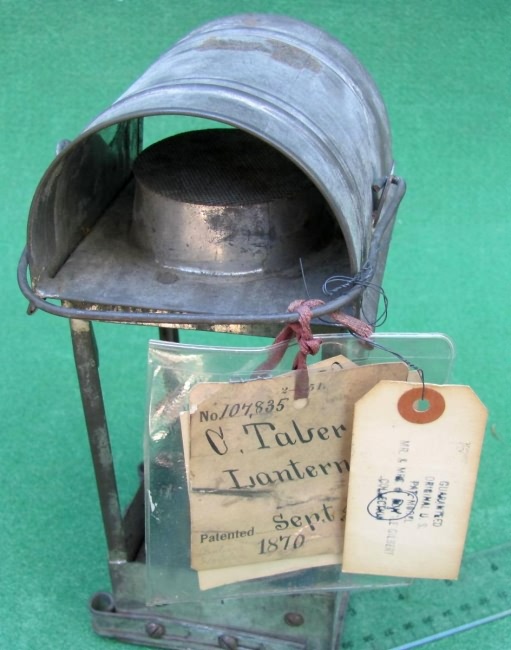 1870
Patent Model of Lantern by C. Tabor
This interesting and nice looking patent model lantern has its original tag
and ribbon. It also has a tag from the seller O. Rundle Gilbert who was
one of the owners of the collection after the government sold them all off back
in the 20's.
1870
Patent Model of Lantern by C. Tabor
This interesting and nice looking patent model lantern has its original tag
and ribbon. It also has a tag from the seller O. Rundle Gilbert who was
one of the owners of the collection after the government sold them all off back
in the 20's. This patent model is approx 4 1/2 " wide x 10" tall. It is a good match to the patent which can be viewed using Google Patent Search. It includes features like the clutch / disconnect for the wick adjuster, and for the different design burner. Nice!!
Excellent. . . . . .$395.00 SOLD!
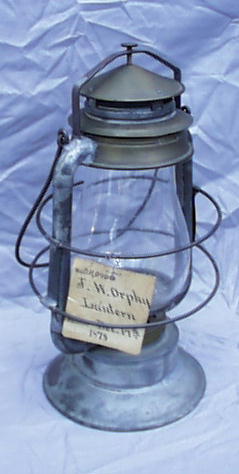 1878
Patent Model of Lantern by J. W. Orphy This
is a very important patent model in the development of Barn Lanterns.
Mr. Orphy, who was the inventor, assigned this idea to the well known
maker of lanterns C. T. Ham and F. D. Clarke of Rochester New York back
in 1878. Mr. Orphy also had a least two other patents for lanterns
or parts for them that I have been able to find information about.
The ideas for this lantern revolve around the tubes running up the sides
that will provide air for combustion and not be affected by the wind or
by the lantern being swung about in use and blowing out or making the
flame flicker.
A problem that was being addressed by several other makers and inventors
of lanterns during this period as well. There are a lot of lanterns out
and about, and not being an expert about them, I do not know if this was his idea
alone, or whether other folks were using the same basic ideas before this or
not, or where this idea fits into the scope chronologically in the
development of this idea. The first person I showed this too said the
patent was most likely for the screw top and that being the means to
hold the globe in place, but in the papers, Mr. Orphy barely mentions
that and instead talks about air getting to the burner and the tubes and
so forth. Makes little difference, it still looks great, the
condition is super and patent models of anything interesting,
significant or graphic are getting harder and harder to find.
1878
Patent Model of Lantern by J. W. Orphy This
is a very important patent model in the development of Barn Lanterns.
Mr. Orphy, who was the inventor, assigned this idea to the well known
maker of lanterns C. T. Ham and F. D. Clarke of Rochester New York back
in 1878. Mr. Orphy also had a least two other patents for lanterns
or parts for them that I have been able to find information about.
The ideas for this lantern revolve around the tubes running up the sides
that will provide air for combustion and not be affected by the wind or
by the lantern being swung about in use and blowing out or making the
flame flicker.
A problem that was being addressed by several other makers and inventors
of lanterns during this period as well. There are a lot of lanterns out
and about, and not being an expert about them, I do not know if this was his idea
alone, or whether other folks were using the same basic ideas before this or
not, or where this idea fits into the scope chronologically in the
development of this idea. The first person I showed this too said the
patent was most likely for the screw top and that being the means to
hold the globe in place, but in the papers, Mr. Orphy barely mentions
that and instead talks about air getting to the burner and the tubes and
so forth. Makes little difference, it still looks great, the
condition is super and patent models of anything interesting,
significant or graphic are getting harder and harder to find.
Good . . . . .$2495.00 SOLD
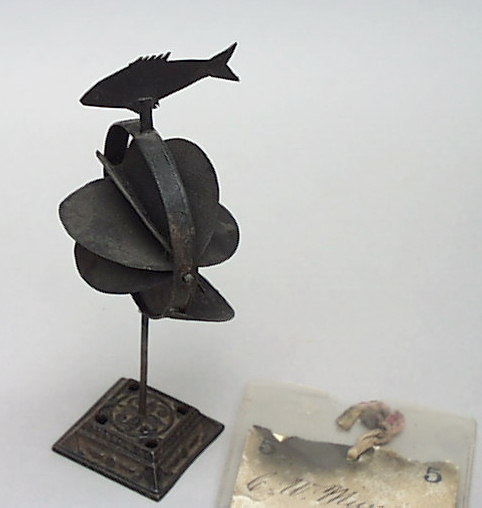 1875 Patent Model of Weathervane / Chimney Top
/ Deflector Here is a great example of a
wonderful and graphic design that comes in a small package. This
dated and tagged Patent Model is from 1875, and only stands about 6"
tall to the top of the flat bodied fish weathervane portion. The
inventors name was Munger, and the patent # is 159,344. The idea
was the the prevailing wind would spin this around so that it's tail
would faced the wind, and then the spinning vanes would draw the smoke
up and out of the chimney, with the small shield at the bottom keeping
rain or snow from entering. It would also have the effect of
rotating and protecting the chimney top away from strong winds that in
some instances can or would create downdrafts that would smoke up the
house. It is interesting to note that this style of chimney top is
still in use today and marketed to folks who live along the coast of
Oregon and Ca to help with the strong winds and driving rains that can
occur there. I can remember seeing them on roofs and marveling at
what a neat idea this was, and then a couple years ago I found this
model and recognized it as being very similar in design and function.
No new ideas!! The overall condition is OK, noting that the
top of the tag has what appears to be some fire / burn damage. The
base of the model also appears to be a replacement and was paper holder,
but it looks proper and feels great to the overall effect. A
nice display piece that has a great look.
1875 Patent Model of Weathervane / Chimney Top
/ Deflector Here is a great example of a
wonderful and graphic design that comes in a small package. This
dated and tagged Patent Model is from 1875, and only stands about 6"
tall to the top of the flat bodied fish weathervane portion. The
inventors name was Munger, and the patent # is 159,344. The idea
was the the prevailing wind would spin this around so that it's tail
would faced the wind, and then the spinning vanes would draw the smoke
up and out of the chimney, with the small shield at the bottom keeping
rain or snow from entering. It would also have the effect of
rotating and protecting the chimney top away from strong winds that in
some instances can or would create downdrafts that would smoke up the
house. It is interesting to note that this style of chimney top is
still in use today and marketed to folks who live along the coast of
Oregon and Ca to help with the strong winds and driving rains that can
occur there. I can remember seeing them on roofs and marveling at
what a neat idea this was, and then a couple years ago I found this
model and recognized it as being very similar in design and function.
No new ideas!! The overall condition is OK, noting that the
top of the tag has what appears to be some fire / burn damage. The
base of the model also appears to be a replacement and was paper holder,
but it looks proper and feels great to the overall effect. A
nice display piece that has a great look.
Good . . . . .$795.00 SOLD
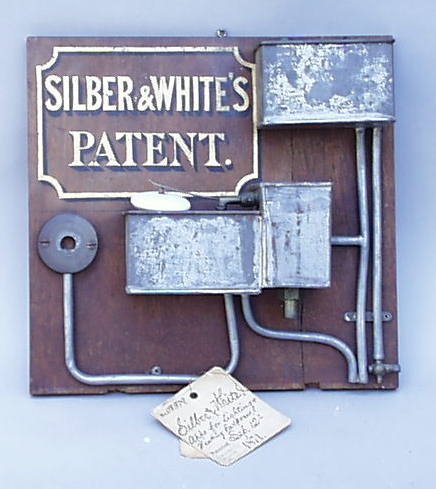 1871
Silber & White Patent Model of Light fixture / Heater and Delivery
System This is an interesting patent model
depicting a series of fuel storage tanks, a float, shutoff valves and more to control
the flow of a given liquid fuel to the round fixture holder at the left which
could be a light, heater or whatever else was consuming the fuel.
This model was made to represent different floors of a house, building
or
factory, etc. The inventors were both from England, and bought
their novel and cutting edge technology to the US Patent office to
obtain a patent here in 1871 least anybody else try and steal their idea. The top tank is the major reservoir, which was to be located
outside the building or on the roof or other convenient place. The
second tank is referred to as the filtering tank and would distribute
the fuel to all the other fixtures found at that level. The tank
with the white porcelain float valve is one of the main factors for the
patent in that it senses the demand and will either allow fuel to be
constantly fed to the burner, or when the burner is turned off and the
float rises to it top position it will cause the flow of fuel to stop,
thus eliminating overflows. It is very graphic, measures approx
12x12" the limit allowed by the patent office, and has a great look.
The condition
is super and patent models of anything interesting, significant or
graphic are getting harder and harder to find. This is a good
one and will display nicely as it is flat and can be hung on the wall
behind the desk as a reminder of just how far we have come!!
1871
Silber & White Patent Model of Light fixture / Heater and Delivery
System This is an interesting patent model
depicting a series of fuel storage tanks, a float, shutoff valves and more to control
the flow of a given liquid fuel to the round fixture holder at the left which
could be a light, heater or whatever else was consuming the fuel.
This model was made to represent different floors of a house, building
or
factory, etc. The inventors were both from England, and bought
their novel and cutting edge technology to the US Patent office to
obtain a patent here in 1871 least anybody else try and steal their idea. The top tank is the major reservoir, which was to be located
outside the building or on the roof or other convenient place. The
second tank is referred to as the filtering tank and would distribute
the fuel to all the other fixtures found at that level. The tank
with the white porcelain float valve is one of the main factors for the
patent in that it senses the demand and will either allow fuel to be
constantly fed to the burner, or when the burner is turned off and the
float rises to it top position it will cause the flow of fuel to stop,
thus eliminating overflows. It is very graphic, measures approx
12x12" the limit allowed by the patent office, and has a great look.
The condition
is super and patent models of anything interesting, significant or
graphic are getting harder and harder to find. This is a good
one and will display nicely as it is flat and can be hung on the wall
behind the desk as a reminder of just how far we have come!!
Good . . . . .$795.00 SOLD
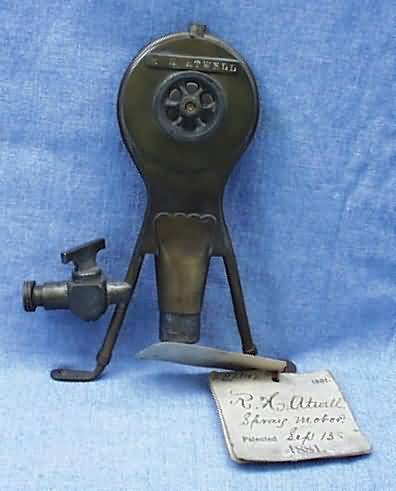 1881
Patent Model of Water / Steam Motor This
Patent Model came out of an old time collection here in California. It is unusual in that you have to read and study the papers that
came with it to fully understand and appreciate exactly what it is.
Typically, Patent Models have their primary feature or the patented idea clearly
visible to the eye so that you could see and get a sense of what you were giving
/ getting a patent for. This is a very detailed and well made brass model, and has a
water wheel / motor inside, but Mr. Atwell did not do a cutaway, or allow any
visual means of seeing what was going on inside his water motor's outside brass
housing. And there is no provision for taking it apart to inspect the innards.
Basically his idea was that you could increase the power and efficiency of a
pretty standard design water motor by installing and utilizing an auxiliary port
through which you fed additional streams of steam or gas in addition to the main
jet of water. As with most patent descriptions this one is very wordy and
extremely detailed, to the point of being confusing, but it seems to have been
enough to impress the proper government officials as Mr. Atwater was granted
his patent in 1881. This one has a great look, and alternative power
devices are all the rage these days
1881
Patent Model of Water / Steam Motor This
Patent Model came out of an old time collection here in California. It is unusual in that you have to read and study the papers that
came with it to fully understand and appreciate exactly what it is.
Typically, Patent Models have their primary feature or the patented idea clearly
visible to the eye so that you could see and get a sense of what you were giving
/ getting a patent for. This is a very detailed and well made brass model, and has a
water wheel / motor inside, but Mr. Atwell did not do a cutaway, or allow any
visual means of seeing what was going on inside his water motor's outside brass
housing. And there is no provision for taking it apart to inspect the innards.
Basically his idea was that you could increase the power and efficiency of a
pretty standard design water motor by installing and utilizing an auxiliary port
through which you fed additional streams of steam or gas in addition to the main
jet of water. As with most patent descriptions this one is very wordy and
extremely detailed, to the point of being confusing, but it seems to have been
enough to impress the proper government officials as Mr. Atwater was granted
his patent in 1881. This one has a great look, and alternative power
devices are all the rage these days
Good . . . . .$995.00 SOLD
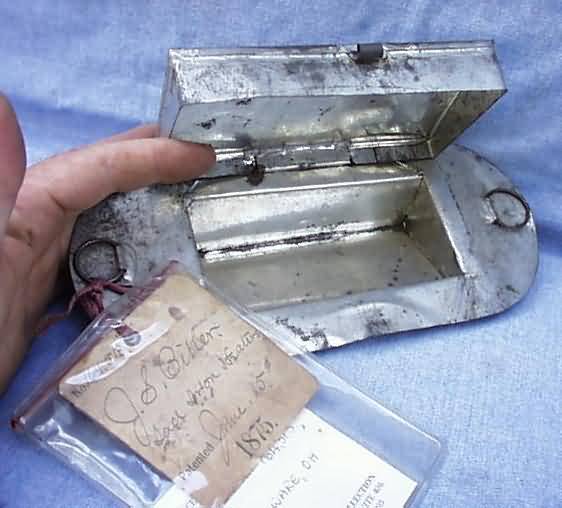 1875
Patent Model of Sad Iron Heater This
is an original Patent Model of a Sadiron Heater that we obtained at
auction a number of years ago. There are many different variations of
these devices available in full size, and they make for a very graphic
display. There were also stoves specifically made for this purpose
of heating sadirons
called laundry stoves that have built in ledges or holders to heat the
irons that the person ironing would set the iron on to reheat as she was
using another one that had been heating on a different ledge. The
idea with this style iron heater was that you would remove two burner lids
and their frame from your big old wood fired cookstove that you were also boiling
your water on, and insert a unit like this in their place into the top.
The lid feature would trap and retain
that much more heat, thus always assuring a heated iron, not to mention the
handle, for the busy lady
of the house. Ironing is almost a lost art, and I can easily imagine
that in the drudgery of that job the original concept of the women's
movement was born or conceptualized back in those good old
days.
1875
Patent Model of Sad Iron Heater This
is an original Patent Model of a Sadiron Heater that we obtained at
auction a number of years ago. There are many different variations of
these devices available in full size, and they make for a very graphic
display. There were also stoves specifically made for this purpose
of heating sadirons
called laundry stoves that have built in ledges or holders to heat the
irons that the person ironing would set the iron on to reheat as she was
using another one that had been heating on a different ledge. The
idea with this style iron heater was that you would remove two burner lids
and their frame from your big old wood fired cookstove that you were also boiling
your water on, and insert a unit like this in their place into the top.
The lid feature would trap and retain
that much more heat, thus always assuring a heated iron, not to mention the
handle, for the busy lady
of the house. Ironing is almost a lost art, and I can easily imagine
that in the drudgery of that job the original concept of the women's
movement was born or conceptualized back in those good old
days.
Good . . . . .$495.00 SOLD
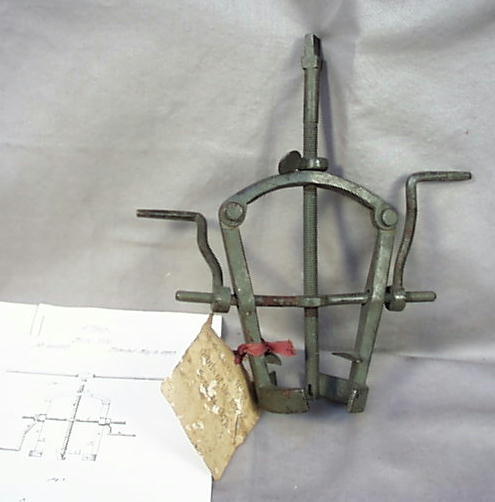 Patent
Model of Hub Borer This patent
model has its original tag and was designed to make the job of boring
wagon wheel hobs an easier task
Think of it as a beam bore meant to fit over a round wheel. I
have never seen the manufactured version, and this might well be one of
those that was never put into production.
Patent
Model of Hub Borer This patent
model has its original tag and was designed to make the job of boring
wagon wheel hobs an easier task
Think of it as a beam bore meant to fit over a round wheel. I
have never seen the manufactured version, and this might well be one of
those that was never put into production.Good . . . . .$495.00 SOLD
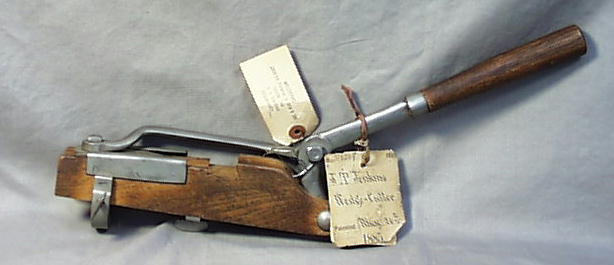 Patent
Model of Wedge Cutter From a time
when there was a need to have wedges. Primarily for tool handles I
suppose. It is operable and has its original tags.
Patent
Model of Wedge Cutter From a time
when there was a need to have wedges. Primarily for tool handles I
suppose. It is operable and has its original tags.
Good . . . . .$495.00 SOLD
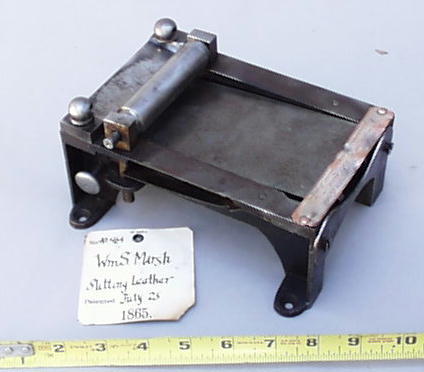 Patent
Model from 1865 of Leather Skiver or Splitter The nickel plated copper plaque or tag says that
the inventor, A Mr. Marsh was from Indianapolis Indiana, and that the name he
picked for his machine was Eureka. The idea here was that the thickness
of the material was set by moving the large flat table under the knife on a
sloped track to achieve different thicknesses. I have not pulled the papers
for this one and so do not know much else other than the fact that it must have
been a bitch going up against the crowd over in Newark with any new ideas about
how to do something with leather for if they did not already, in a few more
years they would have a near monopoly on the manufacture of such devices.
Different at the least, and surely rare as I certainly have not run into any
full size examples of this machine.
Patent
Model from 1865 of Leather Skiver or Splitter The nickel plated copper plaque or tag says that
the inventor, A Mr. Marsh was from Indianapolis Indiana, and that the name he
picked for his machine was Eureka. The idea here was that the thickness
of the material was set by moving the large flat table under the knife on a
sloped track to achieve different thicknesses. I have not pulled the papers
for this one and so do not know much else other than the fact that it must have
been a bitch going up against the crowd over in Newark with any new ideas about
how to do something with leather for if they did not already, in a few more
years they would have a near monopoly on the manufacture of such devices.
Different at the least, and surely rare as I certainly have not run into any
full size examples of this machine.
Good . . . . .$1295.00 SOLD
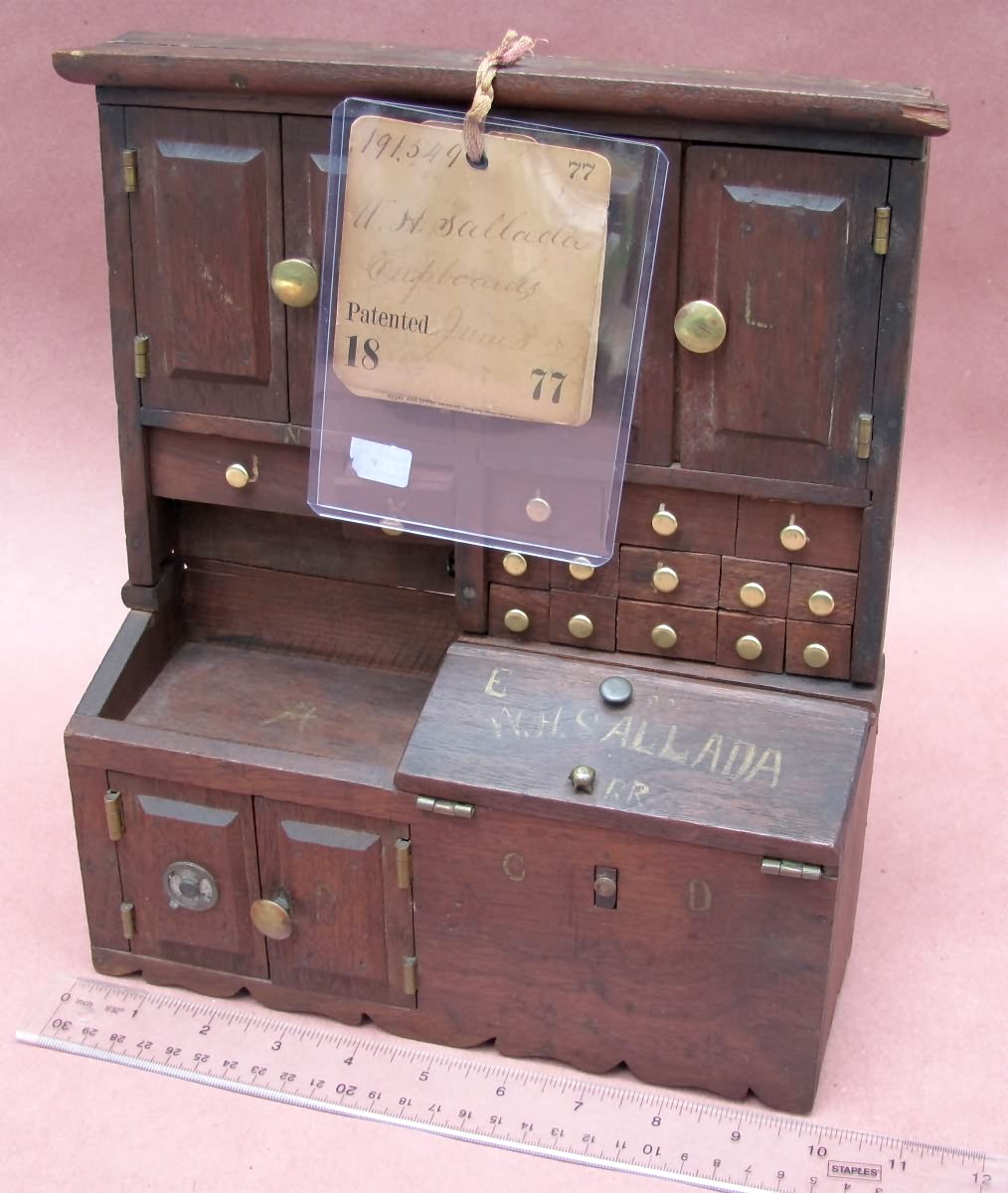 1877 Patent Model
Cupboard by W. H. Sallada of Monroe Iowa This patent model has its original tag.
It is a folksy representation of Mr. Sallada's better idea for a kitchen
cupboard. In reading his patent application it is evident that he
was a bit anal and controlling. His description calls for everything
in its place and a place for everything, and although he speculates that
somebody out there might want to do it different, in his opinion his way is
the best and most convenient. He did include a few good ideas in his
better idea for the cupboard. .
1877 Patent Model
Cupboard by W. H. Sallada of Monroe Iowa This patent model has its original tag.
It is a folksy representation of Mr. Sallada's better idea for a kitchen
cupboard. In reading his patent application it is evident that he
was a bit anal and controlling. His description calls for everything
in its place and a place for everything, and although he speculates that
somebody out there might want to do it different, in his opinion his way is
the best and most convenient. He did include a few good ideas in his
better idea for the cupboard. . This patent model is approx 10" wide x 12" tall. It is referred to as portable in the patent, and comes apart at the base / top. This model is a good match to the patent which can be viewed using Google Patents and a search for the number 191549. On the left is the sink area. Above that is a section with pegs or hooks. Below is a vented area. The patent calls for the drawers to be beveled so that they would be a tight fit. It further calls for some to be edged in rubber so as to preserve the aromas and freshness. He went all in on the folding table on the right. Its hinges are unique and allow it to fold out, down, up, or all the ways you could want. A great piece for a display in the early country kitchen.
This patent model cupboard will display nicely, and the condition is excellent!! Nice!!
Good +. . . . . .$895.00 SOLD!!
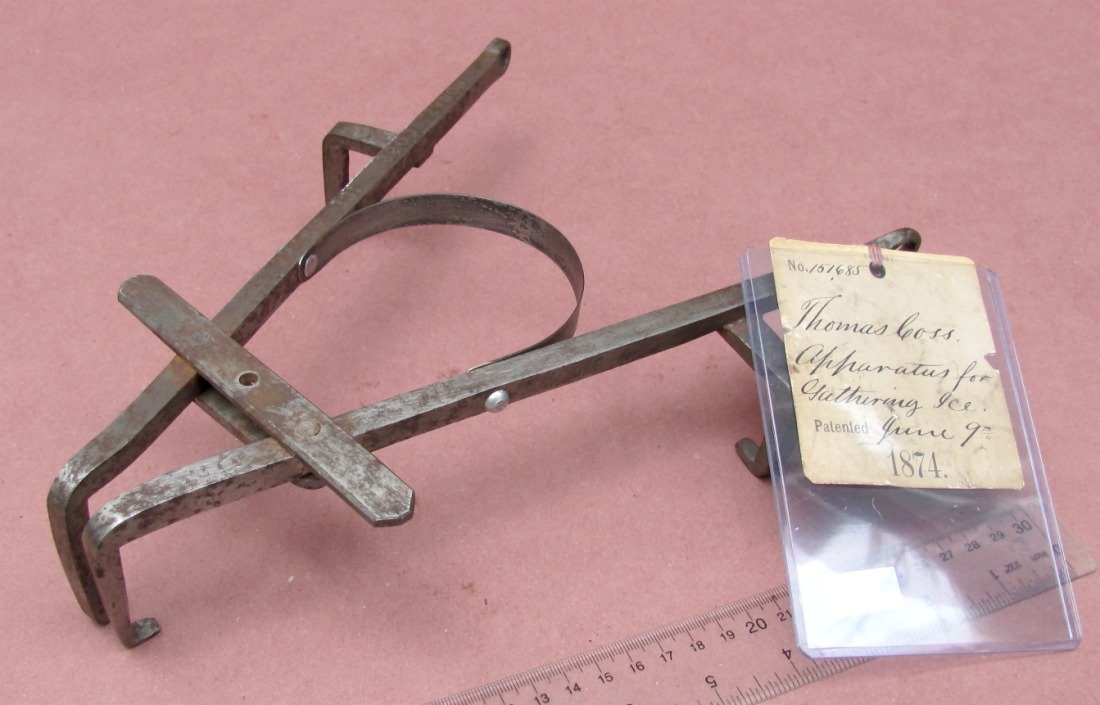 1874 Patent Model of
Apparatus for Gathering Ice
This patent model has its original tag and was issued on June 9th 1874 to
Thomas Cross of Pittston Maine.
This patent model is approx 10" long x 5"
or so wide at the widest point. The patent number is 151685 and is a good match to the patent
drawing which can be viewed
using Google Patents search with the number 151685.
1874 Patent Model of
Apparatus for Gathering Ice
This patent model has its original tag and was issued on June 9th 1874 to
Thomas Cross of Pittston Maine.
This patent model is approx 10" long x 5"
or so wide at the widest point. The patent number is 151685 and is a good match to the patent
drawing which can be viewed
using Google Patents search with the number 151685.The patent text is pretty simple and just mentions that ice is slippery and tends to want to get loose when you gather it. The patent states that the end and side hooks in play here will keep that from happening. It would probably make sense to a ice gatherer.
The condition is excellent!!
Excellent. . . . . .$295.00 SOLD!!
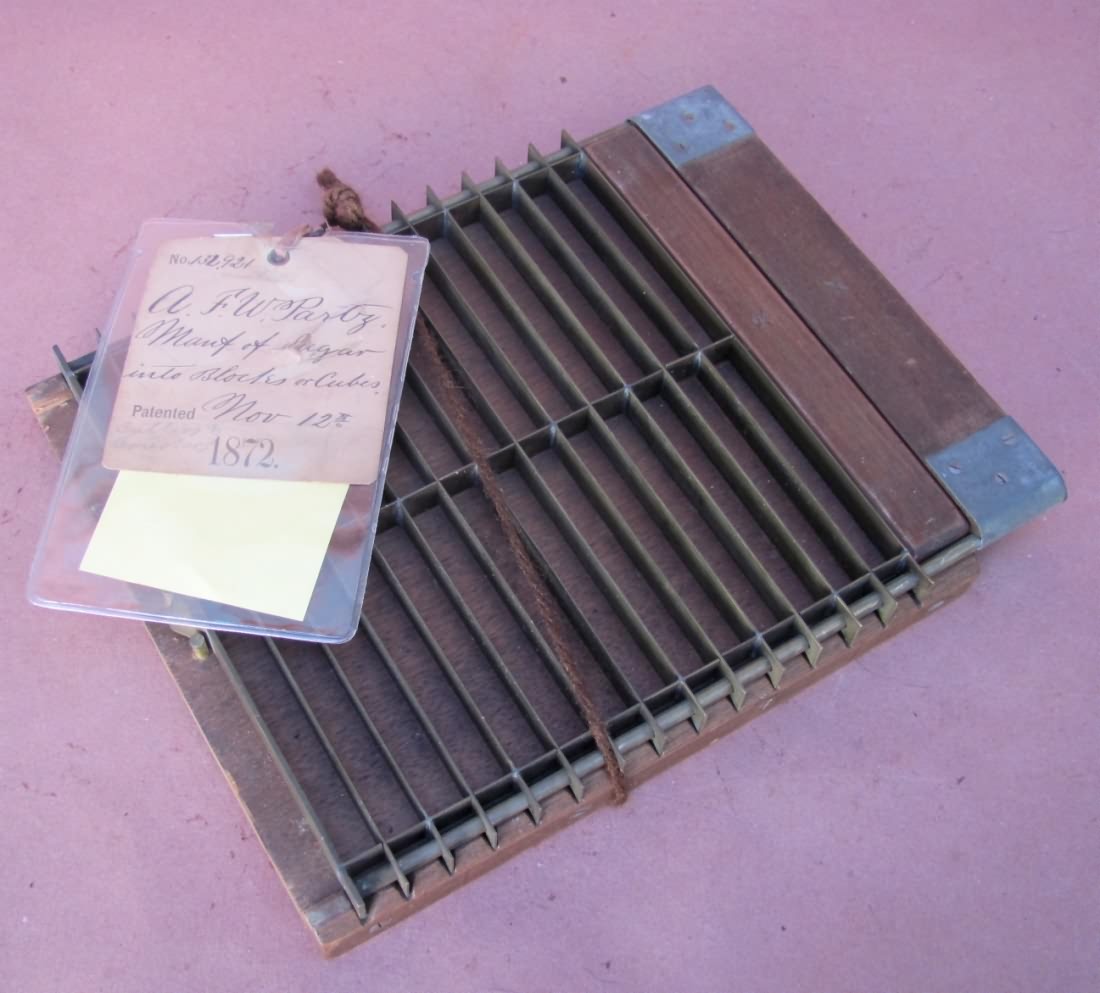 1872 Patent Model of Sugar
Cube / Block Maker by A. F. W. Partz of Oakland CA
This patent model has its original tag, the receiving tag, and a authenticity
tag form Cliff Peterson one of the original owners / buyers of the entire
collection of Patent Models after the government sold them.
Cliff Peterson bought the collection from O. Rundle Gilbert and set up shop
here in California selling some of them off to try and finance his idea for
the museum he envisioned for the collection. His plan worked no better
than the others who have attempted to preserve and / or market these
wonderful pieces, and after a number were sold off through his catalogs and
other sales efforts the collection again changed hands.
1872 Patent Model of Sugar
Cube / Block Maker by A. F. W. Partz of Oakland CA
This patent model has its original tag, the receiving tag, and a authenticity
tag form Cliff Peterson one of the original owners / buyers of the entire
collection of Patent Models after the government sold them.
Cliff Peterson bought the collection from O. Rundle Gilbert and set up shop
here in California selling some of them off to try and finance his idea for
the museum he envisioned for the collection. His plan worked no better
than the others who have attempted to preserve and / or market these
wonderful pieces, and after a number were sold off through his catalogs and
other sales efforts the collection again changed hands. This patent model by August Partz measures approx 8" x 10". It consist of two main pieces and is a good match to the patent which can be viewed using Google Patents and a search for the number 132921. The bottom wooden portion is the frame, and the upper portion with the rods and moveable strips the form. It is designed to have moist granular sugar poured over it once the user has it set up the form on the frame. The patent then calls for the sugar to be pressed into the form and allowed to dry for a couple of hours before removing the top frame. The strips are not fixed and when released from the frame move along the rods they are attached to so the removal of this frame is easier. You would then have strips or blocks of sugar which would them be cut or sawed into the right size cubes or blocks.
This would fit nicely in a display related to the candy industry or sugar which seems to be on the way to becoming a collectible if the PC / Medical crowd has its way. Nice!!
Very Good . . . . . .$395.00 SOLD!!
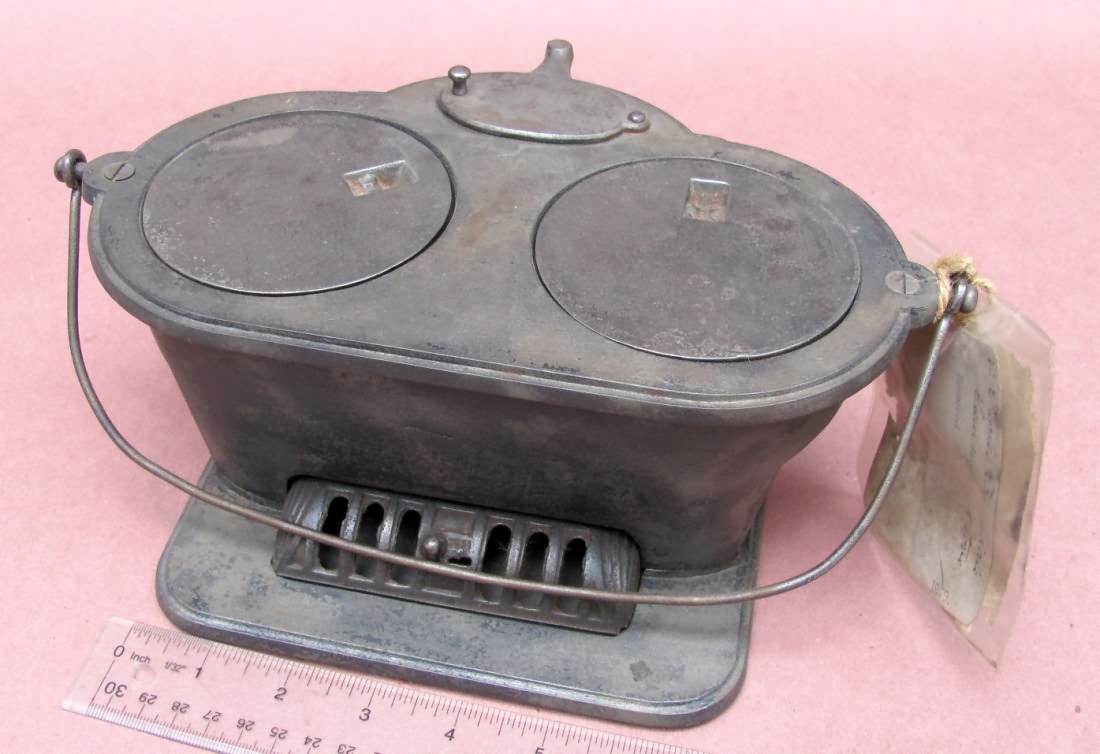 1878 Patent Model of Summer Stove / Furnace by Charles Truesdale of
Cincinnati Ohio
This patent model has its original tag. Mr. Truesdales idea was to use
the heat and flue of the larger inside range or Cookstove, and then take
this portion outside to actually cook the meal or keep things hot outside so
that the heat would not overheat the main house.
It looks like it would be a good idea and Mr. Truesdale went to great
lengths to describe what his invention was not, and how well it would work
for what it was. I imagine it could be used as an iron heater as well
and would be especially well suited for use in the summer when you did not
want to overheat the house.
1878 Patent Model of Summer Stove / Furnace by Charles Truesdale of
Cincinnati Ohio
This patent model has its original tag. Mr. Truesdales idea was to use
the heat and flue of the larger inside range or Cookstove, and then take
this portion outside to actually cook the meal or keep things hot outside so
that the heat would not overheat the main house.
It looks like it would be a good idea and Mr. Truesdale went to great
lengths to describe what his invention was not, and how well it would work
for what it was. I imagine it could be used as an iron heater as well
and would be especially well suited for use in the summer when you did not
want to overheat the house. This patent model is approx 10" wide x 6" tall. This model is a good match to the patent which can be viewed using Google Patents and a search for the number 216710
This patent model summer stove / furnace will display nicely, and the condition is excellent!! Nice!!
Excellent. . . . . .$595.00 SOLD!!
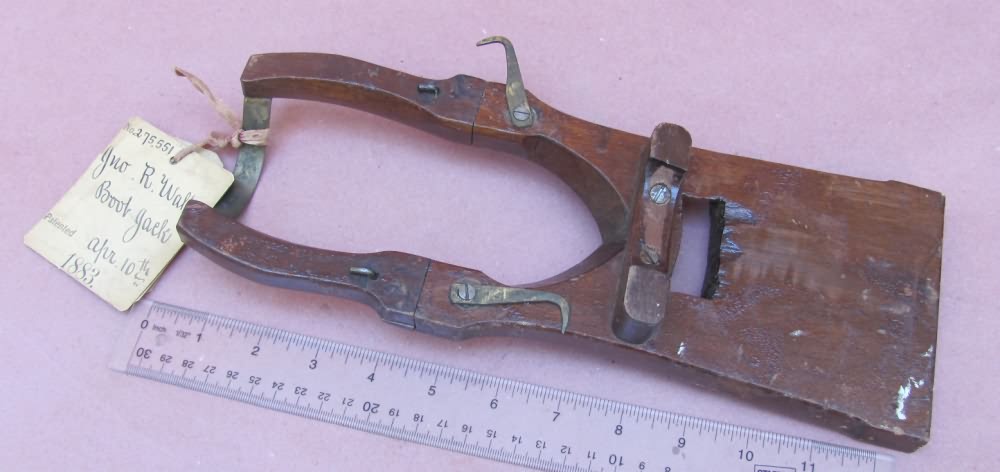 John
Walker of Richland MO. 1883 Patent Model
Boot Jack Mr. John R. Walker got the patent for his folding bootjack April
10th 1883.
The patent # is 275,551. This bootjack patent model is an exact duplicate of the one
pictured in the patent drawings. It is an interesting folding design
that he describes and claims is useful. Useful enough to have had a patent
granted,. A nice looking Patent Model that will fit well with any number
of collections.
John
Walker of Richland MO. 1883 Patent Model
Boot Jack Mr. John R. Walker got the patent for his folding bootjack April
10th 1883.
The patent # is 275,551. This bootjack patent model is an exact duplicate of the one
pictured in the patent drawings. It is an interesting folding design
that he describes and claims is useful. Useful enough to have had a patent
granted,. A nice looking Patent Model that will fit well with any number
of collections. Fine . . . . . .$595.00 SOLD!!
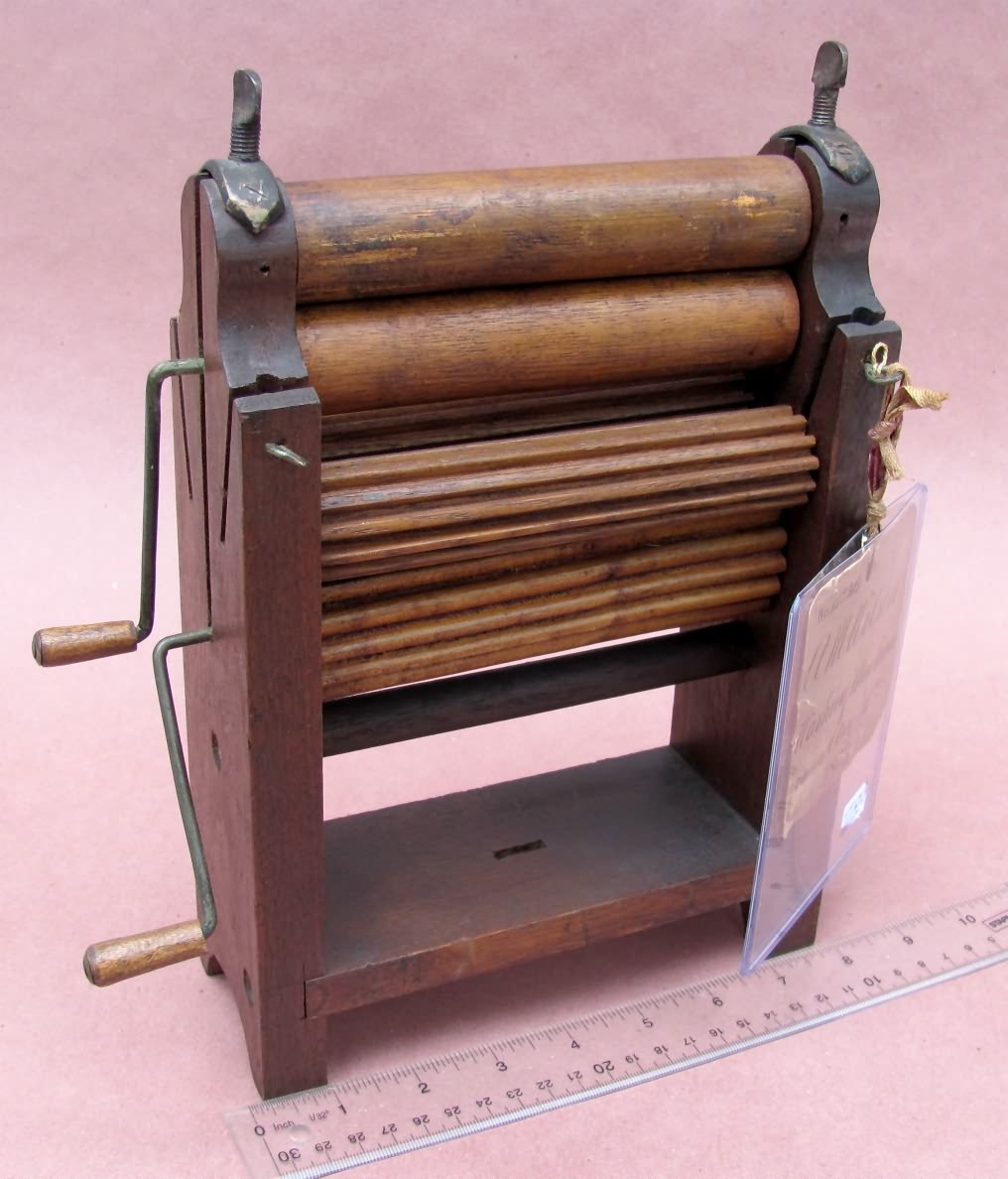 1873 Patent Model of Washing Machine / Wringer by A. M. Wilson of White
Ridge Michigan
This washing machine patent model has its original tag and a authenticity
tag from O. Rundle Gilbert who was one of the original owners / buyers of the entire
collection of Patent Models. Cliff Peterson later bought the entire collection from O. Rundle Gilbert and set up shop
here in California also selling some of them off to try and finance his idea for
the museum he envisioned for the collection. His plan worked no better
than the others who had previously attempted to preserve and / or market these
wonderful pieces of Americana and American History.
1873 Patent Model of Washing Machine / Wringer by A. M. Wilson of White
Ridge Michigan
This washing machine patent model has its original tag and a authenticity
tag from O. Rundle Gilbert who was one of the original owners / buyers of the entire
collection of Patent Models. Cliff Peterson later bought the entire collection from O. Rundle Gilbert and set up shop
here in California also selling some of them off to try and finance his idea for
the museum he envisioned for the collection. His plan worked no better
than the others who had previously attempted to preserve and / or market these
wonderful pieces of Americana and American History. This patent model is approx 8" wide x 12" tall. It major improvement over the standard roller / washer of its time was the utilization of 2 different roller systems and 2 cranks to drive them. One to wash and one to wring no doubt. Mr. Wilson also incorporated a complex design of springs and pins to make it work better. This model is a good match to the patent which can be viewed using Google Patents and a search for the number 142313.
This would fit nicely in a display related to laundry and wash day chores. The condition is excellent!! Nice!!
Excellent. . . . . .$595.00 SOLD!!
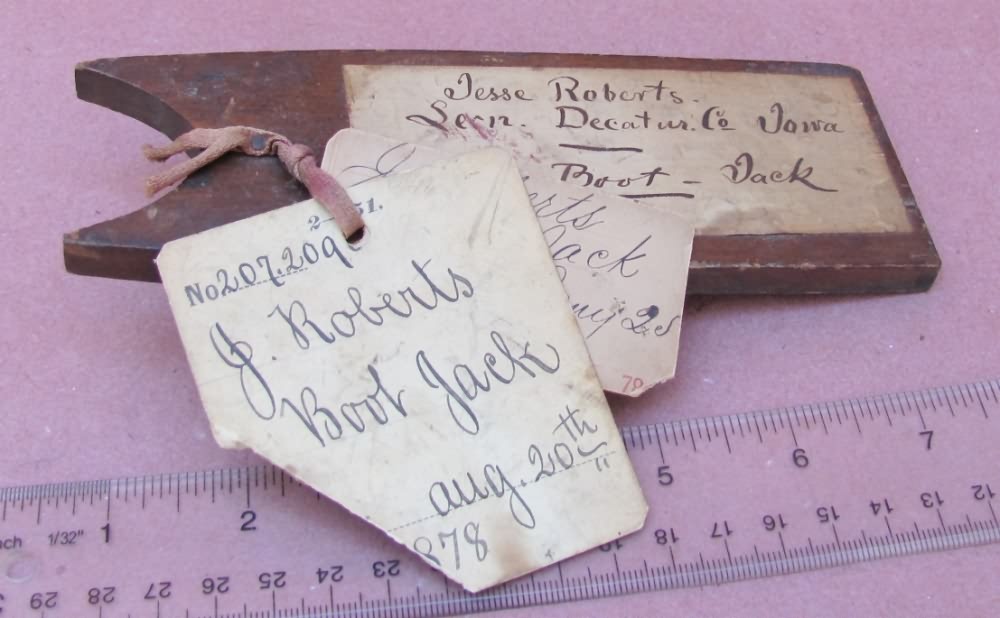 Jesse
Roberts 1878 Patent Model
Boot Jack Mr. Roberts got the patent for his bootjack August
20th 1878.
The patent # is 207,209. If the pics are correct, there are some pieces
missing from this model Given that they would be an integral part of the
operation I would say they are missing as opposed to Mr. Roberts changing the
idea halfway through, or later in production. It was done all the time,
but I see some holes here, and it just looks like it has a few missing parts.
It is a very simple design and looks good as it sits!
Jesse
Roberts 1878 Patent Model
Boot Jack Mr. Roberts got the patent for his bootjack August
20th 1878.
The patent # is 207,209. If the pics are correct, there are some pieces
missing from this model Given that they would be an integral part of the
operation I would say they are missing as opposed to Mr. Roberts changing the
idea halfway through, or later in production. It was done all the time,
but I see some holes here, and it just looks like it has a few missing parts.
It is a very simple design and looks good as it sits! Good + . . . . . .$175.00 SOLD!!
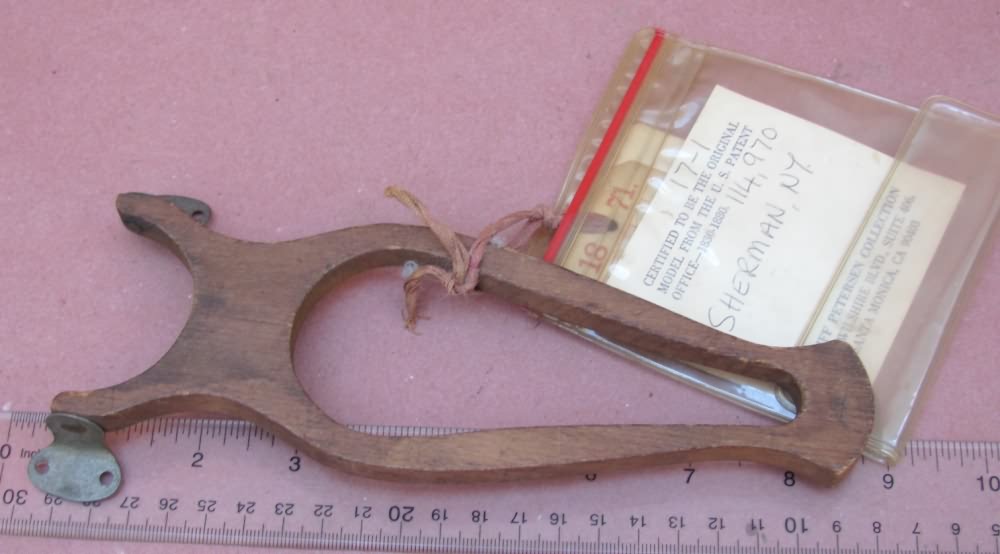 Milo Richardson Wall Mount Patent Model
Boot Jack Mr. Milo Richardson of Sherman NY was granted a patent for
his idea on May 16th 1871.
The patent # is 114,970. This bootjack was designed to mount on a wall and
swing down when needed. Basically the idea called for the boot jack to be
mounted to the base board so that when folded up it could go back beyond
vertical and lean against the wall and not fall forward. That was it, no
springs, cords, hold downs, or anything else. Just mount it proud of the
wall and let gravity do the work. A nice looking Patent Model that will fit well with any number
of collections.
Milo Richardson Wall Mount Patent Model
Boot Jack Mr. Milo Richardson of Sherman NY was granted a patent for
his idea on May 16th 1871.
The patent # is 114,970. This bootjack was designed to mount on a wall and
swing down when needed. Basically the idea called for the boot jack to be
mounted to the base board so that when folded up it could go back beyond
vertical and lean against the wall and not fall forward. That was it, no
springs, cords, hold downs, or anything else. Just mount it proud of the
wall and let gravity do the work. A nice looking Patent Model that will fit well with any number
of collections. Good +. . . . . .$125.00 SOLD!!
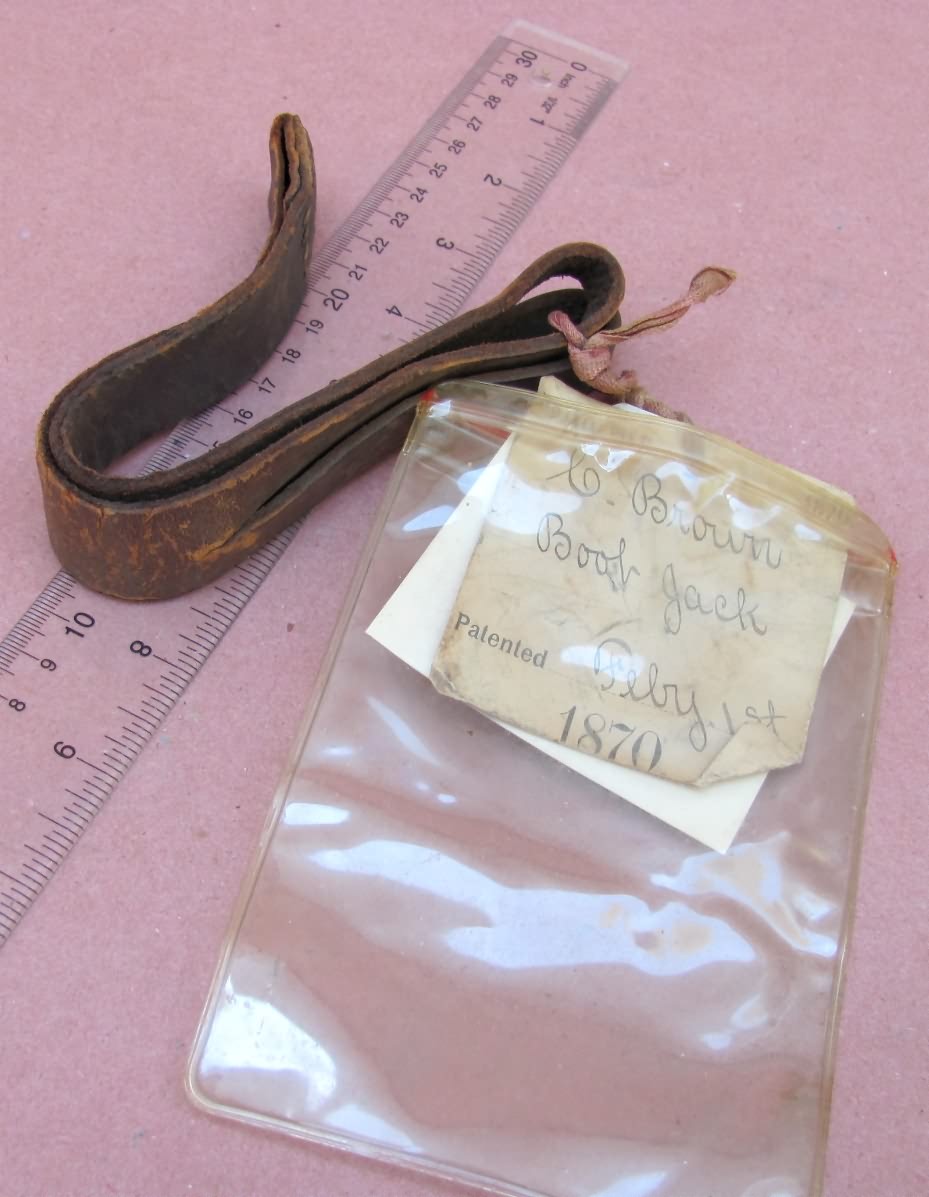 1870
Leather Boot Jack Patent Model
This bootjack was patented on February 1st
1870 by a Mr. Charles Brown of Charlottesville VA. This fellows idea
utilized the KISS approach to materials. Not sure the application or use
would quite meet that standard. The first step was to get it hooked up or
on the boot, and then you would use your other foot to also get into the mix,
and push off the boot. Great idea on paper, not so sure of how it would
work out in use, or how long it would last. What if it was muddy out?
Different!
1870
Leather Boot Jack Patent Model
This bootjack was patented on February 1st
1870 by a Mr. Charles Brown of Charlottesville VA. This fellows idea
utilized the KISS approach to materials. Not sure the application or use
would quite meet that standard. The first step was to get it hooked up or
on the boot, and then you would use your other foot to also get into the mix,
and push off the boot. Great idea on paper, not so sure of how it would
work out in use, or how long it would last. What if it was muddy out?
Different! Good . . . . . .$95.00 SOLD!!
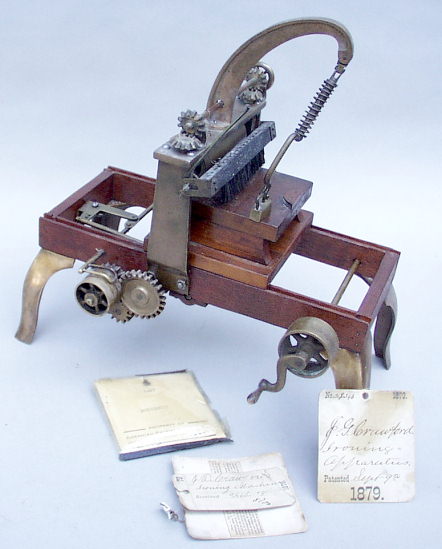 1879
Ironing Apparatus Patent
Model
James Crawford of Boston Mass held a few patents for large
commercial ironing machines. Not sure if any were ever
produced. Different!
1879
Ironing Apparatus Patent
Model
James Crawford of Boston Mass held a few patents for large
commercial ironing machines. Not sure if any were ever
produced. Different! Good . . . . . . SOLD!!
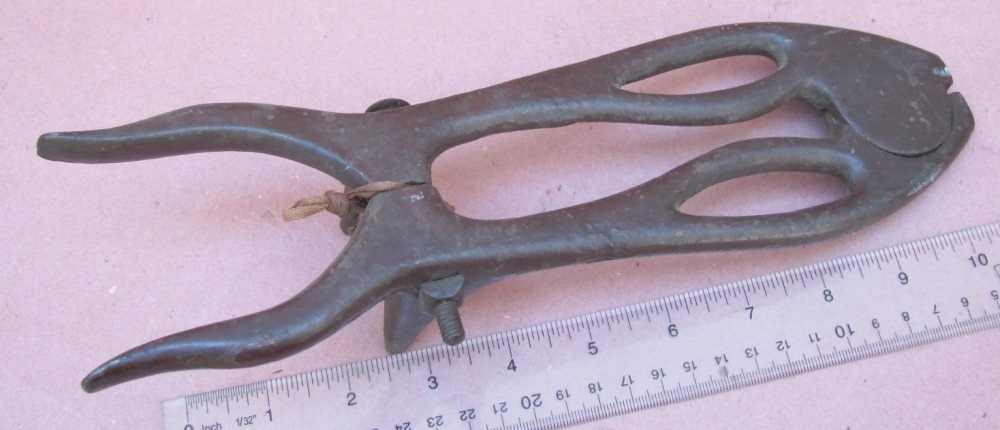 Patent
Model Boot Jack
A known and manufactured model. Different!
Patent
Model Boot Jack
A known and manufactured model. Different! Good . . . . . .$125.00 SOLD!!
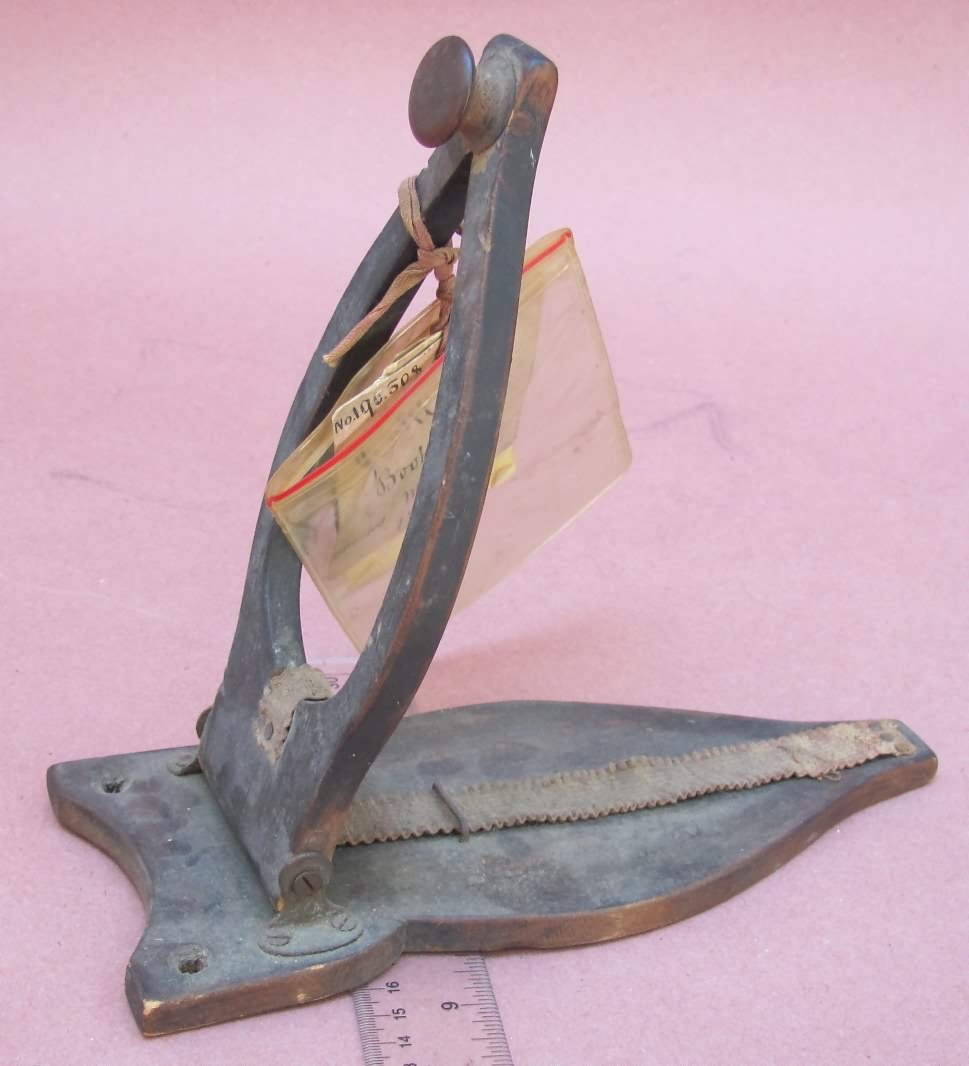 Patent
Model Boot Jack
A known and manufactured model. Different!
Patent
Model Boot Jack
A known and manufactured model. Different! Good . . . . . .$125.00 SOLD!!
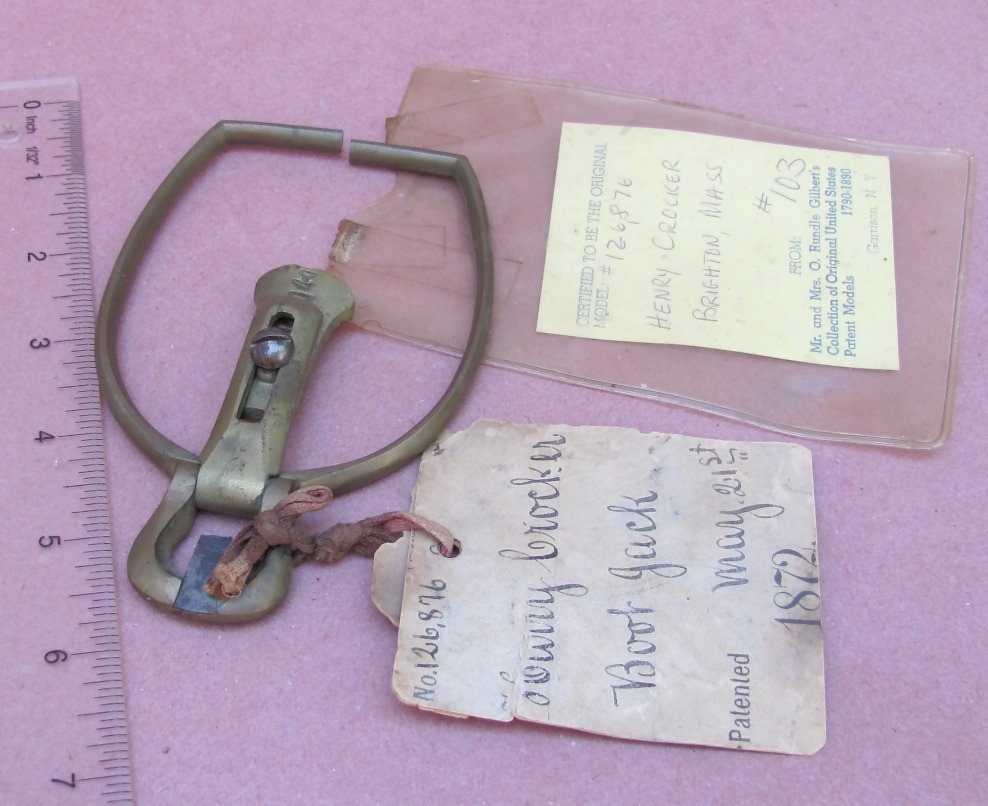 1872 Patent
Model Boot Jack
Different!
1872 Patent
Model Boot Jack
Different! Good . . . . . .$125.00 SOLD!!
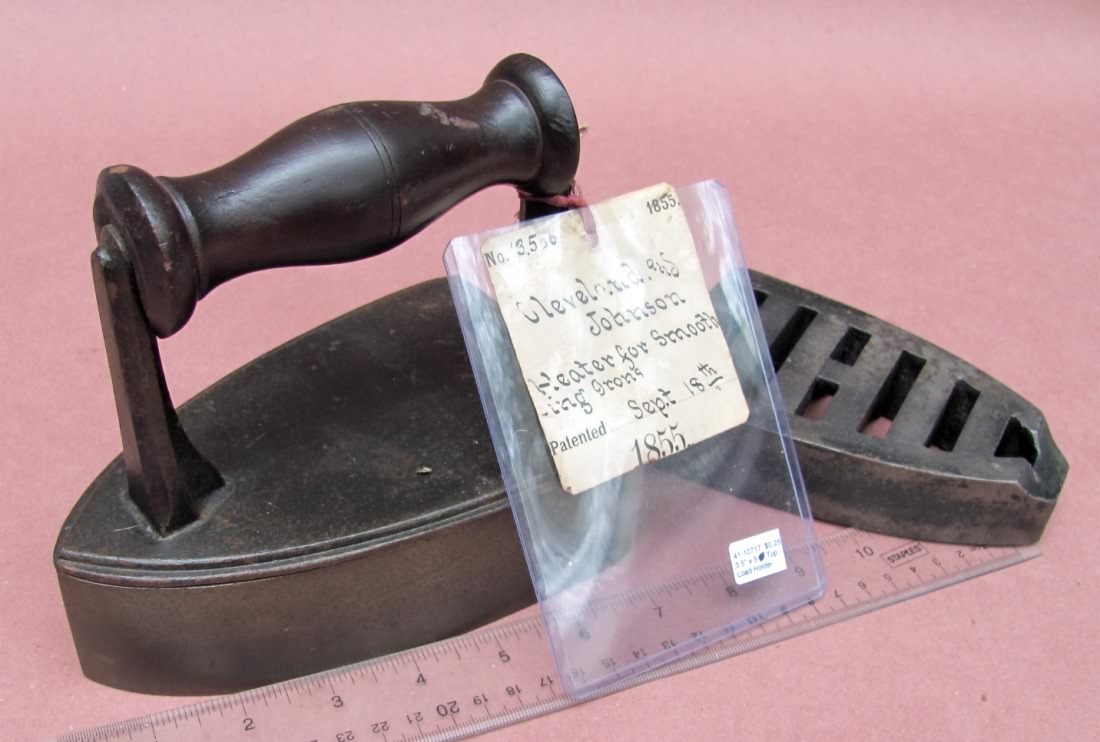 1855
Cleveland & Johnson Patent Model for Sad Iron Heater It
appears the patent is for the slug with numerous holes in it that
fits inside the iron to help with heat flow. This is the only
example I have ever seen and do not think it made it into widespread
production. Super condition.
1855
Cleveland & Johnson Patent Model for Sad Iron Heater It
appears the patent is for the slug with numerous holes in it that
fits inside the iron to help with heat flow. This is the only
example I have ever seen and do not think it made it into widespread
production. Super condition.
Good +. . . . .$3495.00 SOLD
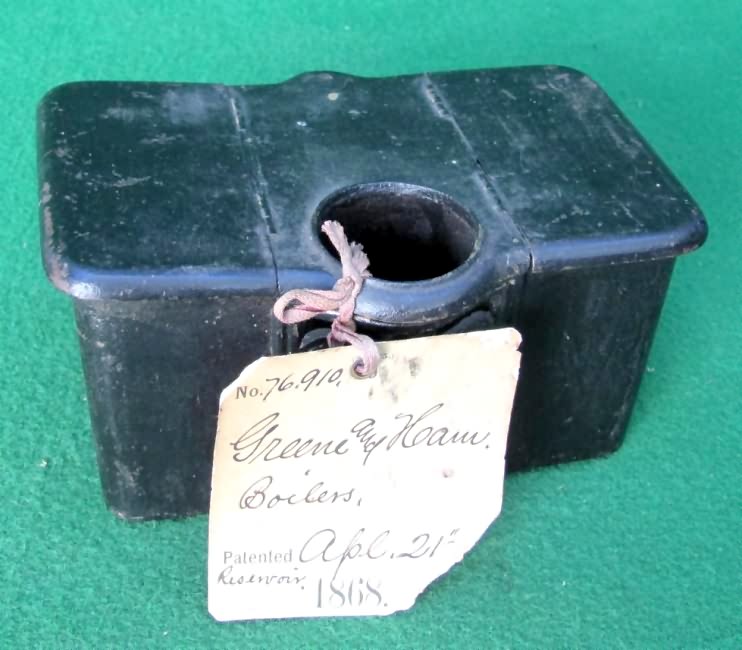 1868
Patent Model of Boiler / Water Tank
This patent model has its original tag. It looks like the water tank form a
Charter Oak 503 salesman sample stove meaning that it would hook onto or be
a part of a wood fired stove and would produce hot water at the same time.
1868
Patent Model of Boiler / Water Tank
This patent model has its original tag. It looks like the water tank form a
Charter Oak 503 salesman sample stove meaning that it would hook onto or be
a part of a wood fired stove and would produce hot water at the same time.
This patent model is approx 10" wide x 6" tall. This model is a good match to the patent which can be viewed using Google Patent Search
This patent model water boiler / storage tank will display nicely, and the condition is excellent!! Nice!!
Excellent. . . . . .$325.00 SOLD!
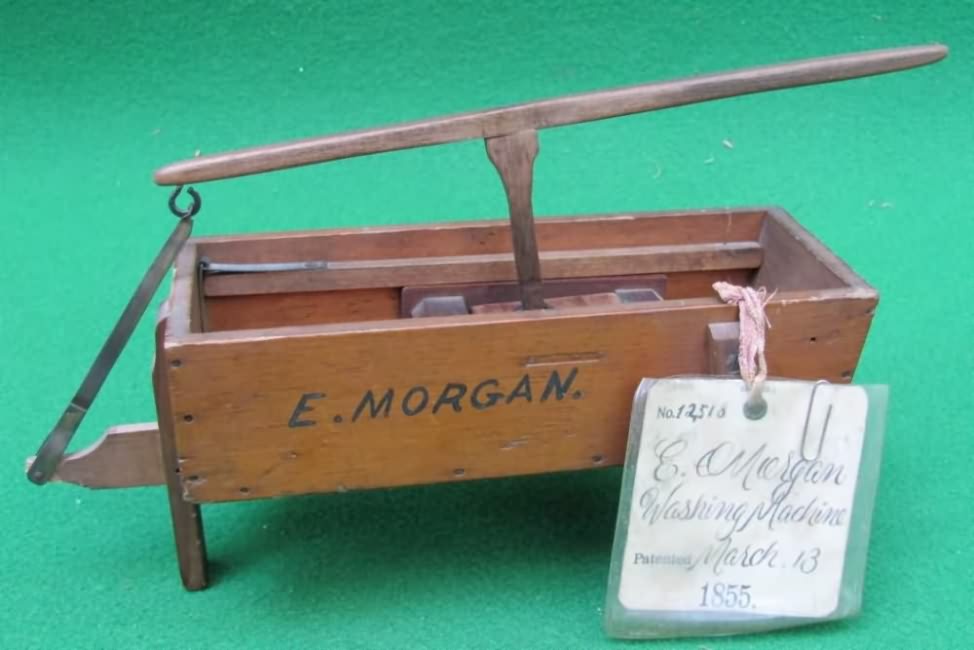 1855
Washing Machine Patent Model
This washing machine patent model is a push / pull / rubber / scrubber design
and has its original tag. It originates from the Glissman Iron
Collection who were buying models from Cliff Peterson who lived nearby them
back in the 70's / 80's.
1855
Washing Machine Patent Model
This washing machine patent model is a push / pull / rubber / scrubber design
and has its original tag. It originates from the Glissman Iron
Collection who were buying models from Cliff Peterson who lived nearby them
back in the 70's / 80's. The patent was issued on March 13th 1855 to E. Morgan. This patent model is approx 6" tall x 11" long and in very nice condition. The patent number is 12518 and this model is a pretty good match to the patent drawing which can be viewed using Google Patents search with the number 12518.
This Patent Model Washer is an interesting design and was cutting edge technology for the time. The inventor put a lot of thought into the workings and features. A lot of later washers use the same basic ideas and action. Basically it takes the idea of a standard washboard, enlarges it, lays it down in a tub, and then mechanizes it. It is basically a wash tub with one built in washboard that can be raised or lowered inside the tub, and a second smaller washboard / rubber with a handle that you use to scrub the dirt away. The condition is excellent!! An nice one!!
Excellent. . . . . .$675.00 SOLD!
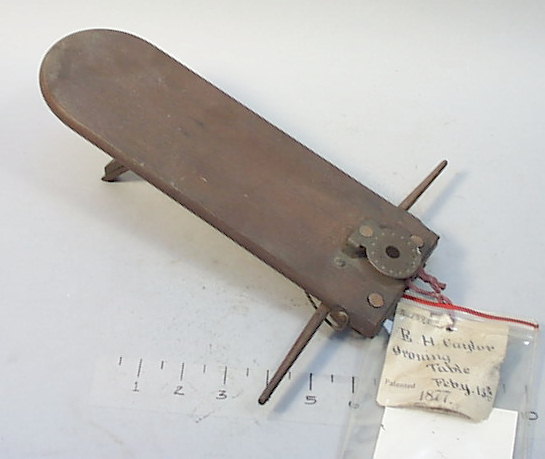 1877
Patent Model Ironing Board This
was designed to clamp onto an existing table or cabinet. It
had little swing out drying racks, and a built in trivet. What
would one think of next? Super condition.
1877
Patent Model Ironing Board This
was designed to clamp onto an existing table or cabinet. It
had little swing out drying racks, and a built in trivet. What
would one think of next? Super condition.
Good +. . . . .$175.00 SOLD
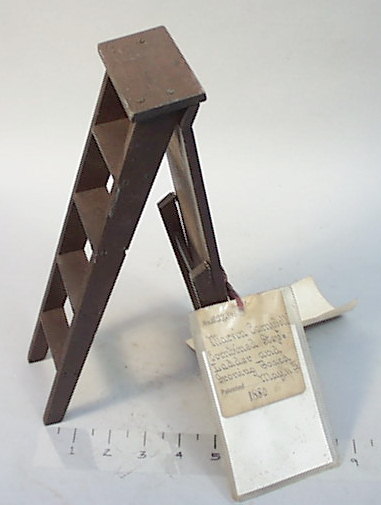 1880
Patent Model Ironing Board / Ladder There
were numerous patent for this combination of an ironing board and
ladder. From a time when both were a necessity and space was
at a premium. Super condition.
1880
Patent Model Ironing Board / Ladder There
were numerous patent for this combination of an ironing board and
ladder. From a time when both were a necessity and space was
at a premium. Super condition.
Good +. . . . .$325.00 SOLD
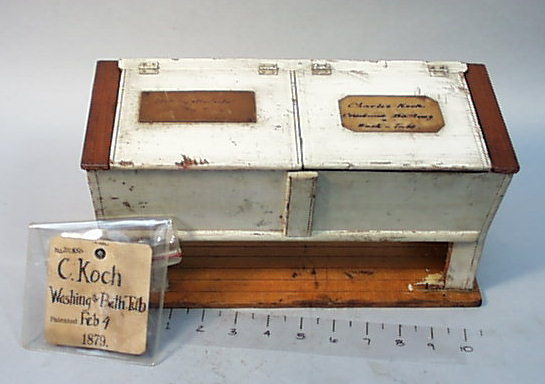 1879
Patent Model Combination Washing Machine / Bath Tub This
idea was presented by a fellow named Kock from NY. The patent
request claims it was to be used in tenements where there was
limited space and a need for both clothes cleanliness and personal
hygiene needs.
1879
Patent Model Combination Washing Machine / Bath Tub This
idea was presented by a fellow named Kock from NY. The patent
request claims it was to be used in tenements where there was
limited space and a need for both clothes cleanliness and personal
hygiene needs.
Good +. . . . .$450.00 SOLD
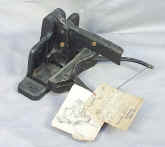 Patent Model of Tire Upsetter I
believe this was for wooden wheels to help in removing the wire rim,
not anything to do with rubber tires as we know them.
Patent Model of Tire Upsetter I
believe this was for wooden wheels to help in removing the wire rim,
not anything to do with rubber tires as we know them. Good . . . . .$295.00 SOLD
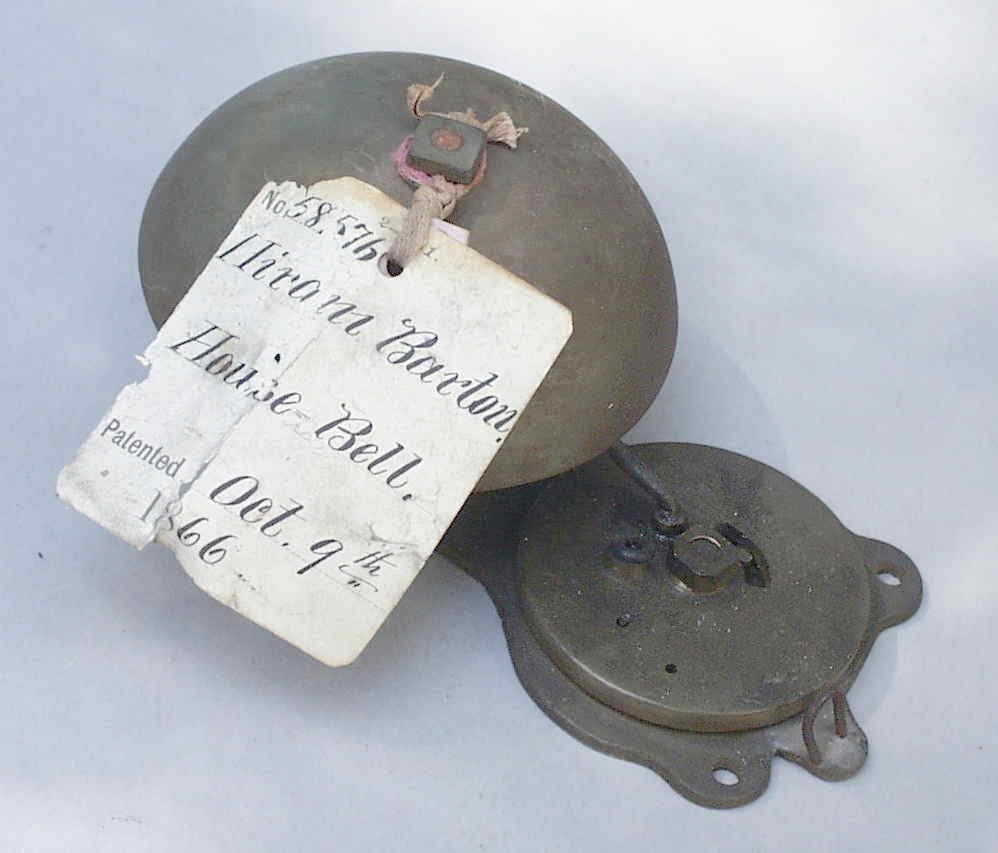 October
9th 1866 Patent Model House Bell This
is an interesting patent model.
October
9th 1866 Patent Model House Bell This
is an interesting patent model.
Good . . . . . SOLD
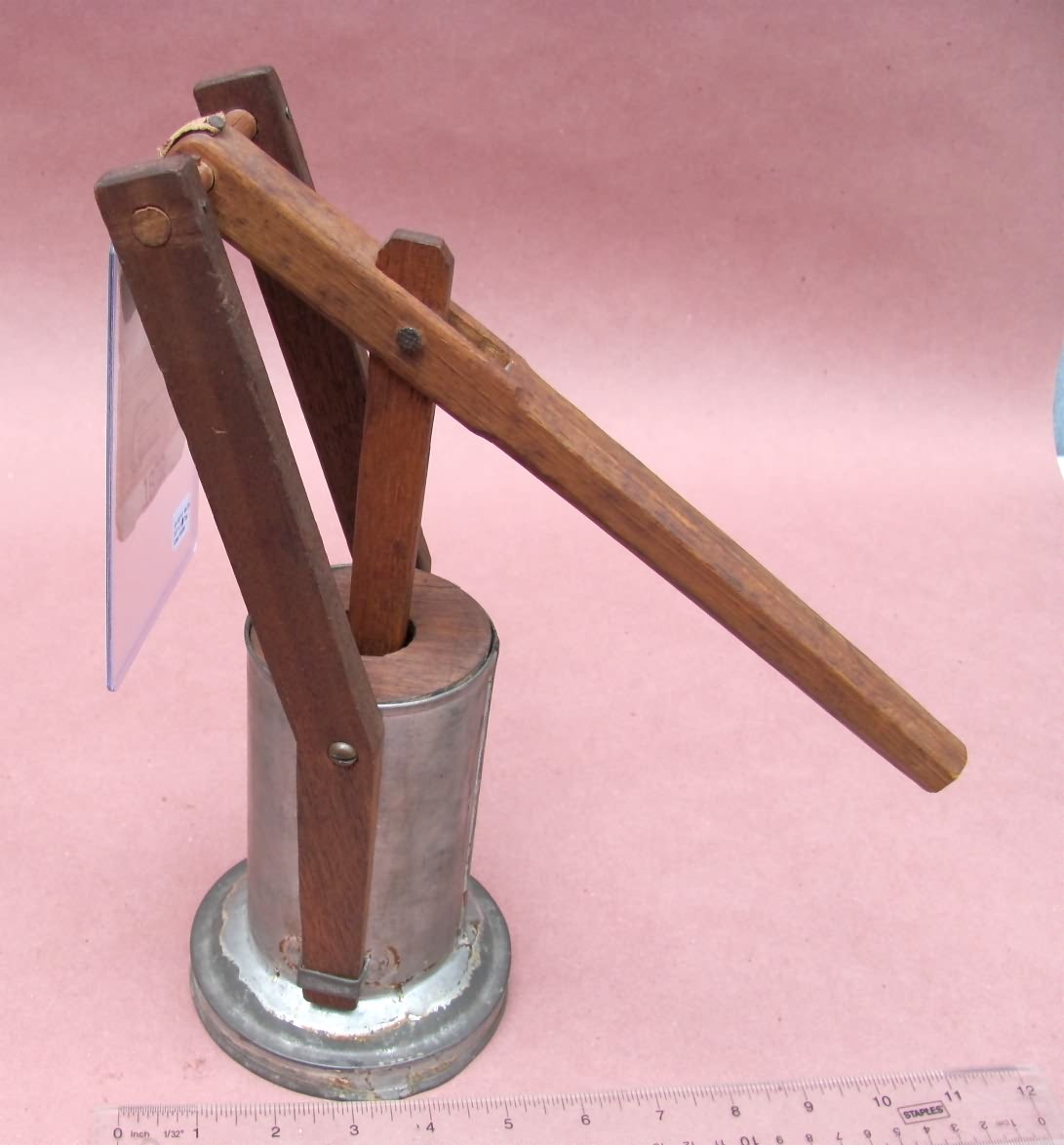 1879
Washing Machine Patent Model
This washing machine patent model is a lever operated plunger type and has its original tag.
The patent was issued on January 7th 9th 1879 to
Robert Ward and Robert Rogers of Arkansas. This patent model is
approx 10" tall x 4"
or so wide at the widest point. The patent number is 211198 and this model is a good match to the patent
drawing which can be viewed
using Google Patents search with the number 211198.
1879
Washing Machine Patent Model
This washing machine patent model is a lever operated plunger type and has its original tag.
The patent was issued on January 7th 9th 1879 to
Robert Ward and Robert Rogers of Arkansas. This patent model is
approx 10" tall x 4"
or so wide at the widest point. The patent number is 211198 and this model is a good match to the patent
drawing which can be viewed
using Google Patents search with the number 211198.The patent text claims that the clothes are washed when the suction created by pumping the handle up and down forces the water through the clothes and delivers a superior result compared to those other washers that rely upon rubbing or other agitators which wear out the clothes to boot. Although I have seen hundreds of different style plunger type washers, with all sorts of different gizmos to help with the action down there, I have never seen a full size version of this one. Different!!
The condition is excellent!!
Excellent. . . . . . $395.00 SOLD!!
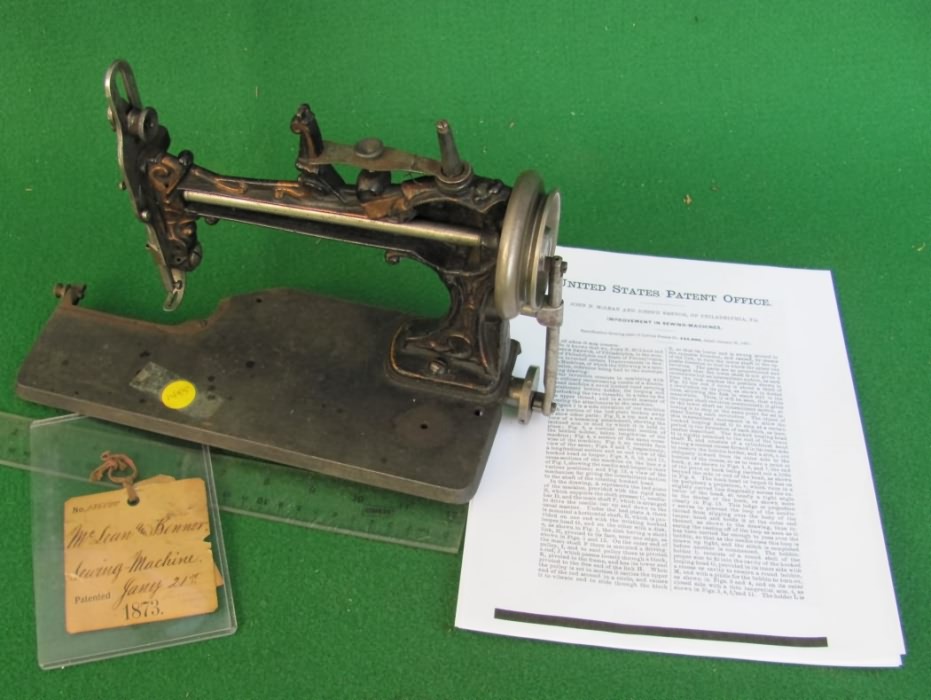 McLean & Bennor 1873 Patent Model Sewing Machine The
patent for this unusual machine was granted on January 21 1873. The
patent number is 135,000. It comes up with a Google search. I
have never seen or had a sewing machine produced by this partnership. The
partnership between McLean & Bennor lasted just 3 years from 1873 -
1876.
McLean & Bennor 1873 Patent Model Sewing Machine The
patent for this unusual machine was granted on January 21 1873. The
patent number is 135,000. It comes up with a Google search. I
have never seen or had a sewing machine produced by this partnership. The
partnership between McLean & Bennor lasted just 3 years from 1873 -
1876.This sewing machine is similar looking to a McLean & Hopper sewing machine who was also McLean's partner during the same period.What the relationship between the three was is unknown. There is info to be found on the internet and at the Smithsonian site about them and the parent company The Centennial Sewing Machine Co. The last listing for that company was also 1876.
The patent mentions the machine bed being "broken away" to better show the working parts. That has been done. Problem is some of those parts below the bed are missing. Most notably the bobbin case and hook assembly which is described in the patent. Different and nice!!
Good . . . . . . . $1250.00 SOLD!!
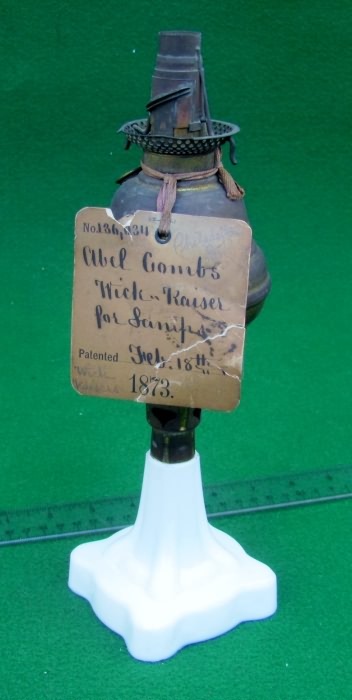 1873
Patent Model of Wick Raiser for Oil Lamp Abel
Combs was granted a patent for his wick raising idea for oil lamps on
February 18th 1873 .
The patent number is 136034. It is viewable on Google and is a close
match.
He had at least one other patent granted in 1885 related to lamps and wicks as well.
He resided in Philadelphia PA.
1873
Patent Model of Wick Raiser for Oil Lamp Abel
Combs was granted a patent for his wick raising idea for oil lamps on
February 18th 1873 .
The patent number is 136034. It is viewable on Google and is a close
match.
He had at least one other patent granted in 1885 related to lamps and wicks as well.
He resided in Philadelphia PA.The patent describes the means by which the wick is raised. Not being a lamp person it is hard for me to describe and looking at the top wick area I can not tell exactly how it would work. The model looks great though and is a complete lamp on a nice milk glass base that is chip or damage free. It has a great looking circular brass body that is dent or damage free. It has its original tag and ribbon. The overall condition is nice. An interesting & unusual display piece!!
Very Good . . . . . . $995.00 SOLD!!
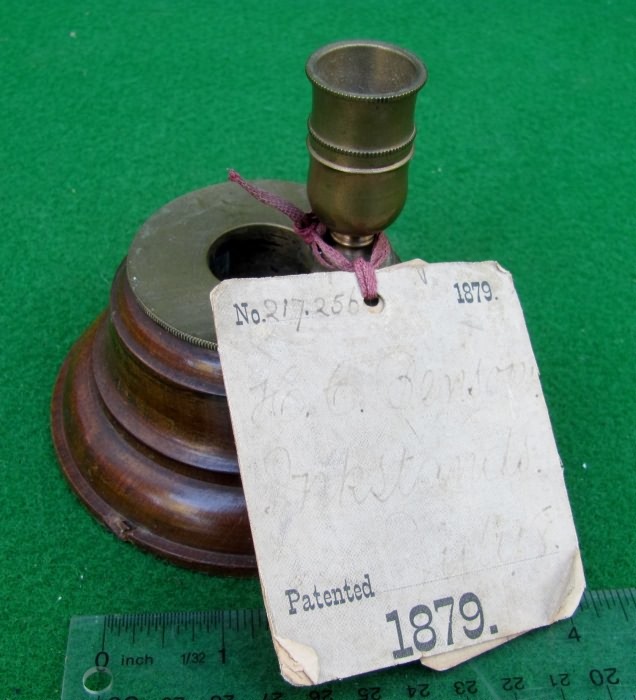 1879
Benson Patent Model of Inkstand / Inkwell The
patent was granted on July 8th 1879 to Henry Benson of NY.
The patent number is 217256. It is viewable on Google with a bit of
work. The idea
here was that the user would fill the upper brass container with dried
material, the coloring agent used to create ink, and after pouring water or
other suitable material into the top hopper / container, ink would be
created and flow down into
the lower bowl to be used. It is interesting to note that the patent
was assigned to Joseph Reckendorfer who is famous for being the first to
develop a pencil w/ eraser on it.
1879
Benson Patent Model of Inkstand / Inkwell The
patent was granted on July 8th 1879 to Henry Benson of NY.
The patent number is 217256. It is viewable on Google with a bit of
work. The idea
here was that the user would fill the upper brass container with dried
material, the coloring agent used to create ink, and after pouring water or
other suitable material into the top hopper / container, ink would be
created and flow down into
the lower bowl to be used. It is interesting to note that the patent
was assigned to Joseph Reckendorfer who is famous for being the first to
develop a pencil w/ eraser on it. This patent model is nicely constructed with finished wood base, and brass cup and plate on the top.. It has its original tag that is quite faded. The overall condition is nice. An interesting & unusual display piece!!
Very Good . . . . . . $395.00 SOLD!!
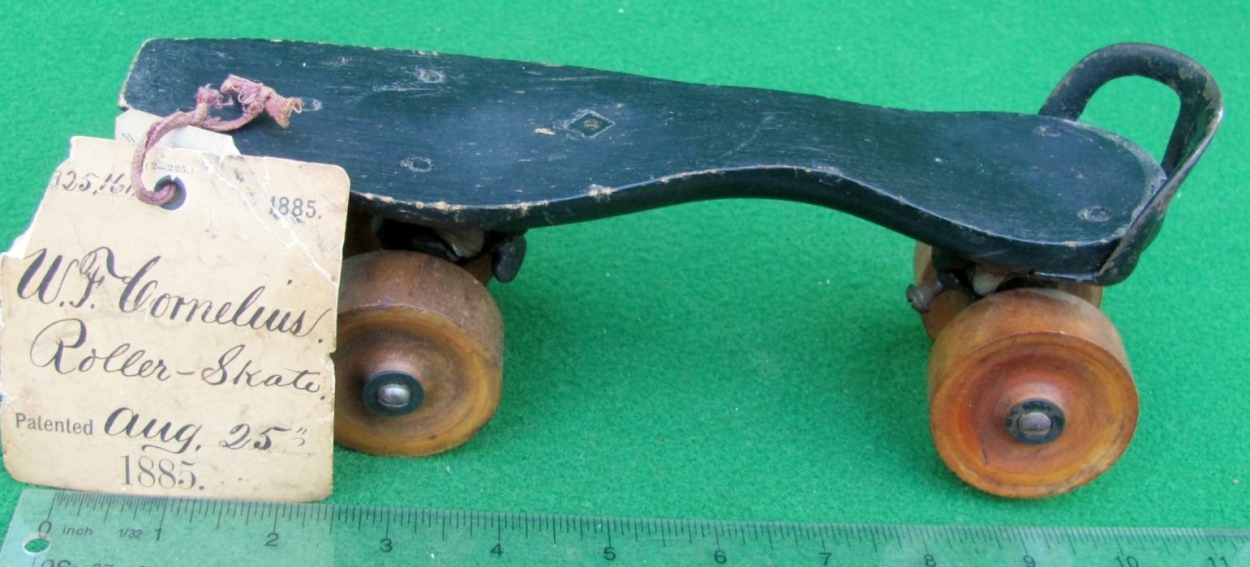 1885 Patent Model of
Roller Skate by W. F. Cornelius The
patent for this roller skate was granted on August 25 1885.
The patent number is 325161. It is viewable on Google and is a close
match. Wilber Cornelius held more than one patent for roller skates
and had a different one issued or granted just one week prior to this one.
He had at least one other as well.
He resided in Muncie Indiana.
1885 Patent Model of
Roller Skate by W. F. Cornelius The
patent for this roller skate was granted on August 25 1885.
The patent number is 325161. It is viewable on Google and is a close
match. Wilber Cornelius held more than one patent for roller skates
and had a different one issued or granted just one week prior to this one.
He had at least one other as well.
He resided in Muncie Indiana.The patent describes the wheels, axels, and how they are operable, adjustable, and flexible. His ideas were cutting edge and the design looks similar to those on modern day roller skates and skateboards. In reading the patent one sees that later designers often referred to his patents when seeking their own.
This patent model is nicely constructed with wood platform, and hardwood wheels attached to multi piece adjustable steel brackets. It has its original tags. The overall condition is nice. An interesting & unusual display piece!!
Very Good . . . . . . $495.00 SOLD!!
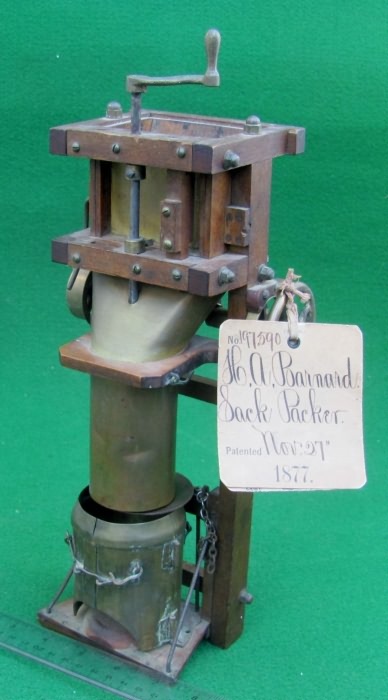 1877
Sack Packer Patent Model by Herman Barnard of Moline Illinois The
patent was granted on November 27th 1877.
The patent number is 197590. It is viewable on Google. Herman
Barnard hailed from Moline Illinois and was a founding partner of Barnard &
Leas Mfg. Co. who he assigned this patent to. Barnard & Leas Mfg. Co. was a
well known manufacturer of farm and corn related tools and products including things
like corn shellers and the like. There is a nice Bio on Barnard and the company
online at
an Illinois
ancestry site.
1877
Sack Packer Patent Model by Herman Barnard of Moline Illinois The
patent was granted on November 27th 1877.
The patent number is 197590. It is viewable on Google. Herman
Barnard hailed from Moline Illinois and was a founding partner of Barnard &
Leas Mfg. Co. who he assigned this patent to. Barnard & Leas Mfg. Co. was a
well known manufacturer of farm and corn related tools and products including things
like corn shellers and the like. There is a nice Bio on Barnard and the company
online at
an Illinois
ancestry site. The patent model is very mechanical and nicely constructed. It stands just about 12" tall. The overall condition is nice noting the chains to lift the upper hopper are disconnected or missing. Most everything else seems to be right. Interesting & unusual!!
Very Good . . . . . . $700.00 SOLD!!
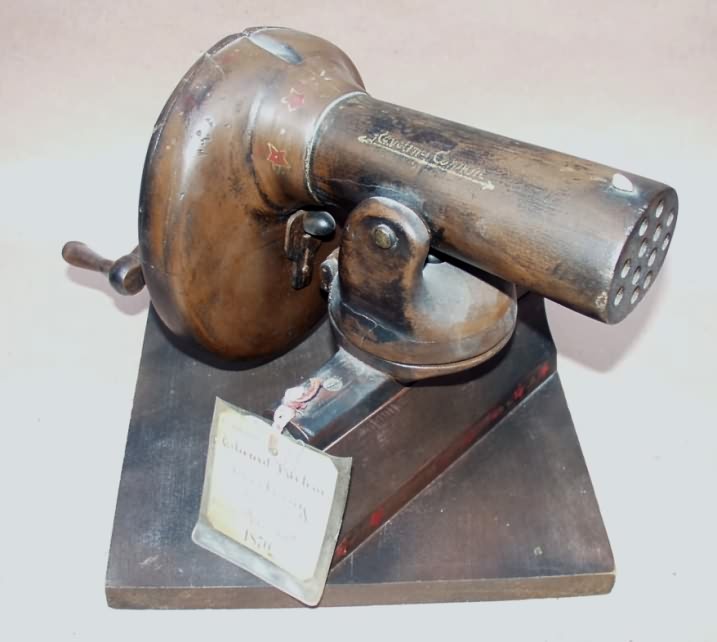 1870
Patent Model of Revolving Cannon This 1870 Patent Model of Revolving Cannon is a very unique and early
ordinance related patent model. This
is not a toy, it is the actual model presented to the US patent Office for a
patent in 1870. The patent was granted on December 20th 1870. This Patent Model of
a Revolving Cannon is a unique and early
ordinance related patent model. Patent models of ordinance or
firearms are very rare and seldom come on the market. The Patent number is
110,194 and the inventors name was Eduard Brehm of Jersey City NJ. A
Google search brings it up, and it is a good match.
1870
Patent Model of Revolving Cannon This 1870 Patent Model of Revolving Cannon is a very unique and early
ordinance related patent model. This
is not a toy, it is the actual model presented to the US patent Office for a
patent in 1870. The patent was granted on December 20th 1870. This Patent Model of
a Revolving Cannon is a unique and early
ordinance related patent model. Patent models of ordinance or
firearms are very rare and seldom come on the market. The Patent number is
110,194 and the inventors name was Eduard Brehm of Jersey City NJ. A
Google search brings it up, and it is a good match.The patentee calls his invention a revolving cannon as the term machine gun or Gatling gun were not yet in common use. This patent model is made almost entirely of wood. Note the decoration and title "Revolving Cannon" on the wooden barrel. Also note the small worm drives Brehm designed to adjust the elevation and to move the gun or cannon left to right. The firing operation and type of ammunition is described in detail in the patent papers but the model does not open too inspect those mechanisms or their design. When the rear crank is turned it makes a clacking sound like a noise maker. A unique piece of Americana that will display well in a number of themed collections.
Very Good . . . . . . $2050.00 SOLD!!
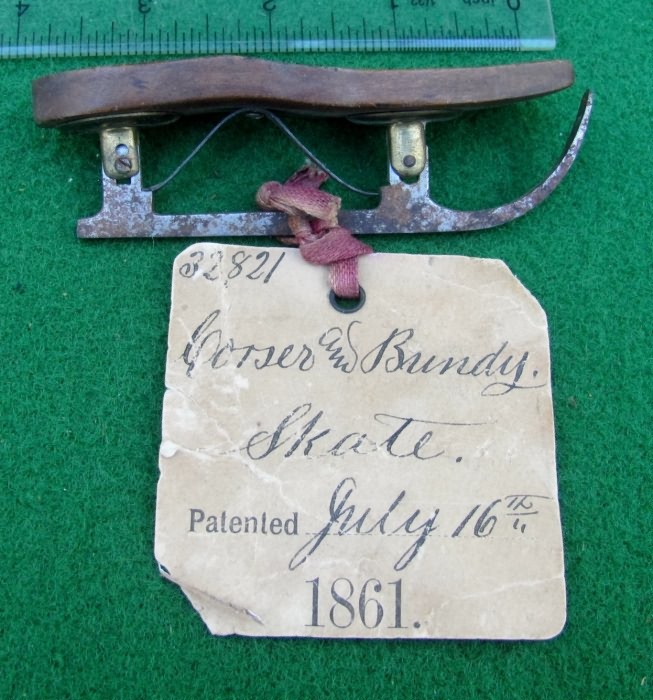 Corser
& Bundy 1861 Patent Model of Ice Skate The
patent was granted on July 16th 1861.
The patent number is 32821. It is viewable on Google. Corser &
Bundy hailed from Clappville Mass.
Corser
& Bundy 1861 Patent Model of Ice Skate The
patent was granted on July 16th 1861.
The patent number is 32821. It is viewable on Google. Corser &
Bundy hailed from Clappville Mass.This small patent model is nicely constructed. It has its original tag. The idea for the patent is that the runners are spring loaded and lockable in either a fixed position, or the spring loaded mode. The idea being that it would be changed as the smoothness of the ice changed. The patent reads that the inventors understand that spring loaded runners are not a new idea, but that they way they have set it up here is. That was enough to be granted a patent. The overall condition is nice. An interesting & unusual display piece!!
Very Good . . . . . . $495.00 SOLD!!
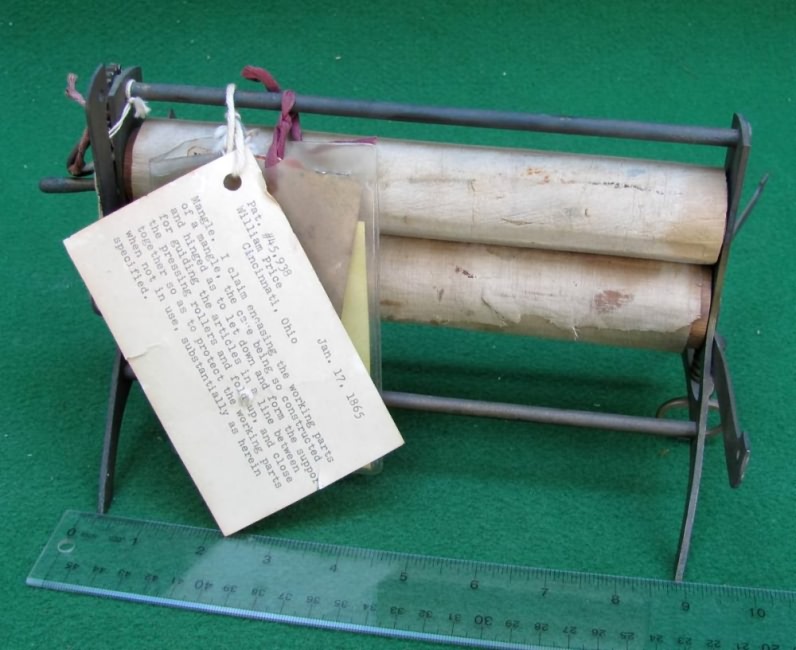 1865
Patent Model of Mangle William Price of
Cincinnati Ohio was granted a patent for this clothes mangle / washer on
January 17th 1865. This model came from the Mr. & Mrs. O. Rundell
Gilbert collection and has those tags as well as the original Patent Office
tag. The fabric on the rollers is beginning to come loose.
The idea revolved around the folding design making it easier to operate and
care for both the clothes and the machine when not in use. A nice
display piece that dates from the Civil War era of American History.
1865
Patent Model of Mangle William Price of
Cincinnati Ohio was granted a patent for this clothes mangle / washer on
January 17th 1865. This model came from the Mr. & Mrs. O. Rundell
Gilbert collection and has those tags as well as the original Patent Office
tag. The fabric on the rollers is beginning to come loose.
The idea revolved around the folding design making it easier to operate and
care for both the clothes and the machine when not in use. A nice
display piece that dates from the Civil War era of American History.
Good . . . . . . $150.00 SOLD!!
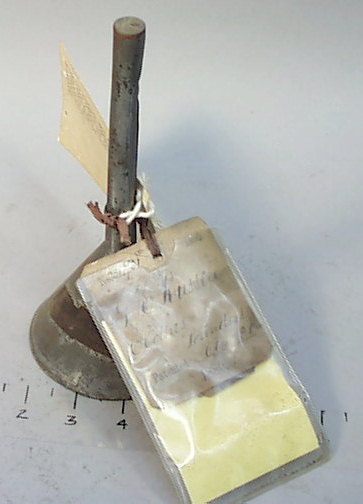 Patent
Model Plunger Washer
Patent
Model Plunger Washer
Good . . . . . $195.00 SOLD
1848 Patent Model of Cook Stove by D. Buck I'm not sure if this super and interesting patent model is by anyone having anything to do with the current line of Buck Stoves, but this fellow sure was proud of his name, and embellished and decorated every available panel with scenes of a large deer in the forest. These are not just painted on the surface, they are 3-dimensional. I never pulled the patent, but he has vents and chambers and even a cold air intake on the bottom. In addition to the original tag and red ribbon, the top of the stove is clearly marked "D. Buck's Patent". Overall it measures just under 12" deep by 8" wide and 6 1/2" tall. It is made out of tinned steel with the exterior painted black. The hinged doors and vents are present and operable, and as with many patent models, Mr. Buck didn't bother with the top plates to give you a better and unobstructed view of the inner workings. This is a great example of a one-of-a-kind patent model and a super piece of Americana to boot. It has the added plus of name recognition in today's world, and the artistic endeavors by Mr. Buck are an added bonus rarely seen on such models.
Good . . . . . SOLD
1876 Patent Model of Burglar Door Alarm and Locking Mechanism Here is a super one of a kind original Patent Model of a Burglar Alarm & Door Lock Mechanism dating from 1876 which is just incredible. It measures approx. 12 " tall by 10" wide and is made of a stained wood to resemble a walnut or mahogany. Its provenance is that it is from the O. Rundle Gilbert Collection, and was sold at the Christies Auction a few years ago. It has its original patent office receiving tag and red ribbon, along with a green one from Mr. Gilbert's inventory. There are remnants of another tag nailed on the model, but most of this one is gone. The idea from looking at and playing with it a bit is that once you had set it, if someone were to later jiggle or try and force the handle in either direction the bell would sound, and at the same time lock the door. It would do this if the handle was turned in either direction. The dome for the bell is not present, but that is proper as it would not be needed and would interfere with viewing of the operation of the model. I have seen a couple of really great patent models passed over because the perspective buyer did not feel it was complete, when in actuality it was made that way and submitted like that, to better demonstrate the model. This is an interesting and desirable piece of Early American History, and as I said in the beginning it is a one of a kind, so when this one is gone, there will not be another.
Good . . . . . SOLD
Sept. 3 1867 Patent Model of Oil Dispenser / Can This is an interesting patent model of the type of Oil Dispenser / Can that you occasionally see full-size at old time auctions, or in petroliana museums or collections. You will never have the opportunity to find another one this size with its original patent tags as this is the only one there is. These Patent Models are far rarer than they may seem, and when the small supply that are presently around are gone, there will be no more. These wonderful pieces of Americana are one-of-a-kinds and each one has a story to tell, and should have a place high up on the shelf in your collection or museum. This super piece measures just under 12" tall by about 8" across. It is in super condition, noting the one small dent in the of the name G. H. Hatch, who was from Pomeroy, Ohio. The pump was made to work, and is complete with stop valves, gaskets, and the rest. Oftentimes you see a model of a piece of which you have never seen the actual full-size item, but that is not the case here, and hopefully Mr. Hatch made a lot of money with his idea.
Good . . . . .$995.00 SOLD
Antique
Salesman Samples & Toys
The
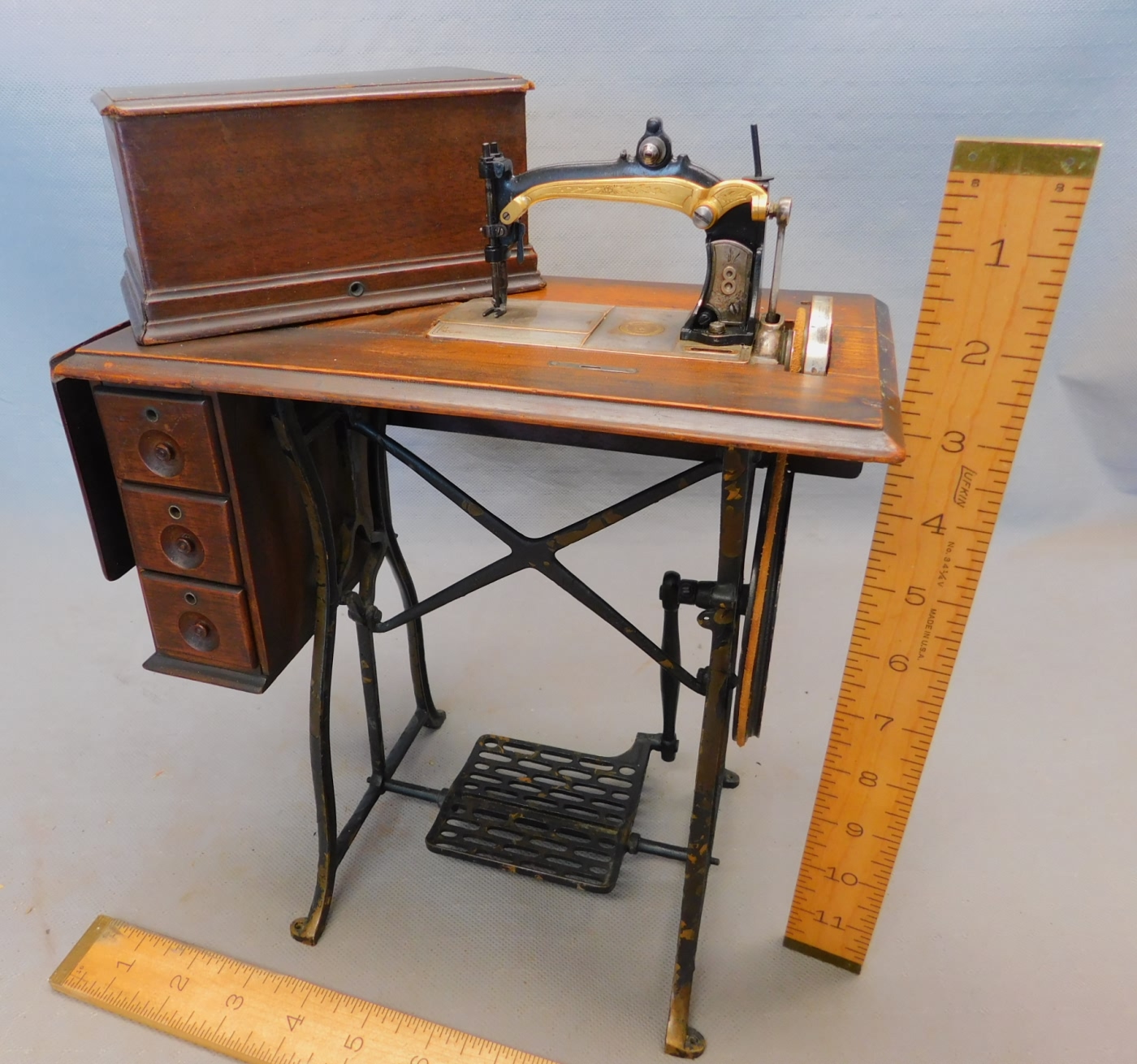 Miniature
Wheeler & Wilson No. 8 Sewing Machine c. 1876 Display Model / Salesman Sample / Patent Model
This is the real deal. This genuine miniature Salesman sample sewing machine is very graphic and looks great.
I have been at this going on 40 years now and use to specialize in toy and child size sewing machines, as well as patent models of
sewing machines. In all that time I have never seen or heard of another example of this special little sewing machine.
The machine looks like a dressed up exact miniature copy of the Wheeler & Wilson No.8 sewing machine that was first
introduced in 1876. One would think if it was a typical salesman sample or display model
for retail shops that others would be known. None are.
I do not use the term rare
often, but this tiny salesman sample Wheeler & Wilson # 8 sewing machine fits the bill.
Miniature
Wheeler & Wilson No. 8 Sewing Machine c. 1876 Display Model / Salesman Sample / Patent Model
This is the real deal. This genuine miniature Salesman sample sewing machine is very graphic and looks great.
I have been at this going on 40 years now and use to specialize in toy and child size sewing machines, as well as patent models of
sewing machines. In all that time I have never seen or heard of another example of this special little sewing machine.
The machine looks like a dressed up exact miniature copy of the Wheeler & Wilson No.8 sewing machine that was first
introduced in 1876. One would think if it was a typical salesman sample or display model
for retail shops that others would be known. None are.
I do not use the term rare
often, but this tiny salesman sample Wheeler & Wilson # 8 sewing machine fits the bill.
After having discussed it with a few other knowledgeable folks I will tell you what I think. Given the size, with no dimension much over 12", it could be a patent model. The patent could be for something like the wood folding table extensions on two sides of the top, an unusual feature in its own right. Or it could be for something having to do with the treadle base. Either are possibilities, but do not explain the sewing machine, and its details, or lack of them.
Another possibility is that it is a patent model of the sewing machine itself. That it is a one of kind, as patent models were, and no others are out and about would help that argument. Also, it is very close to the right size with no dimension much over 12". One could make arguments for or against that idea, but that does not seem quite right given the construction details of the machine, and other factors.
One would also think if it was a typical salesman sample it would be larger and designed to actually work. Meaning that while the table folds as it should, and the treadle works as it should, and the moving parts of the machine move and it seems to be working when operated, the fact is that there are no moving parts under the machine involved with the needle, or provisions for actually making a stitch. Speaking of the mechanism, it works and is a bit sticky. It operates OK when off the base being held and using ones thumb to help move the "drum", but when trying to operate it from the flywheel it tends to hang up in one spot. If one pushes through that spot the flywheel can begin to free spin, (there is no keyway, or lock for it to the shaft), just the nut holding it on. The small nut holding it tight is almost stripped if not so. While made to work, and all the associated parts do move as they should, the actual operation is spotty at best.
I believe it is a limited production promotional / sample / display model made by Wheeler & Wilson of the "New" No. 8 Wheeler & Wilson sewing machine, to be displayed or exhibited at events like the 1876 Centennial Expos, Worlds Fairs, or Trade Shows during the centennial celebrations. The No. 8 Wheeler & Wilson was introduced in 1876 and that time frame would fit this idea. That would also explain the relative scarcity of no others known. Wheeler and Wilson would only need one, two or a few, for events like that. I should note it carries a brass inscribed Wheeler & Wilson logo plaque inset in the base plate.(see pics)
Another aspect or consideration is the construction of the machine and choice of materials and finish. The body has an unusual silver plated like finish. The main cross arm is decorated and polished brass. These cosmetic embellishments would lend weight to the Expo display idea. Such fine finish attributes would certainly grab one's attention as the crowds strolled by the Wheeler & Wilson display booth.
This miniature sewing machine is a wonderful and historically important piece. An opportunity not likely to repeat itself.
Good + . . . . . $00
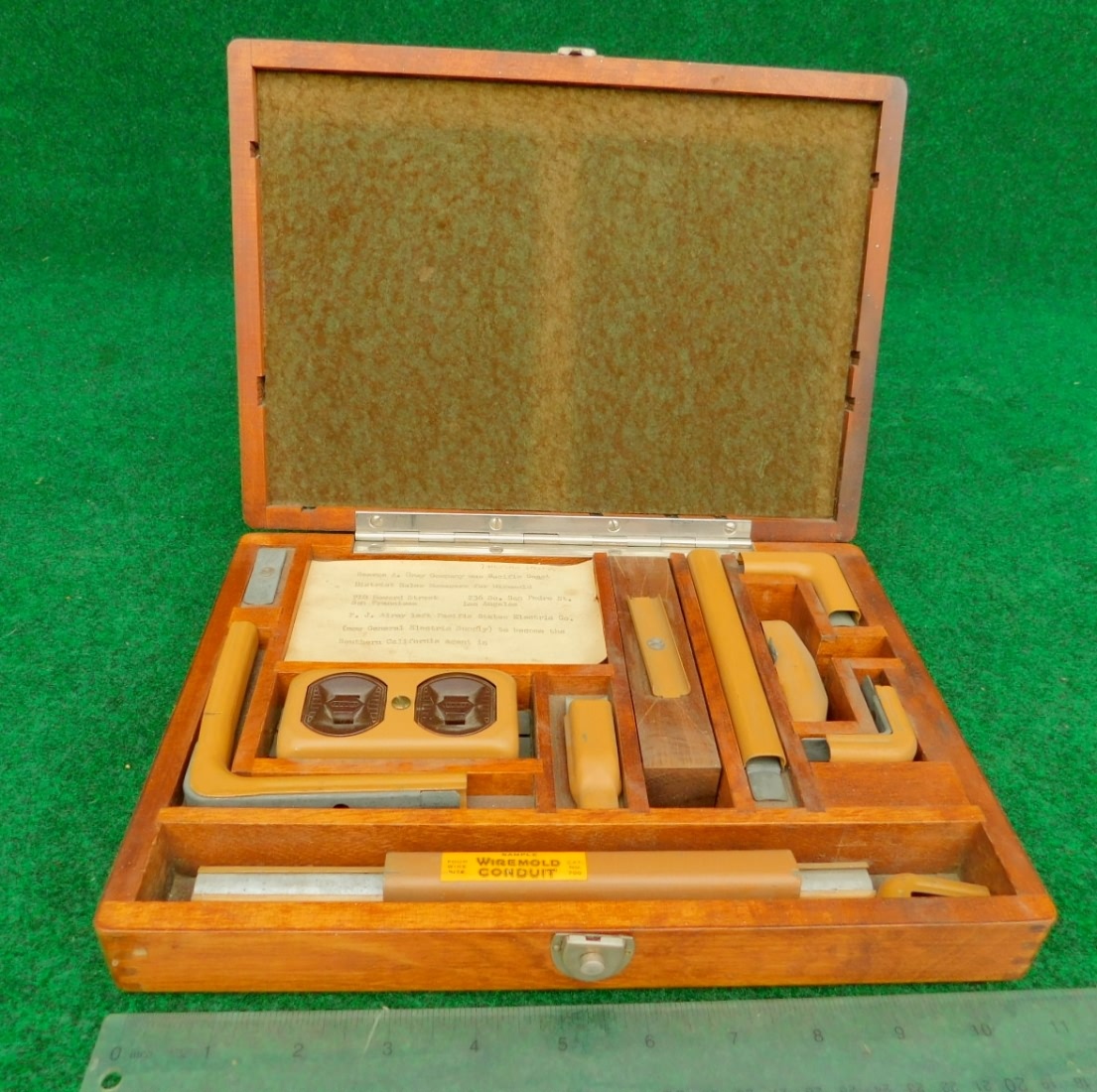 Wiremold
Electric Wire Conduit Salesman Sample
After electricity was introduced for the everyday homeowner a way needed to
be found to safely get it and its wires to different rooms. The Wiremold Co. is still offering
versions of their product for remodels today. This set looks to date from the
1920s - 30s or so.
Neat!!
Wiremold
Electric Wire Conduit Salesman Sample
After electricity was introduced for the everyday homeowner a way needed to
be found to safely get it and its wires to different rooms. The Wiremold Co. is still offering
versions of their product for remodels today. This set looks to date from the
1920s - 30s or so.
Neat!! Fine. . . . . $75.00 SOLD!!
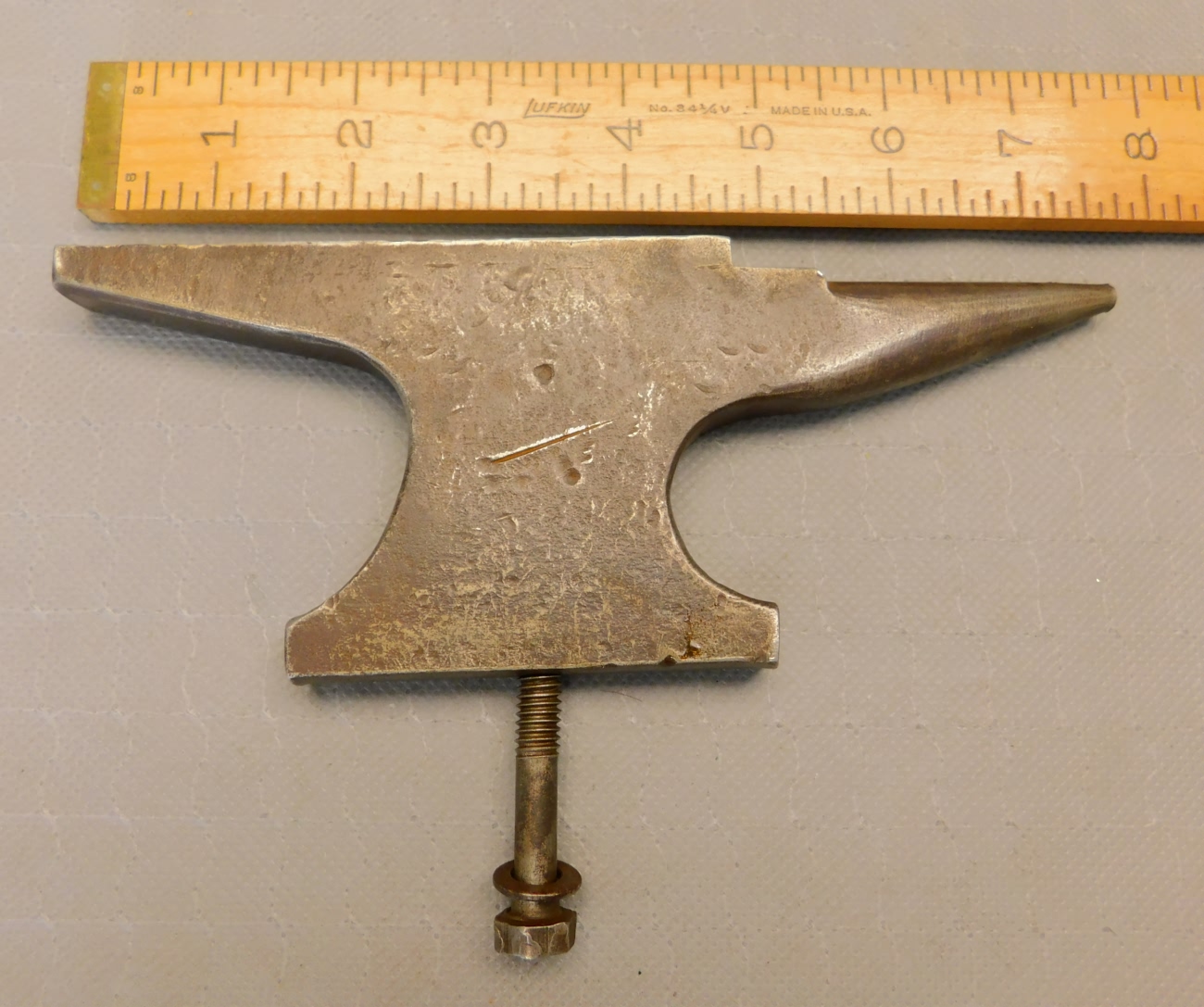 Small
Antique Tinsmiths / Gunsmith, Silversmith, Jewelers Anvil
I have not seen or had this small anvil before and do not know what its intended use is for. It has real
age and has seen some use. It is unmarked as far as maker or other info.
Small
Antique Tinsmiths / Gunsmith, Silversmith, Jewelers Anvil
I have not seen or had this small anvil before and do not know what its intended use is for. It has real
age and has seen some use. It is unmarked as far as maker or other info.Note it is only 9/16" or so wide and approx. 8" long. The bottom where the threaded bolt is has a slight curve to it, indicating something, as it is not flat as one would think. Different, unusual and pretty nice.
Good + . . . . . . $80.00 SOLD!!
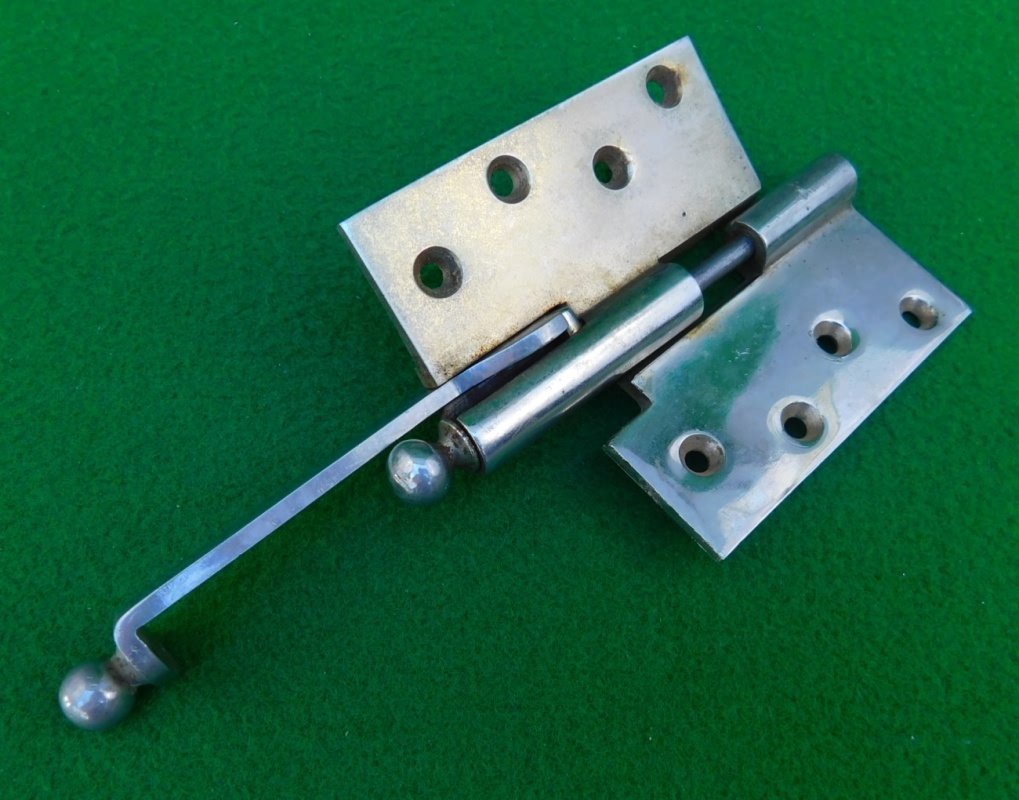 Patented
1898 Salesman Sample Door Hinge A different idea that was no doubt way to expensive
to compete in the marketplace of cheap hinges. Instead of having to punch the pins up to get a door out of the opening here you would swing the
top ball down and a cam would lift the door for you. Simple, elegant and
no doubt way to expensive to produce.
Patented
1898 Salesman Sample Door Hinge A different idea that was no doubt way to expensive
to compete in the marketplace of cheap hinges. Instead of having to punch the pins up to get a door out of the opening here you would swing the
top ball down and a cam would lift the door for you. Simple, elegant and
no doubt way to expensive to produce.Good + . . . . . $18.00 SOLD!!
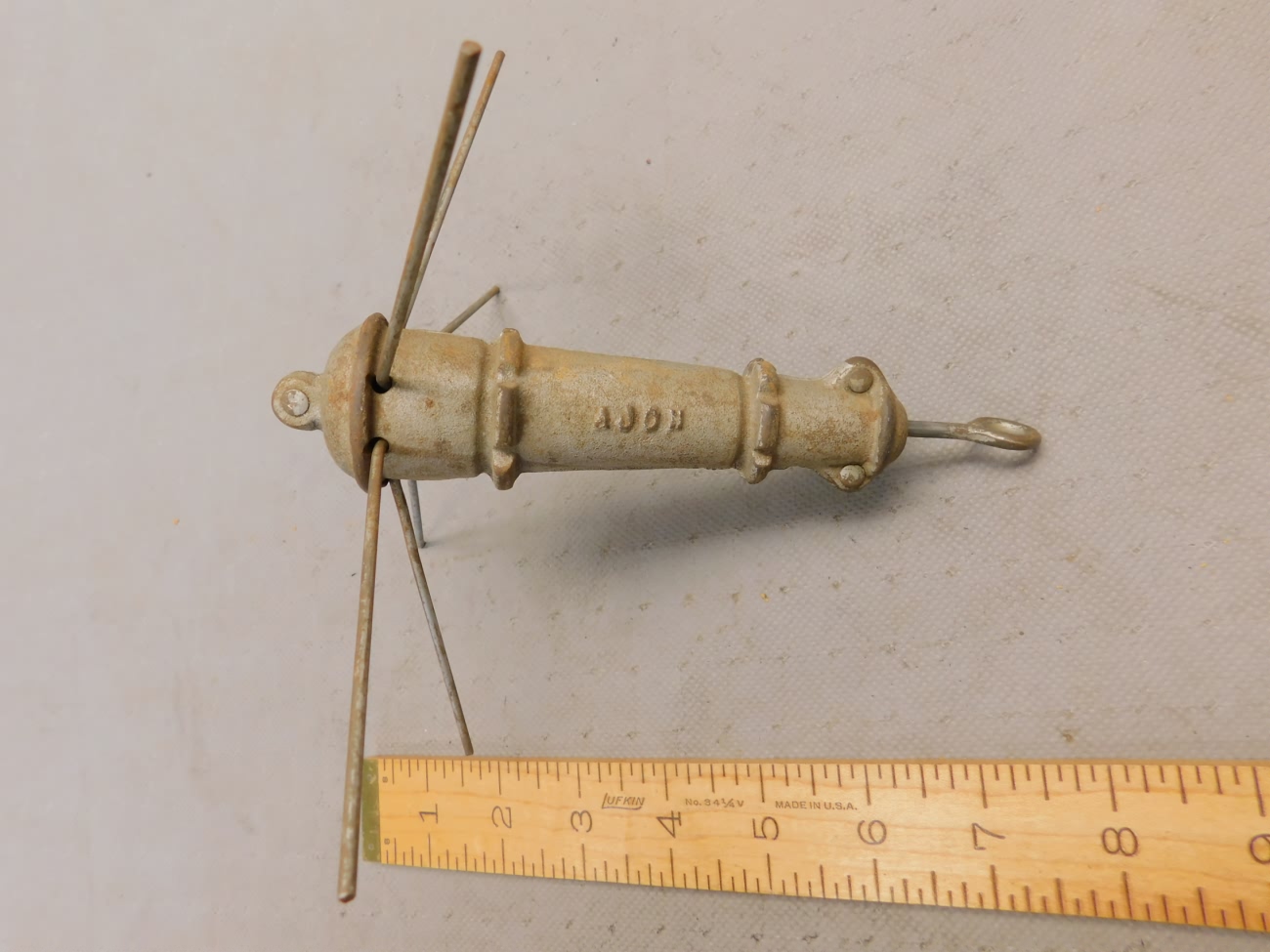 "AJON"
Cast Iron Automatic Anchor Salesman Sample Anchor for Canoe, Kayak, Boat, or Decoy
Anchor or ?
I have had, and could find a similar example of this cast iron folding anchor on the internet marked in
the casting "Automatic Anchor". This one has "AJON" in raised letters
in the casting. Not sure what that stands for and could not find
others.
"AJON"
Cast Iron Automatic Anchor Salesman Sample Anchor for Canoe, Kayak, Boat, or Decoy
Anchor or ?
I have had, and could find a similar example of this cast iron folding anchor on the internet marked in
the casting "Automatic Anchor". This one has "AJON" in raised letters
in the casting. Not sure what that stands for and could not find
others.There is one on Worthpoint called off as a Salesman Sample Anchor for small boats, canoes, or kayaks. That might be right.
Seems like a bit of overkill for a decoy anchor, and not the best of ideas, but I remember having to go out and chase down drifters when using the more typical over the head style mushroom anchors one typically sees. This design would also tend to chew up the paint, not to mention open up at inappropriate times just hanging loose. Nobody ever said all ideas were good though, so - - - -.
The other explanation I found said they were pocket anchors for small boats like canoes, kayaks, and the like. Not quite sure how that would work out either. Thinking back to the Jack London story of the duck hunter and his dog where he did not tie up his sneakbox good enough and it drifted off when the tide came in. It was not a happy ending after that. Funny how a story you read over 50 years ago still sticks with you. Different & Interesting.
Fine . . . . . $110.00 SOLD!!
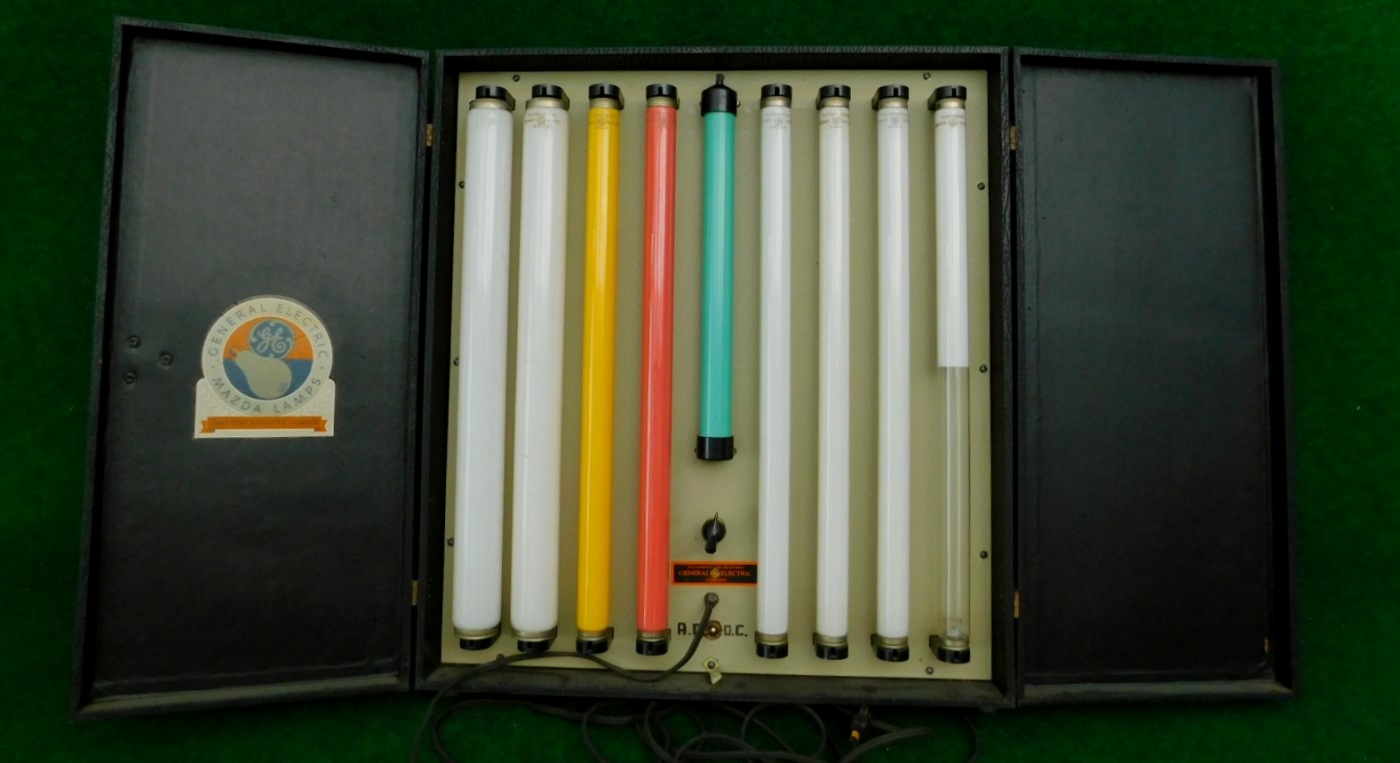 Salesman
Sample General Electric Fluorescent Light Display
This is a bit different than typically seen.I am guessing it dates from the
50's - 60's. All the bulbs light although it had to think
about a couple before coming on full strength. I do not
remember seeing most of these colors ever offered. The pics
show each lit up, but the camera does not do the colors justice,
they are vibrant. The only thing similar I could find on
Google was Salesman Samples for Neon color tubes. Different!!
Salesman
Sample General Electric Fluorescent Light Display
This is a bit different than typically seen.I am guessing it dates from the
50's - 60's. All the bulbs light although it had to think
about a couple before coming on full strength. I do not
remember seeing most of these colors ever offered. The pics
show each lit up, but the camera does not do the colors justice,
they are vibrant. The only thing similar I could find on
Google was Salesman Samples for Neon color tubes. Different!!
Fine . . . . . $395.00 SOLD!!
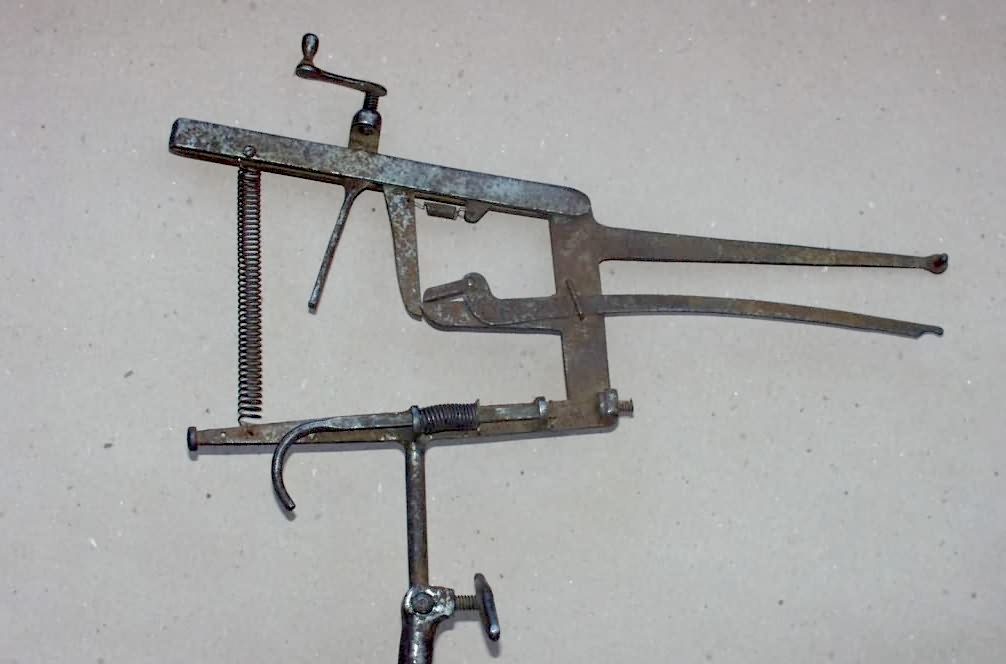 Automatic
Fishing Pole / Fishing Line Alarm
This is a very interesting example of Yankee inventiveness This unusual gizmo device
is in super original condition, complete, and is fully operational.
Automatic
Fishing Pole / Fishing Line Alarm
This is a very interesting example of Yankee inventiveness This unusual gizmo device
is in super original condition, complete, and is fully operational.It is not exactly an antique trap, but is designed to set the hook of the fishing pole / line after the fish takes the bait. It is not exactly antique fishing tackle either, but I imagine would be of interest to that collecting crowd as well. It is also not a gun, but is designed to fire a cap, or charge to alert or wake the napping or otherwise busy fisherman who was not paying attention when the fish were biting and this thing was tripped.
It displays very nicely, has a great look and gizmo appeal and should make a welcome addition to most any collection focused on those categories or others. From the look of it, and the construction details, I would estimate it as being from near the turn of the century give or take 20 years or so.
I am not sure
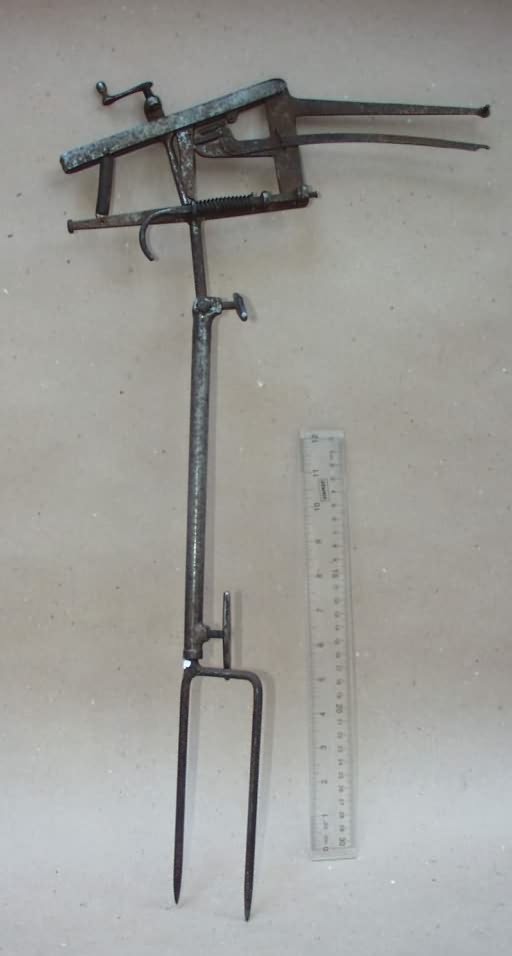 if it is a model of,
salesman sample of, or the actual device. It is unmarked as to maker, patent, or other info.
It should have been, as it is a really well designed and well executed piece. I spent a couple hours looking for a patent for it, and saw many other patents for
other vintage and antique automatic fishing poles and fishing line alarms but I
could not find this exact one. In fact, this version is somewhat more complicated and
well designed than many of those. All told it stands about 22" tall
with the base which is removable. The top portion is about 14" from
end to end.
if it is a model of,
salesman sample of, or the actual device. It is unmarked as to maker, patent, or other info.
It should have been, as it is a really well designed and well executed piece. I spent a couple hours looking for a patent for it, and saw many other patents for
other vintage and antique automatic fishing poles and fishing line alarms but I
could not find this exact one. In fact, this version is somewhat more complicated and
well designed than many of those. All told it stands about 22" tall
with the base which is removable. The top portion is about 14" from
end to end. On one hand it is kind of crude and simplistic looking, but it is really well engineered and made so that it sets up quickly, effortlessly, and it operates flawlessly. The picture on the left shows just the head with the line trigger set, and the alarm / gun / trigger at the bottom cocked and ready to go. In use, the fishing rod tip would be clamped along the top rail and locked into place with threaded thumb screw. To set the line trigger you lift the top left arm and it self sets with the vertical spring loaded trigger. The line would be looped over the arms on the right in such a way that when the fish hit the line it would activate the trigger, snapping the line taught and hooking the fish. At the same time the cocked trigger below would be tripped setting off the cap or percussion charge alerting the napping or otherwise busy fisherman that something important was happening. On the right is a pic of the entire unit with double prong base for setting into the bank of the pond, river or lake.
Where or when are you going to find another!!
Good + . . . . . . $175.00 SOLD!!
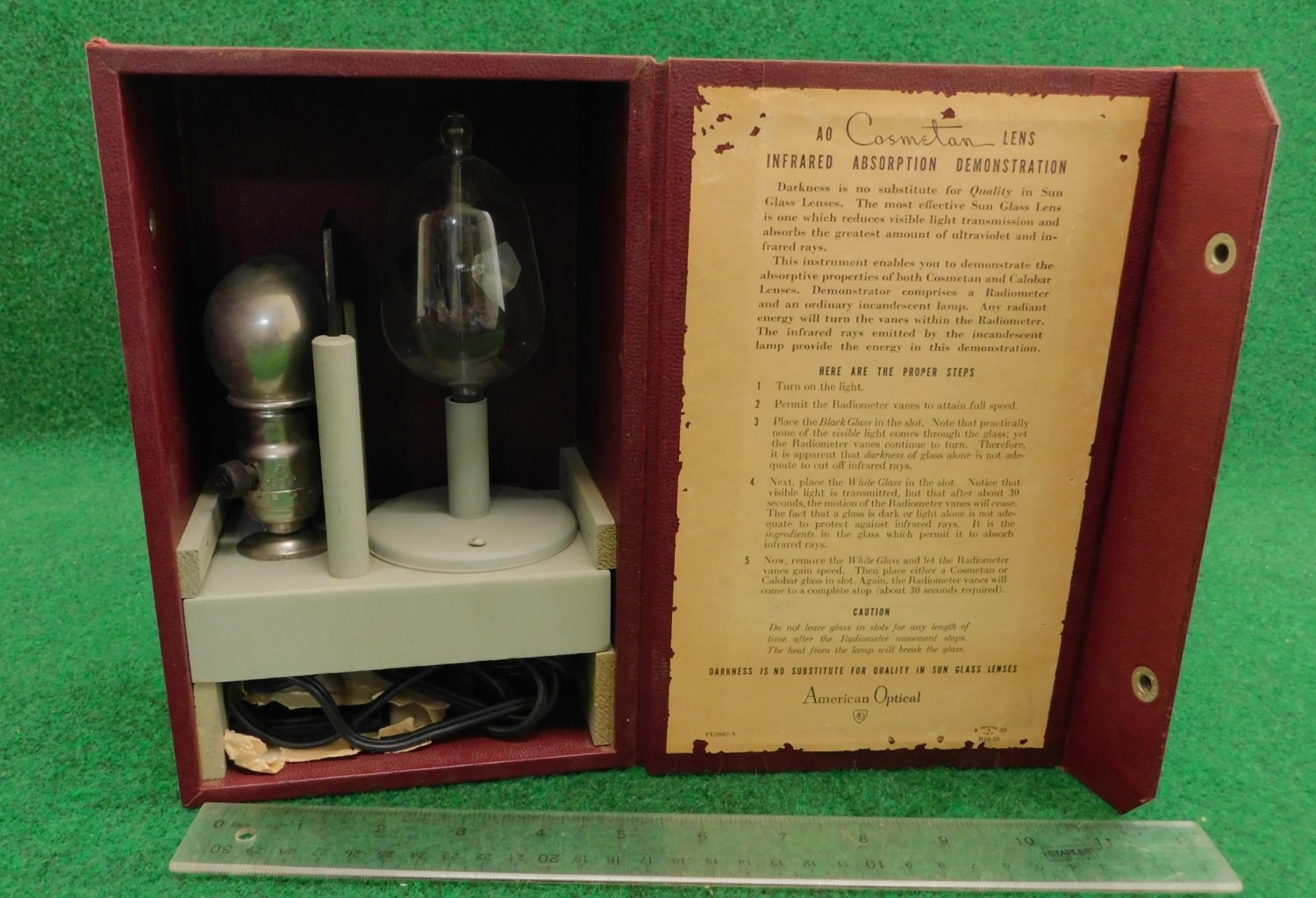 Salesman
Sample American Optical Cosmetan Infared Absorption Demonstrator
This unusual and interesting device demonstrates the superior qualities of
American Optical Cosmetan Lens for use in Sunglasses. The whole idea
and premise is well described on the instruction sheet on the lid. It
operates as intended. Different!!
Salesman
Sample American Optical Cosmetan Infared Absorption Demonstrator
This unusual and interesting device demonstrates the superior qualities of
American Optical Cosmetan Lens for use in Sunglasses. The whole idea
and premise is well described on the instruction sheet on the lid. It
operates as intended. Different!!
Fine . . . . . $45.00
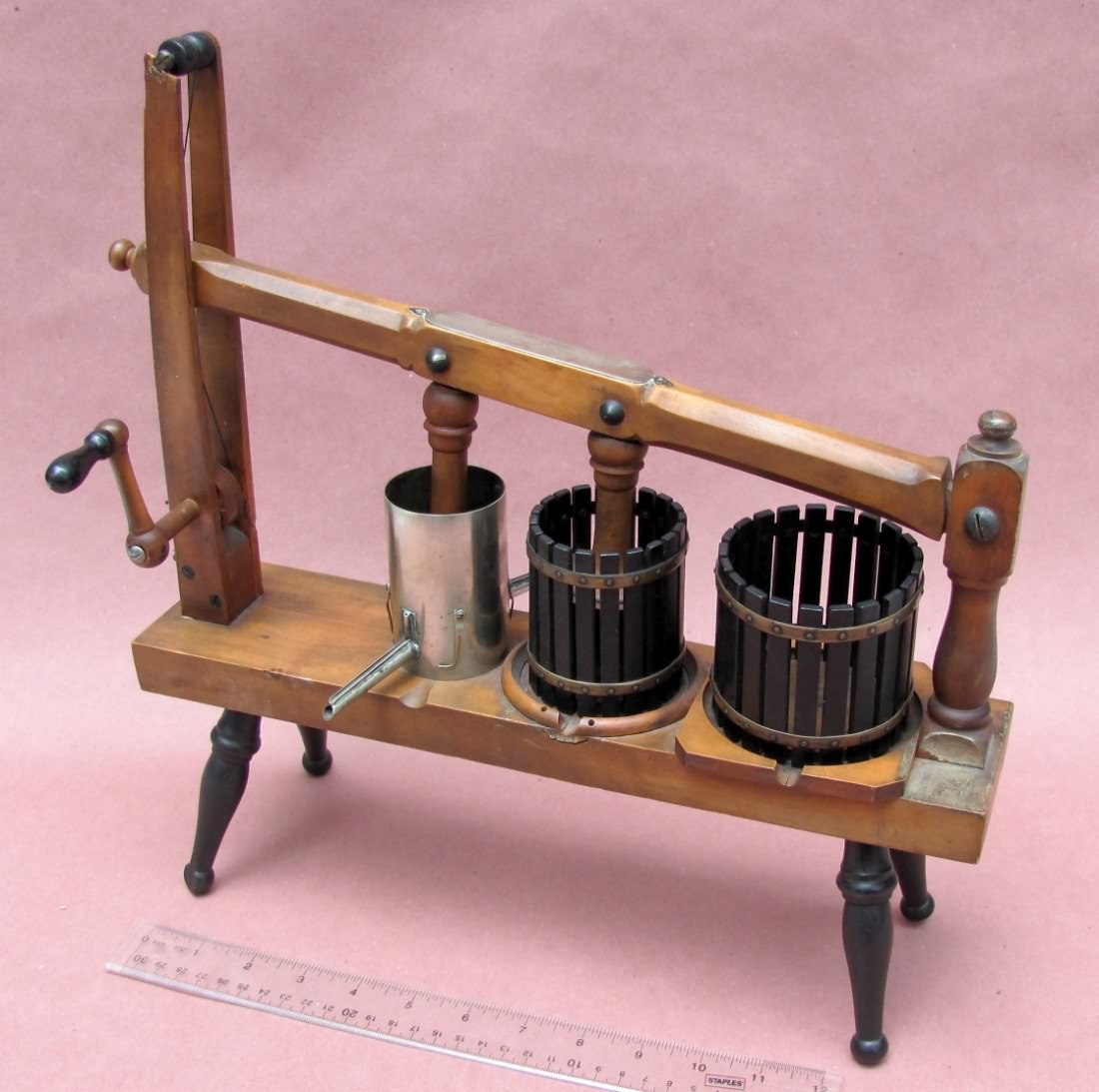 Salesman
Sample of 1867 Musselman Patent Combination Cheese / Wine Press
/ Sausage Stuffer / Wash Wringer
This salesman sample is a bit larger than
the normal patent model at 14" long but could well be the original
patent model, or a second copy of the
patent model submitted to the US Patent Office as it is a very close match
to the actual patent. The patent was granted
on May 21st 1867 and can be viewed on Google Patents under the number
64998.
Salesman
Sample of 1867 Musselman Patent Combination Cheese / Wine Press
/ Sausage Stuffer / Wash Wringer
This salesman sample is a bit larger than
the normal patent model at 14" long but could well be the original
patent model, or a second copy of the
patent model submitted to the US Patent Office as it is a very close match
to the actual patent. The patent was granted
on May 21st 1867 and can be viewed on Google Patents under the number
64998.
Ah, the life and dreams of a winemaker. This great looking salesman sample has an original brass tag with the inventor's name C. C. Musselman of Somerset, PA. , its description, and patent date info on it. I have shown several views of that tag in the pictures as it is a bit hard to make out given the size and stylized script. This detailed model represents Mr. Musselman's idea of how to make the most of your time with his labor saving device so that you would have more time to enjoy the fruits of your labors.
Mr. Musselman tried to cover all the possible bases with this machine and even mentions it being suitable for wringing out wet clothes in one of the vats or containers. It almost looks French in design and form, but the tag says otherwise. It certainly looks like it was wine-making related with its fruit press look, and the crank actuated lever arm used to press the material in the vats. It looks like something that today should be in a California vineyards collection as a piece of winemaking history or as a special piece of decor for a well-appointed tasting room.
The overall condition is super and the look is fantastic with the contrasting light fruitwood base and ebony feet and barrels. There is a small cosmetic crack in one upright, and a small break in the top of the upright that is holding the pulley. They are insignificant.
This is a super piece of Americana and the overall condition is excellent!! Not just nice, Great!!
Excellent . . . . . . $395.00 SOLD!! Note: This is an undervalued ebay result
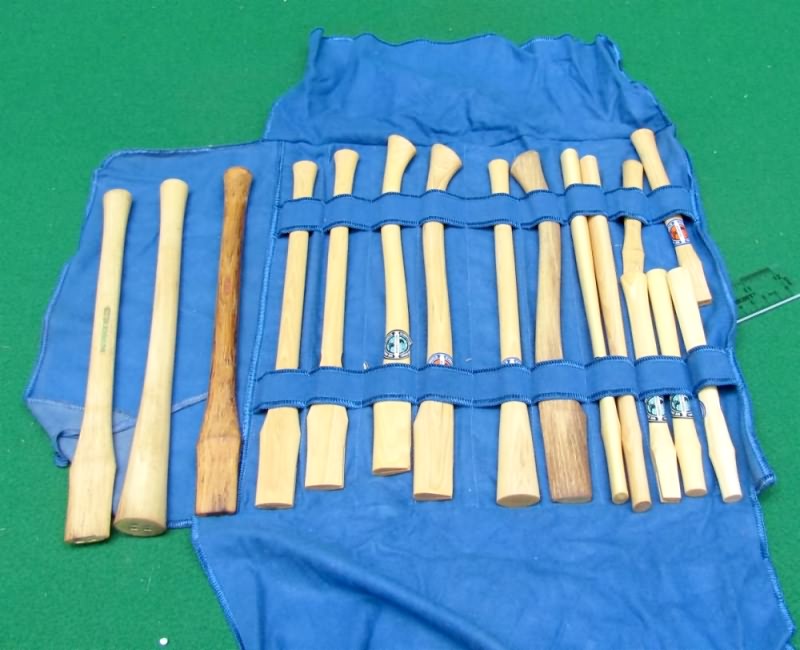 Salesman
Sample Tool Handles
What we have here is actually two different sets of salesman sample
tool handles all stored in one roll for convenience. The one set consists of
the 4 slightly larger ones seen in the pic. 3 on the left, and one in the
roll. They look like ones for a single bit axe, a pick and 2 different
grades for a double bit felling axe.They are stamped differently from the
other 12.
Salesman
Sample Tool Handles
What we have here is actually two different sets of salesman sample
tool handles all stored in one roll for convenience. The one set consists of
the 4 slightly larger ones seen in the pic. 3 on the left, and one in the
roll. They look like ones for a single bit axe, a pick and 2 different
grades for a double bit felling axe.They are stamped differently from the
other 12.The second set consists of sample size tool handles for axes, pics, mauls, etc. as well as handles for hammers, sledges and the like. There are 12 in this set, and it appears that there were different grades here as well as you see the same class handle with 2 different labels. One is a Daniel Boone, and others are marked Perfection and Triumph. A very nice set!!
Good +. . . . . . . $150.00 SOLD!!
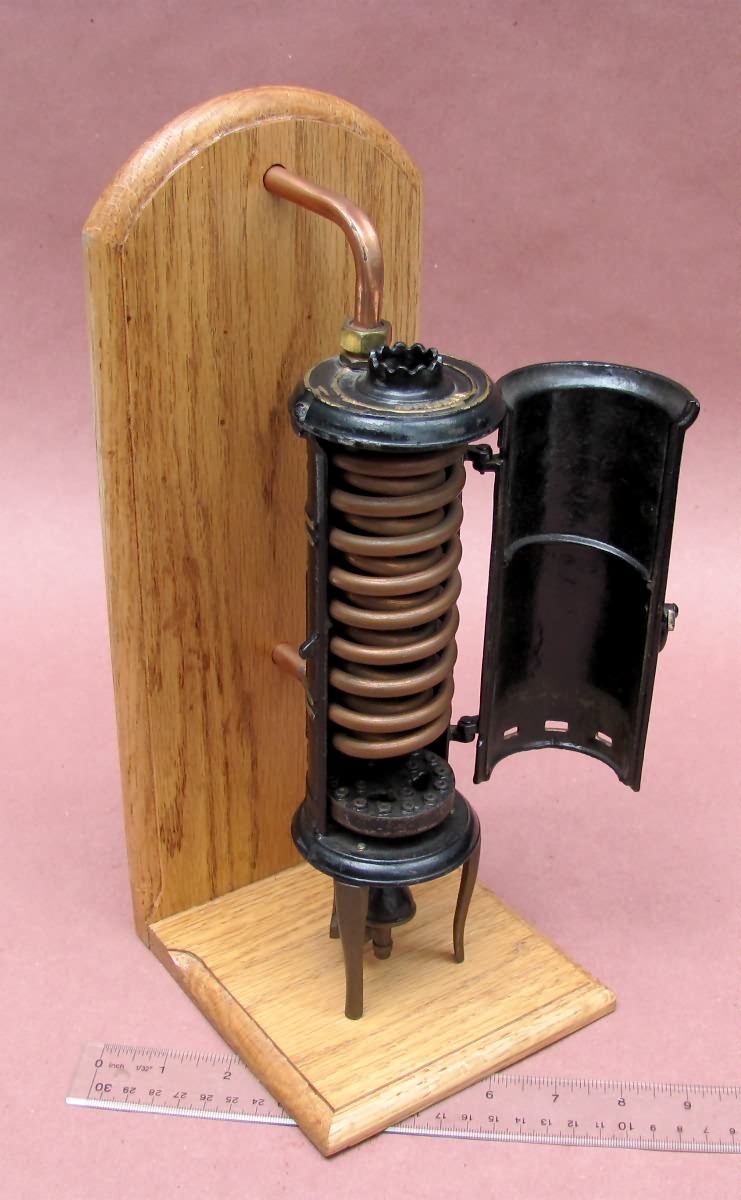 Humphrey
Salesman Sample Tankless Water Heater
This salesman sample Humphrey Water Heater is another example of no new
ideas. I remember when tankless water heaters were introduced as "new"
technology not too many years ago. The Humphrey Co. of Kalamazoo, MI started
operations in the 1890's and this looks to date from that era or just after.
It looks more substantial and as efficient as the one I bought and
installed in our last house. We just need $1.00 / gal. propane again to
make this idea a winner.
Humphrey
Salesman Sample Tankless Water Heater
This salesman sample Humphrey Water Heater is another example of no new
ideas. I remember when tankless water heaters were introduced as "new"
technology not too many years ago. The Humphrey Co. of Kalamazoo, MI started
operations in the 1890's and this looks to date from that era or just after.
It looks more substantial and as efficient as the one I bought and
installed in our last house. We just need $1.00 / gal. propane again to
make this idea a winner.I found an auction result for the same style heater in its box for over $2K. This one is in very nice original condition and the collector made a nice little display stand for it. The condition is really exceptional. Very nice!!
Fine . . . . . . . $195.00 SOLD!!
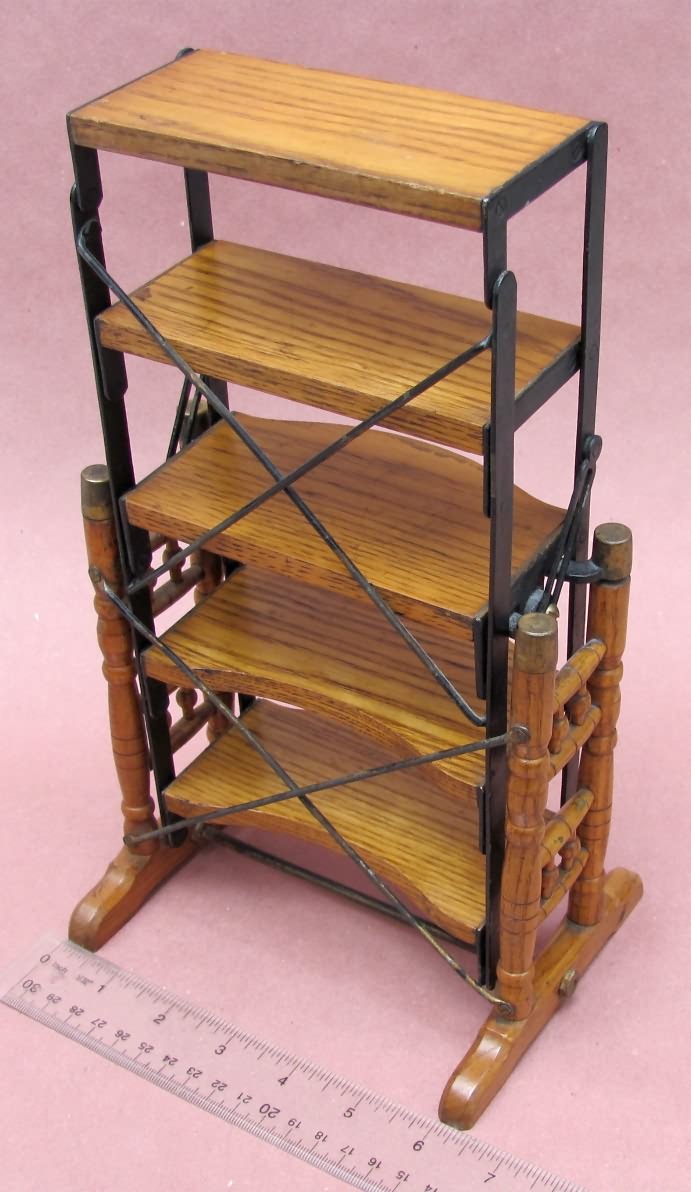 Salesman
Sample Folding Shelving Unit /
Oak Table This is a interesting salesman sample of a folding oak table / set of
shelves. It could be a patent model as well, as it is unmarked.
I have seen numerous full size examples of this style table with
slightly different designs for the base and mechanism.It looks to
date from the 1880's to about the turn of the century. There
was a larger version that sold through Cowen's auction house several
years ago that sold for upwards of 3K. This is an opportunity to
get one reasonable and with no extra costs involved. It measures
approx 6" wide when in the up position, and 12" or so folded out as a table.
In looking at the pictures note the way some of the leaves have a rounded front and others do not.
Also that one end as a table is rounded and the other is not. Were
these differences to show the different styles that could be ordered? Different and
interesting!!
Salesman
Sample Folding Shelving Unit /
Oak Table This is a interesting salesman sample of a folding oak table / set of
shelves. It could be a patent model as well, as it is unmarked.
I have seen numerous full size examples of this style table with
slightly different designs for the base and mechanism.It looks to
date from the 1880's to about the turn of the century. There
was a larger version that sold through Cowen's auction house several
years ago that sold for upwards of 3K. This is an opportunity to
get one reasonable and with no extra costs involved. It measures
approx 6" wide when in the up position, and 12" or so folded out as a table.
In looking at the pictures note the way some of the leaves have a rounded front and others do not.
Also that one end as a table is rounded and the other is not. Were
these differences to show the different styles that could be ordered? Different and
interesting!! Fine . . . . . . . $795.00 SOLD!
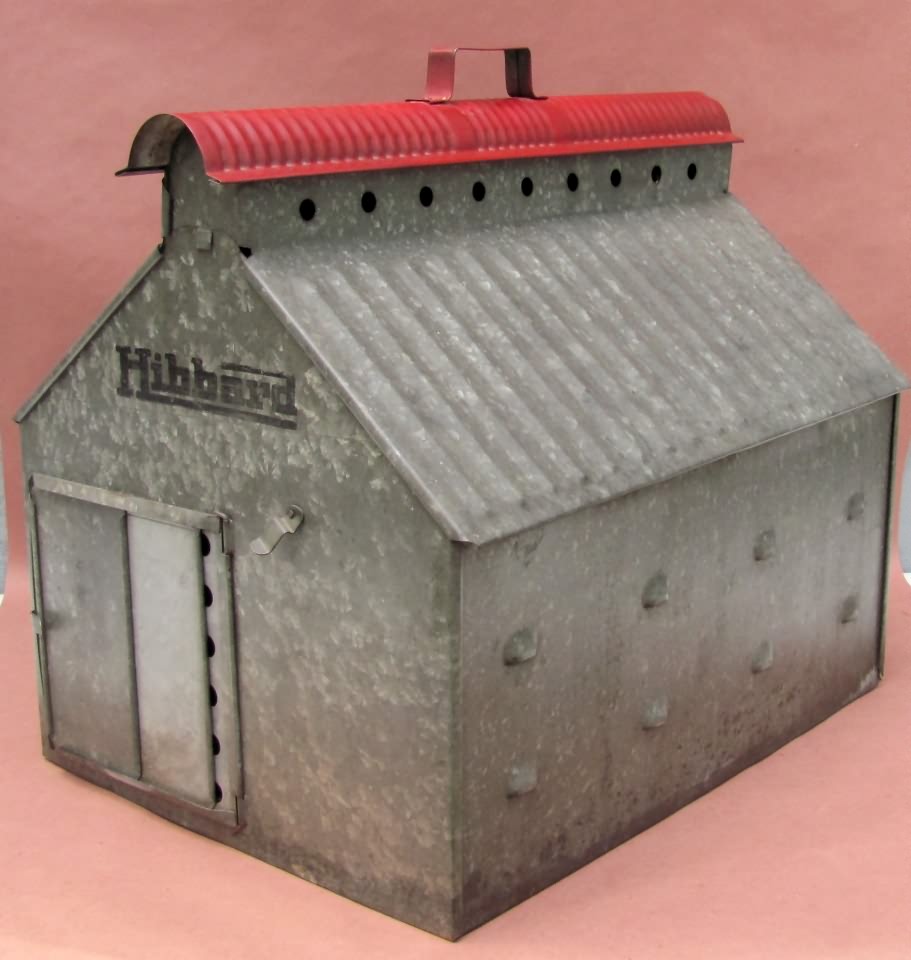 Hibbard
Salesman Sample Chicken Coop / Chicken Carrier
I was told this is a salesman sample chicken brooder. It might be that,
or just a vintage Chicken carrier as I have seen ads for them that look
similar. It certainly is fashioned after
or made to look like a chicken coop or larger building. It looks like it
would date from the 60's or before, but there is no info on the piece itself to
confirm that. I could find no
reference or similar ones to this in the searches I ran looking for it. You would
have a time trying to get a chicken in the one door in the front if that is what
it really is.There are no other openings that are larger. The bottom slides up and down inside
but that would not help you load the waiting chicken if that is a clue.
Hibbard
Salesman Sample Chicken Coop / Chicken Carrier
I was told this is a salesman sample chicken brooder. It might be that,
or just a vintage Chicken carrier as I have seen ads for them that look
similar. It certainly is fashioned after
or made to look like a chicken coop or larger building. It looks like it
would date from the 60's or before, but there is no info on the piece itself to
confirm that. I could find no
reference or similar ones to this in the searches I ran looking for it. You would
have a time trying to get a chicken in the one door in the front if that is what
it really is.There are no other openings that are larger. The bottom slides up and down inside
but that would not help you load the waiting chicken if that is a clue.Is Hibbard the maker and part of the Hibbard, Spence & Bartlett hardware store outfit that operated in the Chicago area back when? I do not know, and do not have a catalog to leaf through right at hand. Different and interesting!!
Very Good +. . . . . . . $195.00 SOLD
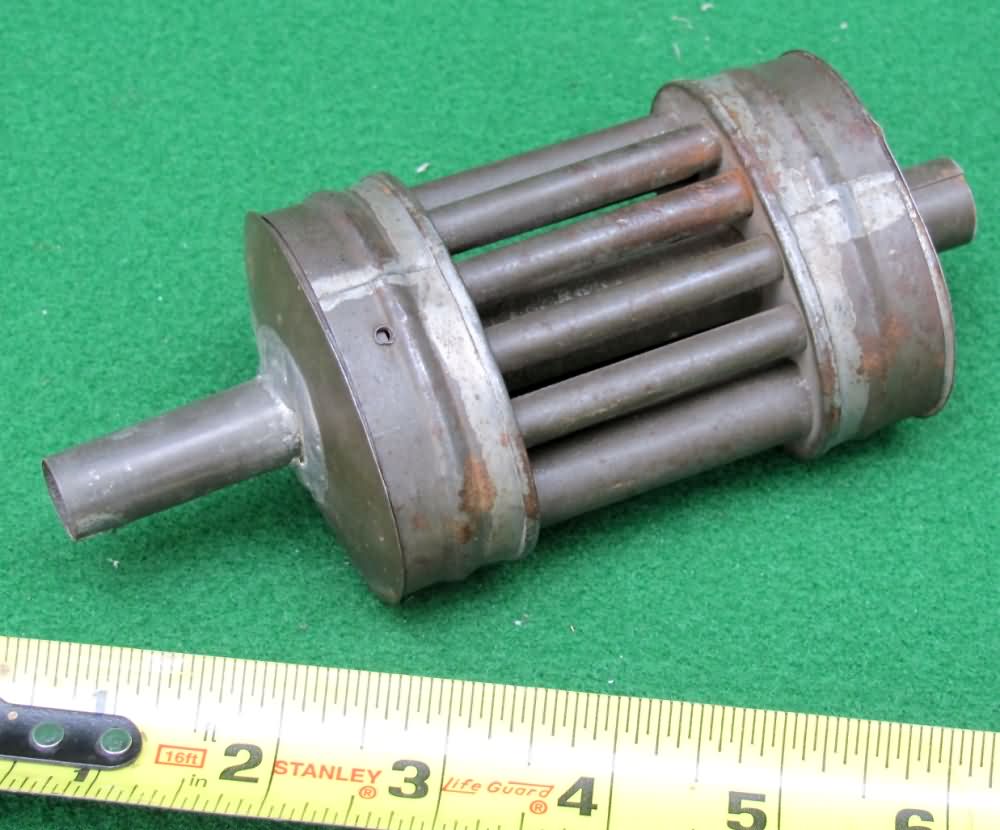 Patent
Model of Heat Exchanger for Wood Stove
There is no tag, but there is little doubt that this is a patent model. A
couple hours of research would probably turn up the # and description at
Google Patent Search. It is a great design with all the tubes to allow
the otherwise wasted heat to be better used. It even has a damper provision
built into it.Both the top and bottom come off to facilitate cleaning
the interior should creosote build up occur. I wish that something similar was available for my
woodstove as it has trouble keeping up with the job, and this looks like it
would keep a lot of that heat in the house that otherwise just goes up and
out the chimney. Kind of neat looking little device!!
Patent
Model of Heat Exchanger for Wood Stove
There is no tag, but there is little doubt that this is a patent model. A
couple hours of research would probably turn up the # and description at
Google Patent Search. It is a great design with all the tubes to allow
the otherwise wasted heat to be better used. It even has a damper provision
built into it.Both the top and bottom come off to facilitate cleaning
the interior should creosote build up occur. I wish that something similar was available for my
woodstove as it has trouble keeping up with the job, and this looks like it
would keep a lot of that heat in the house that otherwise just goes up and
out the chimney. Kind of neat looking little device!!
Good +. . . . . . $195.00 SOLD
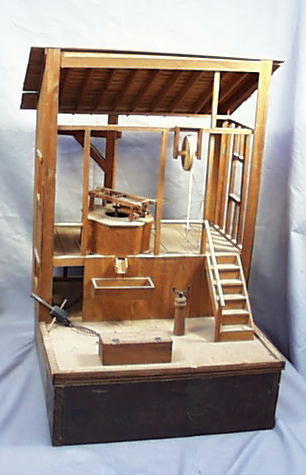 A Model of a Overshot Waterwheel
& Mill This is a very nicely
done representation or model of a overshot waterwheel or as the
label says it is sometimes called a Pitchback Wheel. The card that is
at the bottom left says that this was done by a Edwin F. Bristol in 1881 when
he was 80 some years old. It was donated by his wife, but it is not clear
to whom. In any case it , like many other gifts to museums and historical
societies was de-accessioned and this example ended up here in California in
my museum. It is well done and in pretty good condition, but there is
some evidence that there has been some modification to the outside corners.
Perhaps there was a shed roof or the like at some point. We will
never know. Also included with this wheel I have a 2 story
representation of a grain mill / grinding wheel arrangement set up in an open
framed barn type area, the idea being that the waterwheel drove this thing,
and thus showed the audience how it was done back then in upstate New Hampshire.
I got them together and I will sell them together or separate.
A Model of a Overshot Waterwheel
& Mill This is a very nicely
done representation or model of a overshot waterwheel or as the
label says it is sometimes called a Pitchback Wheel. The card that is
at the bottom left says that this was done by a Edwin F. Bristol in 1881 when
he was 80 some years old. It was donated by his wife, but it is not clear
to whom. In any case it , like many other gifts to museums and historical
societies was de-accessioned and this example ended up here in California in
my museum. It is well done and in pretty good condition, but there is
some evidence that there has been some modification to the outside corners.
Perhaps there was a shed roof or the like at some point. We will
never know. Also included with this wheel I have a 2 story
representation of a grain mill / grinding wheel arrangement set up in an open
framed barn type area, the idea being that the waterwheel drove this thing,
and thus showed the audience how it was done back then in upstate New Hampshire.
I got them together and I will sell them together or separate.
Good . . . . . $1295.00 SOLD
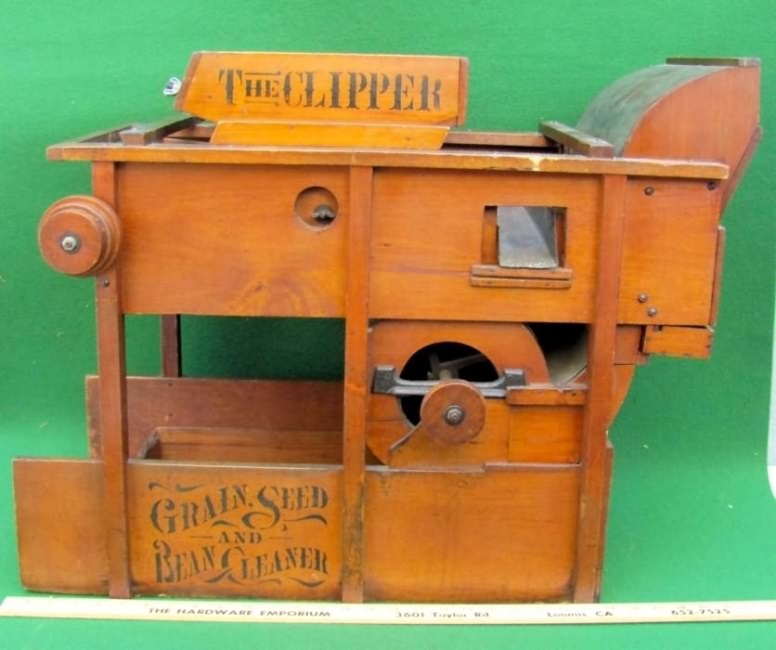 Clipper Fanning Mill Seed / Grain Cleaner
This is a wonderful condition example complete with outrigger and screens.
They came is sizes from this small table top size to ones that were so
large they needed horses to pull them around. Oftentimes called
salesman samples they were in fact a full size user type thing.
Clipper Fanning Mill Seed / Grain Cleaner
This is a wonderful condition example complete with outrigger and screens.
They came is sizes from this small table top size to ones that were so
large they needed horses to pull them around. Oftentimes called
salesman samples they were in fact a full size user type thing.
Good . . . . . $895.00 SOLD
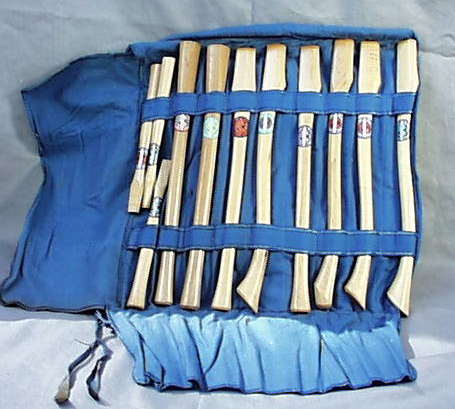 Salesman
Sample Tool Handles Besides salesman samples
of the washing machines and farm implements that we have managed to
gather and collect and which are a major part of the collections we have, we are also always on the
lookout for other interesting examples of vintage salesman samples of
products or consumer goods that were produced early in the last century or
before. In general, salesman samples were
produced for a few different reasons, there were those of very large
products for use by traveling salesman who would travel
from
town to town and state to state attempting to peddle their wares to
not only the general public but also to the stores and shops in any given
location. Salesman Sample Stoves, washers and the farm
implement models are good examples of this type of salesman sample.
But there were also many other salesman samples of smaller
products that were made, both for the traveling salesman, and for use as
displays in stores or shop. These tool handles on the left are a
good example of this type of salesman sample that could be carried around by
the salesman, but probably just offered to the hardware stores and the
buyers for such places rather than the general public. I have seen
several of these over the years with different labels on them, but would
bet they were all put out by the same company and then marketed with the
different labels in different regions or locals. These are in near
mint condition, and each one measures between 6-9" or so. There
are handles for a host of tools including different grades for different
axes and mauls, picks, hammers, etc.
Salesman
Sample Tool Handles Besides salesman samples
of the washing machines and farm implements that we have managed to
gather and collect and which are a major part of the collections we have, we are also always on the
lookout for other interesting examples of vintage salesman samples of
products or consumer goods that were produced early in the last century or
before. In general, salesman samples were
produced for a few different reasons, there were those of very large
products for use by traveling salesman who would travel
from
town to town and state to state attempting to peddle their wares to
not only the general public but also to the stores and shops in any given
location. Salesman Sample Stoves, washers and the farm
implement models are good examples of this type of salesman sample.
But there were also many other salesman samples of smaller
products that were made, both for the traveling salesman, and for use as
displays in stores or shop. These tool handles on the left are a
good example of this type of salesman sample that could be carried around by
the salesman, but probably just offered to the hardware stores and the
buyers for such places rather than the general public. I have seen
several of these over the years with different labels on them, but would
bet they were all put out by the same company and then marketed with the
different labels in different regions or locals. These are in near
mint condition, and each one measures between 6-9" or so. There
are handles for a host of tools including different grades for different
axes and mauls, picks, hammers, etc.
Good . . . . . $175.00 SOLD
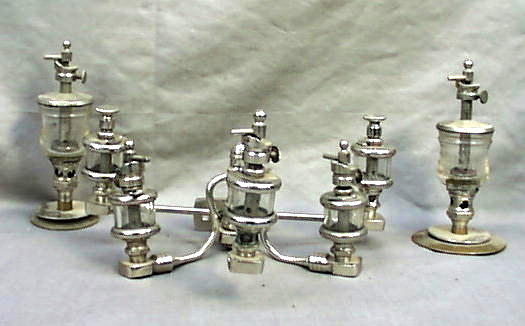
Salesman Sample or Display of Machinery Oilers Another type of salesman sample is the miniature or store display that was probably not carried around by a traveling salesman at all, but was rather displayed or hung up in the shop or store as an enticement for all that came through. The patented machinery Oilers on the right are probably an example of this type of vintage sample. This display was meant to be mounted near the counter to impress those who saw it. It is a neat piece as each oiler is slightly different, and the Patentee had his name and other information embossed on the glass of each oiler. This is pretty neat, to think that there were so many different styles available to the public back then.
Good . . . . . $1295.00 SOLD
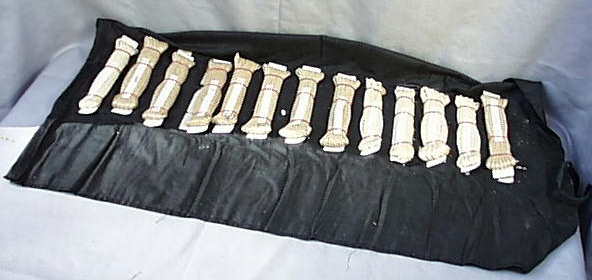 Salesman
Sample Rope / Twine I believe this salesman
sample of different style rope and twine are a bit earlier than the
handles above. From an era when there was more than one type or
style of twine offered for the discerning shop keeper to offer his
customers. Today there are 20 different grades of toilet paper,
back then people needed and used ropes much more often I suppose. The
small tags with most describe the twist or make-up of each. It
appears to me to date from the 1880's or so. Different!
Salesman
Sample Rope / Twine I believe this salesman
sample of different style rope and twine are a bit earlier than the
handles above. From an era when there was more than one type or
style of twine offered for the discerning shop keeper to offer his
customers. Today there are 20 different grades of toilet paper,
back then people needed and used ropes much more often I suppose. The
small tags with most describe the twist or make-up of each. It
appears to me to date from the 1880's or so. Different!
Good . . . . . $95.00 SOLD
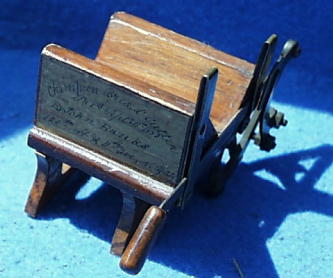 Salesman
Sample Bread Slicer I believe this is a salesman
sample and not a Patent Model for 2 reasons. There is no tag, and
it has a lot of info printed on it. It could be, but I do not
think so. None the less it is nice, and well done, and will make
an attractive addition to the display.. Different!
Salesman
Sample Bread Slicer I believe this is a salesman
sample and not a Patent Model for 2 reasons. There is no tag, and
it has a lot of info printed on it. It could be, but I do not
think so. None the less it is nice, and well done, and will make
an attractive addition to the display.. Different!
Good . . . . . $295.00 SOLD
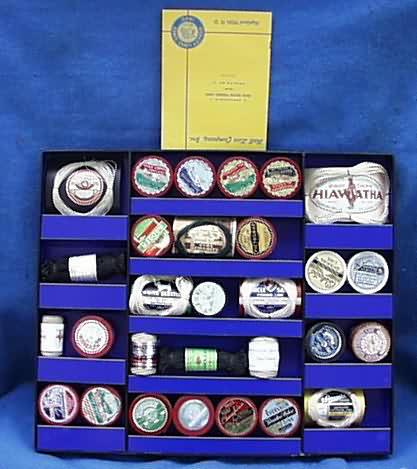 Salesman
Sample Hall Fishing Line Display A
stash of these came out of the old factory which had burned and closed
down. Somewhere back on the late 80's early 90's a large amount of
these appeared on the market, and for a while they were bringing crazy
prices, than as is typical the supply exceeded the demand and prices
fell. Now they are back to almost impossible to find. Different!
Salesman
Sample Hall Fishing Line Display A
stash of these came out of the old factory which had burned and closed
down. Somewhere back on the late 80's early 90's a large amount of
these appeared on the market, and for a while they were bringing crazy
prices, than as is typical the supply exceeded the demand and prices
fell. Now they are back to almost impossible to find. Different!
Good + . . . . . $295.00 SOLD
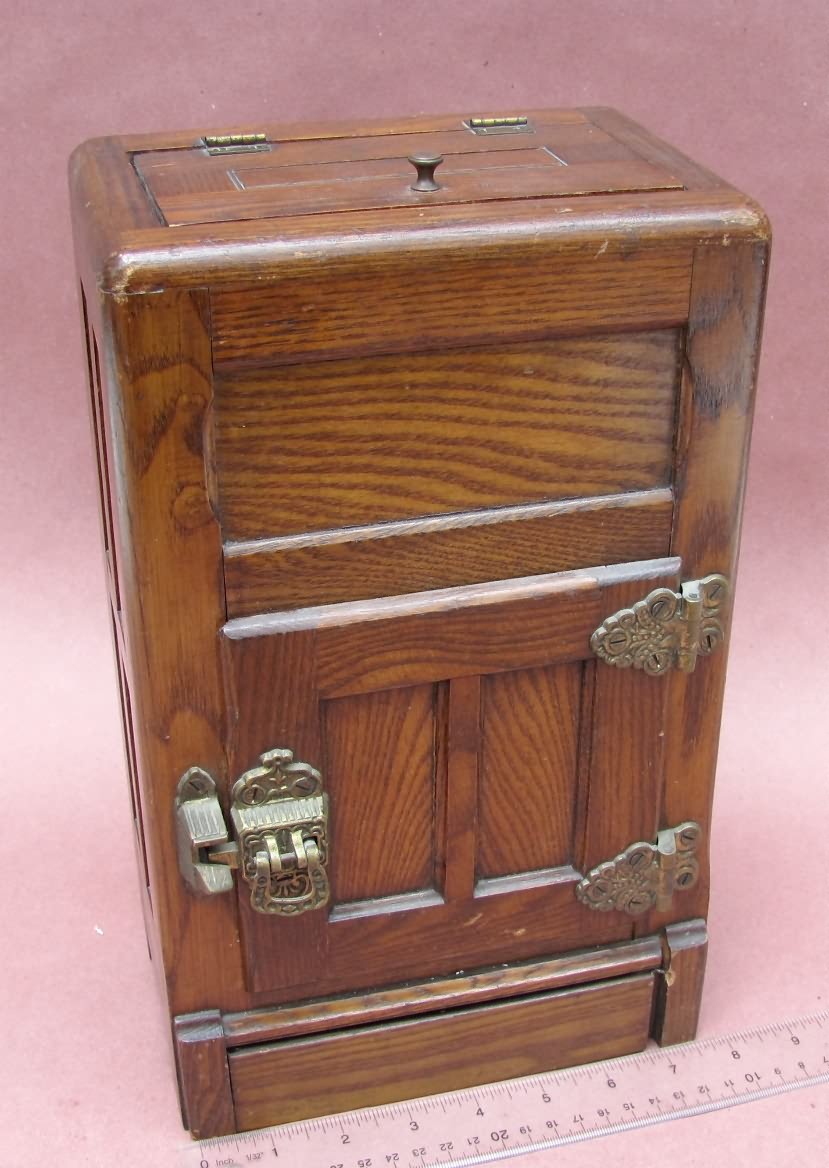 Antique
Salesman Sample Oak Ice Box / Refrigerator
This antique salesman sample oak ice box is a wonderful piece of early Americana.
To give you a sense of the scale of this
diminutive piece of Americana there is a clear ruler at the base in the foreground.
It measures about 8" across, and 12" tall overall. A perfect size for
display.
Antique
Salesman Sample Oak Ice Box / Refrigerator
This antique salesman sample oak ice box is a wonderful piece of early Americana.
To give you a sense of the scale of this
diminutive piece of Americana there is a clear ruler at the base in the foreground.
It measures about 8" across, and 12" tall overall. A perfect size for
display. Take a look at all the details and construction. It is unmarked as far as I can see. It is smaller than some I have seen, but it is the real deal and not just a toy or simple model. It is constructed to look just like the full size oak ice boxes that were offered back in the day. It even has the ice tray in the top as well as shelves below and the enameled interior. The brass hardware is a good miniature representation of the full size latches and hinges you find on the full size models as well..
The top lifts for access to the portion where the ice was put. As you can see in the other pics the galvanized ice tray is there and just like the original. I do not think they were accounting for the lead that might be leached into the water from the melting ice. Keeping the food from spoiling was the primary concern. At the bottom the piece of oak there flips up to remove the tray where the melted water would drain. There is a small breakout here and the small piece of oak holding the pin used as a hinge for this door is missing.
Good + . . . . . . $695.00 SOLD!
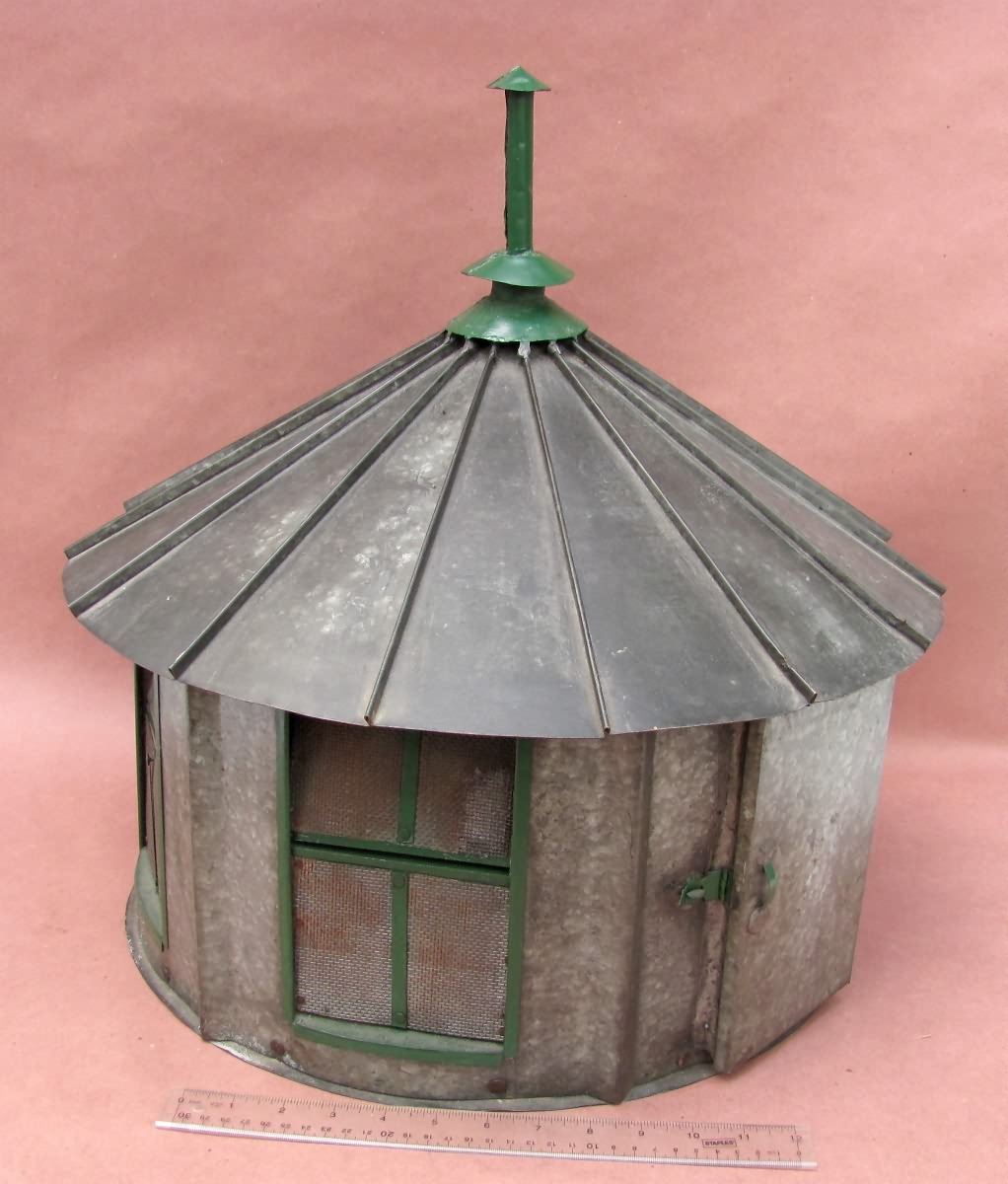 Salesman
Sample Chicken Brooder
This is a Roundtop Gazebo style salesman sample of a chicken brooder or
chicken coop. It
looks to date from the 40's or so and is unmarked as far as I can see. It
has a hinged door and fold down windows for ventilation. It also has a
draft system hooked up to the top vent for added ventilation. It measures
approx 14" in diameter and about the same tall. . Different and interesting!!
Salesman
Sample Chicken Brooder
This is a Roundtop Gazebo style salesman sample of a chicken brooder or
chicken coop. It
looks to date from the 40's or so and is unmarked as far as I can see. It
has a hinged door and fold down windows for ventilation. It also has a
draft system hooked up to the top vent for added ventilation. It measures
approx 14" in diameter and about the same tall. . Different and interesting!!
Very Good +. . . . . . . $295.00 SOLD!
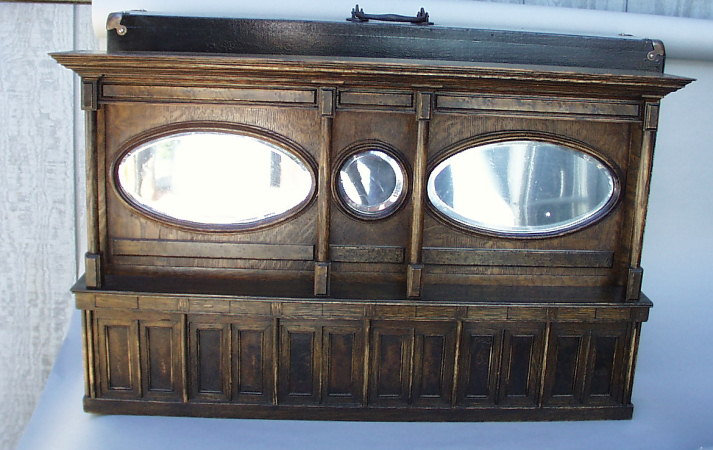 Salesman
Saloon Backbar in Box
This is a very nice piece. It is unmarked as to maker, but very well
done.
Salesman
Saloon Backbar in Box
This is a very nice piece. It is unmarked as to maker, but very well
done.Good + . . . . $950.00 SOLD!
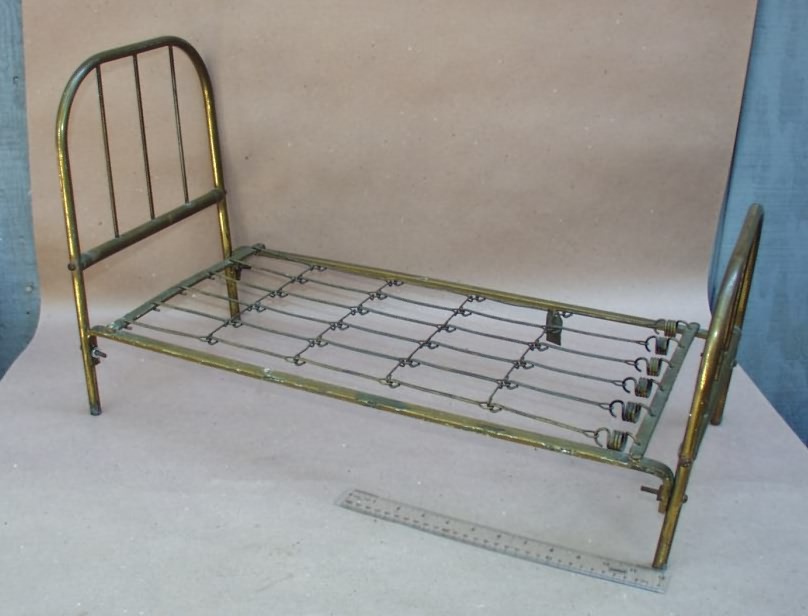 Simmons Salesman
Sample / Patent Model of Bed Springs
This is an interesting salesman sample display model that has the patent info attached to
the springs in the form of a small metal tag. At first glance one might think this was a
patent model but it is a bit too big for that. Or that it is
just a piece of doll furniture at 24 inches long, but given it has patent info on a tag attached to the
spring we must assume it is a display model or salesman sample to allow the
Simmons Salesman
Sample / Patent Model of Bed Springs
This is an interesting salesman sample display model that has the patent info attached to
the springs in the form of a small metal tag. At first glance one might think this was a
patent model but it is a bit too big for that. Or that it is
just a piece of doll furniture at 24 inches long, but given it has patent info on a tag attached to the
spring we must assume it is a display model or salesman sample to allow the
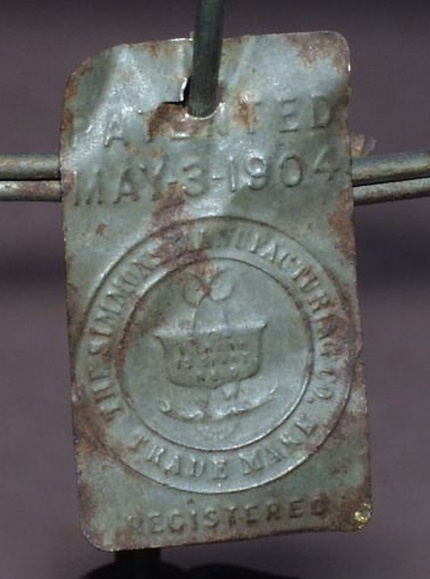 prospective customer to view this new idea they were about to buy or sleep
on.
prospective customer to view this new idea they were about to buy or sleep
on. Here is a link to view the patent as recorded at the US Patent Office. The text explains that the patent is for the design of the springs, and their ability to fold this way or that. In typical fashion the description is very long winded and needlessly complicated, but I suppose that was by design.
This patent was probably the beginnings of the famous Simmons line of hide-a-beds and folding chairs. Simmons was probably buying up all the different spring ideas for furniture and beds presented to them to utilize in their products. It would also keep others from encroaching on their plans and development of this now famous line of furniture. I am not sure if this was the idea or design that they went with and incorporated into their line of beds and chairs, but given they made a model of it and tagged it I would assume it is.
Good +. . . . . . $395.00 SOLD!
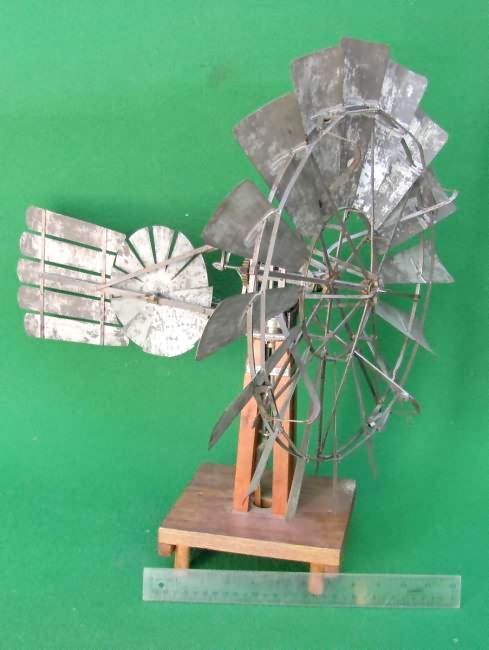 Salesman
Sample Windmill w/ Auxiliary Rotor In Tail Vane
This is a super nice condition and very unusual salesman sample of a power Windmill
as opposed to a more typically seen pump style windmill. In addition to
having a highly detailed and complex feature to feather the vanes for different
wind conditions, this sample size windmill has a
very different design for the vane tail with a separate tail rotor that is chain
driven. I believe this was to correct the tendency for a windmill to swing away from the wind when
operating and be less efficient.
Salesman
Sample Windmill w/ Auxiliary Rotor In Tail Vane
This is a super nice condition and very unusual salesman sample of a power Windmill
as opposed to a more typically seen pump style windmill. In addition to
having a highly detailed and complex feature to feather the vanes for different
wind conditions, this sample size windmill has a
very different design for the vane tail with a separate tail rotor that is chain
driven. I believe this was to correct the tendency for a windmill to swing away from the wind when
operating and be less efficient. I have been told that because it is a power design windmill as opposed to a pump design windmill that this is a factor that has to be addressed. The power design means that it delivers its power to the bottom shaft in a circular motion as opposed to an up and down motion as typically seen to drive a water pump. This style windmill was used to power shop tools, generators and the like as opposed to those typically seen in the field whose purpose was to operate a well pump.
It is unmarked, and to date I have not found any info on the maker, patents, or specific design. I am in the process of gathering more info and doing research to find out when this idea was patented, and who the maker or inventor was. To date I have not seen any others with the tail rotor feature this windmill has. I am not sure if it was ever put into production as a full size windmill. I will update this ad as I gather that info.
A very nice piece of farm history that will make for a great display piece.
Fine + SOLD!
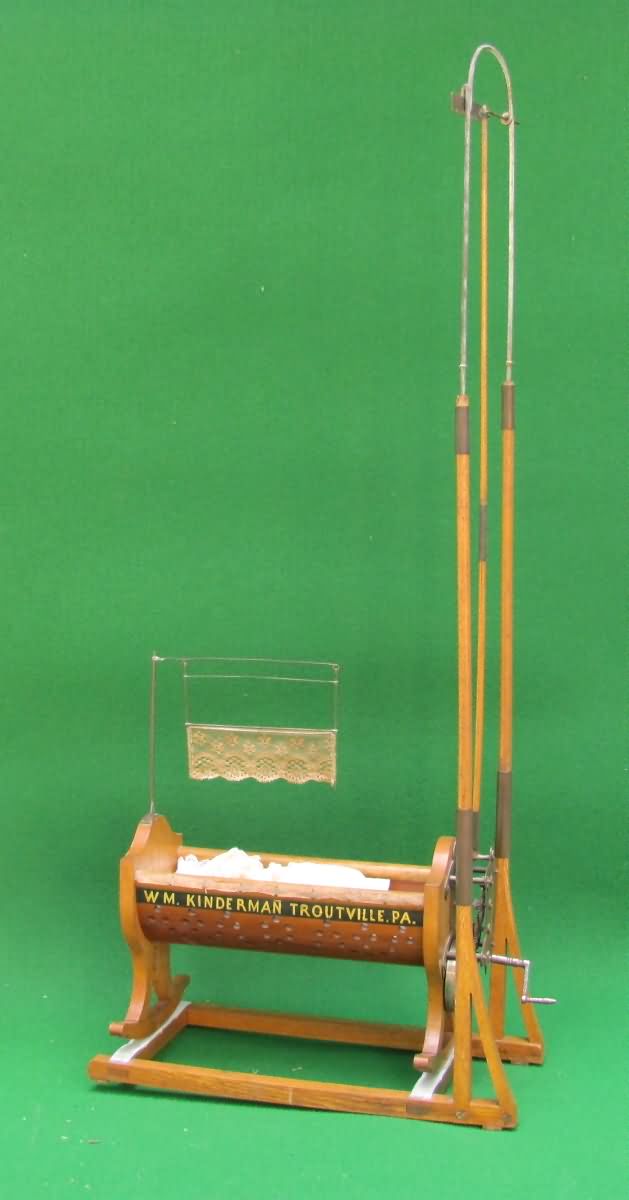 Doll
Size Salesman
Sample / Patented Model of Automatic Rocking Crib w/ Clockwork Mechanism &
Lace Fan
This is a super nice piece and, I am sure, a one-of-a-kind salesman sample
/ patented model of an automatic rocking cradle / crib from the 19th century. Please
be sure to see all the pictures I have provided to fully appreciate this
wonderful piece.
Doll
Size Salesman
Sample / Patented Model of Automatic Rocking Crib w/ Clockwork Mechanism &
Lace Fan
This is a super nice piece and, I am sure, a one-of-a-kind salesman sample
/ patented model of an automatic rocking cradle / crib from the 19th century. Please
be sure to see all the pictures I have provided to fully appreciate this
wonderful piece.The patent for this automatic rocking cradle was issued to a Mr. Kinderman / Kindermann of Troutville, PA on March 30th 1875. It seems he spelled his name both ways, or the Patent Office did. His name on this model is spelled with one N and the patent was issued to the name spelled with two N's. He was issued another patent with just one N in that patent. It took me a while to figure that out and find this patent. The number is 161417 and it is a very close match.
The first picture to the left shows the automatic rocking cradle / crib fully assembled . The salesman sample case is shown in pictures below. The model itself is about 12" across and fits perfectly into the original black salesman carry case. With all the parts assembled it is about 30" tall to the top of the hoop. Up at the top of that hoop is a provision to hold the pendulum rod, and to regulate the distance that the crib will rock when activated. The action when it is all assembled and operating is great but a bit spotty. The clockwork mechanism runs just fine, but is a bit underpowered to actually rock the cradle consistently. The patent refers to the hanging lace fan over the cradle as chasing away flies and keeping the baby cool. It refers to the gentle action transmitted to the rocking cradle through the "clock train" clockwork mechanism as "somnific" as opposed to the "jerky and irregular" motion imparted by the "attendant" / mother.
Just imagine the salesman slowly and carefully taking this out of the original black carry case explaining its functions and qualities while assembling it in front of the new prospective customer---be that the mother or a storekeeper. It takes me about 10 minutes to do this with all the pieces carefully stored in the case that need to be assembled correctly. First question that comes to my mind, and I am sure the mothers', is: When full size, just how big would that baby-eating "clock train" with exposed gears on the end be? Big enough to eat fingers, or my whole baby? On a more personal level, I imagine most mothers would not be to impressed when told their way of rocking the baby was jerky and incorrect either. I have a feeling that this better idea was met with some mild skepticism when presented.
It is a perfect size to go with, and be the highlight of an advanced antique doll collection, or any advanced collection of Americana consisting of "real" pieces. It is a great piece of early mechanical Americana and not a made up or newly created assemblage that some folk art dealers manage to come up with these days.
Way different and a super interesting piece!! Opportunity!!
Fine +. . . . . . . . SOLD!
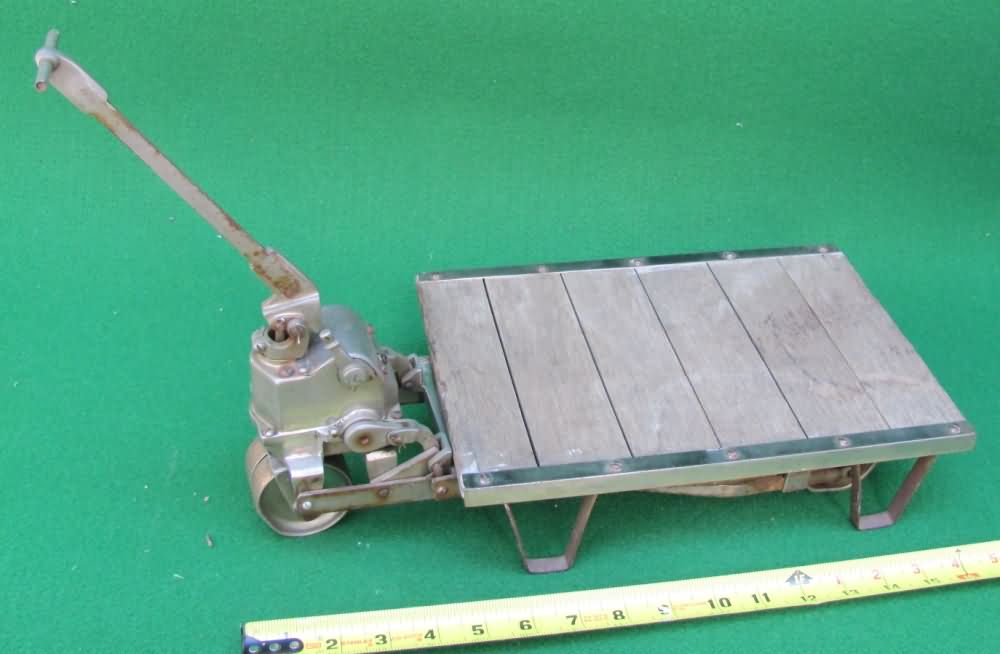 Yale
& Towne Salesman
Sample Skid Jack / Pallet Jack w/ Skid
This is a super nice salesman sample of a skid jack made by the
leader in the industry Yale & Towne. This model or salesman sample is
an exact replica of a working skid jack, more commonly called a pallet
jack these days. The condition is all original and super. The
hydraulic jack and its release and
all other functions work as they should. All the wheels and bearings are
good. The name plaque gives the location of Philadelphia, PA, but there is
no patent info or other dates. I would guess from right around the turn of
the century and before electric forklifts were introduced in the 1920's. A very nice piece of industrial history that will make for a great display
piece.
Yale
& Towne Salesman
Sample Skid Jack / Pallet Jack w/ Skid
This is a super nice salesman sample of a skid jack made by the
leader in the industry Yale & Towne. This model or salesman sample is
an exact replica of a working skid jack, more commonly called a pallet
jack these days. The condition is all original and super. The
hydraulic jack and its release and
all other functions work as they should. All the wheels and bearings are
good. The name plaque gives the location of Philadelphia, PA, but there is
no patent info or other dates. I would guess from right around the turn of
the century and before electric forklifts were introduced in the 1920's. A very nice piece of industrial history that will make for a great display
piece.Fine . . . . . . . $1995.00 SOLD!
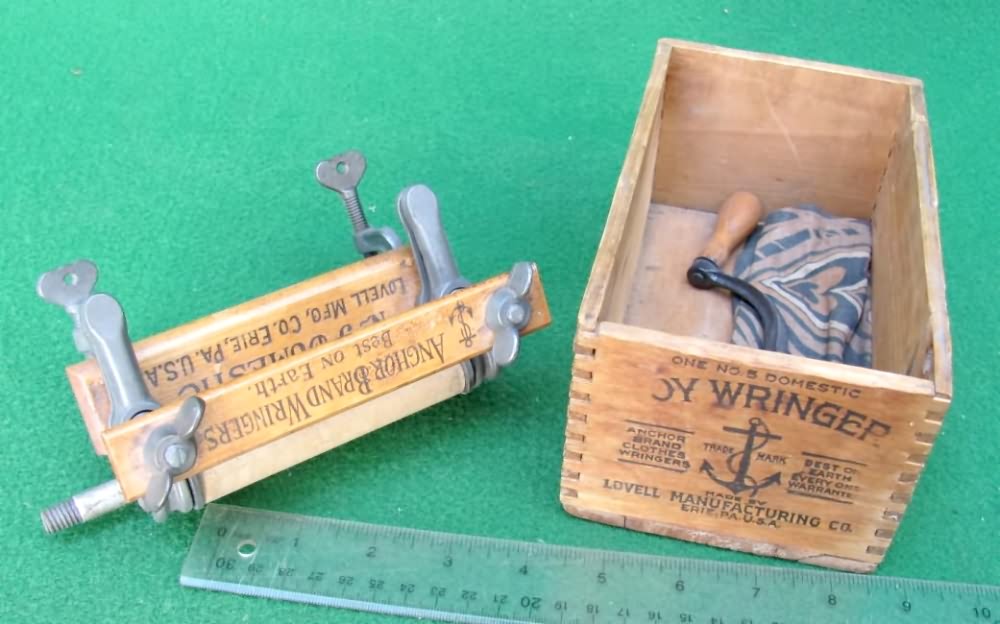 Salesman Sample
/ Toy Wringer for Washing Machine / Washer
This is a very nice piece. They are hard to find in this condition
in an original box!!
Salesman Sample
/ Toy Wringer for Washing Machine / Washer
This is a very nice piece. They are hard to find in this condition
in an original box!!
Good + . . . . $195.00 SOLD!
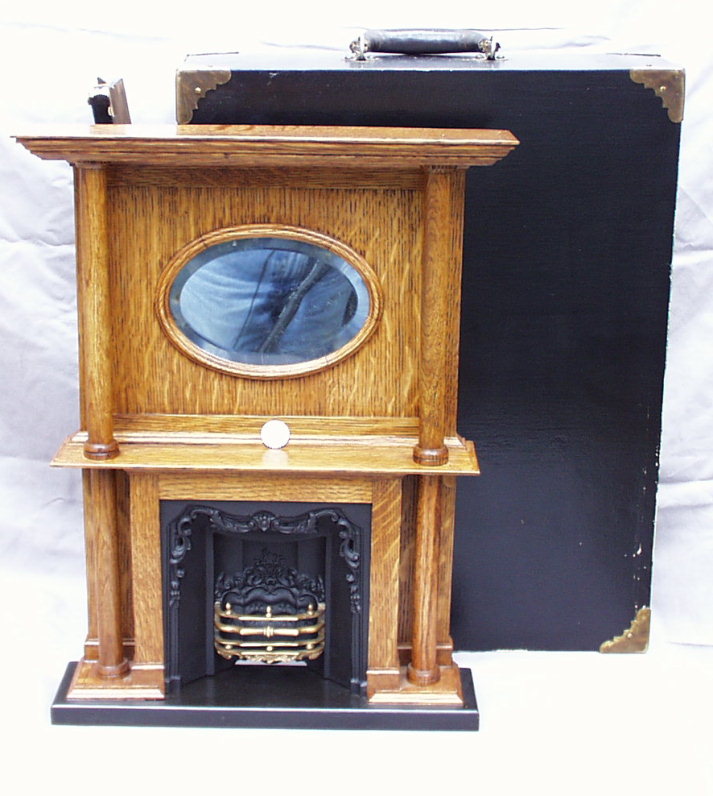 Salesman
Sample Mantle w/ Fireplace in Box
This is a very nice piece. It is unmarked as to maker, but very well
done.
Salesman
Sample Mantle w/ Fireplace in Box
This is a very nice piece. It is unmarked as to maker, but very well
done.Good + . . . . $395.00 SOLD!
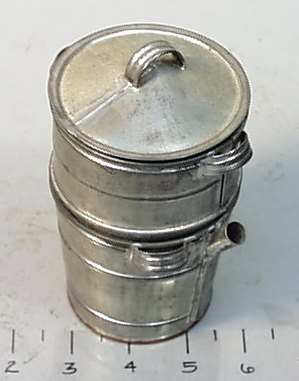 Salesman
Sample Double Boiler / Cooking Pot
This is an interesting salesman sample. It is a very well
made piece with copper bottom and about 10 different pieces that all fit
together and inside one another. It is unmarked as to maker, but very well
done.
Salesman
Sample Double Boiler / Cooking Pot
This is an interesting salesman sample. It is a very well
made piece with copper bottom and about 10 different pieces that all fit
together and inside one another. It is unmarked as to maker, but very well
done.
Good + . . . . 125.00 SOLD!
Antique Salesman Sample
& Advertising
Anvils
The
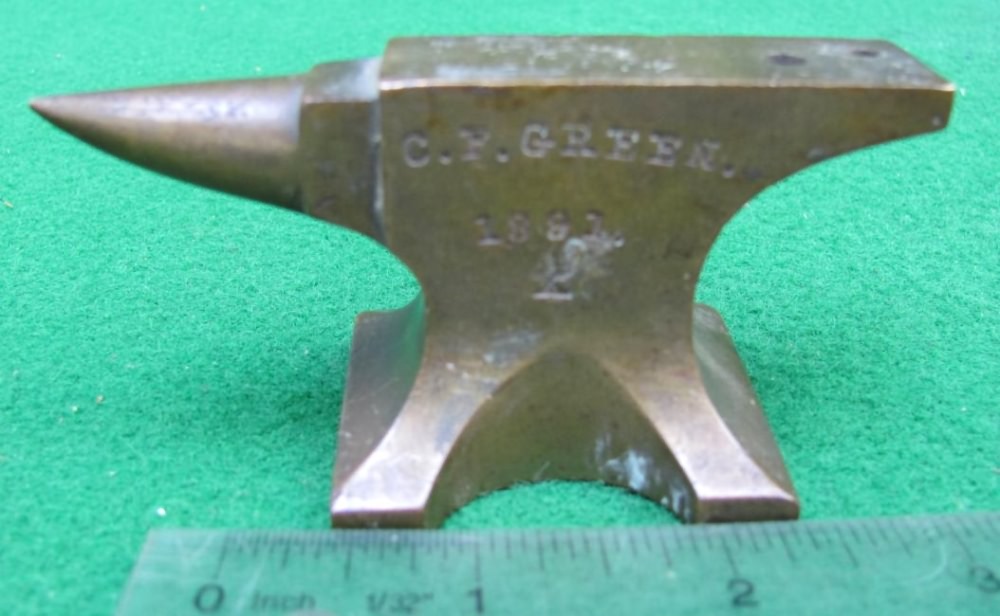 "C.
P. Green 1891 X" Cast Brass Miniature Anvil Paperweight
This commemorates or honors a fellow named C. P. Green and is dated 1891 w/ an X
below that. I did not try to research the who, why, what or other.
It is old and legit. I guarantee that!!
"C.
P. Green 1891 X" Cast Brass Miniature Anvil Paperweight
This commemorates or honors a fellow named C. P. Green and is dated 1891 w/ an X
below that. I did not try to research the who, why, what or other.
It is old and legit. I guarantee that!!
Good + . . . . . $95.00 SOLD!!
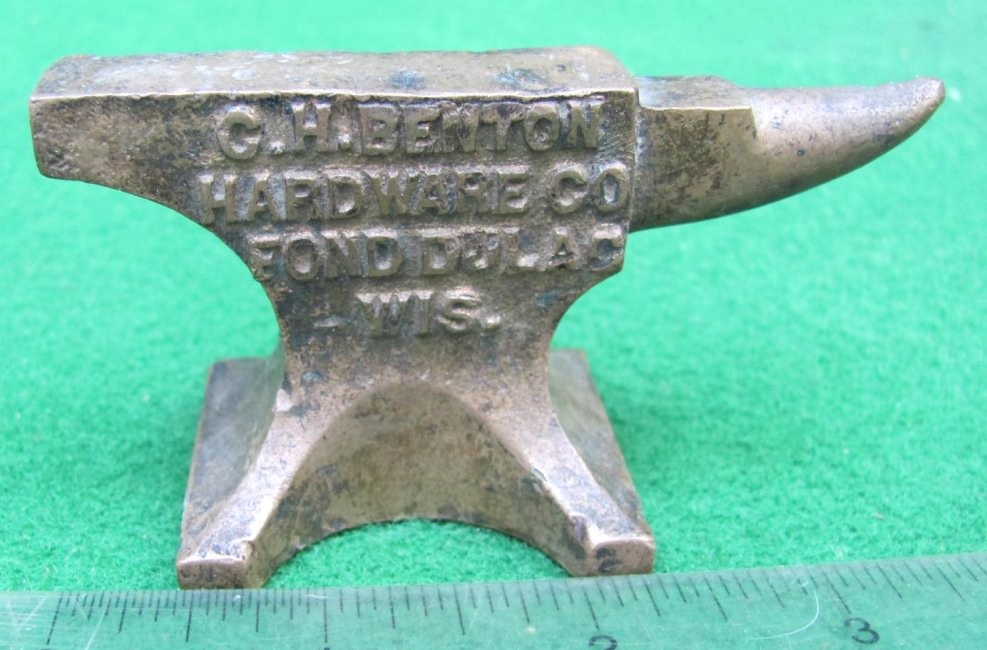 "C.H.
Benton" Miniature Advertising Anvil / Salesman Sample / Paperweight
This miniature anvil has writing on both sides. One side says C. H. Benton
Hardware Co. Fon Dulac Wis. On the other side it says Heavy & Shelf
Hardware Woodstock Iron. There is a pic and mention of another at an
anvil / blacksmith site. After that there are a couple mentions of the
company, and then nothing. It is old and legit. I guarantee
that!!
"C.H.
Benton" Miniature Advertising Anvil / Salesman Sample / Paperweight
This miniature anvil has writing on both sides. One side says C. H. Benton
Hardware Co. Fon Dulac Wis. On the other side it says Heavy & Shelf
Hardware Woodstock Iron. There is a pic and mention of another at an
anvil / blacksmith site. After that there are a couple mentions of the
company, and then nothing. It is old and legit. I guarantee
that!!
Good + . . . . . $125.00 SOLD!!
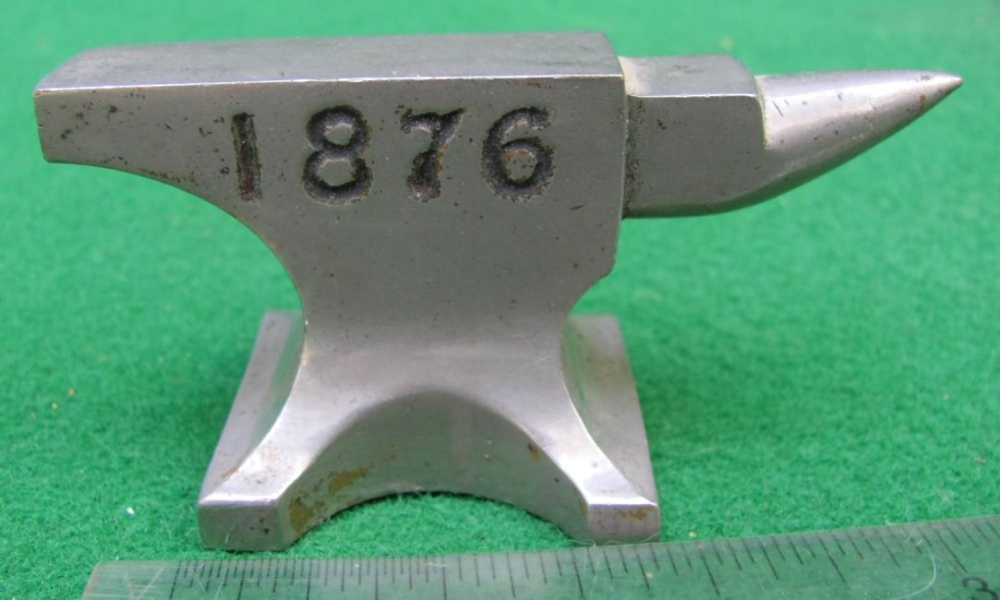 1776
/ 1876 Miniature Centennial Commemorative Anvil Paperweight
This miniature anvil has 1876 on one side and 1776 on the other.
That would make it a 100 year commemorative of the American Revolution
and the Declaration of Independence. It is nickel over brass. It is in super condition
with near perfect nickel. It is old and legit. I guarantee
that!!
1776
/ 1876 Miniature Centennial Commemorative Anvil Paperweight
This miniature anvil has 1876 on one side and 1776 on the other.
That would make it a 100 year commemorative of the American Revolution
and the Declaration of Independence. It is nickel over brass. It is in super condition
with near perfect nickel. It is old and legit. I guarantee
that!!
Good + . . . . . $100.00 SOLD!!
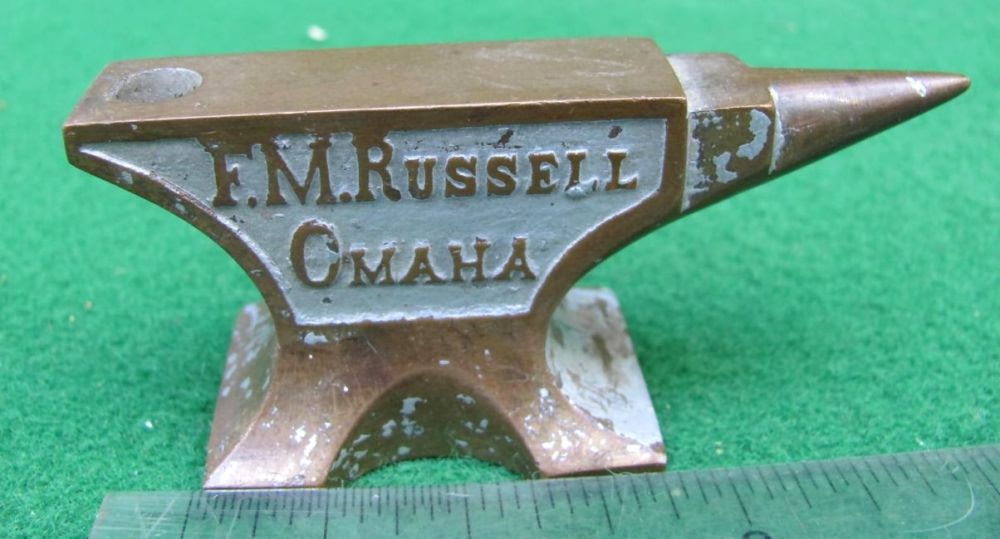 F. M.
Russell Omaha Gas & Electric Fixtures Miniature Advertising Anvil / Salesman Sample / Paperweight
This is a rare & early miniature anvil. The company was formed in
the 1870's and they supplied electric and gas fixtures to the growing
city. This miniature anvil is in super condition. It is old and legit. I guarantee
it!!
F. M.
Russell Omaha Gas & Electric Fixtures Miniature Advertising Anvil / Salesman Sample / Paperweight
This is a rare & early miniature anvil. The company was formed in
the 1870's and they supplied electric and gas fixtures to the growing
city. This miniature anvil is in super condition. It is old and legit. I guarantee
it!!
Good + . . . . . $125.00 SOLD!!
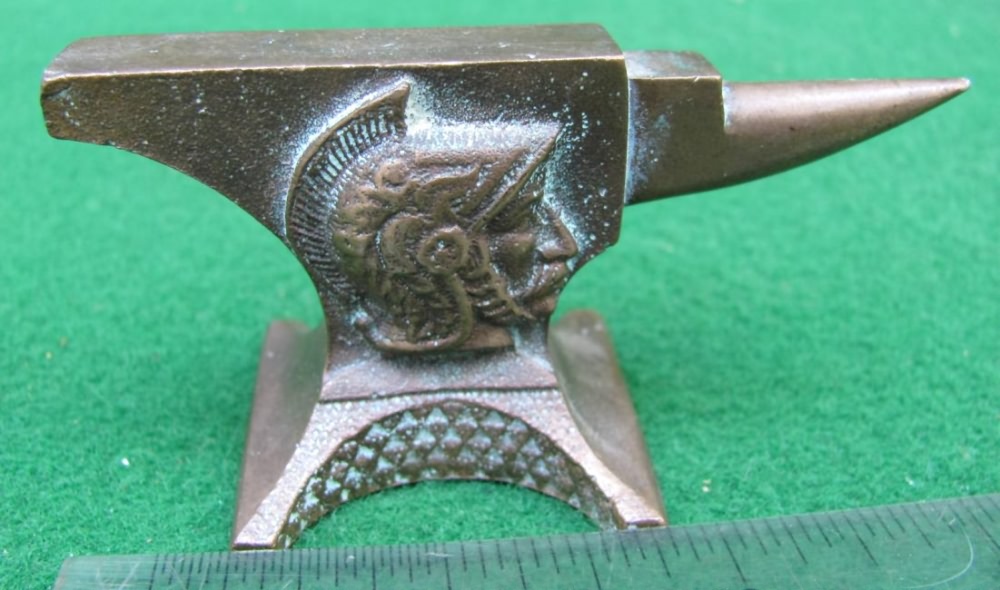 Cast
Brass Miniature Advertising Anvil / Salesman Sample / Paperweight This
unusual miniature anvil with an ancient Roman Soldier wearing a helmet cast into the side
is in super condition. It is old and legit. I guarantee
it!!
Cast
Brass Miniature Advertising Anvil / Salesman Sample / Paperweight This
unusual miniature anvil with an ancient Roman Soldier wearing a helmet cast into the side
is in super condition. It is old and legit. I guarantee
it!!
Good + . . . . . $125.00 SOLD!!
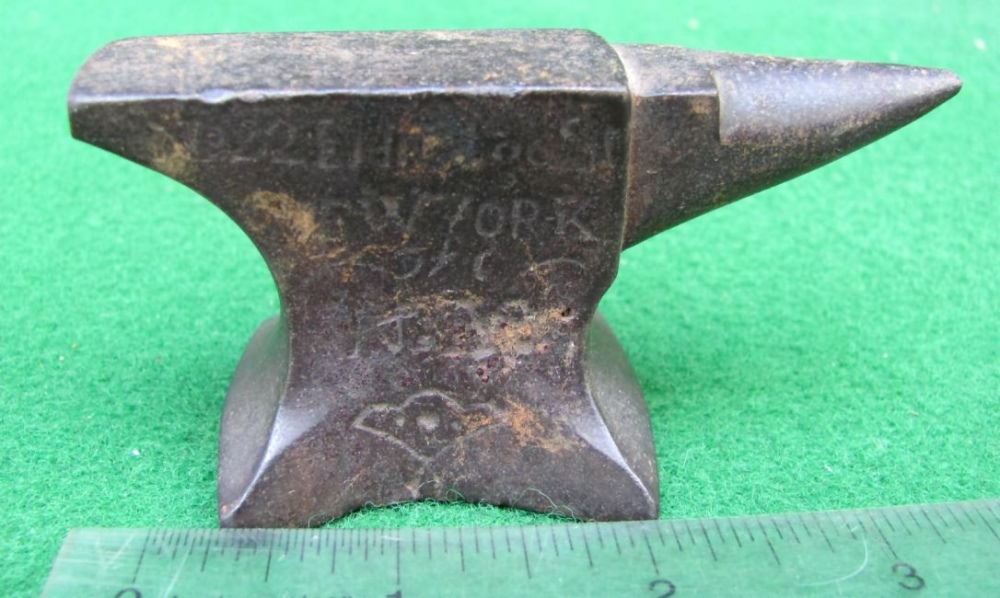 Adam
Wagner Cast
Iron Miniature Advertising Anvil / Salesman Sample / Paperweight This
unusual miniature cast iron anvil is stamped with info on both sides. It
is from an Iron Works that was located in NY from the 1870's to 1885 or so.
There is a website with the company history that is pretty easy to find,
but I could find no other examples of this anvil. It is old and legit. I guarantee
it!!
Adam
Wagner Cast
Iron Miniature Advertising Anvil / Salesman Sample / Paperweight This
unusual miniature cast iron anvil is stamped with info on both sides. It
is from an Iron Works that was located in NY from the 1870's to 1885 or so.
There is a website with the company history that is pretty easy to find,
but I could find no other examples of this anvil. It is old and legit. I guarantee
it!!
Good + . . . . . $150.00 SOLD!!
 "Cristobal Colon / Sunk July 3rd 1898" Miniature
Cast Brass Commemorative Advertising Anvil / Paperweight
This unusual miniature cast brass anvil is stamped with info and a date
on one side. The top line indicates it is made from brass from the
wreckage of the Cristobal Colon. Running "Cristobal Colon /
Sunk July 3rd 1898" in Google turned up lots of interesting info about
this Spanish ship and how it performed in the Spanish American War in
1898. It is an interesting read, a highlight being the Captain
decided to steam out of the harbor into the path of the American fleet
with his largest guns being wooden dummies. It is old and legit. I guarantee
it!! A nice piece!!
"Cristobal Colon / Sunk July 3rd 1898" Miniature
Cast Brass Commemorative Advertising Anvil / Paperweight
This unusual miniature cast brass anvil is stamped with info and a date
on one side. The top line indicates it is made from brass from the
wreckage of the Cristobal Colon. Running "Cristobal Colon /
Sunk July 3rd 1898" in Google turned up lots of interesting info about
this Spanish ship and how it performed in the Spanish American War in
1898. It is an interesting read, a highlight being the Captain
decided to steam out of the harbor into the path of the American fleet
with his largest guns being wooden dummies. It is old and legit. I guarantee
it!! A nice piece!! Good + . . . . . $100.00 SOLD!!
 "USE
Bradley's Top Props / New Haven Slat Irons" Miniature
Cast Iron Advertising Anvil / Paperweight
This unusual miniature anvil is stamped with info on both sides.The
black paint is original. I
believe the products referred to are parts for Horse drawn Carriages / Buggies. I
found scant info on that, but did find some. I could find no info
on or other examples of this unusual anvil though. It is old and legit. I guarantee
it!! A nice piece!!
"USE
Bradley's Top Props / New Haven Slat Irons" Miniature
Cast Iron Advertising Anvil / Paperweight
This unusual miniature anvil is stamped with info on both sides.The
black paint is original. I
believe the products referred to are parts for Horse drawn Carriages / Buggies. I
found scant info on that, but did find some. I could find no info
on or other examples of this unusual anvil though. It is old and legit. I guarantee
it!! A nice piece!! Good + . . . . . $100.00 SOLD!!
 2
Miniature Anvils The Brass one
is a semi hollow casting. It has good age, and looks good. The
jewelers anvil on the stand is marked Brookstone. Clean & Nice!!
2
Miniature Anvils The Brass one
is a semi hollow casting. It has good age, and looks good. The
jewelers anvil on the stand is marked Brookstone. Clean & Nice!!
Good + . . . . . $30.00 / pr. SOLD!!
 Salesman
Sample Miniature SIS Co Blacksmith Anvil
The name SIS Co - Superior and location Made
in Sweden are engraved in the side of this fine condition miniature salesman
sample anvil. These anvils are oftentimes called Sisco
which is an acronym for Swedish Iron and Steel Corporation. It is real, and
not a new knockoff or repop. The plating is in fine condition. It has
not been beat on or banged up. Very Nice!!
Salesman
Sample Miniature SIS Co Blacksmith Anvil
The name SIS Co - Superior and location Made
in Sweden are engraved in the side of this fine condition miniature salesman
sample anvil. These anvils are oftentimes called Sisco
which is an acronym for Swedish Iron and Steel Corporation. It is real, and
not a new knockoff or repop. The plating is in fine condition. It has
not been beat on or banged up. Very Nice!!
Fine . . . . . $150.00 SOLD!!
Antique
Salesman Sample & Toy Stoves
The
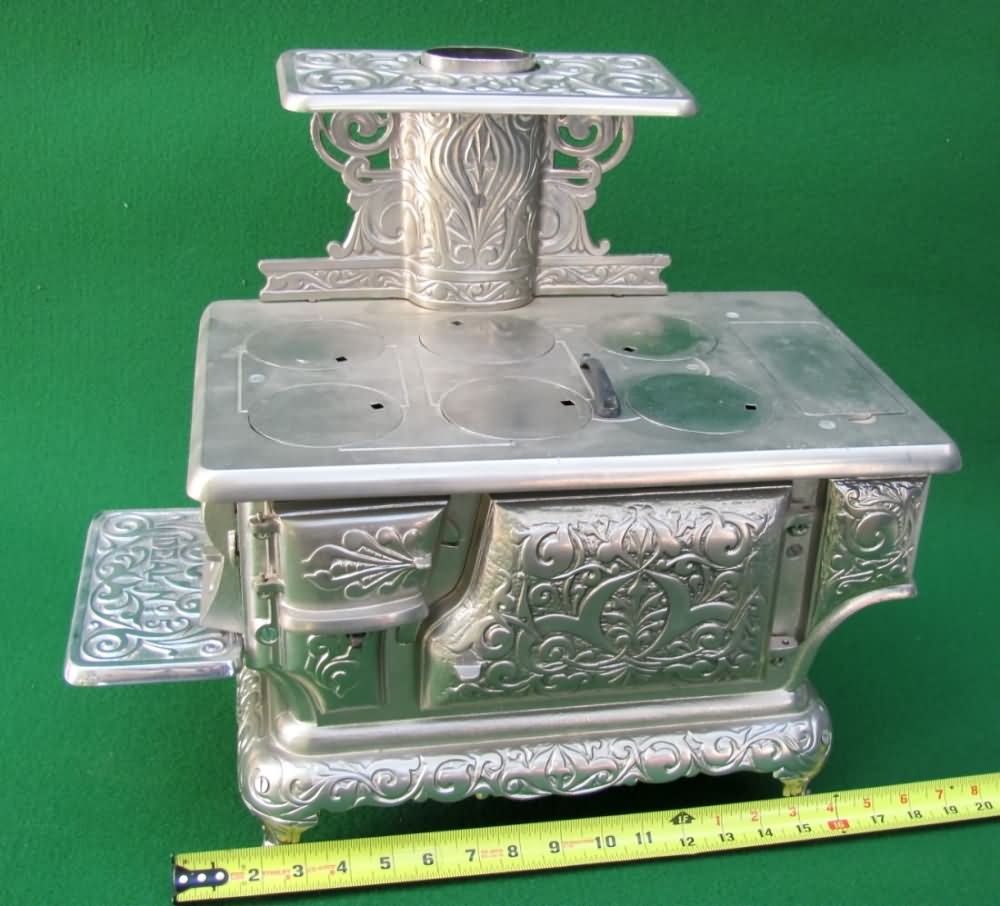 Ideal #5 Cast Iron Toy Range / Cook Stove
This is a great looking cast iron antique toy cook stove by Ideal.
This company was one of the major makers of toy stoves and other cast iron
toys in the late 19th century / early 20th century. This stove has
been nicely cleaned and restored. It looks to be all original with the
exception of one replaced stove lid and the different colored side shelf,
which would lead one to believe that shelf was recast and then re-plated. The overall condition
is exceptionally nice. This antique stove measures just about 20" wide across the base including the
side shelf, and was the largest stove that Ideal manufactured. A great addition to
the collection.
Very nice!!
Ideal #5 Cast Iron Toy Range / Cook Stove
This is a great looking cast iron antique toy cook stove by Ideal.
This company was one of the major makers of toy stoves and other cast iron
toys in the late 19th century / early 20th century. This stove has
been nicely cleaned and restored. It looks to be all original with the
exception of one replaced stove lid and the different colored side shelf,
which would lead one to believe that shelf was recast and then re-plated. The overall condition
is exceptionally nice. This antique stove measures just about 20" wide across the base including the
side shelf, and was the largest stove that Ideal manufactured. A great addition to
the collection.
Very nice!!
Fine . . . . . . $250.00 SOLD!!
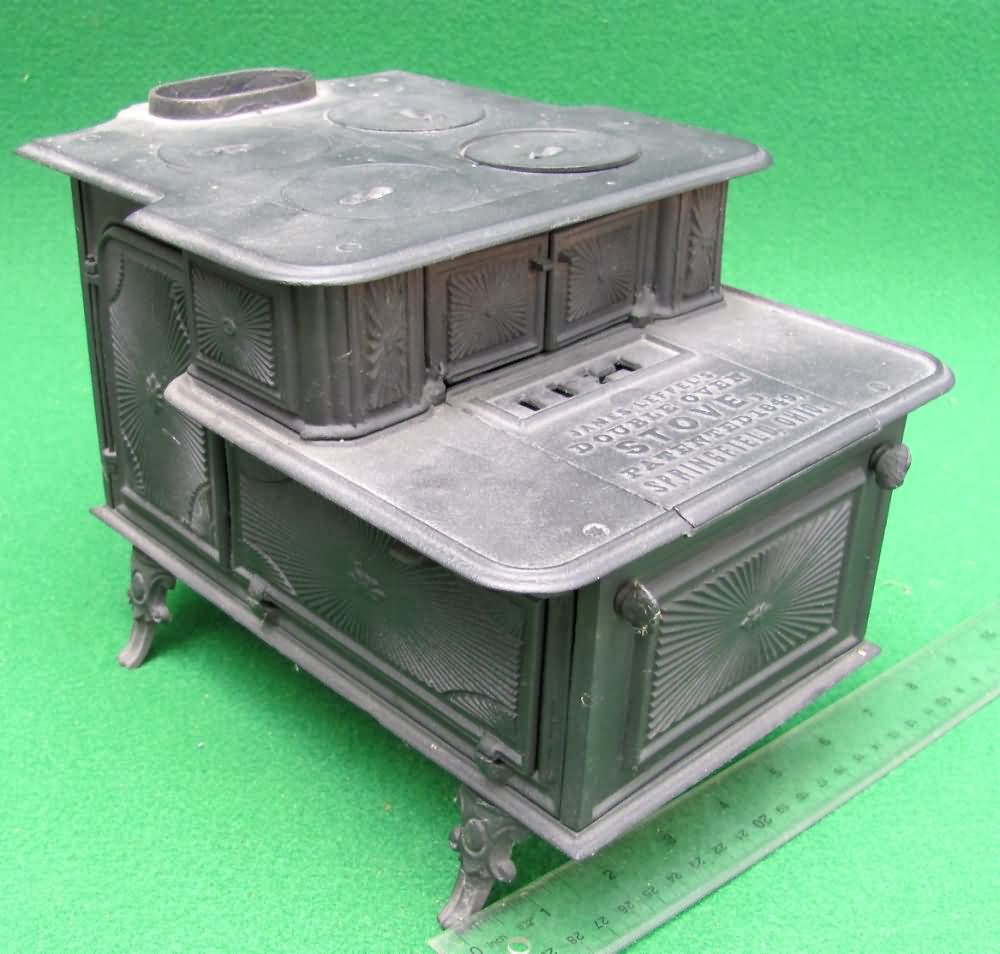 James
Leffel "Double Oven Stove Patented 1849 Springfield Ohio" Salesman
Sample Cast
Iron Stove
This is the actual stove pictured in Ford's book on toy stoves. I think he got it wrong with
this stove and that it is not just a toy, but rather a salesman sample or
display model. Given the size it could be a copy of the original Patent Model of
James Leffel's invention. The patent for this stove was issued in 1849
and the number is 6775. It is a
good match. The collector who owned this piece use to also buy and collect Patent Models
in addition to toy stoves, but he has passed and we can not ask him where or when he got this. It
was consigned by his family, and any records of purchases and the where and
when are spotty at best.
James
Leffel "Double Oven Stove Patented 1849 Springfield Ohio" Salesman
Sample Cast
Iron Stove
This is the actual stove pictured in Ford's book on toy stoves. I think he got it wrong with
this stove and that it is not just a toy, but rather a salesman sample or
display model. Given the size it could be a copy of the original Patent Model of
James Leffel's invention. The patent for this stove was issued in 1849
and the number is 6775. It is a
good match. The collector who owned this piece use to also buy and collect Patent Models
in addition to toy stoves, but he has passed and we can not ask him where or when he got this. It
was consigned by his family, and any records of purchases and the where and
when are spotty at best. James Leffel was a famous inventor hailing from the Miami Valley of Ohio. He is most famous for his water wheels and turbines. There is a biography for him on the internet at the Wright State University site and that is copied below.
James Leffel (1806-1866)
Water Wheel Pat. No. 4,056 Filed: (not stated on patent) Issued: May 21, 1845 Title: Water Wheel Double Turbine Water Wheel -
"The American Double Turbine" Pat. No. 34,150 Filed: (not stated on patent) Issued: January 14, 1862 Title: Improved Water-Wheel
James Leffel was born in Botetourt County, Virginia. His family settled outside of Springfield, Ohio, on Donnel's Creek when he was one year old. His father built a sawmill and gristmill on the creek. In the 1820s James Leffel built a sawmill on Mad River and installed a water wheel of his own design. Leffel decided to diversify and built his first foundry and machine shops in 1838 in Springfield. In 1849, he patented, pat. no. 6,775, an improved "double oven" stove and in 1850 he patented, pat. no. 7,820, a lever jack. The oven sold well regionally. As the foundry and machine shop continued to prosper, Leffel turned to waterpower experiments. On the basis of the experiments, Leffel, in 1862, applied for his second water wheel patent, the "American Double Turbine." It is this design that Leffel's fame is largely based on. The wheel was sold in the west, as far as Canada, and regionally. The James Leffel and Company continues today to manufacture water turbines in Springfield, Ohio. James Leffel was one of Ohio's great pioneer inventors and manufacturers.
This is the finest casting on a
small stove I have ever seen. The detail and construction are super. The model is all original and in fine
condition.
A must have for the special collection of Americana,
Miniature Stoves, Ohio History or a host of others.
Fine . . . . . . SOLD!!
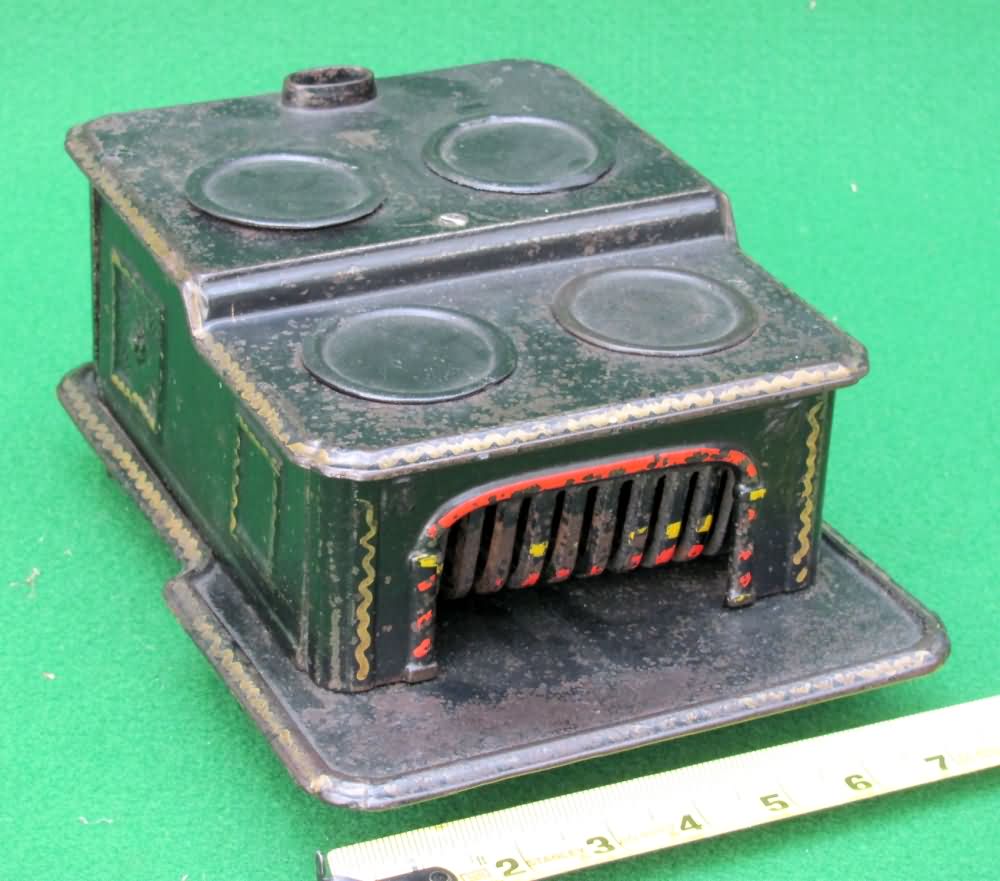 Bay State Toy Cook Stove
This small circa 1880's antique cast iron stove is American. It has a step-style design
on the top and low legs.The black japanned finish is very nice, and it
has gilt decoration with red and yellow decorations
on the front grill. The top is a bi-level range top with four original
burner lids. The hearth
plate is faintly marked "Bay State". This toy stove
was shown in the 1886 toy catalog of FAO Schwarz. The size is 4" H x 6" W
x 7" D. Early and different!
Bay State Toy Cook Stove
This small circa 1880's antique cast iron stove is American. It has a step-style design
on the top and low legs.The black japanned finish is very nice, and it
has gilt decoration with red and yellow decorations
on the front grill. The top is a bi-level range top with four original
burner lids. The hearth
plate is faintly marked "Bay State". This toy stove
was shown in the 1886 toy catalog of FAO Schwarz. The size is 4" H x 6" W
x 7" D. Early and different!
Good + . . . . . . SOLD!
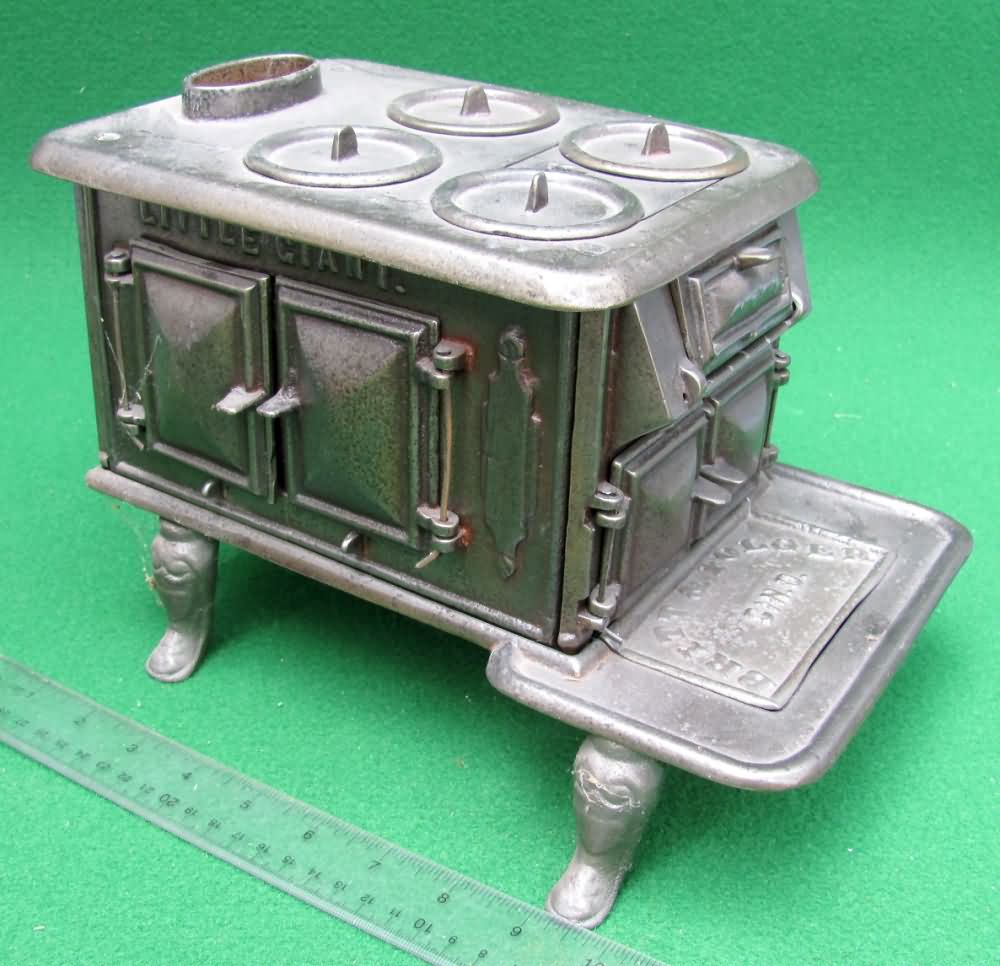 Britt
& Folger Cin. O. "Little Giant" Cast Iron Stove
This small early cast iron stove measures just about 8" across the front
and 12" long including the
shelf. It is a nicely cast and constructed cast iron stove. The name
Little Giant is cast into the side, and the name of the maker, Britt &
Folger, an early Ohio Stove maker, is on the front apron. It looks to
date from the mid 1800's.
A nice early little cast iron stove!!
Britt
& Folger Cin. O. "Little Giant" Cast Iron Stove
This small early cast iron stove measures just about 8" across the front
and 12" long including the
shelf. It is a nicely cast and constructed cast iron stove. The name
Little Giant is cast into the side, and the name of the maker, Britt &
Folger, an early Ohio Stove maker, is on the front apron. It looks to
date from the mid 1800's.
A nice early little cast iron stove!! Fine . . . . . . SOLD!
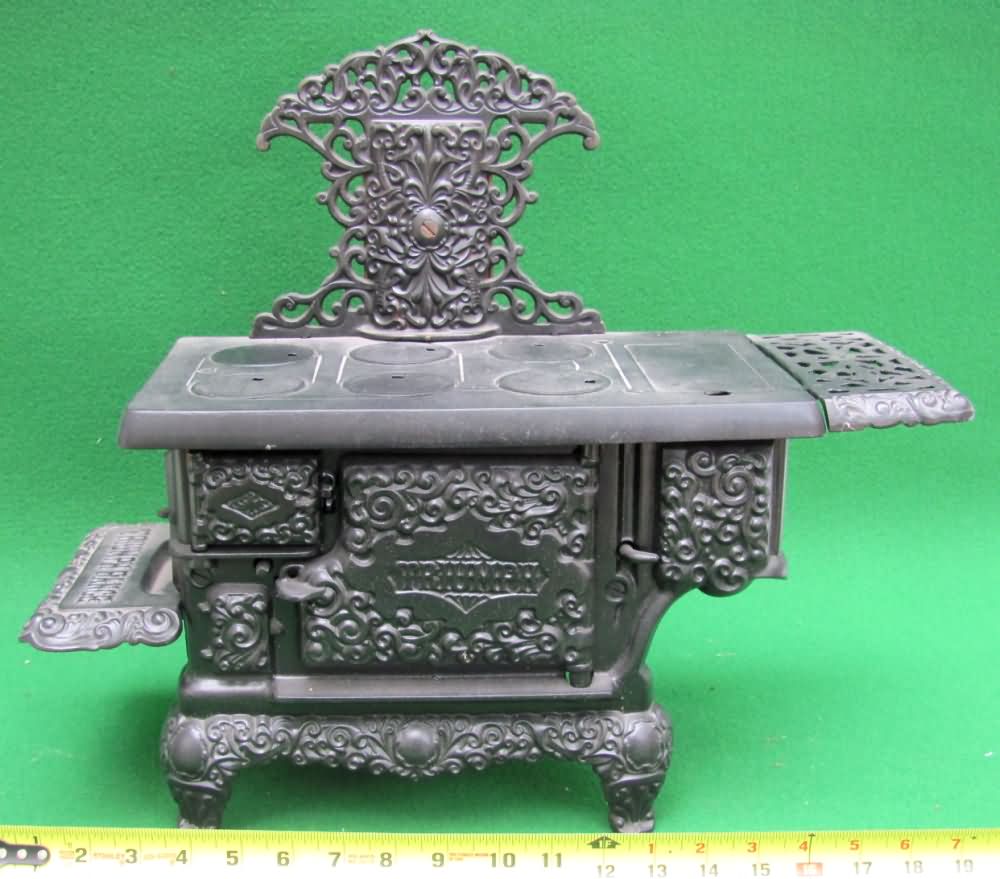 Triumph
Range Cast Iron Toy Stove
This is a nicely detailed stove by I think Kenton who was one of the biggest and best makers of cast
iron toy stoves back near the turn of the century. The back piece
on this one is slightly different from those shown in Fords book. It
measures close to 19" across the front with both removable shelves. A
nice condition stove!!
Triumph
Range Cast Iron Toy Stove
This is a nicely detailed stove by I think Kenton who was one of the biggest and best makers of cast
iron toy stoves back near the turn of the century. The back piece
on this one is slightly different from those shown in Fords book. It
measures close to 19" across the front with both removable shelves. A
nice condition stove!! Fine . . . . . . SOLD!!
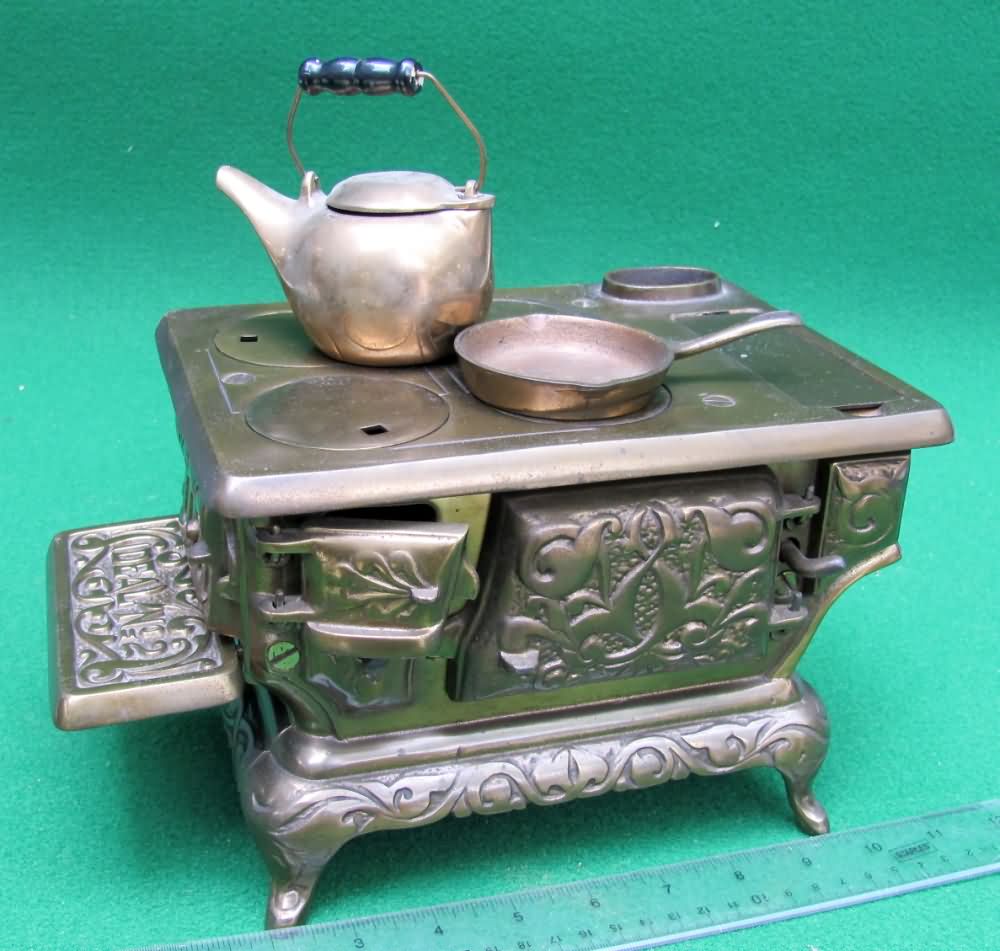 Ideal #2 Brass Plated Cast Iron Toy Stove
This is a bit different. I have seen other plated stoves before, but
not quite like this. It is an Ideal #2 size and so not the biggest nor
the smallest as Ideal made stoves with numbers from up to 5, and down
to 0 , but not a #4. The 2 pieces of cookware are included. A
nice condition stove!!
Ideal #2 Brass Plated Cast Iron Toy Stove
This is a bit different. I have seen other plated stoves before, but
not quite like this. It is an Ideal #2 size and so not the biggest nor
the smallest as Ideal made stoves with numbers from up to 5, and down
to 0 , but not a #4. The 2 pieces of cookware are included. A
nice condition stove!!
Fine . . . . . . SOLD!
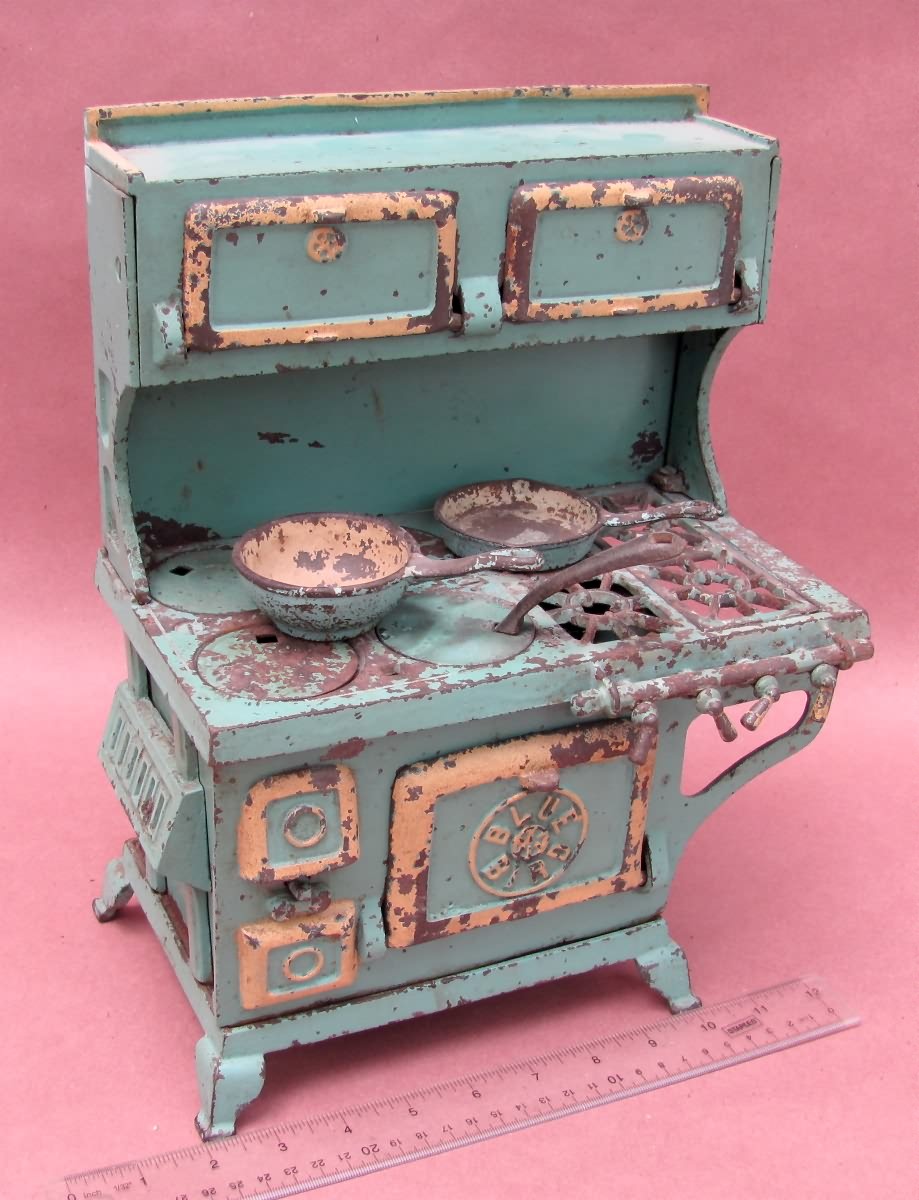 Blue
Bird Toy Stove by Grey Iron
This style stove came in a few different sizes configurations and color
schemes. This is the middle size model
at about 11" across the front. They date from the 20's or so.
The maker Grey Casting from PA is still in business making cast iron toys
and other pieces. These stoves are typically found in the condition
seen with paint issues.They have a unique look, and make for a nice
display piece in any setting and as part of many different collections.
Blue
Bird Toy Stove by Grey Iron
This style stove came in a few different sizes configurations and color
schemes. This is the middle size model
at about 11" across the front. They date from the 20's or so.
The maker Grey Casting from PA is still in business making cast iron toys
and other pieces. These stoves are typically found in the condition
seen with paint issues.They have a unique look, and make for a nice
display piece in any setting and as part of many different collections.
Very Good . . . . . . SOLD!
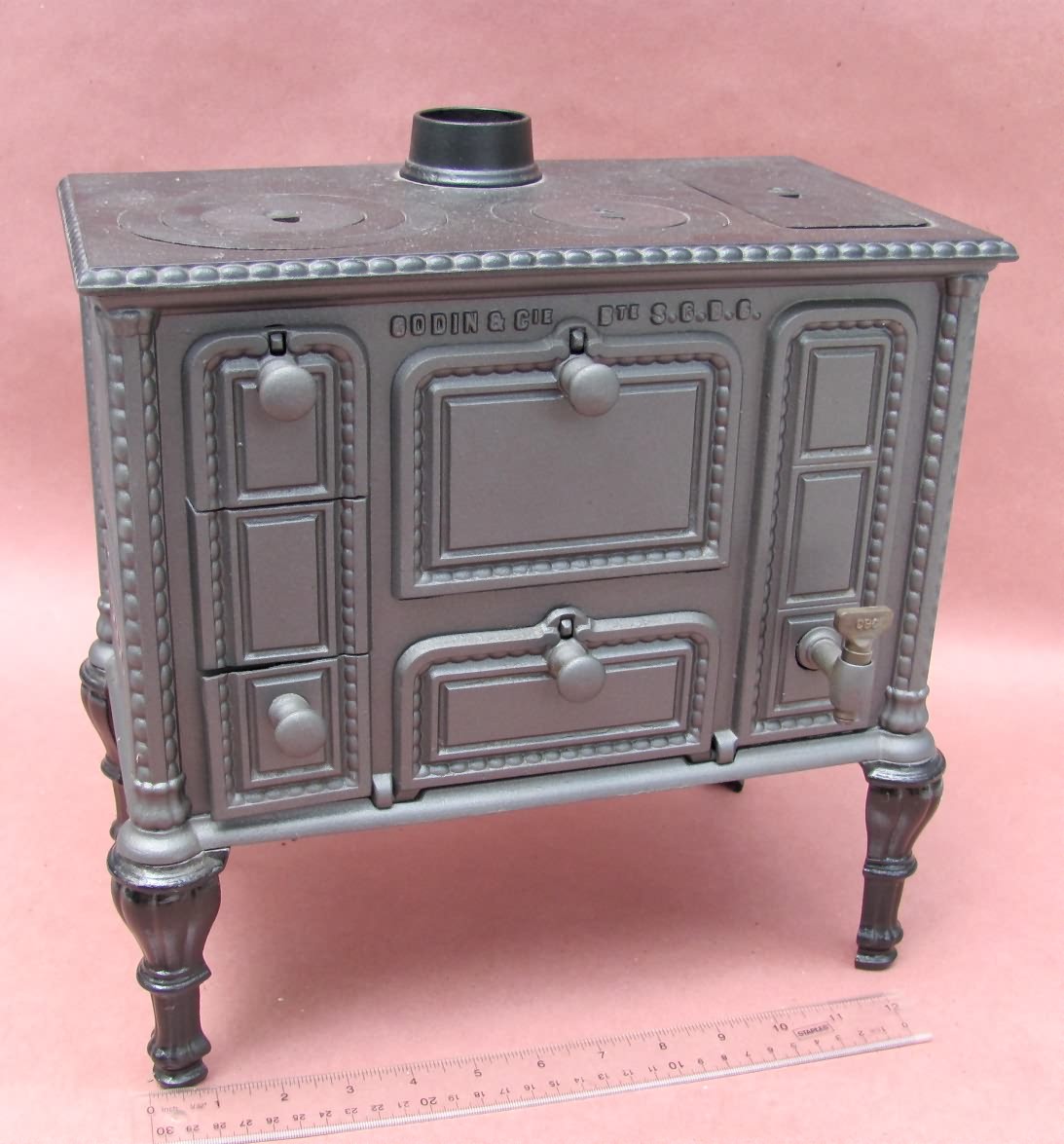 French
Salesman Sample / Toy Cookstove
This is another great looking French toy / salesman sample cast iron stove. It has two
burner lids in the top with multiple ring inserts to accommodate different size pots
that would sit down into the fire box. On the right is a water reservoir
with original lid. The doors and ash tray all open and operate as
they should. The maker's name is cast into the top front as well as the
French equivalent of their patent designation. It is approx 12" across the front
and 10" tall. A nice looking stove, in great condition, that will display very nicely
in many settings.
French
Salesman Sample / Toy Cookstove
This is another great looking French toy / salesman sample cast iron stove. It has two
burner lids in the top with multiple ring inserts to accommodate different size pots
that would sit down into the fire box. On the right is a water reservoir
with original lid. The doors and ash tray all open and operate as
they should. The maker's name is cast into the top front as well as the
French equivalent of their patent designation. It is approx 12" across the front
and 10" tall. A nice looking stove, in great condition, that will display very nicely
in many settings.
Very Good . . . . . . SOLD!
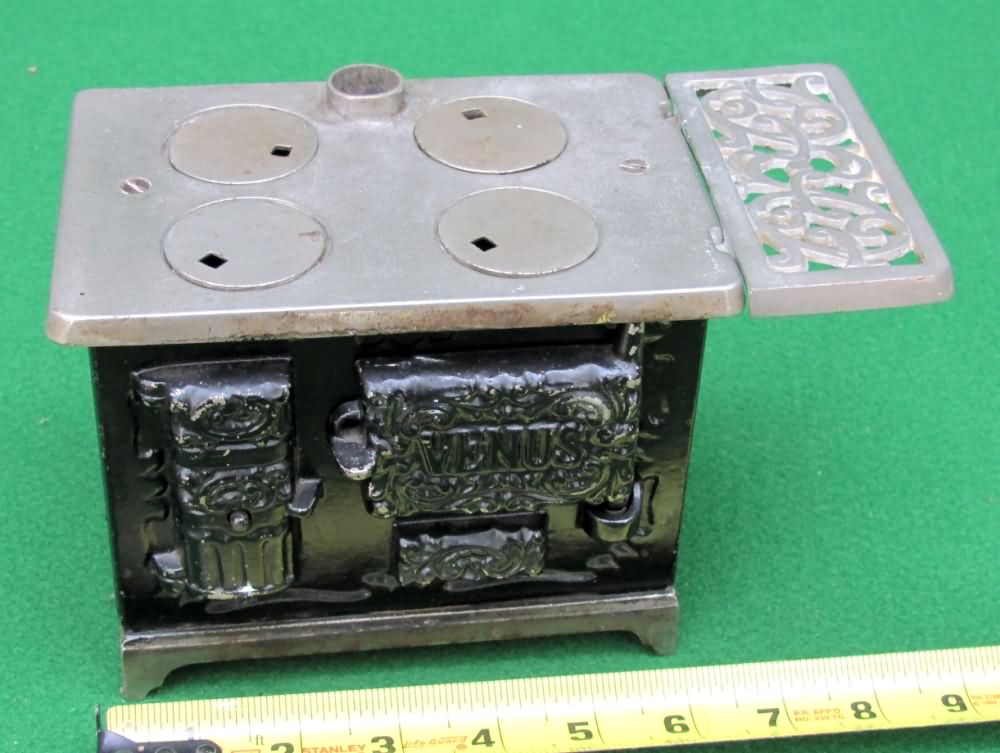 Venus
Toy Stove by Kenton A nice
little stove! The side shelf looks to have originally been from
another stove and modified to fit this one. Still cute!
Venus
Toy Stove by Kenton A nice
little stove! The side shelf looks to have originally been from
another stove and modified to fit this one. Still cute!
Good . . . . . . SOLD!
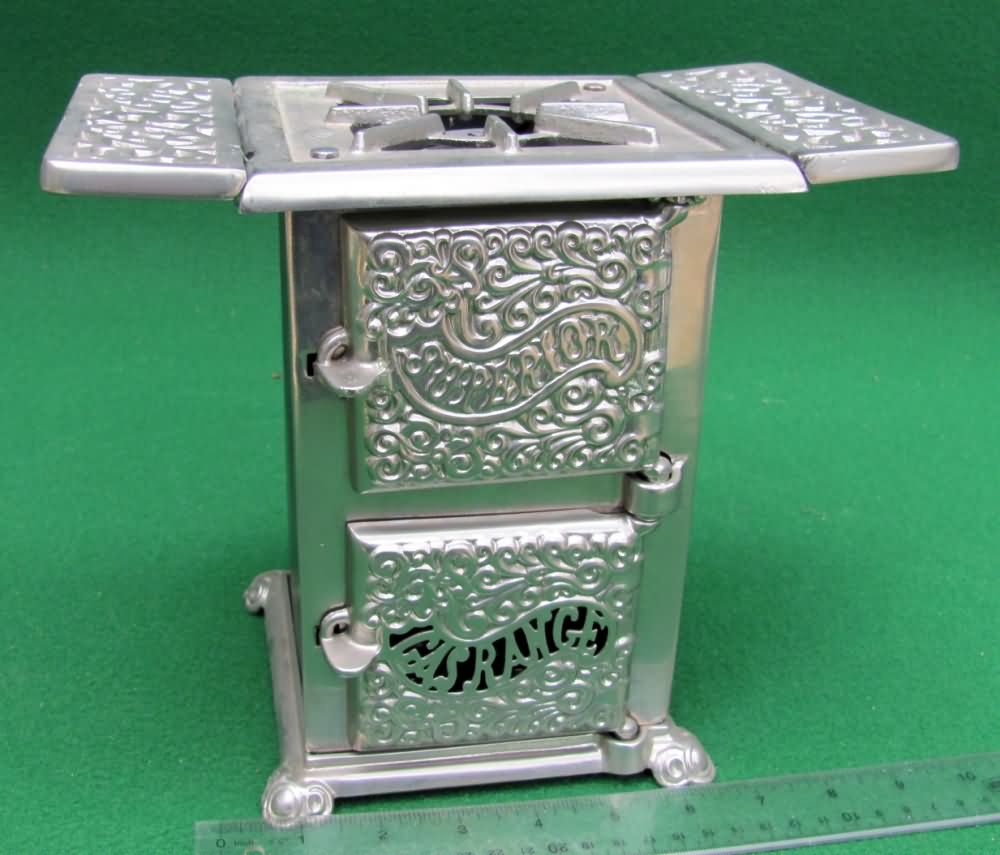 Superior
Salesman Sample Gas Range / Stove
This salesman sample of an apartment size stove has been nicely restored and
re-nickeled. The shelves remove and look good. The base measures approx 6" square
and it stands a bit over 8" tall.. It has one gas burner in the
top and 2 gas ovens below. I believe this was more a display model or
salesman sample than a toy.
A nice looking salesman sample gas range.
Superior
Salesman Sample Gas Range / Stove
This salesman sample of an apartment size stove has been nicely restored and
re-nickeled. The shelves remove and look good. The base measures approx 6" square
and it stands a bit over 8" tall.. It has one gas burner in the
top and 2 gas ovens below. I believe this was more a display model or
salesman sample than a toy.
A nice looking salesman sample gas range.
Fine . . . . . . SOLD!
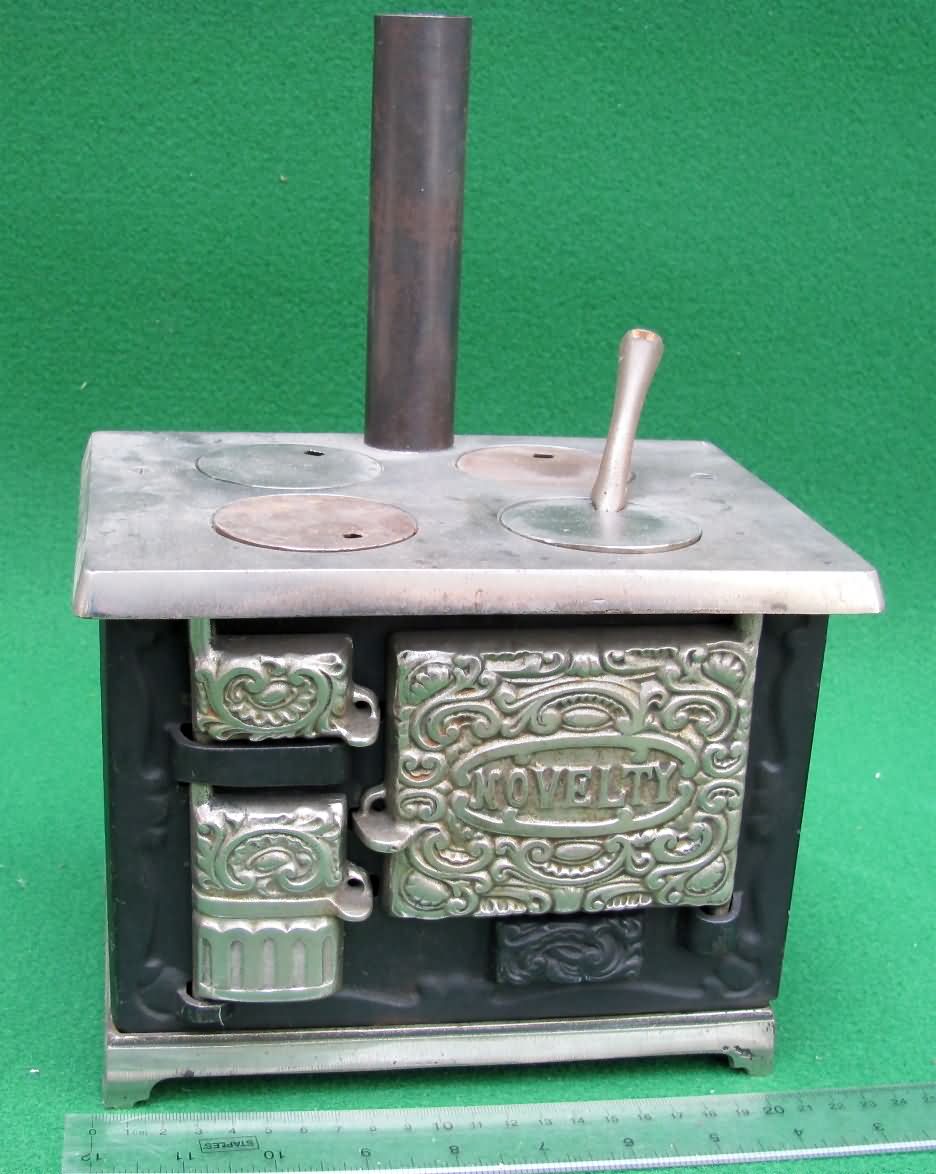 Kenton
Novelty Cast Iron Toy Stove
This is a nicely detailed stove by Kenton who was one of the biggest and best makers of cast
iron toy stoves back near the turn of the century. Kenton made a
few different versions of this stove. With or with out a backpiece,
and with or without side shelves. This is the plain Jane model with no
bells or whistles, just a nicely cast door with the name. It
measures close to 8" across the front. A
nice condition stove!!
Kenton
Novelty Cast Iron Toy Stove
This is a nicely detailed stove by Kenton who was one of the biggest and best makers of cast
iron toy stoves back near the turn of the century. Kenton made a
few different versions of this stove. With or with out a backpiece,
and with or without side shelves. This is the plain Jane model with no
bells or whistles, just a nicely cast door with the name. It
measures close to 8" across the front. A
nice condition stove!!
Fine . . . . . . SOLD!
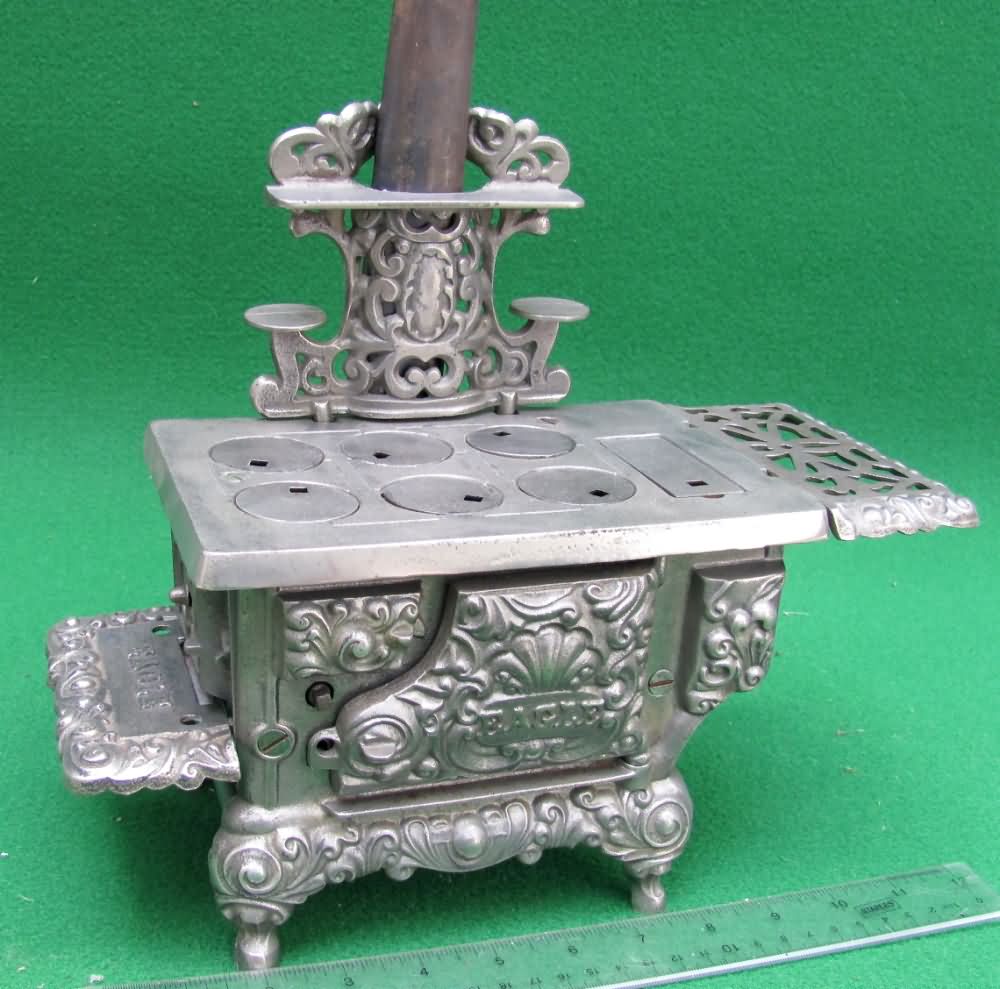 Eagle Cast Iron Toy Stove
This is a nicely detailed cast iron stove. I am not sure if it is
by Kenton Stevens, or Hubley. Ford pictures a number of Eagle stoves,
but as usual none with the exact same base or backpiece this one has.
This stove measures approx 12" across the front and is in nice original
condition
Eagle Cast Iron Toy Stove
This is a nicely detailed cast iron stove. I am not sure if it is
by Kenton Stevens, or Hubley. Ford pictures a number of Eagle stoves,
but as usual none with the exact same base or backpiece this one has.
This stove measures approx 12" across the front and is in nice original
condition Fine . . . . . . SOLD!!
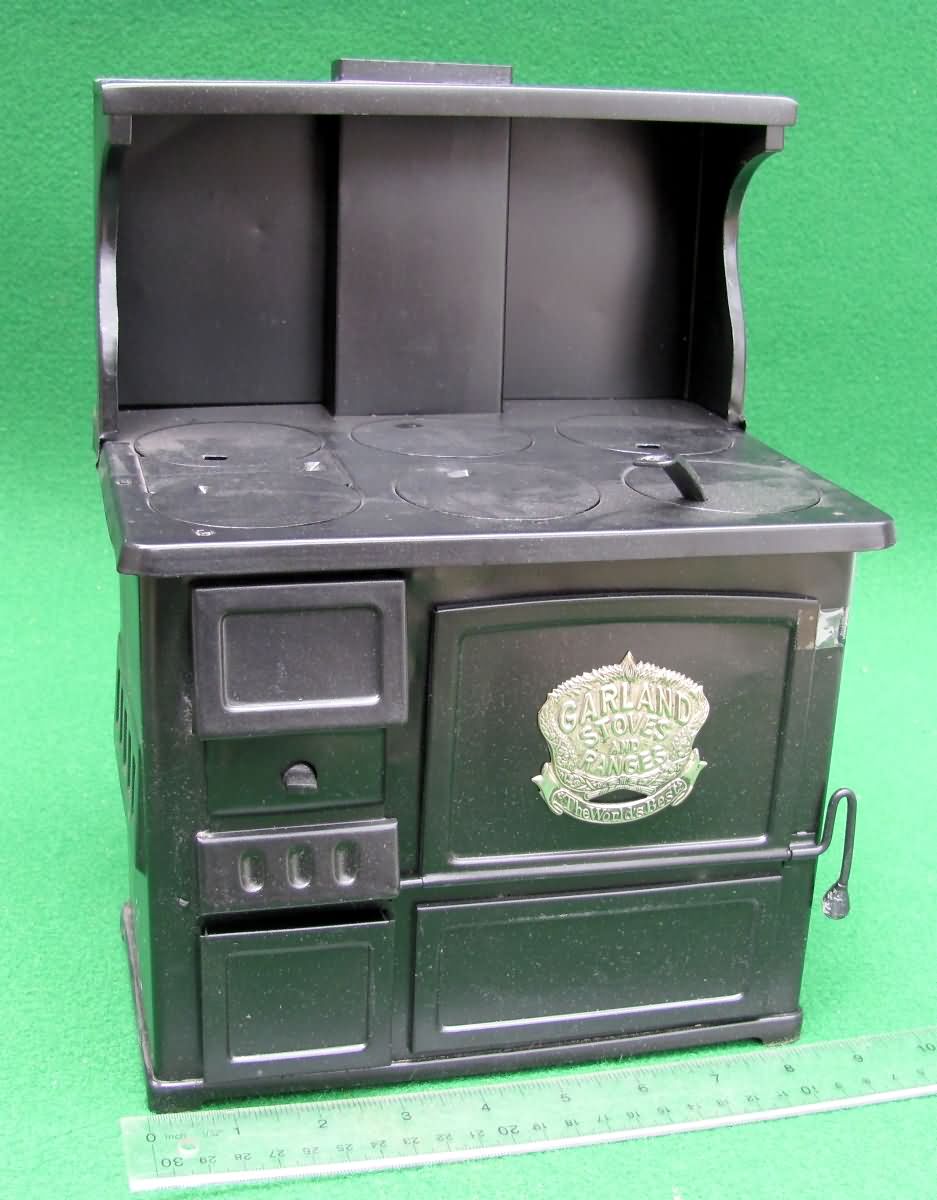 Garland Toy Stove
The cast badge on the front of this toy tin stove is very nice.The
stove
measures about 9' across the front, and is 16" tall. The drawers all
work, an the lids look to be original. Nice!!
Garland Toy Stove
The cast badge on the front of this toy tin stove is very nice.The
stove
measures about 9' across the front, and is 16" tall. The drawers all
work, an the lids look to be original. Nice!! Fine . . . . . . SOLD!
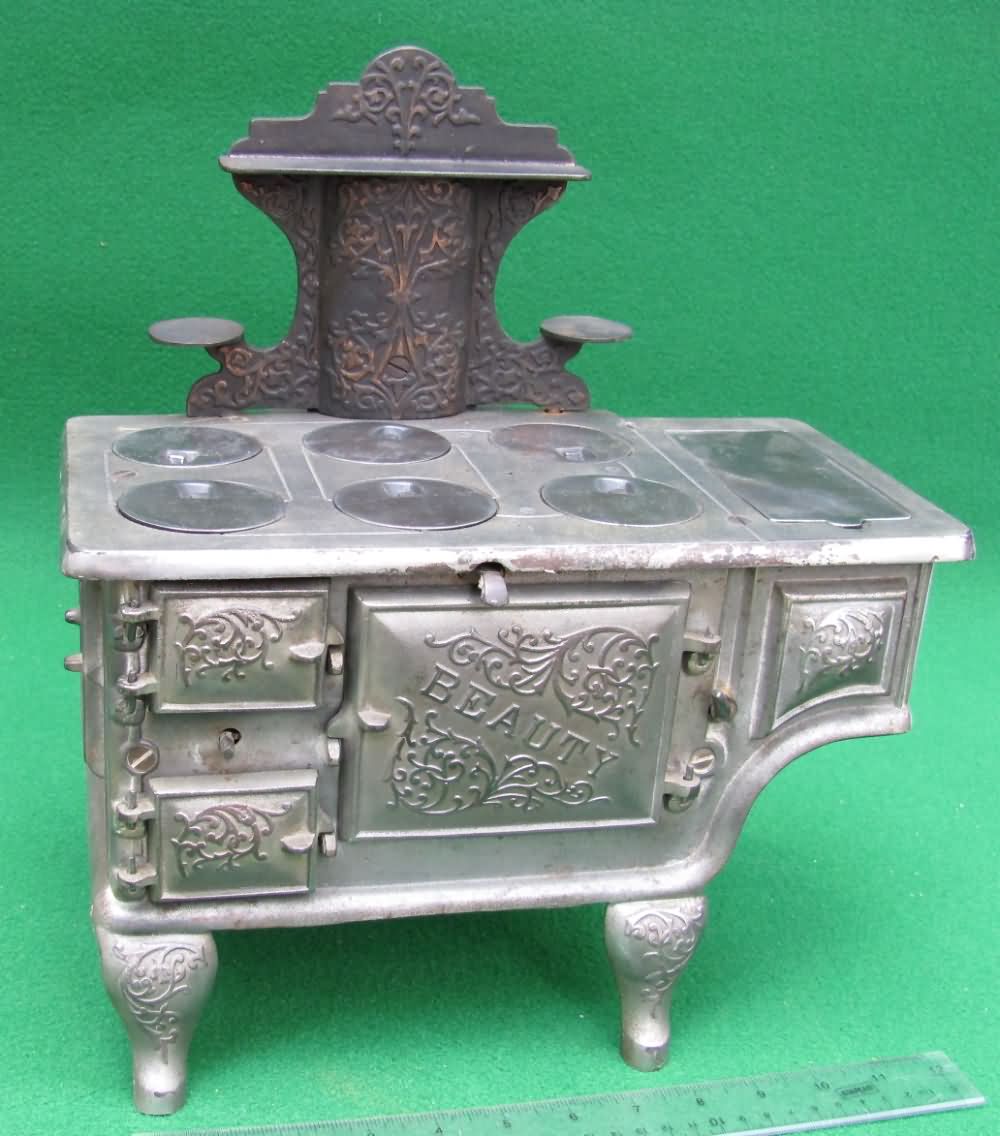 Beauty
Cast Iron Toy Stove
This toy stove is by Kenton. It measures approx 12" There is no
side shelf, and it appears the backpiece is a replacement from a different
finish but correct stove.
Beauty
Cast Iron Toy Stove
This toy stove is by Kenton. It measures approx 12" There is no
side shelf, and it appears the backpiece is a replacement from a different
finish but correct stove. Good . . . . . . SOLD!
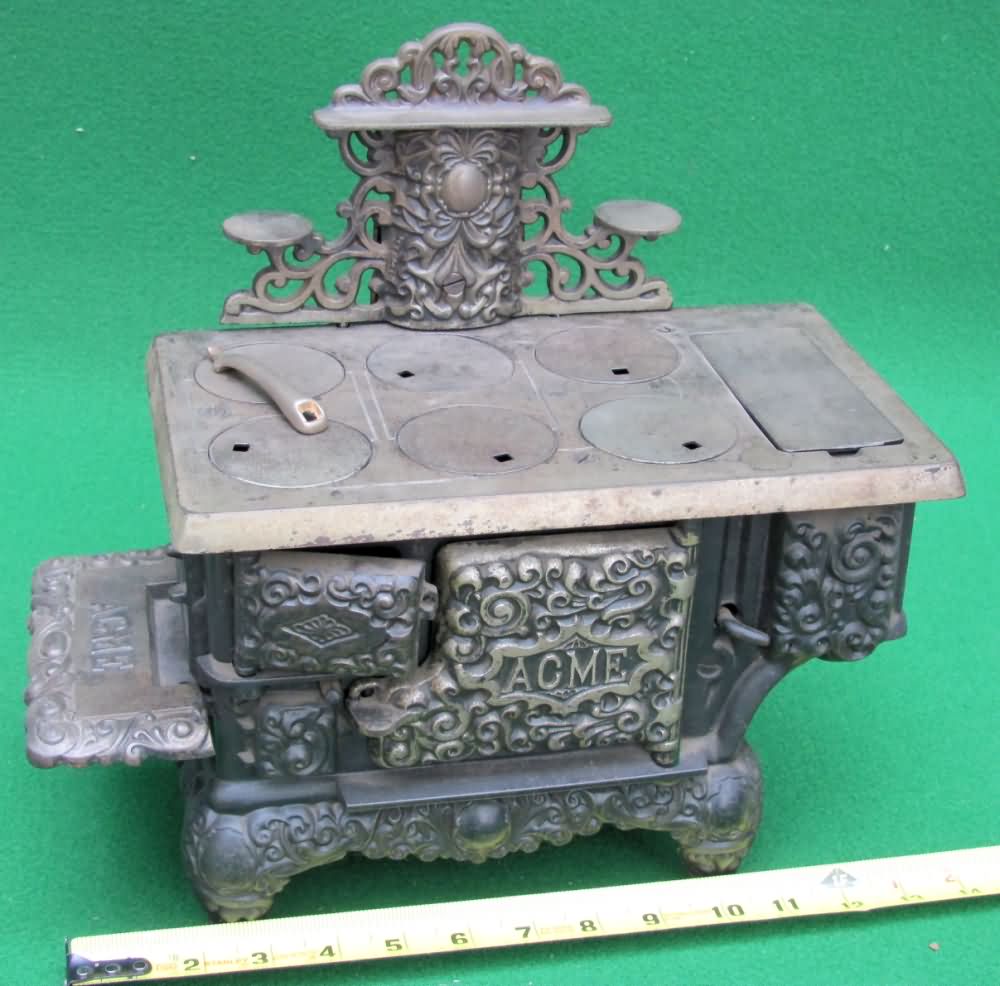 Kenton
Acme Cast Iron Toy Cook Stove
This nice condition cast iron toy stove by the well known maker Kenton looks to
be all original It has 6 burners, a water reservoir, as well as
the cast back piece with warming plates. The size is
14" wide across the front including the single shelf. The black finish
with nickel highlights is good and the contrasts looks great. A nice
early stove!!
Kenton
Acme Cast Iron Toy Cook Stove
This nice condition cast iron toy stove by the well known maker Kenton looks to
be all original It has 6 burners, a water reservoir, as well as
the cast back piece with warming plates. The size is
14" wide across the front including the single shelf. The black finish
with nickel highlights is good and the contrasts looks great. A nice
early stove!!
Fine . . . . . . SOLD!!
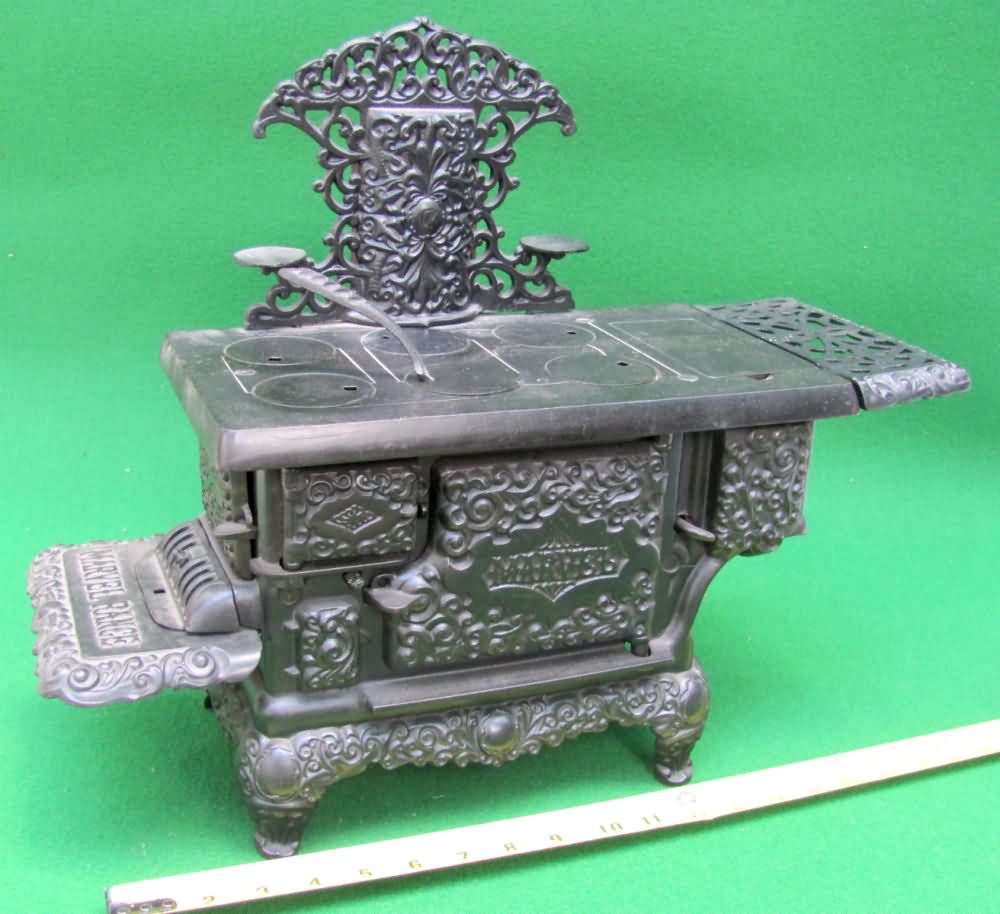 Kenton
Marvel Range Toy Stove
The Marvel was a large cast iron toy stove produced and offered by Kenton
back in the 20's or so. This example is is a great looking antique
cast iron toy cook stove that has been tastefully cleaned and is ready for
the collection or display.
Kenton
Marvel Range Toy Stove
The Marvel was a large cast iron toy stove produced and offered by Kenton
back in the 20's or so. This example is is a great looking antique
cast iron toy cook stove that has been tastefully cleaned and is ready for
the collection or display.Very nice!!
Fine . . . . . . SOLD!
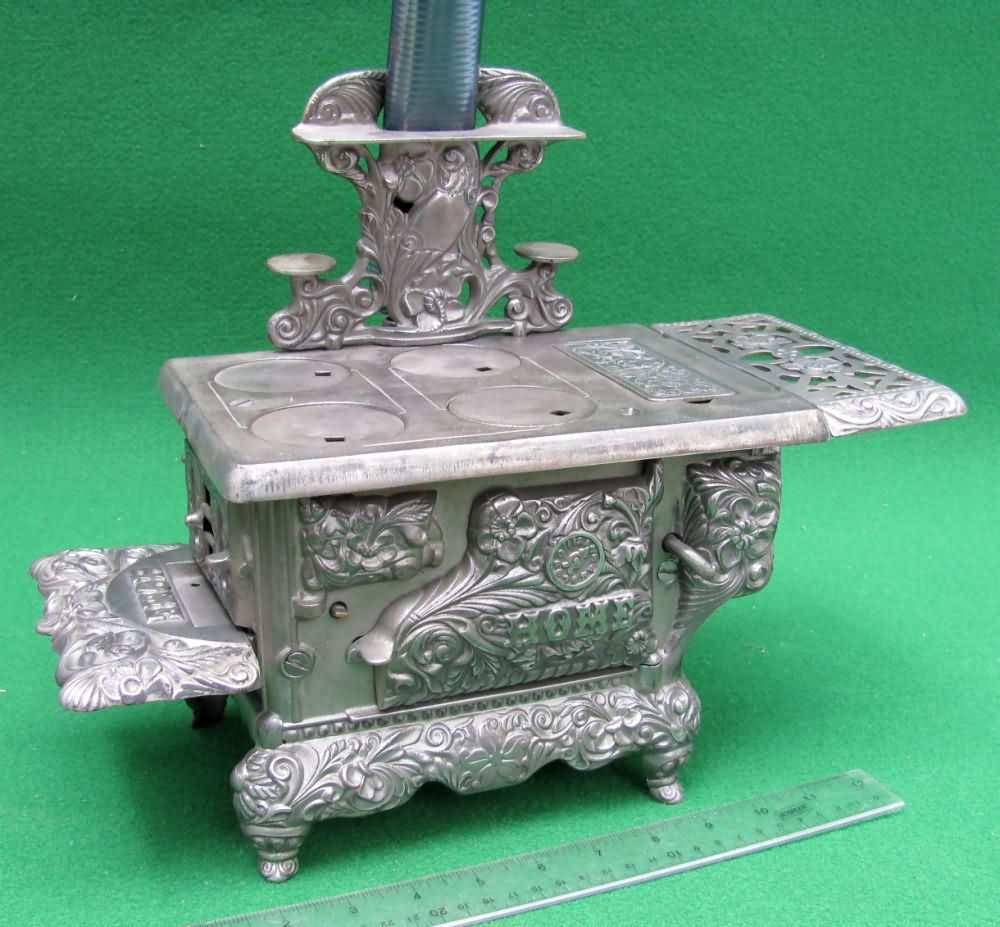 Home Cast Iron
Toy Stove by Stevens
Same as above but one size smaller. Very Nice!!
Home Cast Iron
Toy Stove by Stevens
Same as above but one size smaller. Very Nice!!
Fine . . . . . . SOLD
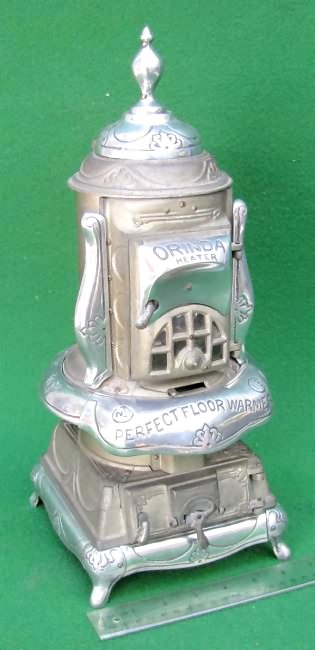 #
118 "Perfect Floor Warmer" Parlor Stove by Orinda Stove Works of Quincy Ill
This is a very rare piece. Almost no info on this company turns up
in a Google Search and no info on this particular model, either full size or
as a sample as shown here. RARE!!
#
118 "Perfect Floor Warmer" Parlor Stove by Orinda Stove Works of Quincy Ill
This is a very rare piece. Almost no info on this company turns up
in a Google Search and no info on this particular model, either full size or
as a sample as shown here. RARE!! The condition is very nice and I see no breaks or repairs. One of the side pieces looks to be a recast with slightly less detail than the other, but it looks great. A nice salesman sample stove that was probably used as a display model or carried from door to door!
Fine . . . . . . SOLD!
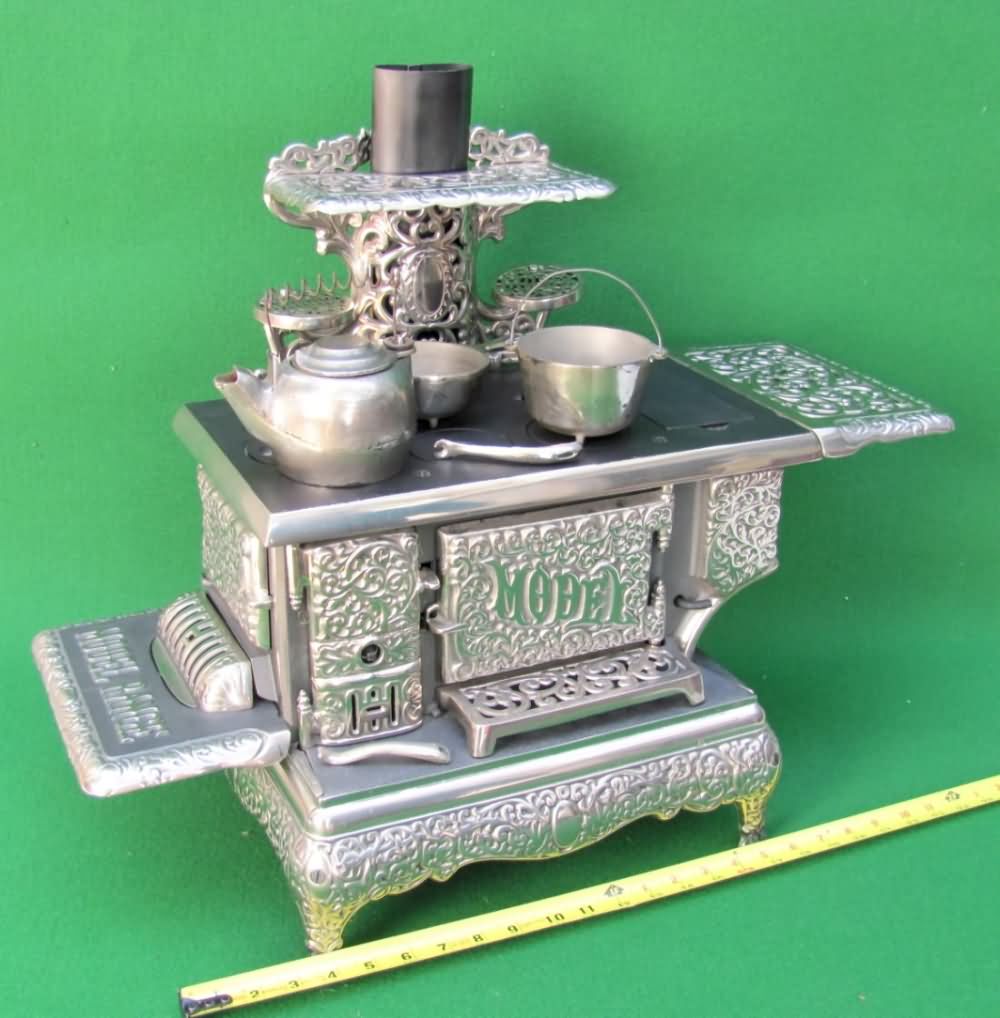 Model Cookstove by Kenton
The Kenton MODEL Toy Stove is one of the largest and most detailed of all
antique toy or sample size stoves.
This toy stove was made by Kenton, a major cast iron toy manufacturer from the late 19th
century. This antique stove dates from near the turn of the century give or
take.
The Kenton name is cast into the back of the stove in bold letters. This
unusual toy stove measures over 2' across,
and is so detailed and such a nice casting that these antique toy stoves are often referred to as, and mistaken
for, salesman sample stoves.
Model Cookstove by Kenton
The Kenton MODEL Toy Stove is one of the largest and most detailed of all
antique toy or sample size stoves.
This toy stove was made by Kenton, a major cast iron toy manufacturer from the late 19th
century. This antique stove dates from near the turn of the century give or
take.
The Kenton name is cast into the back of the stove in bold letters. This
unusual toy stove measures over 2' across,
and is so detailed and such a nice casting that these antique toy stoves are often referred to as, and mistaken
for, salesman sample stoves. The stove looks to be all-original, but the finish looks so nice that some might think it has been re-plated. I just don't know for sure. In any case it has been carefully cleaned / restored and it looks terrific. This will be a shinning highlight of any collection or display.
Also included are the 4 original Kenton brand cast iron cookware pieces shown in the pictures. There is the lidded tea kettle, a skillet, a handled pot, as well as the pot with a bail handle. I will sell these 4 pieces separately as a unit for a reasonable amount. They are very hard to find and considered a pretty rare commodity.
This antique Kenton brand Model cast iron stove is a super piece of early Americana and one of the nicest examples of this stove I have seen.
Fine . . . . . . SOLD!
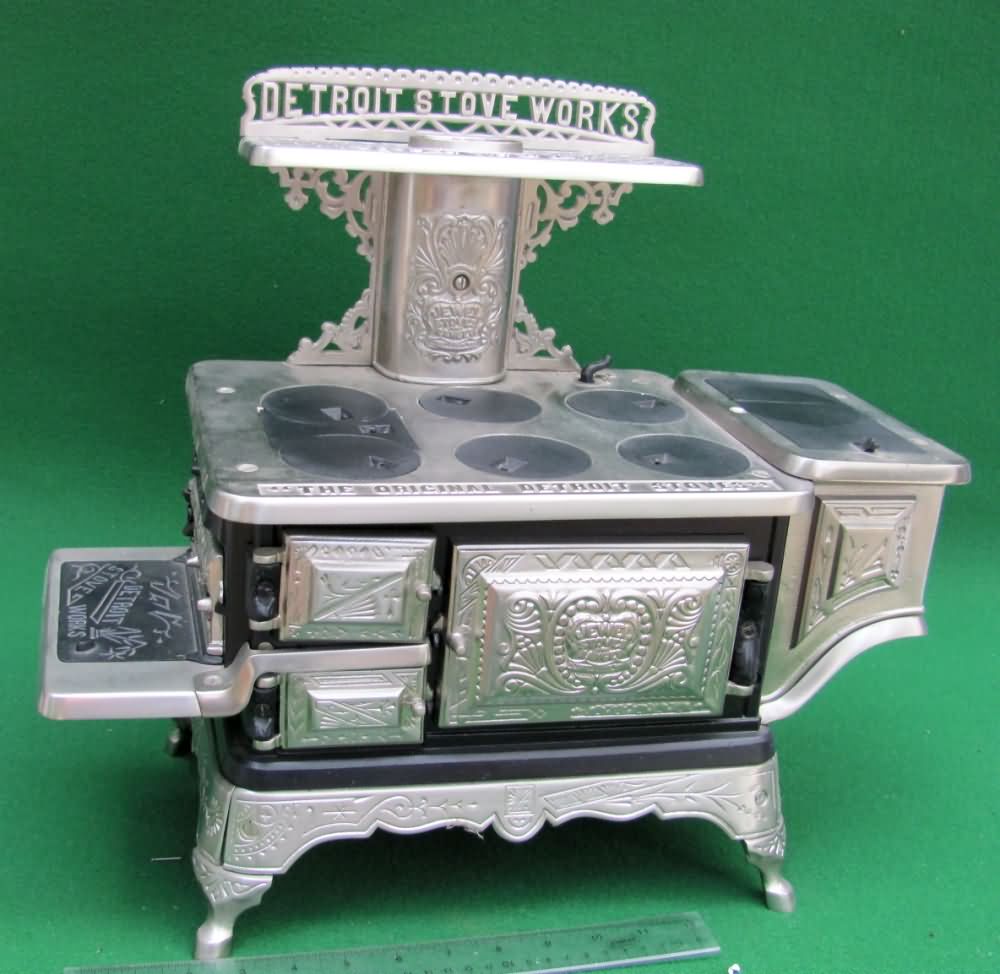 Jewell
Range Jr. Cast Iron Stove by Detroit Stove Works
The Detroit Stove Works child size stoves are classified as toys.
They are one of the best done and most detailed of all the different "toy"
stoves available. The Jewell Range Jr.is not the same type of "toy" as
stoves by Kenton
or Hubley as those firms did not make full size stoves, and the Detroit
Stove Works, who made this, did. They are more like Home Comfort stoves and Great Majestic stoves
in that regard. This stove came in at least 2 different
versions with this being the larger and more detailed one with a water reservoir
on the side. This stove has been tastefully and professionally
restored and looks great!! A nice cast
iron toy stove that was probably used as a display model as well as being
offered for sale as a toy!!
Jewell
Range Jr. Cast Iron Stove by Detroit Stove Works
The Detroit Stove Works child size stoves are classified as toys.
They are one of the best done and most detailed of all the different "toy"
stoves available. The Jewell Range Jr.is not the same type of "toy" as
stoves by Kenton
or Hubley as those firms did not make full size stoves, and the Detroit
Stove Works, who made this, did. They are more like Home Comfort stoves and Great Majestic stoves
in that regard. This stove came in at least 2 different
versions with this being the larger and more detailed one with a water reservoir
on the side. This stove has been tastefully and professionally
restored and looks great!! A nice cast
iron toy stove that was probably used as a display model as well as being
offered for sale as a toy!! Fine . . . . . . SOLD!
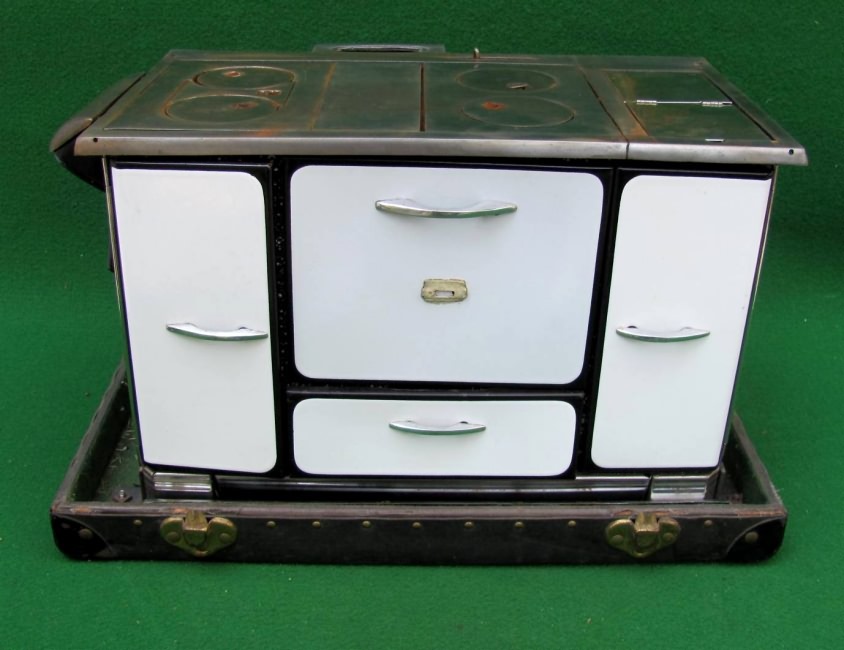 Home
Comfort Salesman Sample Wood Stove / Kitchen Range w/ Box
This is a true salesman sample wood stove / range in its original carry case
/ box that a salesperson would carry from door to door or shop to shop
trying to sell full size models to prospective customers. It measures just about
18" across the front.I believe it dates from the 20's or so.
It is all wood fired and must have been directed toward those folks living
in rural areas without access to electricity or gas. I bet it was a
hard sell.
Home
Comfort Salesman Sample Wood Stove / Kitchen Range w/ Box
This is a true salesman sample wood stove / range in its original carry case
/ box that a salesperson would carry from door to door or shop to shop
trying to sell full size models to prospective customers. It measures just about
18" across the front.I believe it dates from the 20's or so.
It is all wood fired and must have been directed toward those folks living
in rural areas without access to electricity or gas. I bet it was a
hard sell.The overall condition is pretty nice noting that the lid to the water tank, and the tank itself are replacements. The rest is all original and in good condition. A nice looking salesman sample stove!!
Fine . . . . . . SOLD!
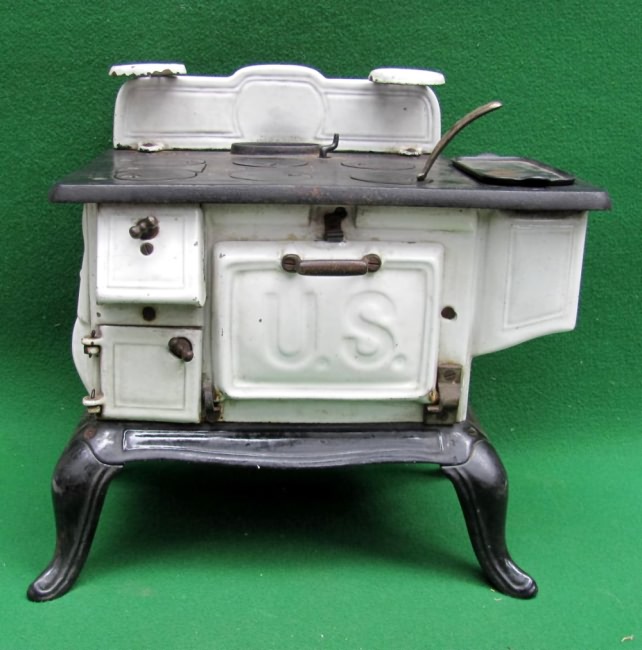 U.S.
"Baby Goth" Wood Fired Cook Stove / Range by the U. S. Stove Corp. of TN
There
are several different versions of this sample size toy woodstove that can be found. From the
information I found the US version was made by the U.S. Stove Corporation
based in Tennessee. I have only seen this antique sample size stove a few
times in all of my travels and searches. There are a couple similar stoves
pictured in Ford's book with different names including a cream and green that he has valued at $3000 - $4000 in restored condition.
U.S.
"Baby Goth" Wood Fired Cook Stove / Range by the U. S. Stove Corp. of TN
There
are several different versions of this sample size toy woodstove that can be found. From the
information I found the US version was made by the U.S. Stove Corporation
based in Tennessee. I have only seen this antique sample size stove a few
times in all of my travels and searches. There are a couple similar stoves
pictured in Ford's book with different names including a cream and green that he has valued at $3000 - $4000 in restored condition.This sample size toy stove is in great un-restored condition and looks to be all original. There is some minor chipping of the enamel at joints, but overall it is close to 97% or better. The door hinges are good and they function and holds well.
The cast iron top is in natural iron finish and is not pitted or rusty. The U.S. cast into the door is very graphic and bold. On the top left the word "Gothic" is cast into the top. On the right 68-18 is cast into the top. The back of the top shelf is marked "Baby Goth". The bottom of the lid for the water reservoir on the right is also marked Baby Goth. The cast iron fire box is OK, and the damper works. The feed door is good, and the sifter feature below the fire box is present and operable. It even has the two original swiveling warming plates.
This sample size antique stove is nice as it sits, and will be even nicer cleaned up a bit more. A very nice example of a hard to find cast iron antique toy stove at an attractive price not found elsewhere.
Fine . . . . . . SOLD!
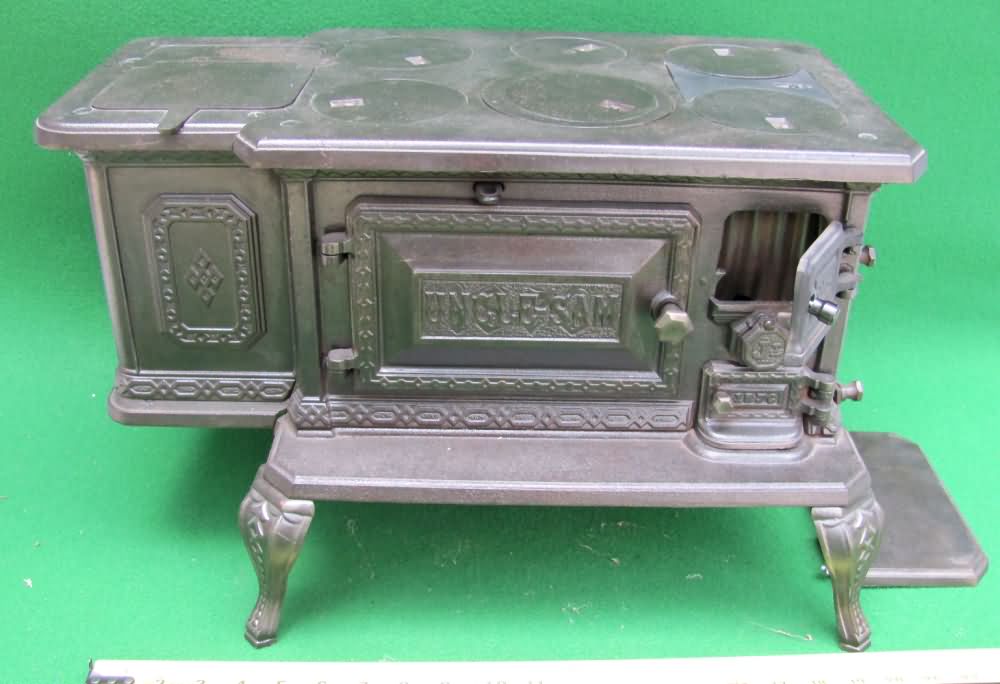 Uncle Sam Jr. Cast
Iron Salesman Sample / Toy Cook Stove by Abendroth Bros
Abendroth Brothers foundry of Port Chester, NY made full size stoves as well as at least
four different sizes of the Uncle Sam
Jr. stove.These toy or sample stoves were highly detailed and fully
functional.
Uncle Sam Jr. Cast
Iron Salesman Sample / Toy Cook Stove by Abendroth Bros
Abendroth Brothers foundry of Port Chester, NY made full size stoves as well as at least
four different sizes of the Uncle Sam
Jr. stove.These toy or sample stoves were highly detailed and fully
functional. This model has a water reservoir on the left. It is a tall model with cabriole legs. It has the same 4-panel mica glazed window in the end door for checking on the fire that the ones above have. Below that is a small door marked Poker.The shelf seen in the pictures is OK and just needs to be bolted on. The cross member to hold the round lids on the right side is a replacement. One knob on the front has been replaced as well. As with the others each door on the front has info cast into from the name Uncle Sam, JR. and the date 1876.
A nice cast iron toy stove that was probably used as a display model as well as being offered for sale as a toy!
Good + . . . . . . SOLD!
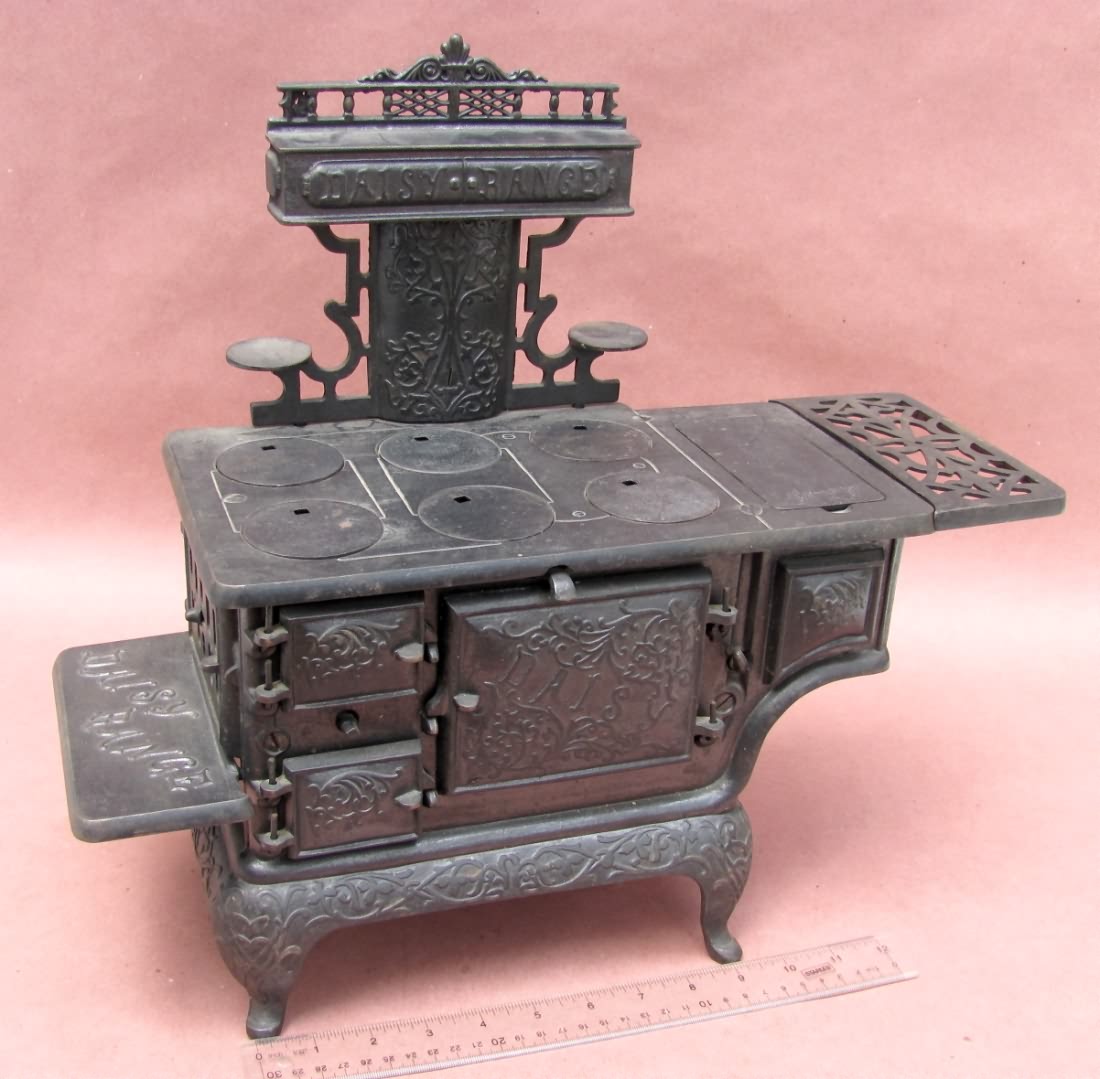 Daisy
Range Cast
Iron Toy Stove by Kenton
This is the actual stove pictured in the Ford reference / price guide on
cast iron antique toy stoves. The condition is great and it is a nice
looking and hard to find model. Both shelves are present and correct.
It looks to be all original and very nice. The back is marked Kenton, one of the best makers of cast iron stoves and
other quality cast iron toys during this era. It is one of the larger stoves
Kenton made and
stands 8-3/4" high by 13" wide without the shelves on each side.
It has six burners and lids, and a water reservoir on the right. This
is a good stove at a good price!! Opportunity!
Daisy
Range Cast
Iron Toy Stove by Kenton
This is the actual stove pictured in the Ford reference / price guide on
cast iron antique toy stoves. The condition is great and it is a nice
looking and hard to find model. Both shelves are present and correct.
It looks to be all original and very nice. The back is marked Kenton, one of the best makers of cast iron stoves and
other quality cast iron toys during this era. It is one of the larger stoves
Kenton made and
stands 8-3/4" high by 13" wide without the shelves on each side.
It has six burners and lids, and a water reservoir on the right. This
is a good stove at a good price!! Opportunity! Fine . . . . . . SOLD!
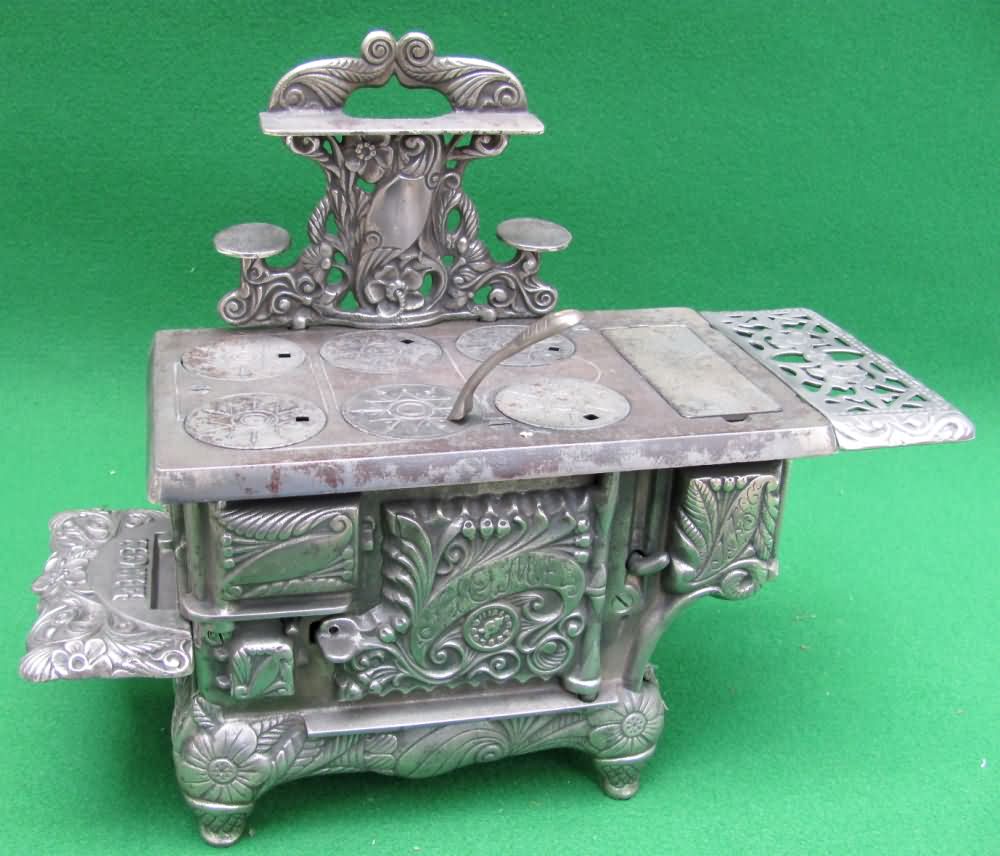 Home Cast Iron
Toy Stove by Stevens
This is a very well made stove by one of the biggest and best makers of cast
iron toy stoves, J. E. Stevens. Note that all 6 sides are cast iron and
nicely decorated. Even the stove lids and water tank lid are
decorated. It is the largest model that Stevens offered at
over 14 1/2 inches wide w/ the shelves. A
very unusual stove, and very Nice!!
Home Cast Iron
Toy Stove by Stevens
This is a very well made stove by one of the biggest and best makers of cast
iron toy stoves, J. E. Stevens. Note that all 6 sides are cast iron and
nicely decorated. Even the stove lids and water tank lid are
decorated. It is the largest model that Stevens offered at
over 14 1/2 inches wide w/ the shelves. A
very unusual stove, and very Nice!!
Fine . . . . . . SOLD!
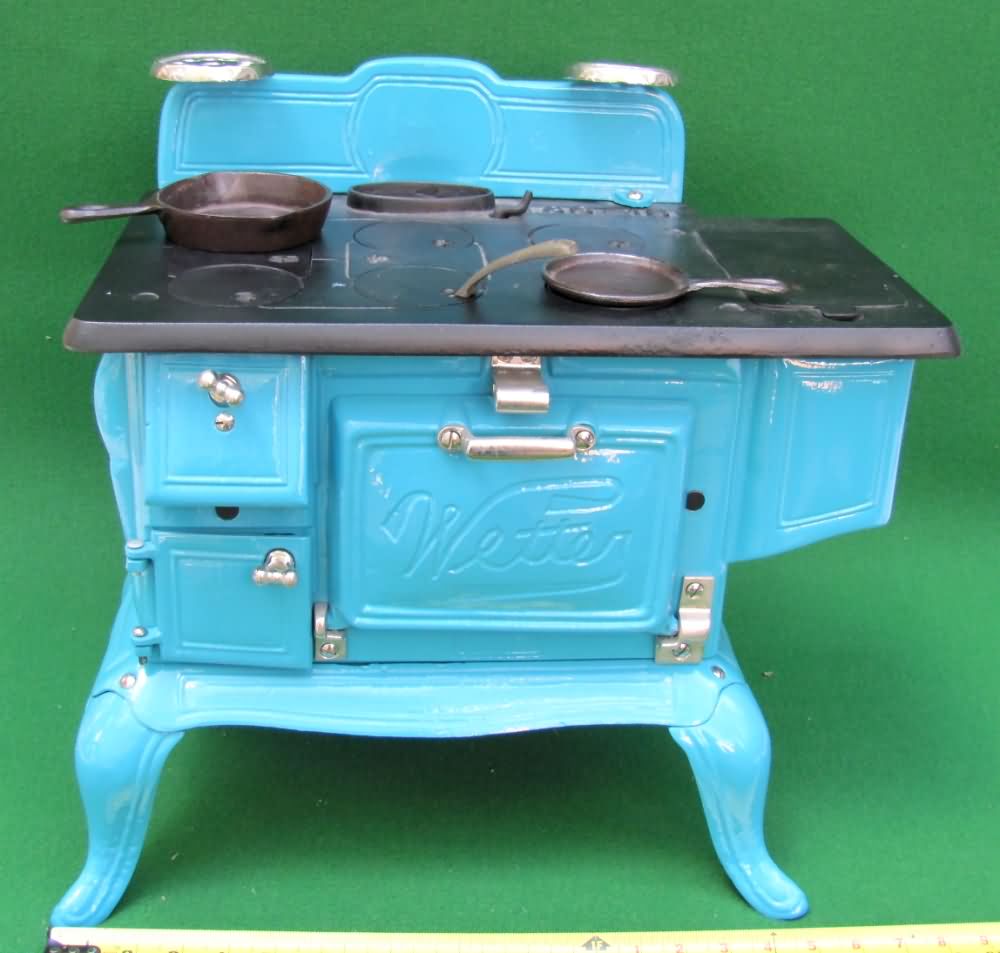 Wetter Salesman Sample
/ Display Model / Cast Iron Toy Stove
This is the actual stove pictured in Ford's book. In the picture taken
for that book the lighting was off, and the color is off. This is much
closer to a robin egg blue in person and very close to the color seen here.
Wetter Salesman Sample
/ Display Model / Cast Iron Toy Stove
This is the actual stove pictured in Ford's book. In the picture taken
for that book the lighting was off, and the color is off. This is much
closer to a robin egg blue in person and very close to the color seen here. This is very similar to the US stove at the top of the page, just a bit nicer, and a bit more. Ford's write-up for this stove mentions a few different makers' names for this style stove over the years including Blue City Stove Works and the US Stove Corp., both located in Tennessee. Other stoves that can be found that look similar but with different names are the Hanks Junior, the Mascot, and Baby Hazel.
Very Nice!!
Fine . . . . . . . SOLD!
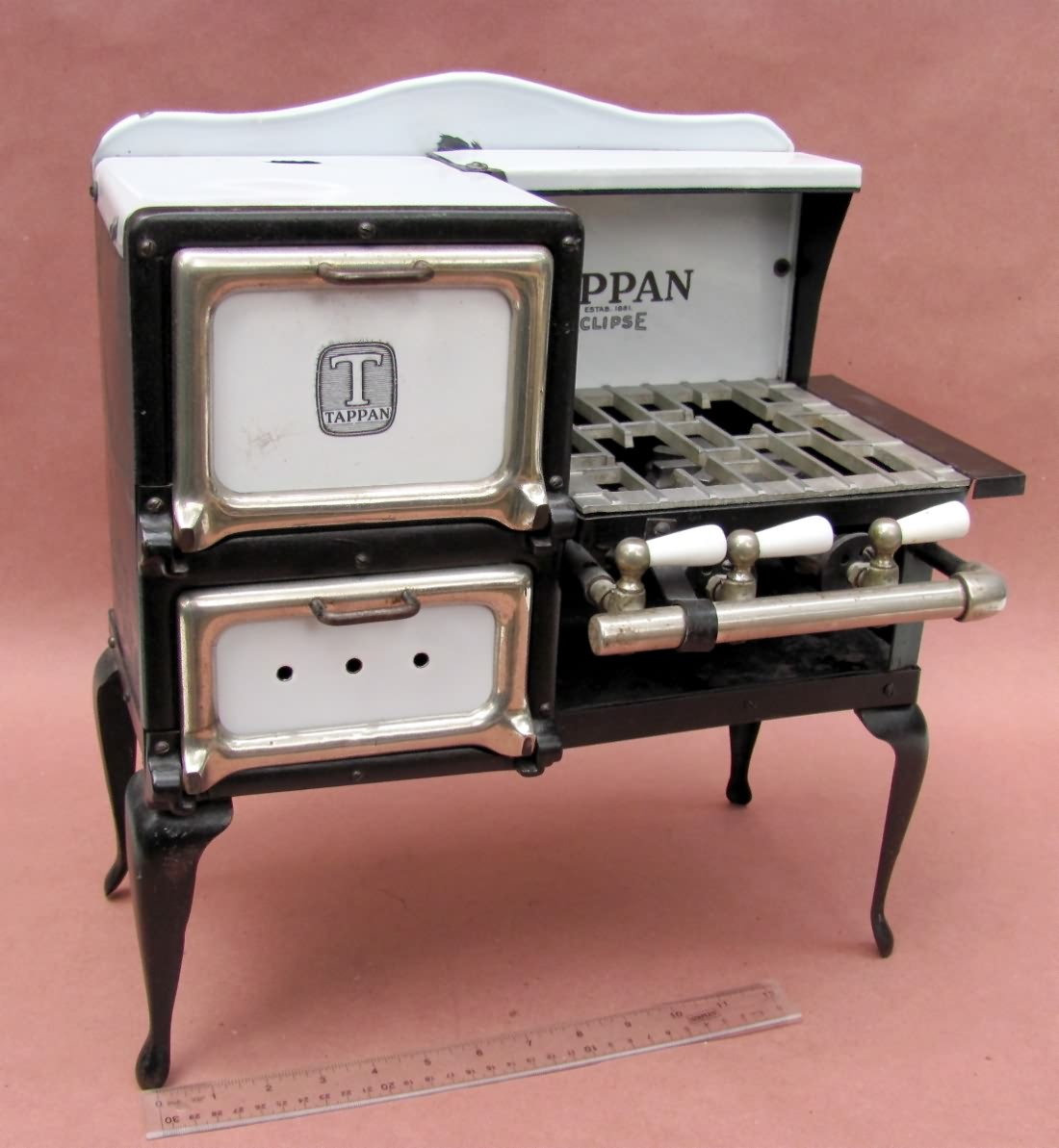 Tappan
Salesman Sample / Toy Cookstove / Gas Range
This is a great looking, working toy / salesman sample stove. The
two gas burners are real, and there is a hookup in the rear for a gas line so this
could actually be fired up and used.
The aspect that keeps it from being a true salesman sample though is that it
has only two burners on the right side instead of the typical four one would
expect.
Tappan
Salesman Sample / Toy Cookstove / Gas Range
This is a great looking, working toy / salesman sample stove. The
two gas burners are real, and there is a hookup in the rear for a gas line so this
could actually be fired up and used.
The aspect that keeps it from being a true salesman sample though is that it
has only two burners on the right side instead of the typical four one would
expect. I believe that these were models of the full size stoves offered, sold, or given to buyers of real Tappan stoves. The idea being that the child of the buyer would take it home and bond with it and the Tappan name, and have fond memories when the time came for her to be in the market for a real full size model. Singer used much the same marketing strategy with their line of miniature sewing machines that they offered around the same period. Create buyer / customer loyalty any way you could---and the sooner the better!
There has been some minor chipping to the enamel in places. There has been some minor touch up as well. All in all this antique gas stove is in great condition, and has a great look and sense to it. A nice piece that will make a great addition to the collection or decor.
Very Good . . . . . . . SOLD!
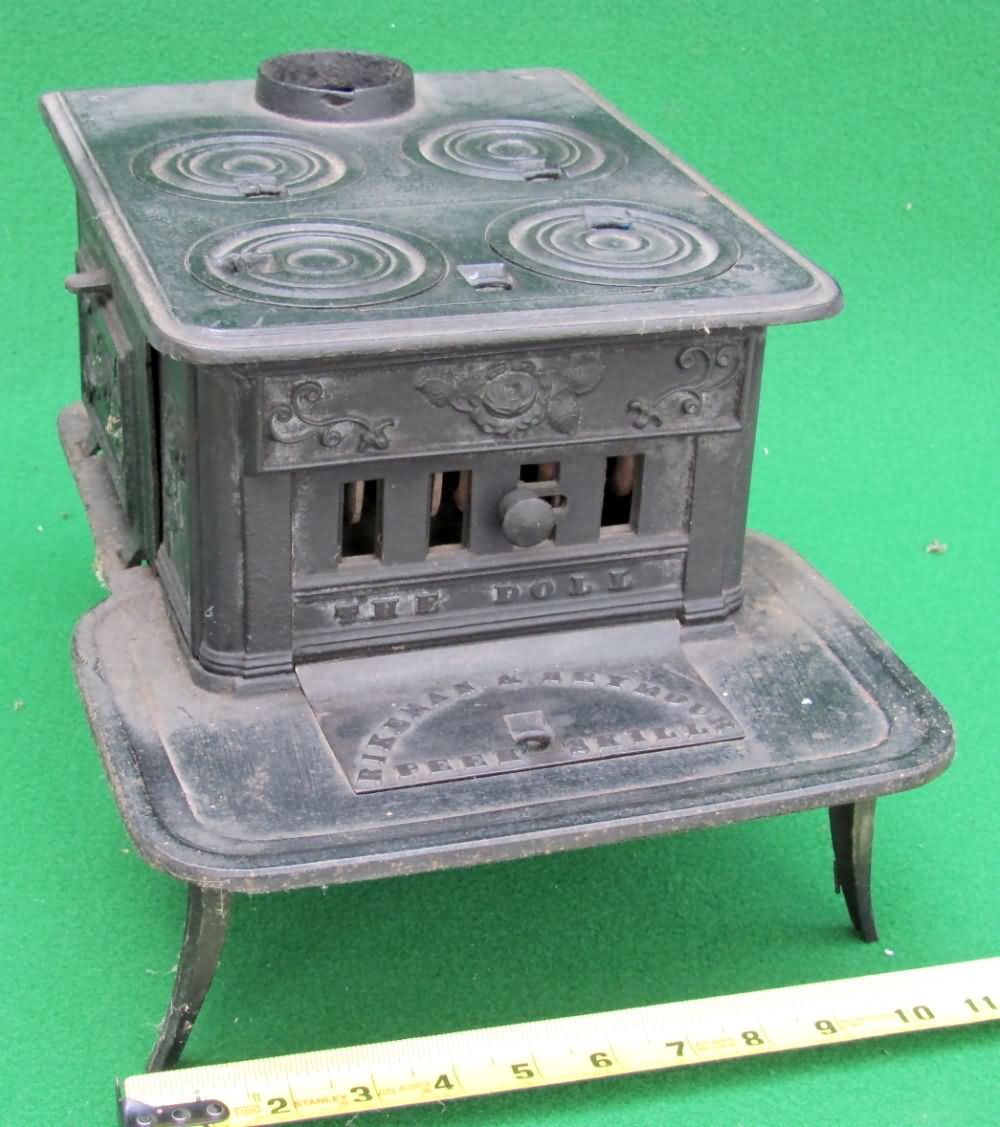 "THE
DOLL" Toy Cook Stove By Rikeman & Seymour / Peekskill NY
This is a early and unusual toy stove.There are a couple of variations
of this stove pictured in Ford's book, but they are both marked differently
than this example. It looks to date from the mid-1800's with
its early style and look. The quality of the casting is exceptional. Running the Rikeman & Seymour name turns up no reference to
the company, but a stove just like it did sell at the Theriaults auction a while back. It has
a four-burner top with original lids and three legs.The sides are heavily
decorated in the casting with roses and other flowers. The size is
13" deep x approximately 11" wide across the front. Early,
different, and very nice!!
"THE
DOLL" Toy Cook Stove By Rikeman & Seymour / Peekskill NY
This is a early and unusual toy stove.There are a couple of variations
of this stove pictured in Ford's book, but they are both marked differently
than this example. It looks to date from the mid-1800's with
its early style and look. The quality of the casting is exceptional. Running the Rikeman & Seymour name turns up no reference to
the company, but a stove just like it did sell at the Theriaults auction a while back. It has
a four-burner top with original lids and three legs.The sides are heavily
decorated in the casting with roses and other flowers. The size is
13" deep x approximately 11" wide across the front. Early,
different, and very nice!!
Good + . . . . . . SOLD!
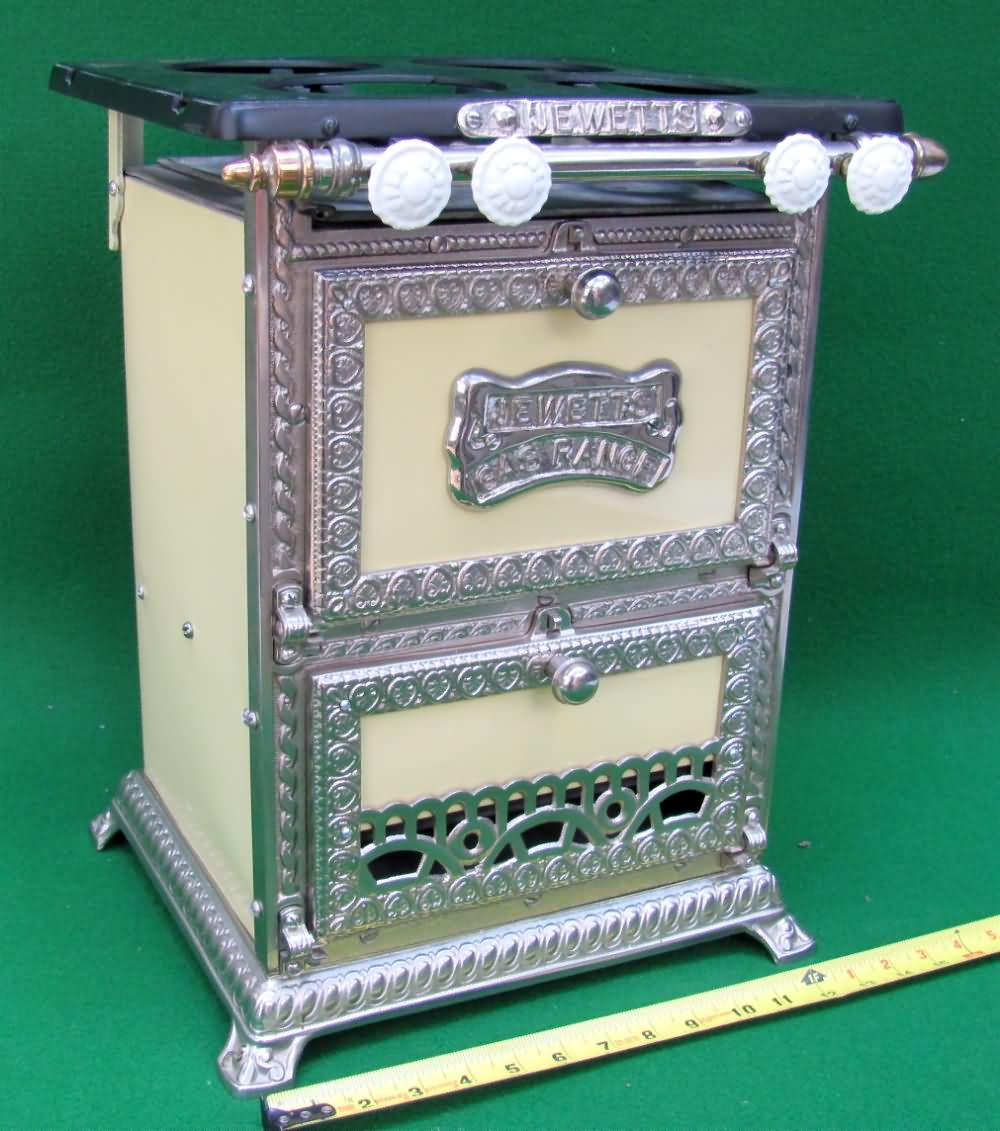 Jewetts Salesman Sample
Gas Range
There is little information available online about Jewett, or Jewetts, as a stove maker.
There seems to be a town or city named Jewett in just about every state, but
scant info on that name associated with stoves or heaters. Take a look
at the pictures of the interior and the trays and baking racks that are
included. I think this is the sort of stove, range, or heater that was
used in apartments and doubled as a heater and cook stove for the renter or
occupant. It has been nicely restored and looks great. Different and
very pretty!!
Jewetts Salesman Sample
Gas Range
There is little information available online about Jewett, or Jewetts, as a stove maker.
There seems to be a town or city named Jewett in just about every state, but
scant info on that name associated with stoves or heaters. Take a look
at the pictures of the interior and the trays and baking racks that are
included. I think this is the sort of stove, range, or heater that was
used in apartments and doubled as a heater and cook stove for the renter or
occupant. It has been nicely restored and looks great. Different and
very pretty!!
Fine. . . . . . . SOLD!
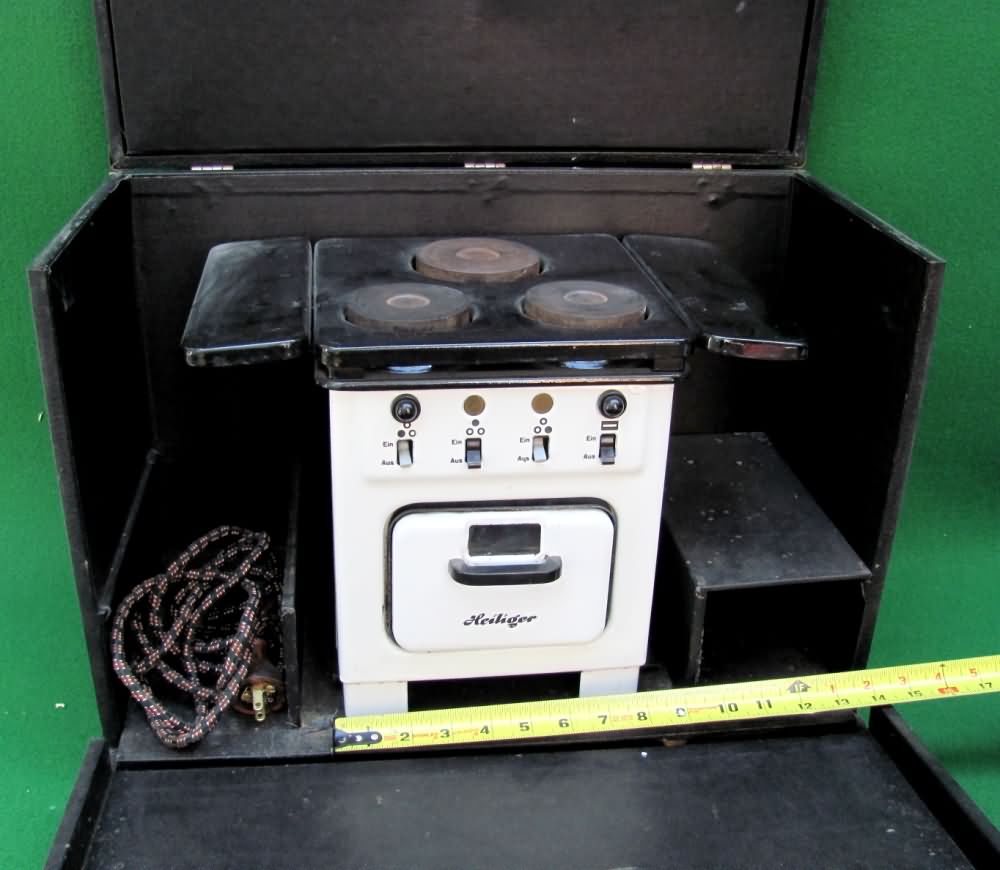 Heiliger Salesman Sample Electric Range / Stove
This is a genuine salesman sample for an apartment size stove in its original
salesman sample black case. Please be sure
to look at the other pictures.
Heiliger Salesman Sample Electric Range / Stove
This is a genuine salesman sample for an apartment size stove in its original
salesman sample black case. Please be sure
to look at the other pictures.This stove is vintage and dates from the 1920`s. It is German and made by Heiliger. There is an information tag on the rear with that info. It has 3 top burners and an oven.. It has a porcelain surface over steel. The porcelain has a couple of minor corner and edge chips but otherwise the stove is in excellent condition. It`s all original and has 2 different plugs. I am not sure if either is the original, but both work. The stove has been tested and works fine with the stove and all three burners heating up. It measures 10 1/2" tall and 14 1/4" wide including the side panels. It weighs almost 12 lbs out of the box. Very Nice!!
Fine . . . . . . SOLD!
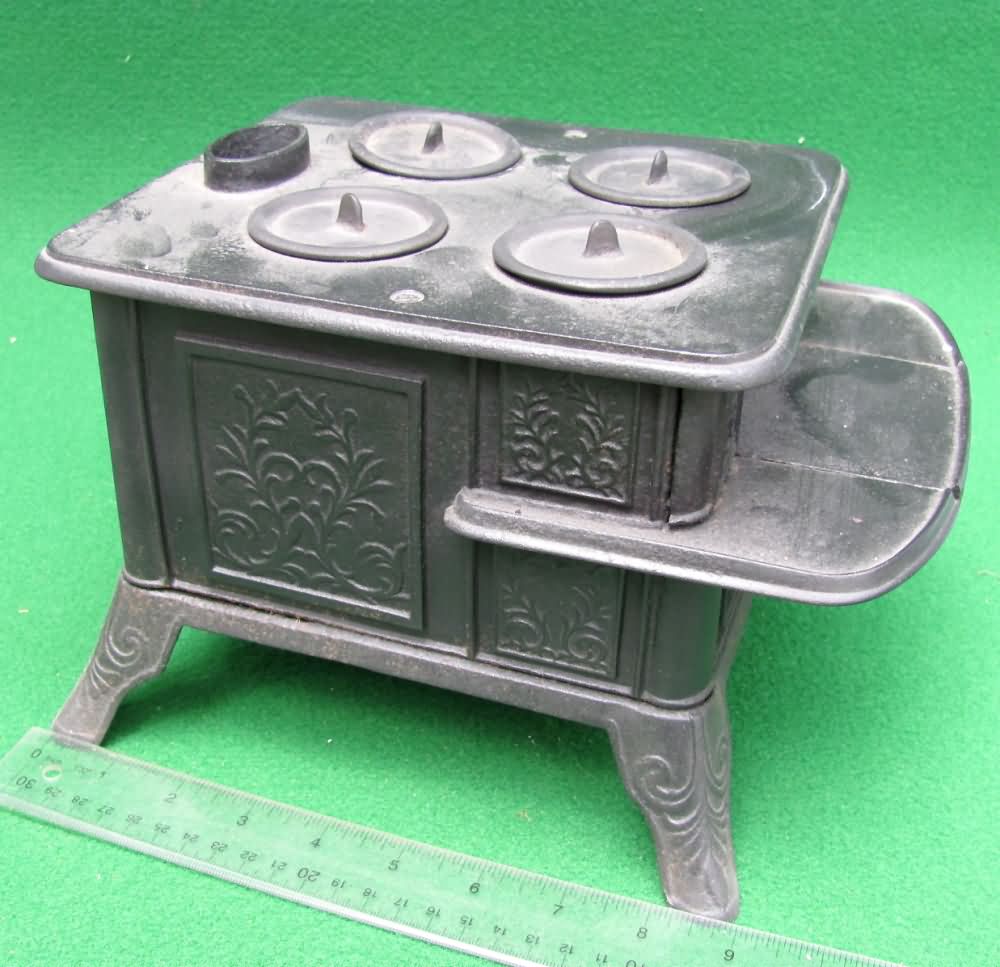 Early Cast Iron
Miniature Stove
This small early cast iron stove measures just about 9" across the front
and 12" long including the shelf. It is a nicely cast and constructed stove that is unmarked as
to maker. It is a nice early stove!!
Early Cast Iron
Miniature Stove
This small early cast iron stove measures just about 9" across the front
and 12" long including the shelf. It is a nicely cast and constructed stove that is unmarked as
to maker. It is a nice early stove!!
Fine . . . . . . SOLD!
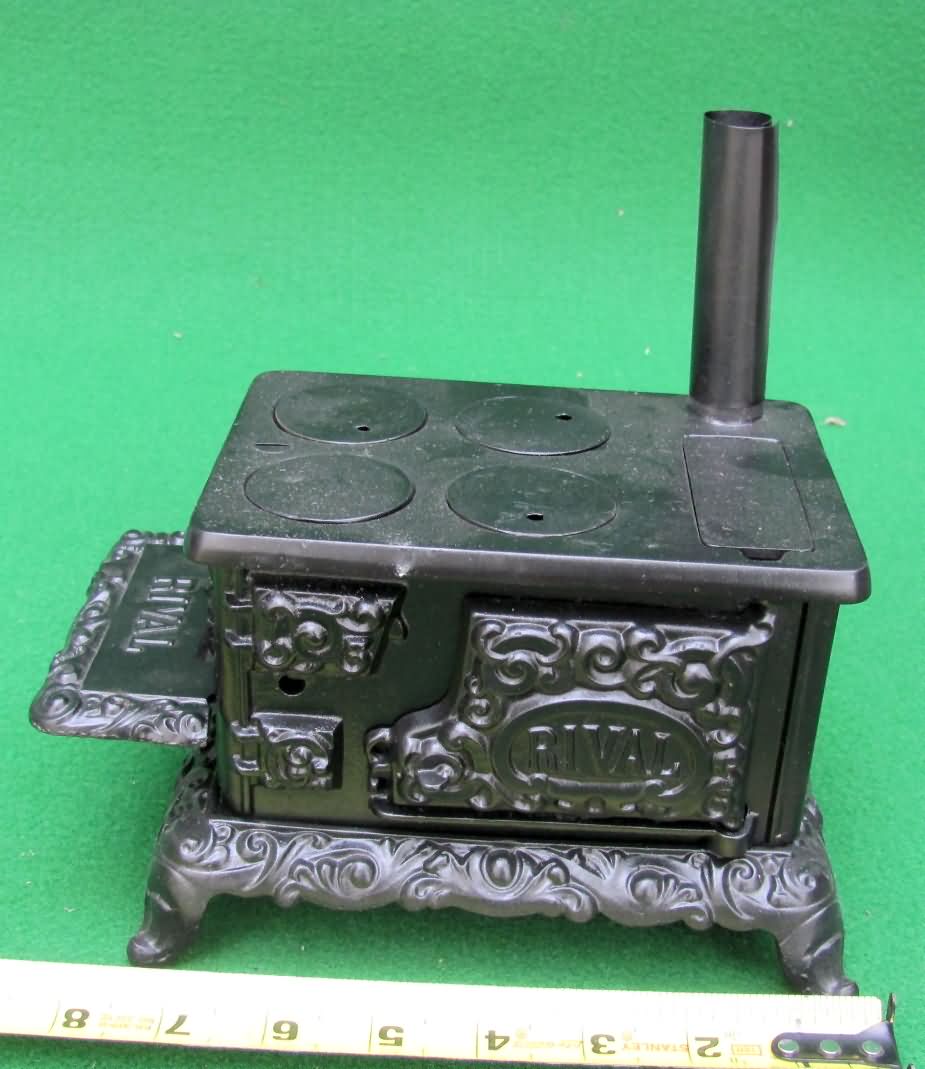 Rival
Toy Stove
This small stove is probably by Dent. It is just marked with the Rival name
and no maker info. It has been painted and looks good. A very nice
little vintage stove!
Rival
Toy Stove
This small stove is probably by Dent. It is just marked with the Rival name
and no maker info. It has been painted and looks good. A very nice
little vintage stove!
Fine . . . . . . $55.00 SOLD!
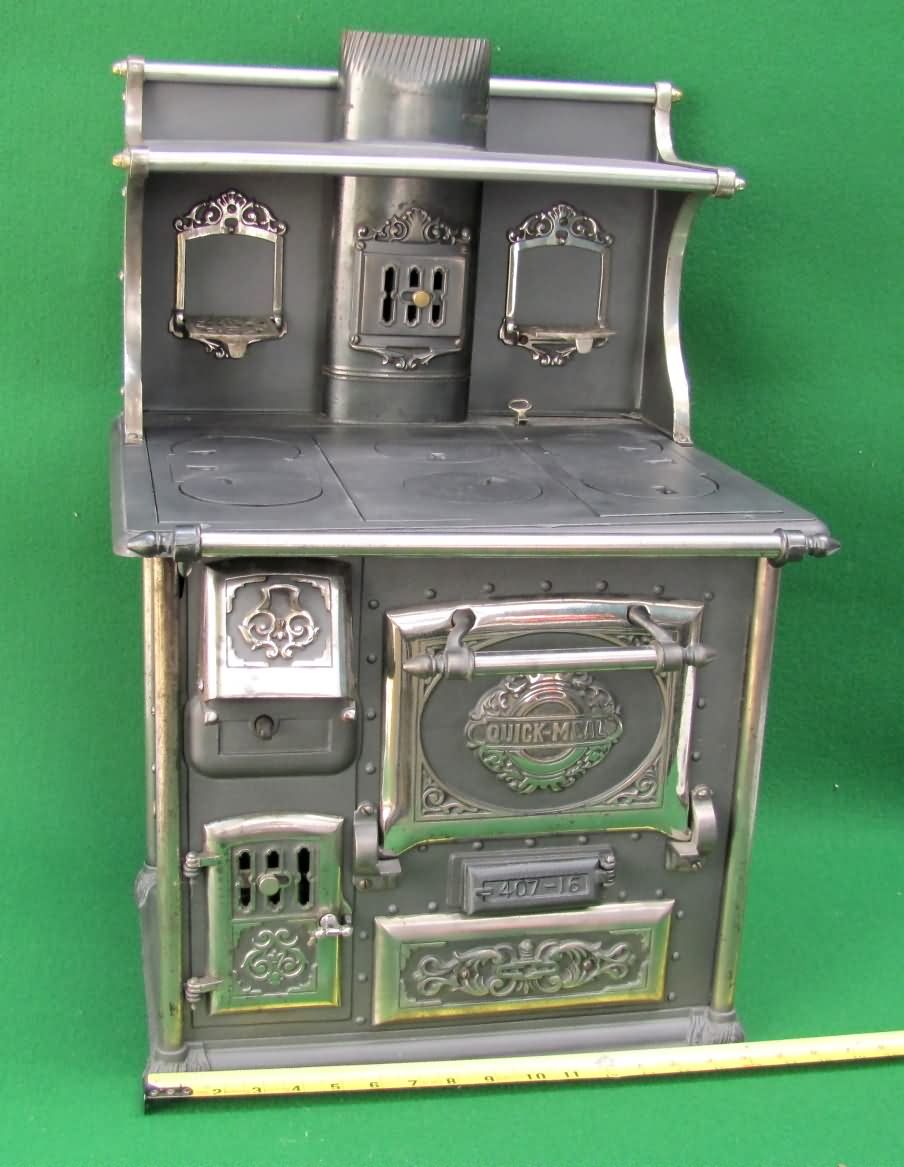 Quick
Meal Salesman Sample / Toy Cook Stove
This is a great looking child size antique cook stove by the famous Quick Meal Stove
Co. of St Louis. It has been nicely
cleaned and not overly restored. It looks to be all original and the condition is
very nice. This
stove measures just over
16" wide across the base.
It has the fold down shelf trivets on the back wall and all the doors are
all operable and correct. The inside components are all present as well.
Quick
Meal Salesman Sample / Toy Cook Stove
This is a great looking child size antique cook stove by the famous Quick Meal Stove
Co. of St Louis. It has been nicely
cleaned and not overly restored. It looks to be all original and the condition is
very nice. This
stove measures just over
16" wide across the base.
It has the fold down shelf trivets on the back wall and all the doors are
all operable and correct. The inside components are all present as well.Stoves such as this can be found in cases and were used as salesman samples as well as display models in small shops. Many more are found without boxes and this would indicate that in addition to being used as store displays stoves like this were also sold to buyers of the large full size models as toys.
There is one of these stoves listed elsewhere on the internet for $10,000 with a bit of family provenance with it. This stove has the same sort of provenance and came from a similar situation in the Midwest. It is waiting to become a part of a new family legacy. An uncommon stove in uncommonly nice condition. A great addition to any collection or decor. Very nice!!
Fine . . . . . . SOLD!
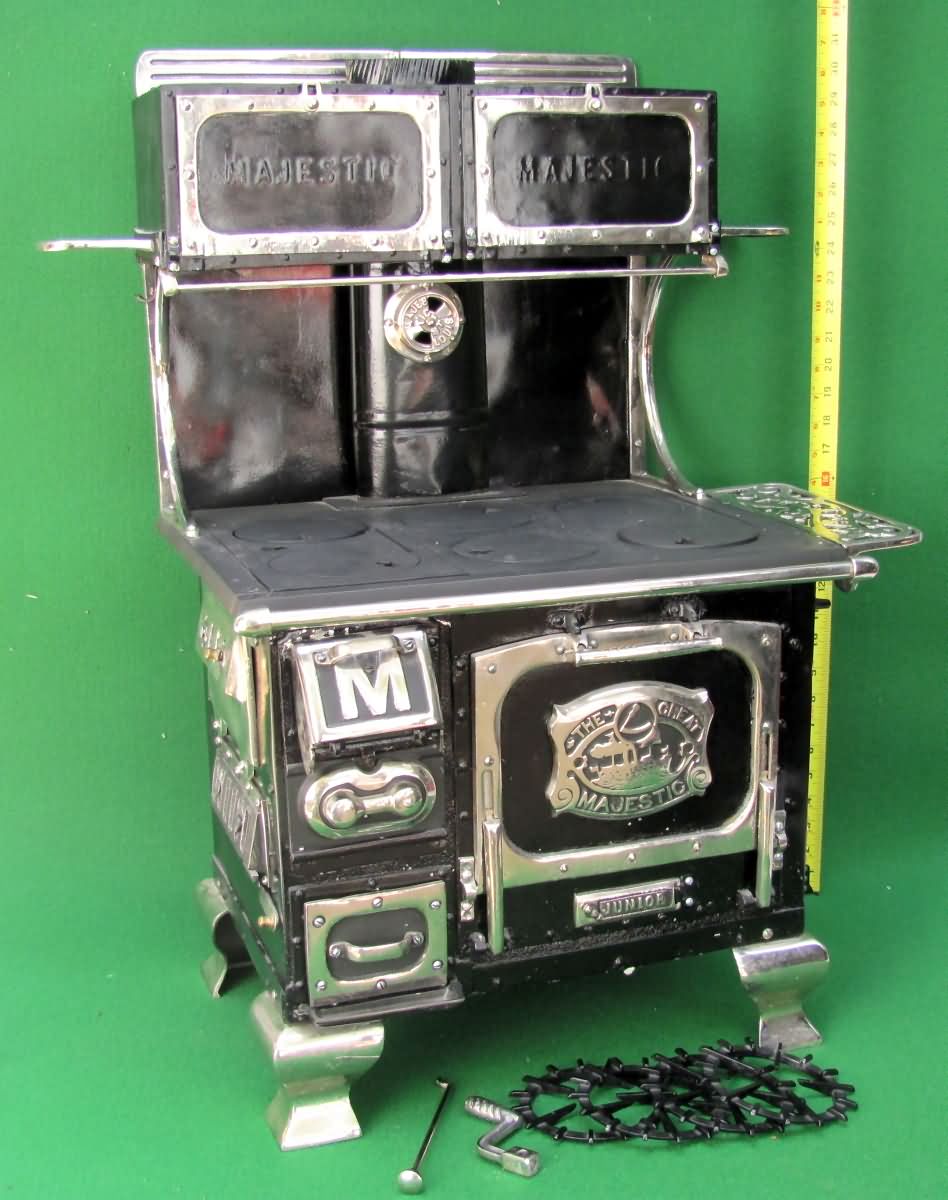 Great Majestic Junior Salesman Sample / Display Model of Wood Stove
This large antique salesman sample / toy cook stove / range has been carefully and meticulously restored!!
These stoves are a near exact copy of the full size range made by the Great Majestic
Stove Company of St Louis, MO. They were sold to customers of the line,
as well as used in stores as display models. When I say restored I mean that it has been polished and painted. I do not see
any evidence of repairs or replaced parts. A very large and graphic
child size toy stove that also served as a salesman sample and display model stove that
looks great!!
Great Majestic Junior Salesman Sample / Display Model of Wood Stove
This large antique salesman sample / toy cook stove / range has been carefully and meticulously restored!!
These stoves are a near exact copy of the full size range made by the Great Majestic
Stove Company of St Louis, MO. They were sold to customers of the line,
as well as used in stores as display models. When I say restored I mean that it has been polished and painted. I do not see
any evidence of repairs or replaced parts. A very large and graphic
child size toy stove that also served as a salesman sample and display model stove that
looks great!! Fine. . . . . . SOLD!
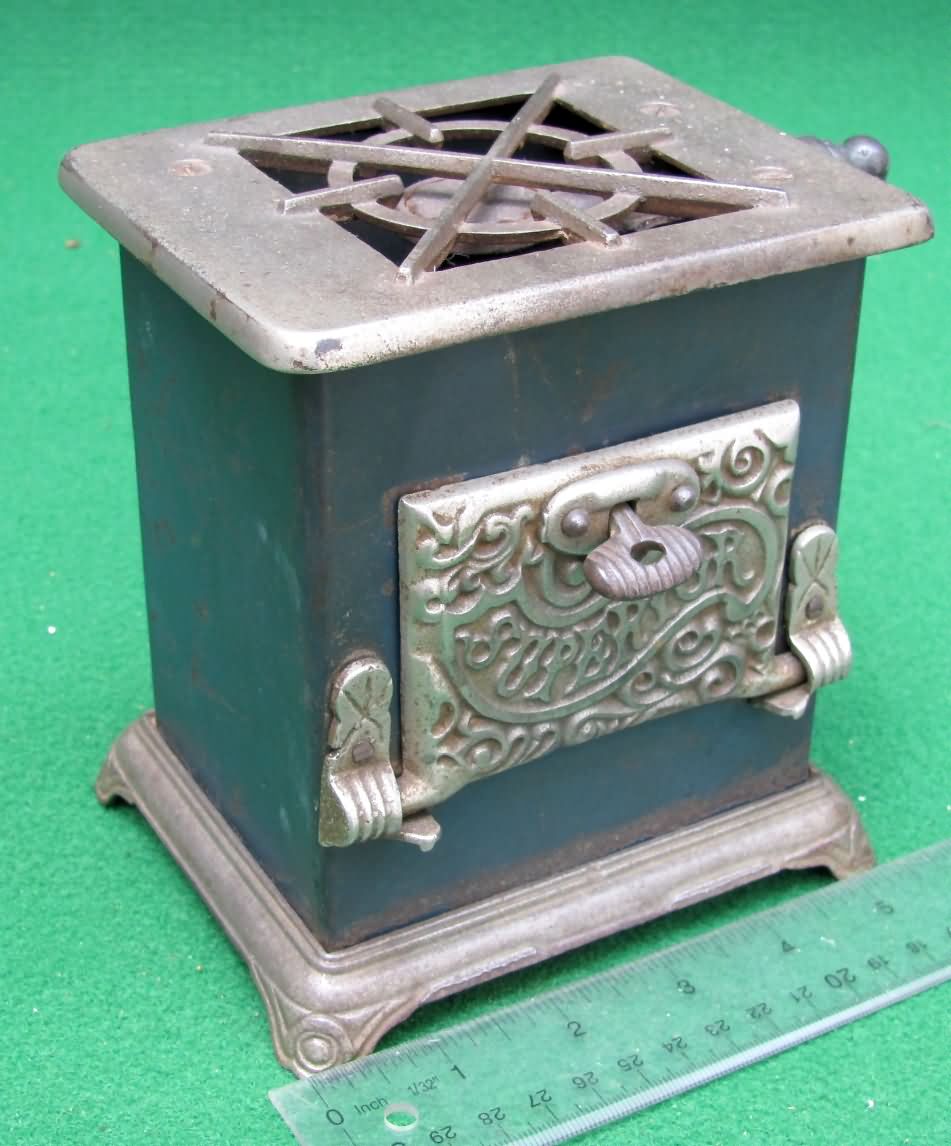 Superior
Gas Range
This small early cast iron & tin gas Range by Superior measures just about
5" square. It is a simple single burner range and oven.
There is a more complicated version offered above with side shelves, but
this one is correct as shown. It is a
nice stove!!
Superior
Gas Range
This small early cast iron & tin gas Range by Superior measures just about
5" square. It is a simple single burner range and oven.
There is a more complicated version offered above with side shelves, but
this one is correct as shown. It is a
nice stove!!
Good + . . . . . . SOLD!
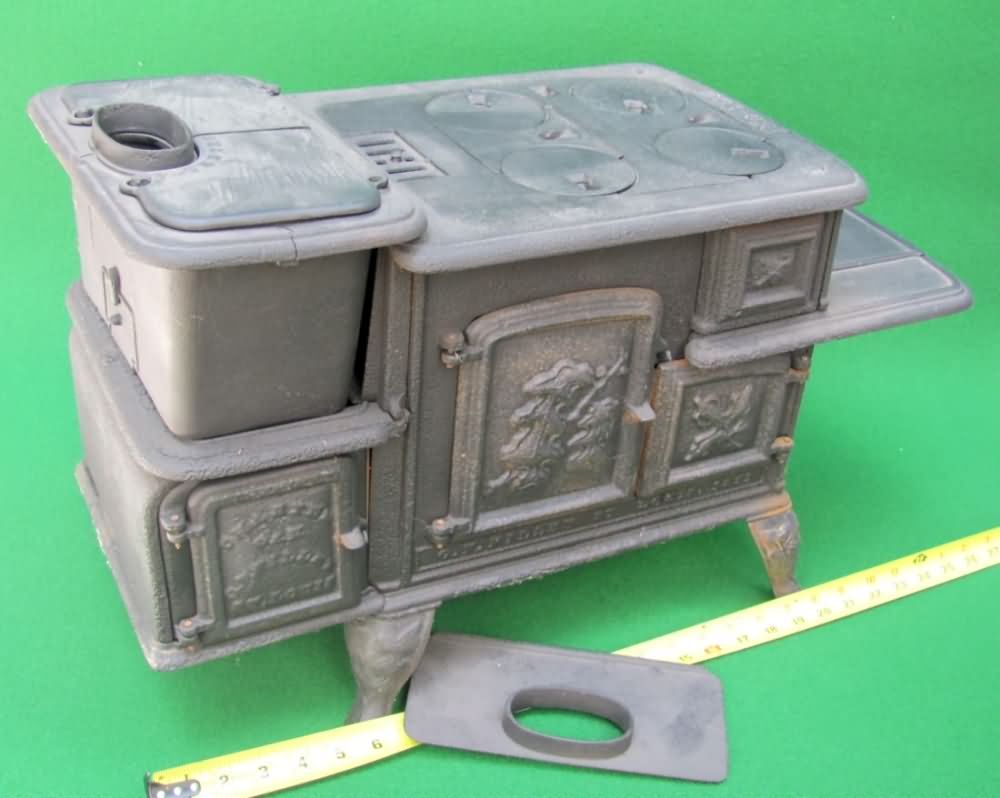 G. F. Filley / Excelsior Manufacturing Co #100 Charter Oak Cook Stove
This is a rare and early stove. G.F. Filley first opened shop in
about 1849 in St Louis, MO. This stove has his name cast into it on the
small doors, and along the bottom edge of the main body. The top is
marked #100. The small doors on the front are marked #30. Later
versions of this stove are numbered 503 and Charter Oak. Many of the
later models have no reference to G.F. Filley, as this one is marked. There is also patent info
from the 1870's on the sliding lid of the water reservoir. Note the added bonus of
how the water
reservoir is removable and the hole left, if the stove is used without the
reservoir, can be covered with the vented plate in the picture.
G. F. Filley / Excelsior Manufacturing Co #100 Charter Oak Cook Stove
This is a rare and early stove. G.F. Filley first opened shop in
about 1849 in St Louis, MO. This stove has his name cast into it on the
small doors, and along the bottom edge of the main body. The top is
marked #100. The small doors on the front are marked #30. Later
versions of this stove are numbered 503 and Charter Oak. Many of the
later models have no reference to G.F. Filley, as this one is marked. There is also patent info
from the 1870's on the sliding lid of the water reservoir. Note the added bonus of
how the water
reservoir is removable and the hole left, if the stove is used without the
reservoir, can be covered with the vented plate in the picture. This is one of those stoves that is hard to call just a toy or to call a true salesman sample. I believe stoves like this were primarily meant to be store display models. Perhaps they were carried about to stores and shops to show shopkeepers the latest in the maker's line, but I am pretty sure nobody was carrying stoves like this door to door to try and sell.
The body of the stove is pitted, but it is in overall OK condition. I do not see any major cracks or repairs. This is one of the earliest Filley marked Charter Oak stoves you will ever see and represents an opportunity that will not repeat many times. Recommended!!
Good . . . . . . SOLD!!
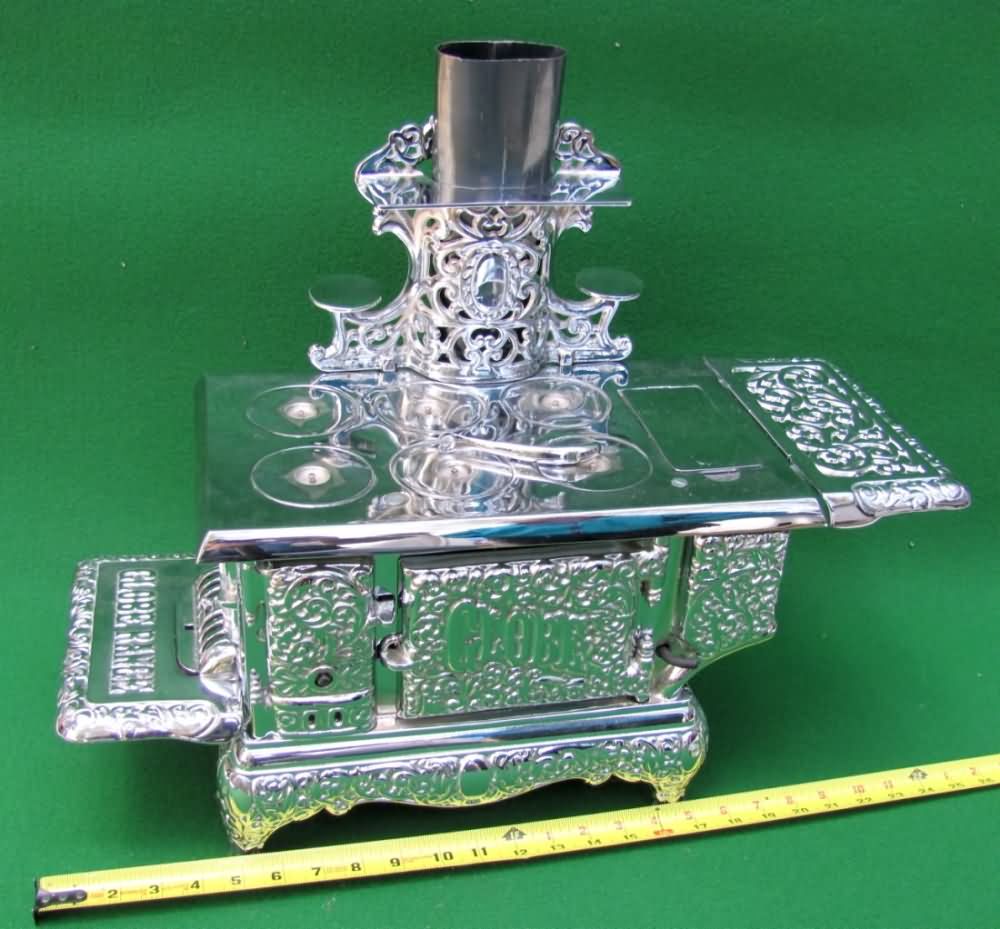 Globe
Range Cast Iron Toy # 950 Cook Stove by Kenton
This is a great looking large child size cast iron toy cook stove by Kenton. It has been nicely
restored and the nickel plating redone. It looks to be all original and the condition
is exceptional. I see no repairs or replaced parts. This stove measures just about 24" wide across the base including the 2
removable shelves.
The inside components are all present as well.
Globe
Range Cast Iron Toy # 950 Cook Stove by Kenton
This is a great looking large child size cast iron toy cook stove by Kenton. It has been nicely
restored and the nickel plating redone. It looks to be all original and the condition
is exceptional. I see no repairs or replaced parts. This stove measures just about 24" wide across the base including the 2
removable shelves.
The inside components are all present as well.This antique stove will be a great addition to any collection. Very nice!!
Fine . . . . . . SOLD!!
Salesman Sample Woodstove w/ Fast Draft Vent Feature (RIGHT) This is for the salesman sample woodstove on the right. It is unmarked but I believe by the same maker Sterling as the one above. Its most unusual feature is the fast draft chimney style vent seen in the front. This sort of tube vent / draft was used to get fires going quickly and make them burn real hot as the air rushed by. The design enhanced and created an almost supercharged draft to really fire up the fire. I assume these were used in places like hunting camps, cabins, and the like where you wanted to heat up an area quickly upon arrival to a cold place. Also note the raised loading port in the top. The top finial is missing but that would be an easy fix. It stands just about 10" tall and approx 6" across. The condition is otherwise super. It is a hard to find salesman sample, and will make a great addition to the collection.
Good + . . . . . . SOLD!
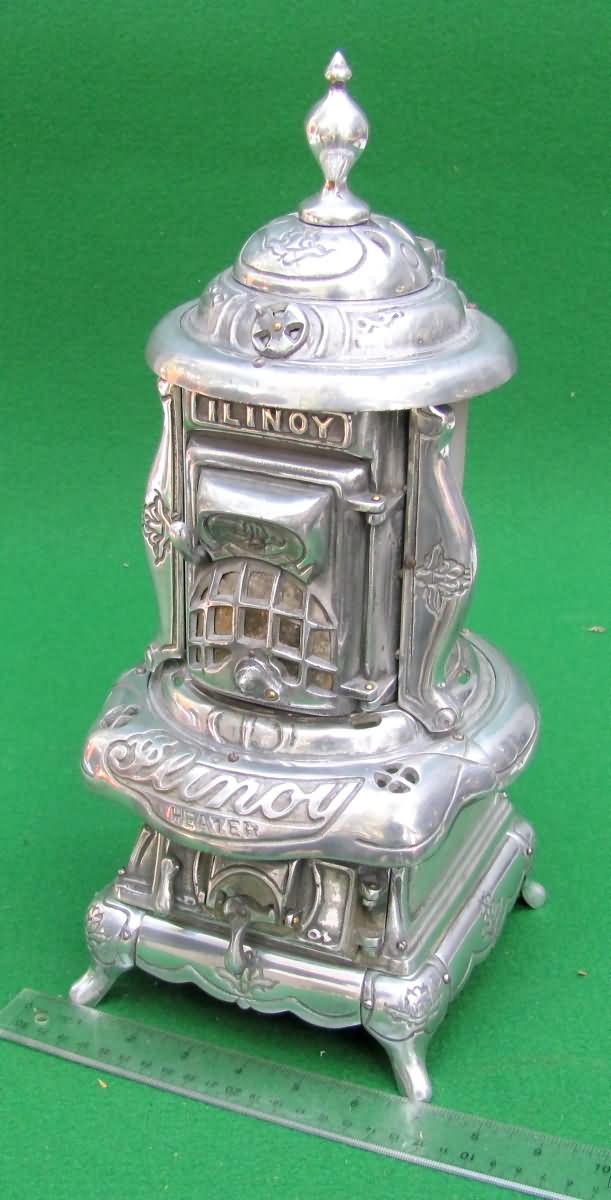 Ilinoy Salesman Sample / Display Model of
Parlor Stove /
Wood Stove Heater This miniature
Ilinoy antique parlor stove / heater
has a great look to it. The base measures approx 7" square and it stands
just under 16' tall to the top of the finial. This unusual model or
salesman sample is
constructed of aluminum and as can be seen in the last pictures comes apart in
sections just like the full size model would. The doors and vents
operate as well. It has a great look almost like brushed nickel, which
I am sure that was the idea when these were made in a material that was
easier to work with than iron. A super nice piece!!
Ilinoy Salesman Sample / Display Model of
Parlor Stove /
Wood Stove Heater This miniature
Ilinoy antique parlor stove / heater
has a great look to it. The base measures approx 7" square and it stands
just under 16' tall to the top of the finial. This unusual model or
salesman sample is
constructed of aluminum and as can be seen in the last pictures comes apart in
sections just like the full size model would. The doors and vents
operate as well. It has a great look almost like brushed nickel, which
I am sure that was the idea when these were made in a material that was
easier to work with than iron. A super nice piece!!
Fine. . . . . . SOLD!!
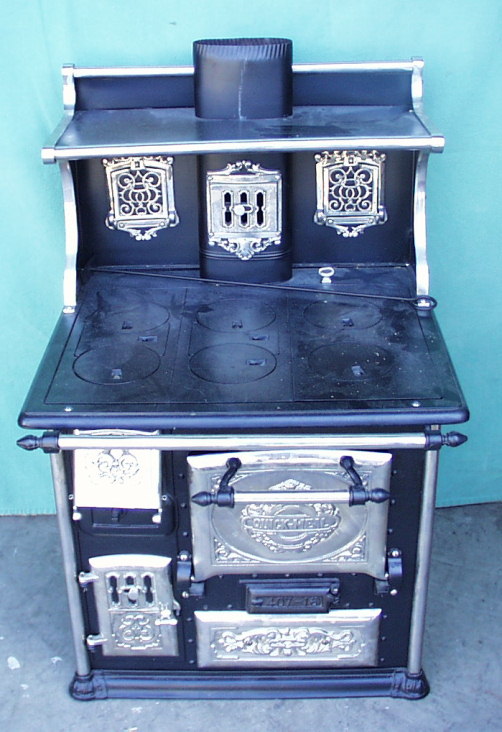 Quick
Meal Toy Cookstove This toy stove was made
by the American Stove Co. It is one of the larger toy stoves made at
17" across and about 2' tall. It has been restored and looks great.
There is a receipt inside the oven from when the collector bought this
back in 1979 in Ill from an antique shop and paid the whopping sum of
4500.00. Imagine what that is in 2009 dollars. It looks to be all
original and nicely restored. The lids all look right. Note the flip
down warming shelves on the back wall. A very nice example.
Quick
Meal Toy Cookstove This toy stove was made
by the American Stove Co. It is one of the larger toy stoves made at
17" across and about 2' tall. It has been restored and looks great.
There is a receipt inside the oven from when the collector bought this
back in 1979 in Ill from an antique shop and paid the whopping sum of
4500.00. Imagine what that is in 2009 dollars. It looks to be all
original and nicely restored. The lids all look right. Note the flip
down warming shelves on the back wall. A very nice example.
Excellent . . . . . . . SOLD!
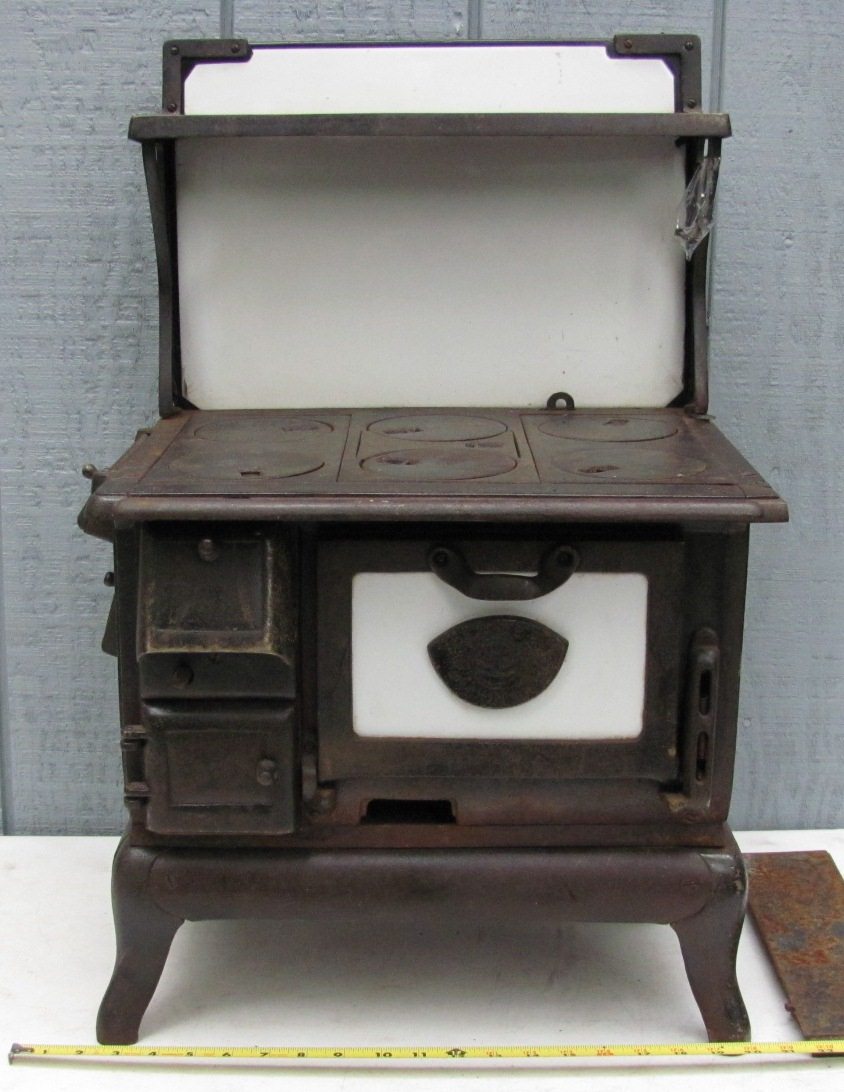 Washington
"Leader" #649 Salesman Sample / Toy Cookstove The
"Leader" by the Washington Stove Co. is similar in size and detail to
the Great Majestic sample size stove.This Washington Leader salesman
sample size stove, like the Majestic Junior is one of the larger toy or
salesman sample stoves made at 24" across and about 3' tall. It is a
far harder to find, and much rarer salesman sample size stove.
Washington
"Leader" #649 Salesman Sample / Toy Cookstove The
"Leader" by the Washington Stove Co. is similar in size and detail to
the Great Majestic sample size stove.This Washington Leader salesman
sample size stove, like the Majestic Junior is one of the larger toy or
salesman sample stoves made at 24" across and about 3' tall. It is a
far harder to find, and much rarer salesman sample size stove. There is an example of one of these stoves pictured in Fords book on the subject where he assigns a value of 4 - 5500.00 to this stove. He states that due to the detail and style that this stove would qualify as a salesman sample. I believe these larger sample size stoves were used as floor or window displays, and that they were also sold as toys to the customers of the stove company, or out of the large distributers where they were sold. Given the few of these that have been seen or found it is likely that they were not widely distributed like some others that are more commonly seen.
The stove looks to be all original and is unrestored. It is in overall nice condition with just a couple of minor apologies. The side shelf on the right has had its attachment tabs broken off. I have seen these repaired before with a careful weld / brazing. If done from the underside it will be unnoticeable after this is cleaned up a bit. There is a small sliding ash door missing that goes below the oven fold down door. The one other apology is the backsplash right side bracket. Near the top there are 2 small cracks / breaks as pictured. These are so superficial as to be unnoticeable when judged from a few feet away. I have pictured this area and the small pieces in the pics.
Note that the cabriole legs and the base which are separate from the main body and that it simply lifts off. It is all in nice condition. The oven is nice with lots of original red finish in it and the shelf is good. The same is true of the fire box on the far left. All of the pieces are shown in one of the pics. The main damper is present and works. The side feed doors are good, and the sifter feature below the fire box is OK. All of the lids and parts for the top are nice and original. The enamel on the backsplash and oven door.is very nice and original.
This stove is nice as it sits, and will be even nicer cleaned up a bit and with some simple restoration. It is a very nice example of a hard to find stove at an attractive price you will not find elsewhere.
Very Good . . . . . SOLD!
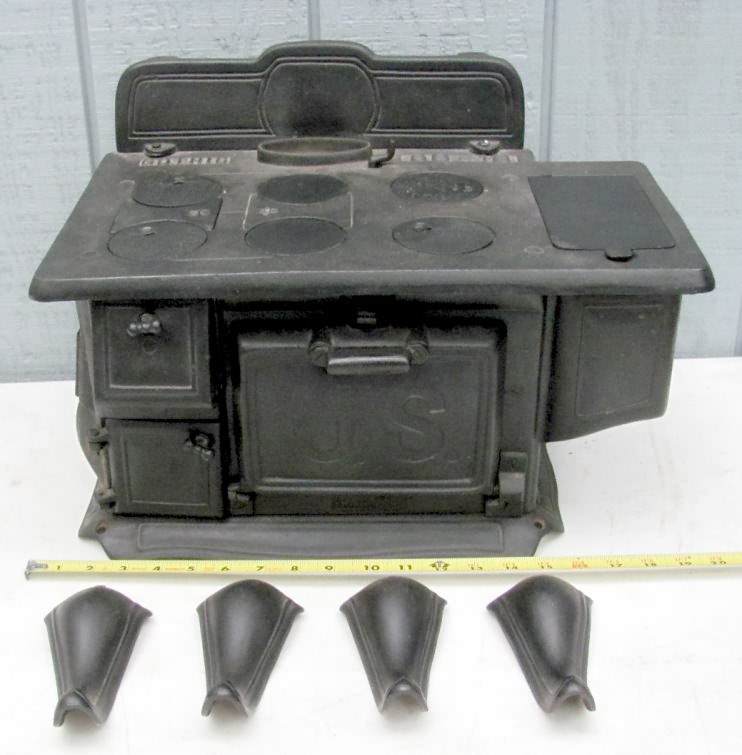 "Gothic"
U.S. Range by the U. S. Stove Corp. TN I
have only seen this sample size stove a couple times in all of my
travels and searches. Some info will appear in Google searches, but not
much. There is one pictured in Fords book on stoves that has been
powder coated / enameled and restored that he has valued at 3000 -
4000.
"Gothic"
U.S. Range by the U. S. Stove Corp. TN I
have only seen this sample size stove a couple times in all of my
travels and searches. Some info will appear in Google searches, but not
much. There is one pictured in Fords book on stoves that has been
powder coated / enameled and restored that he has valued at 3000 -
4000.This example is unrestored and looks to be all original with the exception of two stove lids on top. The other 4 lids look to have been stored separately in a damp location and are pitted much more than the top or other parts. The one real apology is the lower hinge on the oven door is damaged. It still functions and holds the door, but it broken. Note the cabriole legs are OK and have been removed to make shipping easier and safer. None are damaged.
Overall this sample size U. S. Gothic stove is in pretty nice condition. It is in natural iron finish and looks to have had stove black applied at some point in its life. The U.S. cast into the door is very graphic and bold. On the top left the word "Gothic" is cast into the top. On the right 68-18. The bottom of the lid for the water resivouir on the right is marked Baby Goth. You can see that there is no pitting or rust in this area, or the rest for that matter. The cast iron fire box is OK, and the damper works. The feed door is good, and the sifter feature below the fire box is OK.
This stove is nice as it sits, and will be even nicer cleaned up a bit. A very nice example of a hard to find stove at an attractive price not found elsewhere.
Good + . . . . . SOLD!
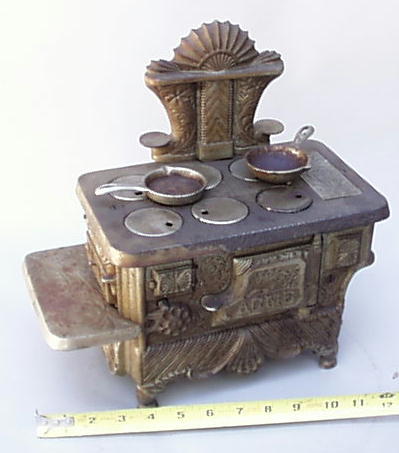 "The
Acme" Cast Iron Child Size
Cook Stove This toy stove is by Stevens
and dates from near the turn of the century and as late as the 30's or so.
Stevens was a major toy bank maker from this era as well. They made a
quality cast iron product. Kenton also made a version named the same.
This stove can be found in different finishes as well. The stove
is nice, all original and has a few accessory pieces to go along.
"The
Acme" Cast Iron Child Size
Cook Stove This toy stove is by Stevens
and dates from near the turn of the century and as late as the 30's or so.
Stevens was a major toy bank maker from this era as well. They made a
quality cast iron product. Kenton also made a version named the same.
This stove can be found in different finishes as well. The stove
is nice, all original and has a few accessory pieces to go along. Good + . . . . . SOLD
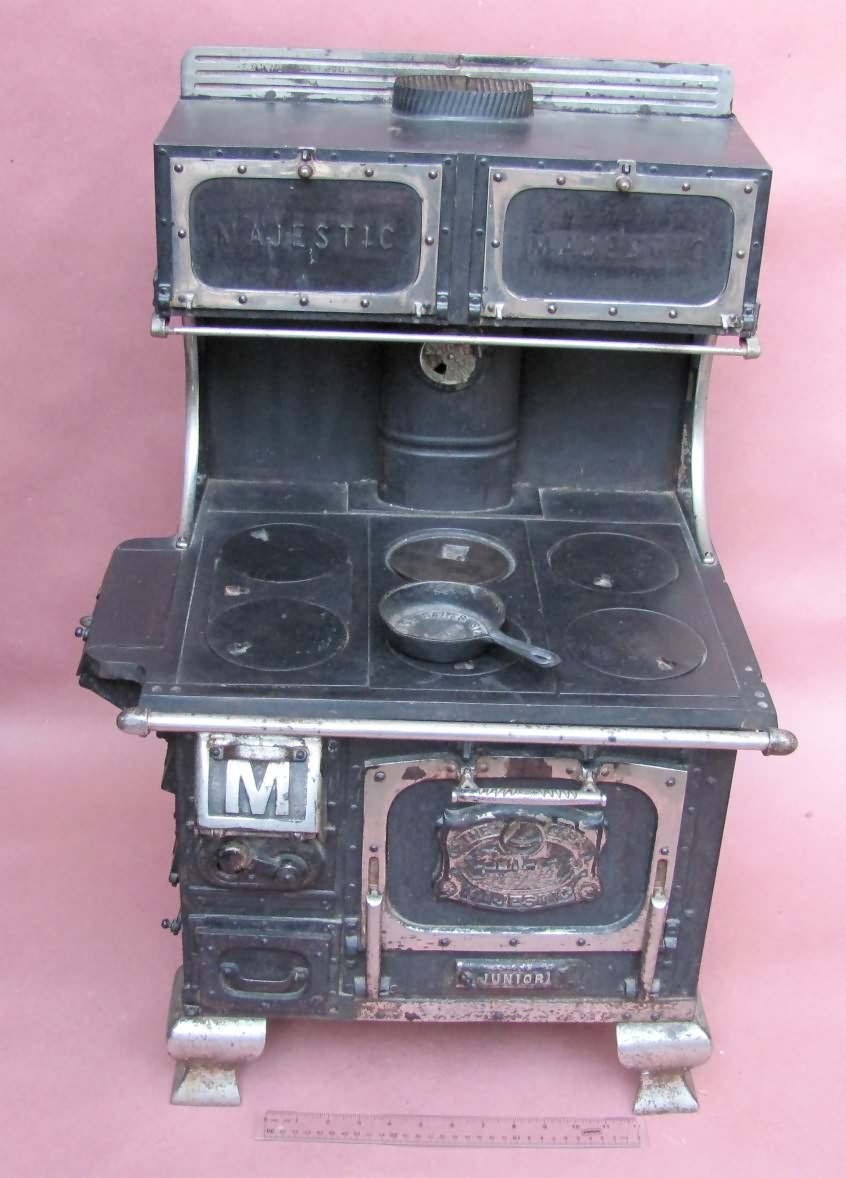 Great Majestic Junior Toy / Salesman Sample Cookstove
The
Great Majestic line of stoves was made by the Majestic Manufacturing
Co. of St. Louis Mo. The Majestic Junior is one of the larger toy
or salesman sample stoves made at 24" across and about 3'
tall. I believe these were used as floor or window model samples, and
that they were also sold as toys to the customers of the stove company, or
out of the large distributers where they were sold. It looks to be all original and is unrestored.
Note the cabriole legs. These stoves can be found with no feet, or
different styles than this. Overall it is in pretty nice condition with just one stove lid being a
replacement, and it appears one side shelf may be missing. The cast
iron fire box is OK, and the damper works. The side feed do
or is
good, and the sifter feature below the fire box is OK. The warming
oven doors work as they should as well. This stove is nice as it
sits, and will be even nicer cleaned up a bit.
A very nice example of a hard to find stove at an attractive price not found elsewhere.
Great Majestic Junior Toy / Salesman Sample Cookstove
The
Great Majestic line of stoves was made by the Majestic Manufacturing
Co. of St. Louis Mo. The Majestic Junior is one of the larger toy
or salesman sample stoves made at 24" across and about 3'
tall. I believe these were used as floor or window model samples, and
that they were also sold as toys to the customers of the stove company, or
out of the large distributers where they were sold. It looks to be all original and is unrestored.
Note the cabriole legs. These stoves can be found with no feet, or
different styles than this. Overall it is in pretty nice condition with just one stove lid being a
replacement, and it appears one side shelf may be missing. The cast
iron fire box is OK, and the damper works. The side feed do
or is
good, and the sifter feature below the fire box is OK. The warming
oven doors work as they should as well. This stove is nice as it
sits, and will be even nicer cleaned up a bit.
A very nice example of a hard to find stove at an attractive price not found elsewhere.
Very Good . . . . . SOLD!
"The Baby" Cast Iron Child Size Cook Stove There is sometimes confusion in the world about stoves that are this size, and what exactly to call them. People are always wanting to call them salesman samples when, in reality, most of them are toys. There are salesman sample stoves and ranges that date from this era, but this style stove was a toy, as are the other similar ones with different names on the door. This one is called the Baby and measures about 9" tall by 15" wide. It was made near the turn of the century or a little later. It is in very nice condition and has all of its lids and other parts. These came both with backsplashes / chimneys / warmers and without, and this version is without. The nickel is dull, but there is a lot still remaining. The fine quality of the casting confirms that this is not one of those reproductions that are often passed off for the real thing, and you will love the way it displays!
Good + . . . . . SOLD
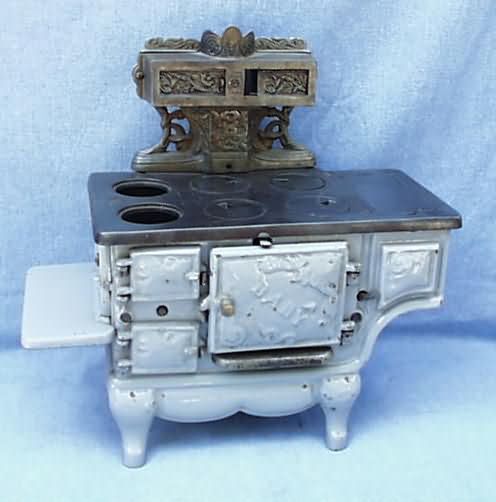 "The Baby" Blue Enameled Stove
This
is not a rare or unusual stove in most instances and they are seen quite regularly
for sale in plain cast iron. What is unusual is the blue / gray enameling
that this example came with. We found this one evening at a show before
the opening and bought it for a reasonable price. Usually after something
like that when you go back to the same booth for the next 3 years with the hope
of finding something nice it never happens again, and you wonder how they could
have possibly had such a nice piece? That is not the case with this dealer.
We have been going back ever since, and buying some of the best stuff we have
ever come across. Others know of him too, and by the time the show officially
opens this guy's booth looks as if he forgot to bring anything and a regular
attendee of the show might wonder why he is even there. One of a dying
and disappearing breed to be sure. His booth is at the end of the
3rd isle on the right hand side if you want to find him!
"The Baby" Blue Enameled Stove
This
is not a rare or unusual stove in most instances and they are seen quite regularly
for sale in plain cast iron. What is unusual is the blue / gray enameling
that this example came with. We found this one evening at a show before
the opening and bought it for a reasonable price. Usually after something
like that when you go back to the same booth for the next 3 years with the hope
of finding something nice it never happens again, and you wonder how they could
have possibly had such a nice piece? That is not the case with this dealer.
We have been going back ever since, and buying some of the best stuff we have
ever come across. Others know of him too, and by the time the show officially
opens this guy's booth looks as if he forgot to bring anything and a regular
attendee of the show might wonder why he is even there. One of a dying
and disappearing breed to be sure. His booth is at the end of the
3rd isle on the right hand side if you want to find him!
Good + . . . . . SOLD
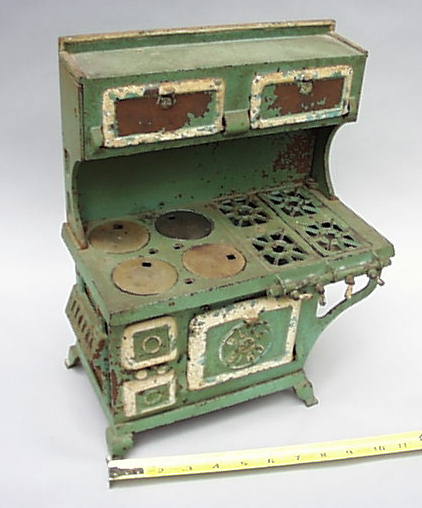 The Bluebird Toy Stove This toy stove was produced by the Grey
Iron Co. of Pa. They made several different sizes with this being the
largest of those offered measuring in at about 11" across. The overall
condition is pretty nice noting the color change it has experienced from sitting
in the window for 50 or so years.
The Bluebird Toy Stove This toy stove was produced by the Grey
Iron Co. of Pa. They made several different sizes with this being the
largest of those offered measuring in at about 11" across. The overall
condition is pretty nice noting the color change it has experienced from sitting
in the window for 50 or so years.
Good + . . . . . SOLD
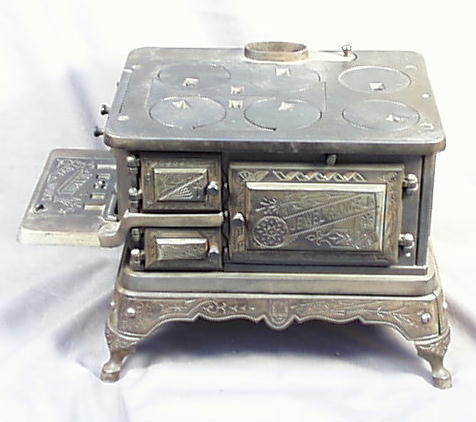 The
Jewel Stove This toy stove was produced
by the Detroit Stove Works of Chicago Ill It is one of those that is often
called a salesman sample, but as we have seen dozens of them over the years
and not one in a case, it is much more likely that these were made as toys to
be sold or given away when a large full-size model was bought. They were
probably also used in stores as display props, but it is unlikely that it is
a true salesman sample. This example is in very nice condition,
noting that there is a door on the right end that is missing. These can
be had, if you are a member of the secret society of stove part repair pieces,
but for the general public, trying to run one down is like trying to reinvent
the wheel. Actually that is probably for the better as if it was too easy,
think Cresent here, there would be thousands of complete repops running
about, and we do not need that.
The
Jewel Stove This toy stove was produced
by the Detroit Stove Works of Chicago Ill It is one of those that is often
called a salesman sample, but as we have seen dozens of them over the years
and not one in a case, it is much more likely that these were made as toys to
be sold or given away when a large full-size model was bought. They were
probably also used in stores as display props, but it is unlikely that it is
a true salesman sample. This example is in very nice condition,
noting that there is a door on the right end that is missing. These can
be had, if you are a member of the secret society of stove part repair pieces,
but for the general public, trying to run one down is like trying to reinvent
the wheel. Actually that is probably for the better as if it was too easy,
think Cresent here, there would be thousands of complete repops running
about, and we do not need that.
Good + . . . . . SOLD
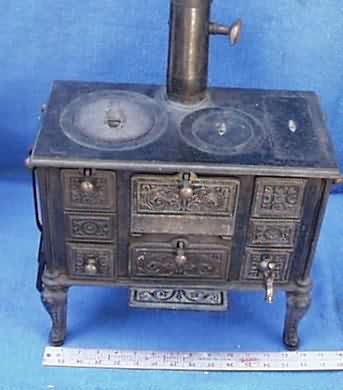 Unusual Small French Cast Iron
Stove When I first
purchased this very ornate little stove I was told by the owner
that it was French, and this was again confirmed to me several years later by
a woman who had lived in France and remembered seeing them there. It measures
just 12" tall, not including the stovepipe, and is nicely detailed with decorative
casting design, brass knobs and a brass spigot, two brass towel bars on the
end panels, a brass stovepipe damper knob, and it even has an enamel-lined water
tank on the far right side. We have owned this stove for close to 10 years,
and it was not until we decided to list it for sale recently that we took a
very close look at it and realized that the two center doors have been repaired
/ recast. I have included two close-up pictures of these pieces, both
front and back views. At first glance it is not obvious that they were
repaired, but it is evident with a closer inspection of the details. In
any case, it is still a real nice piece and if you want to add an unusual little
stove to your collection this might be just the one to add variety and interest.
Unusual Small French Cast Iron
Stove When I first
purchased this very ornate little stove I was told by the owner
that it was French, and this was again confirmed to me several years later by
a woman who had lived in France and remembered seeing them there. It measures
just 12" tall, not including the stovepipe, and is nicely detailed with decorative
casting design, brass knobs and a brass spigot, two brass towel bars on the
end panels, a brass stovepipe damper knob, and it even has an enamel-lined water
tank on the far right side. We have owned this stove for close to 10 years,
and it was not until we decided to list it for sale recently that we took a
very close look at it and realized that the two center doors have been repaired
/ recast. I have included two close-up pictures of these pieces, both
front and back views. At first glance it is not obvious that they were
repaired, but it is evident with a closer inspection of the details. In
any case, it is still a real nice piece and if you want to add an unusual little
stove to your collection this might be just the one to add variety and interest.
Good + . . . . . SOLD
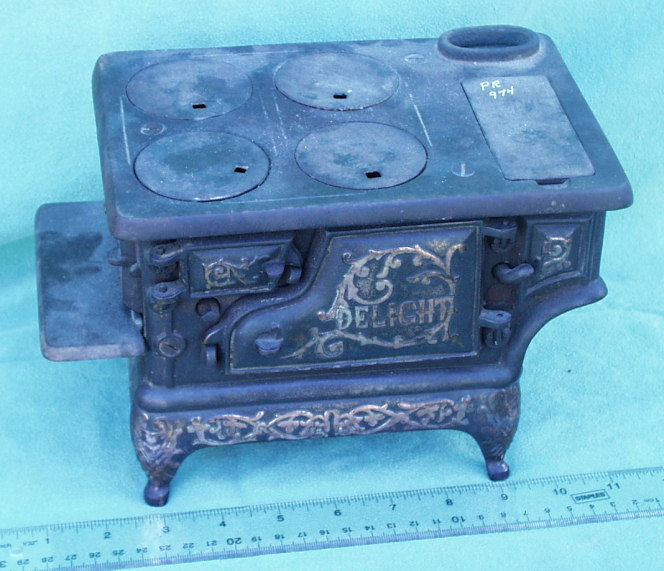 Delight
Toy Cookstove This toy stove was made by either Ideal or Kenton.
Most of the original nickel plating has worn off. It is not a common stove,
and it is an early design. It is not a repop or knockoff either.
There are no breaks, repairs or damage I can see.
A super piece of Americana!
Delight
Toy Cookstove This toy stove was made by either Ideal or Kenton.
Most of the original nickel plating has worn off. It is not a common stove,
and it is an early design. It is not a repop or knockoff either.
There are no breaks, repairs or damage I can see.
A super piece of Americana!
Very Good . . . . . . . SOLD!
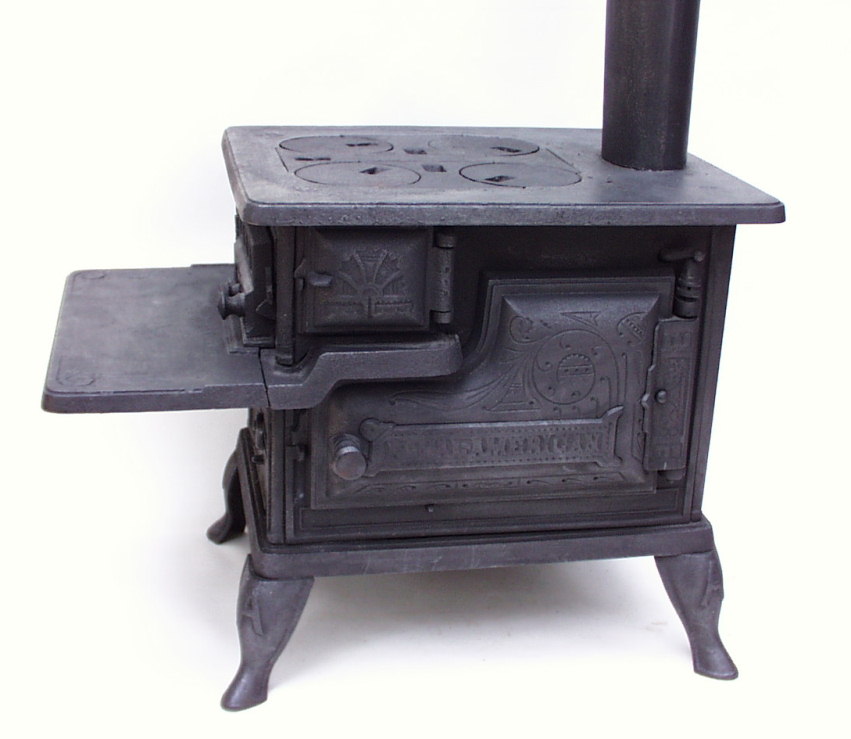 Royal American Salesman Sample / Toy Cookstove
This antique salesman sample / child size Royal American Cookstove
has a great look and appeal. It is an exact representation of a full size
stove produced in the late 1800's and into the beginning of the 20th century.
The makers location is on the front and the name Royal American appears on both
sides on the main doors. It measures approx 18" long across the front
and stands about 10" tall. It is a heavy and well detailed stove.
Royal American Salesman Sample / Toy Cookstove
This antique salesman sample / child size Royal American Cookstove
has a great look and appeal. It is an exact representation of a full size
stove produced in the late 1800's and into the beginning of the 20th century.
The makers location is on the front and the name Royal American appears on both
sides on the main doors. It measures approx 18" long across the front
and stands about 10" tall. It is a heavy and well detailed stove.
This stove was offered by the Bridgeford & Co. of Louisville KY. There are other stoves that are nearly identical to this one with different names, and the name plates on this one are applied rather than cast into the doors. This was done as different companies used the same castings or molds over the years. Stoves like this fit the bill as both salesman samples or display models that would sit in the general store, but were also sold as toys at different periods.
The stove is in good condition and original. There are no breaks, repairs, or damage I can see other than some pitting to the top and lids. Note the letter A cast into each of the 4 legs. This antique toy cookstove, that many refer to as a salesman sample is a super piece and will make a great accent piece.
Very Good. . . . . . . SOLD!
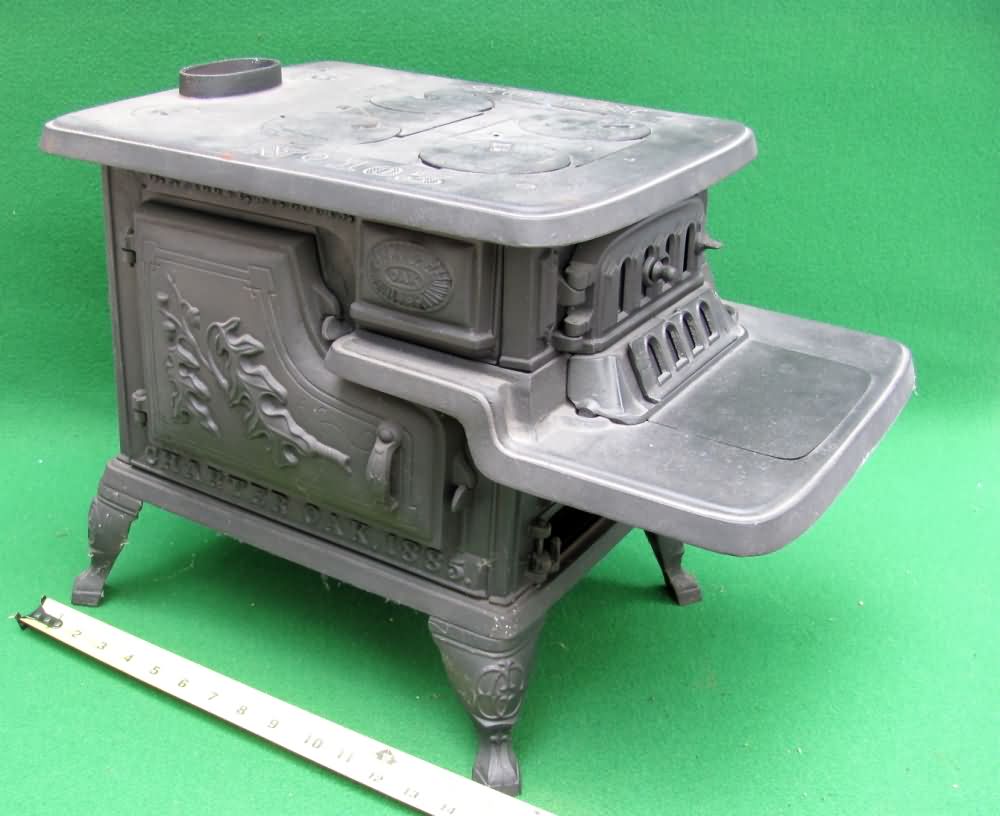 #103 Charter Oak Salesman Sample / Toy Cookstove
This antique salesman sample / child size Charter Oak #103 Cookstove has a
great look and appeal.
#103 Charter Oak Salesman Sample / Toy Cookstove
This antique salesman sample / child size Charter Oak #103 Cookstove has a
great look and appeal. The stove is in good condition and original. There are no breaks, repairs, or damage I can see. This antique toy cookstove, that many refer to as a salesman sample is a super piece and will make a great accent piece.
Very Good. . . . . . . SOLD!
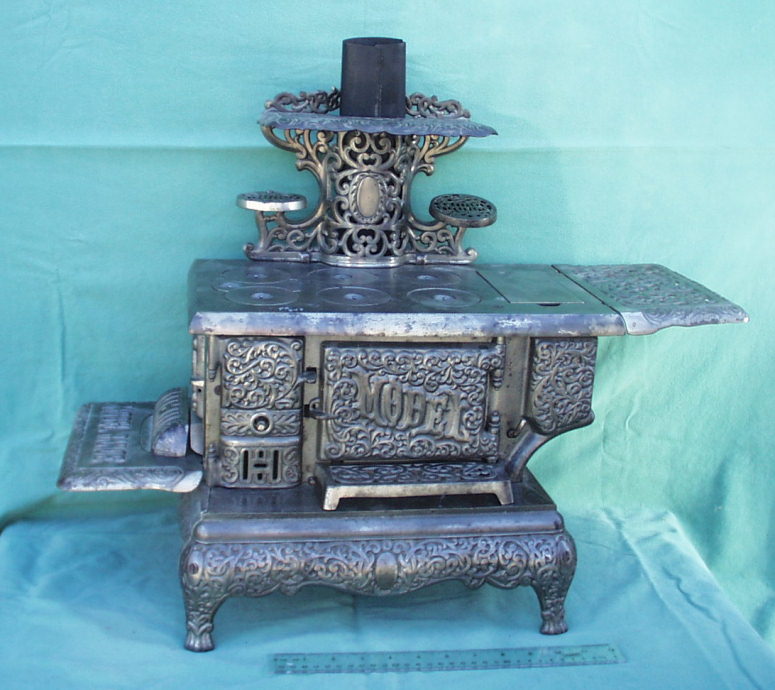 Model
Cookstove The Model Stove is one of the
largest and most detailed of all toy or sample size stoves. It was made
by Kenton a toy manufacturer and this stove dates from near the turn of the
century. The Kenton name is cast into the back of the stove in bold letters.
This stove measures over 2' across, and is so detailed and such a nice casting
that these toy stoves are often referred to as and mistaken for salesman sample
stoves, and it is no wonder.
Model
Cookstove The Model Stove is one of the
largest and most detailed of all toy or sample size stoves. It was made
by Kenton a toy manufacturer and this stove dates from near the turn of the
century. The Kenton name is cast into the back of the stove in bold letters.
This stove measures over 2' across, and is so detailed and such a nice casting
that these toy stoves are often referred to as and mistaken for salesman sample
stoves, and it is no wonder. It still has most of its nickel and all of its shelves and lids look to be original. Note the small warmer trays / Trivets in the back as shelves with the name in cast out letters.
There are no breaks, repairs or damage I can see. This antique cast iron toy stove is a super piece of early Americana and one of the nicest example of this stove I have seen.
Very Good . . . . . . SOLD!
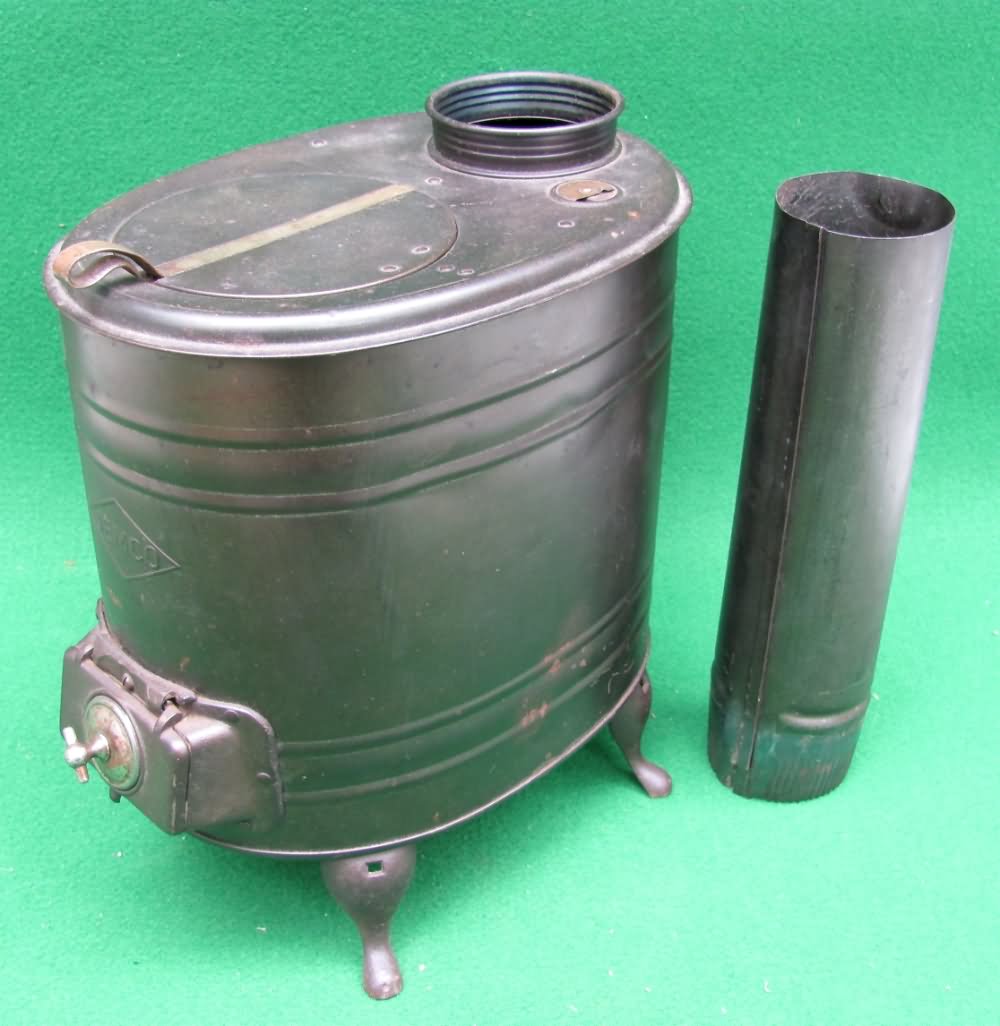 Gemco Salesman Sample Wood Stove
This style of stove was popular back in the 50's, especially so in cabins,
hunting lodges, and vacation homes. The body was tin, and they cranked out heat when you got
them going. The feet and the draft
control are cast iron. The lid on top is marked Pat. Apl'd For.
It is about twice as big as the others of similar design marked Sterling
that I have listed on another page. Very Nice!!
Gemco Salesman Sample Wood Stove
This style of stove was popular back in the 50's, especially so in cabins,
hunting lodges, and vacation homes. The body was tin, and they cranked out heat when you got
them going. The feet and the draft
control are cast iron. The lid on top is marked Pat. Apl'd For.
It is about twice as big as the others of similar design marked Sterling
that I have listed on another page. Very Nice!!
Good + . . . . . . SOLD!!
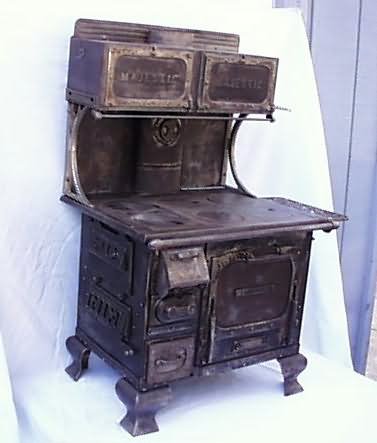 The Great Majestic Stove
This toy stove was produced by the Majestic
Manufacturing Co. of St. Louis. It is one of those that is often
called a salesman sample, but as we have seen dozens of them over the years
and not one in a case, it is much more likely that these were made as toys to
be sold or given away when a large full-size model was bought just like the
Jewel above. They were probably also used in stores as display props,
but it is unlikely that it is a true salesman sample. This example
is in fair condition having been improperly stored out in the garage after the
child grew up. It has had major nickel losses, but that is fixable, and
these have a great look when carefully and tastefully restored. They also
look great like this in the proper setting, and that is how we are going to
be selling this one. Complete and nice, but well used.
The Great Majestic Stove
This toy stove was produced by the Majestic
Manufacturing Co. of St. Louis. It is one of those that is often
called a salesman sample, but as we have seen dozens of them over the years
and not one in a case, it is much more likely that these were made as toys to
be sold or given away when a large full-size model was bought just like the
Jewel above. They were probably also used in stores as display props,
but it is unlikely that it is a true salesman sample. This example
is in fair condition having been improperly stored out in the garage after the
child grew up. It has had major nickel losses, but that is fixable, and
these have a great look when carefully and tastefully restored. They also
look great like this in the proper setting, and that is how we are going to
be selling this one. Complete and nice, but well used.
Good + . . . . . SOLD
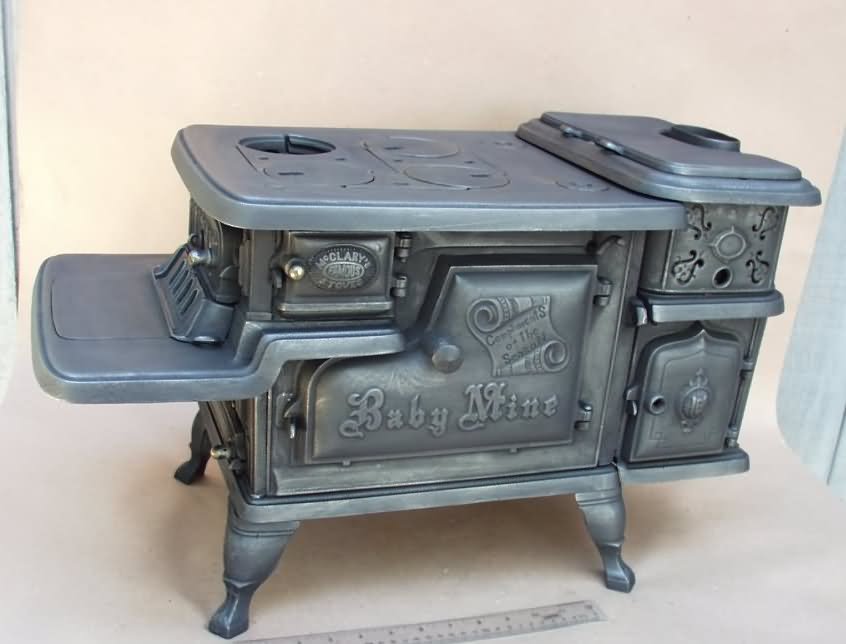 McClary's "Baby Mine Compliments of
the Season" Toy / Sample Stove This antique salesman sample / child size
McClary's Famous Cookstove has a great look and appeal. It is an exact
representation of a full size stove produced in the late 1800's and into the
beginning of the 20th century. It looks to be cast from the same molds as a
Charter Oak #503, and at approx 24" long is one of the largest toy / sample
size stoves made.
McClary's "Baby Mine Compliments of
the Season" Toy / Sample Stove This antique salesman sample / child size
McClary's Famous Cookstove has a great look and appeal. It is an exact
representation of a full size stove produced in the late 1800's and into the
beginning of the 20th century. It looks to be cast from the same molds as a
Charter Oak #503, and at approx 24" long is one of the largest toy / sample
size stoves made. The makers name is on the front top door, and a Google search reveals they are a Canadian outfit, and are indeed "famous" for their line of stoves. This is the first example I have ever seen of this toy stove though, and it or the name McClary are not listed in the book on the subject by Dick & Joan Ford.
Stoves like this fit the bill as both salesman samples or display models that would sit in the general store, but were also sold as toys at different periods.
The stove is in good condition and all original. This antique toy Cookstove, that many refer to as a salesman sample is a super piece and will make a great accent or display piece in the home featuring country store and child's toys from the past
Good + . . . . . SOLD
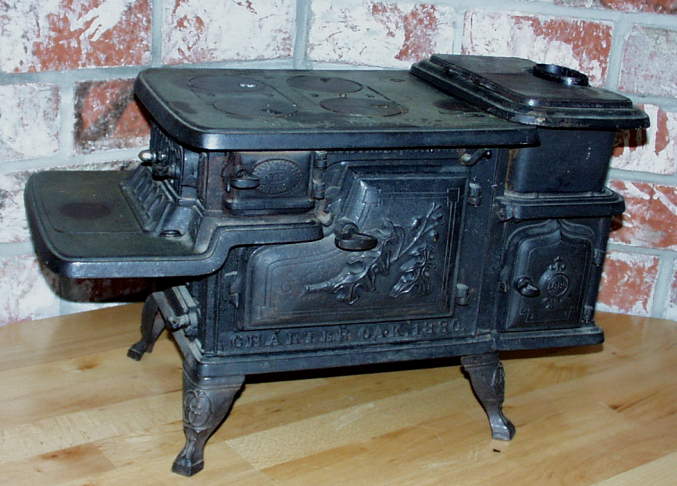 Charter
Oak #503 Toy / Salesman Sample Stove This antique salesman sample / child size
Charter Oak #503 Cookstove has a great look and appeal. It is an exact
representation of a full size stove produced in the late 1800's and into the
beginning of the 20th century. It is approx 24" long and the larger of
the two Charter Oak stoves that can be found.
Charter
Oak #503 Toy / Salesman Sample Stove This antique salesman sample / child size
Charter Oak #503 Cookstove has a great look and appeal. It is an exact
representation of a full size stove produced in the late 1800's and into the
beginning of the 20th century. It is approx 24" long and the larger of
the two Charter Oak stoves that can be found. Stoves like this fit the bill as both salesman samples or display models that would sit in the general store, but were also sold as toys at different periods.
The stove is in good condition and all original. This antique toy Cookstove, that many refer to as a salesman sample is a super piece and will make a great accent or display piece in the home featuring country store and child's toys from the past
Good + . . . . . SOLD
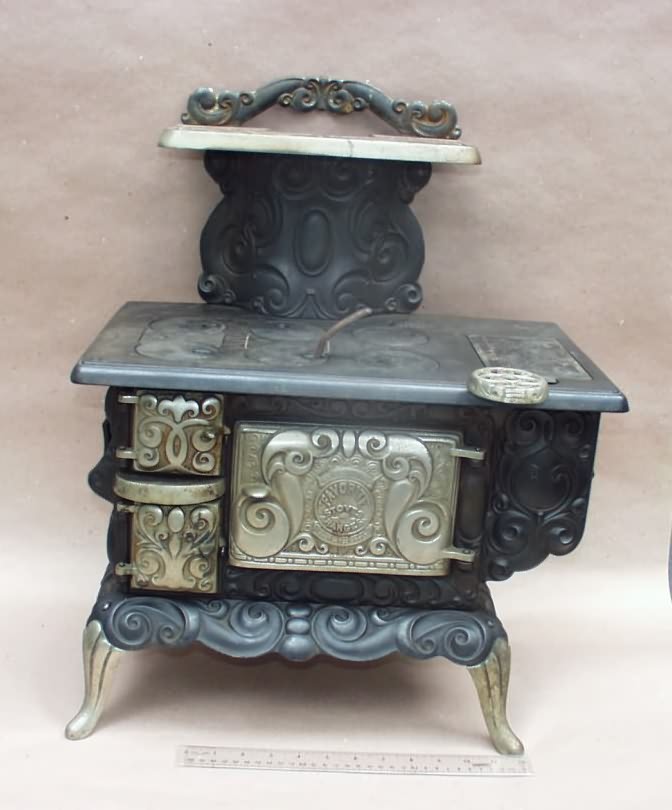 Favorite / Dolly's Favorite Toy / Salesman Sample Stove
This is a true salesman sample, toy stove, or display model. It is not one of the repop fakes you typically see
listed. The telling features are the quality of the casting, and the name and company info cast into the left side
that all of the fakes I have seen are missing.
Favorite / Dolly's Favorite Toy / Salesman Sample Stove
This is a true salesman sample, toy stove, or display model. It is not one of the repop fakes you typically see
listed. The telling features are the quality of the casting, and the name and company info cast into the left side
that all of the fakes I have seen are missing.
Look at the detail and condition of the front door. You can read the "We Guarantee / Best in the World" around the center logo area. The nickel plating here and elsewhere is original and in super nice condition. There is one apology, and that is the back left corner of the top is broken / cracked and has been glued back in place. I have pictured this area.
On the left is the fire chamber complete with its cast iron fire box. Each internal part is individually cast, just like in a real stove. Below that is the ash door & drawer. On top there are 6 original cast iron lids for the burner areas, and on the right a large lid over the water heater.
This original Dolly's Favorite stove is a rare piece, and the prices I have seen them offered for before has been in the many thousands of dollars. A rare opportunity.
Good + . . . . . SOLD
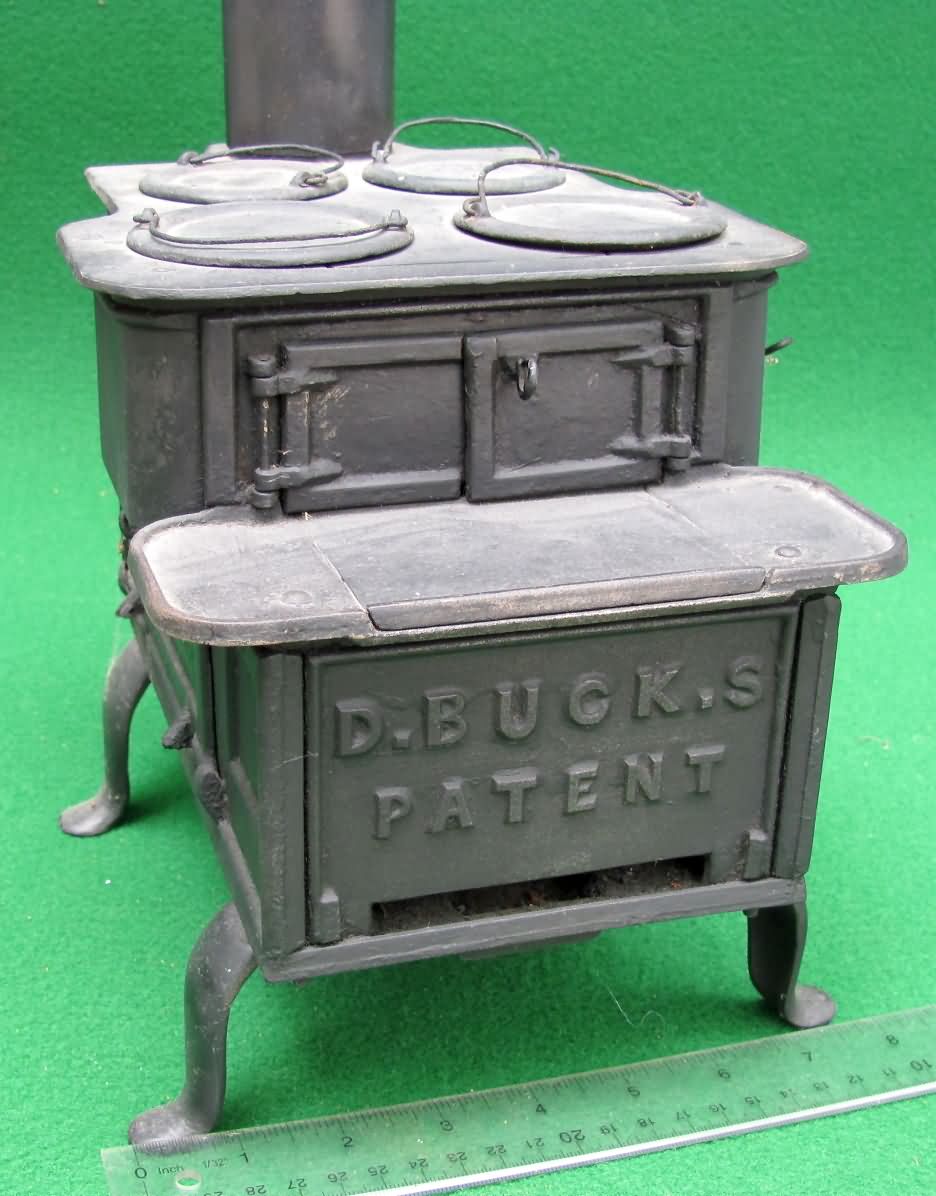 D.
Buck 1839 Patent Stove
This is the actual stove pictured in Ford's book on toy stoves. Ford limited the
entries in his book to mostly toys, and goes to some length explaining
the limits and rationale of that decision. I think he got it wrong with
this stove and that it is not a toy.
D.
Buck 1839 Patent Stove
This is the actual stove pictured in Ford's book on toy stoves. Ford limited the
entries in his book to mostly toys, and goes to some length explaining
the limits and rationale of that decision. I think he got it wrong with
this stove and that it is not a toy.Darius Buck of Albany, New York was granted the patent for this stove on May 20th 1839. The patent number is 1157 which can be viewed by going to Google Patents. It is a very close match. Mr. Buck had two main ideas involved in this stove. First was the idea of having part of the oven under the front apron, as opposed to the apron being lower and out in front, thus enlarging the cooking area of the oven. His second idea was not the "reverberating flue" as he called the design of most flues and incorporated into the design of this stove but rather that his refined design would increase the efficiency and save fuel. He was a man with ideas way ahead of his time. His design allowed for the air to be heated thus more evenly heat the ovens, and allow for better combustion. I swear this is the same technology being foisted upon modern day woodstove buyers as cutting edge technology, and adding $1000 or more to the cost of stoves. I'll stop there with that thought.
Given the size of this stove, 11" long by 9" wide, I believe that it could well be the original Patent Model or 2nd model that Mr. Buck made for his idea. Barring that it is surely a display model or salesman sample as opposed to a toy. It should be noted that Mr. Buck held other patents for stoves and that I have had the original Patent Model of and sold. A super piece in super condition.
Fine . . . . . . SOLD!
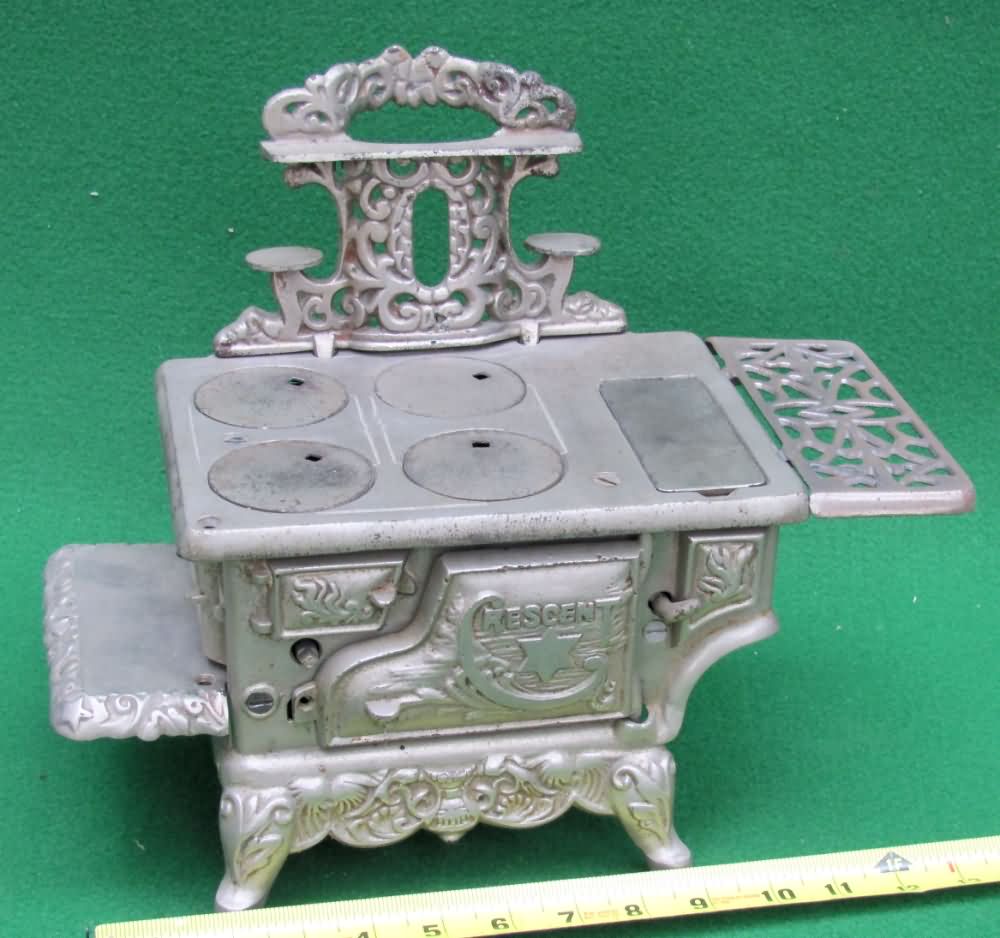 Crescent
Toy Stove
Here is a rare bird. A Crescent stove that is actually old and not a
new modern knock-off being sold as old. This is an early and legit stove from the 20's or
before.
It is complete with both shelves and backsplash. It measures approx
14" across the front with the shelves in place. Very Nice!
Crescent
Toy Stove
Here is a rare bird. A Crescent stove that is actually old and not a
new modern knock-off being sold as old. This is an early and legit stove from the 20's or
before.
It is complete with both shelves and backsplash. It measures approx
14" across the front with the shelves in place. Very Nice!
Fine . . . . . . SOLD!
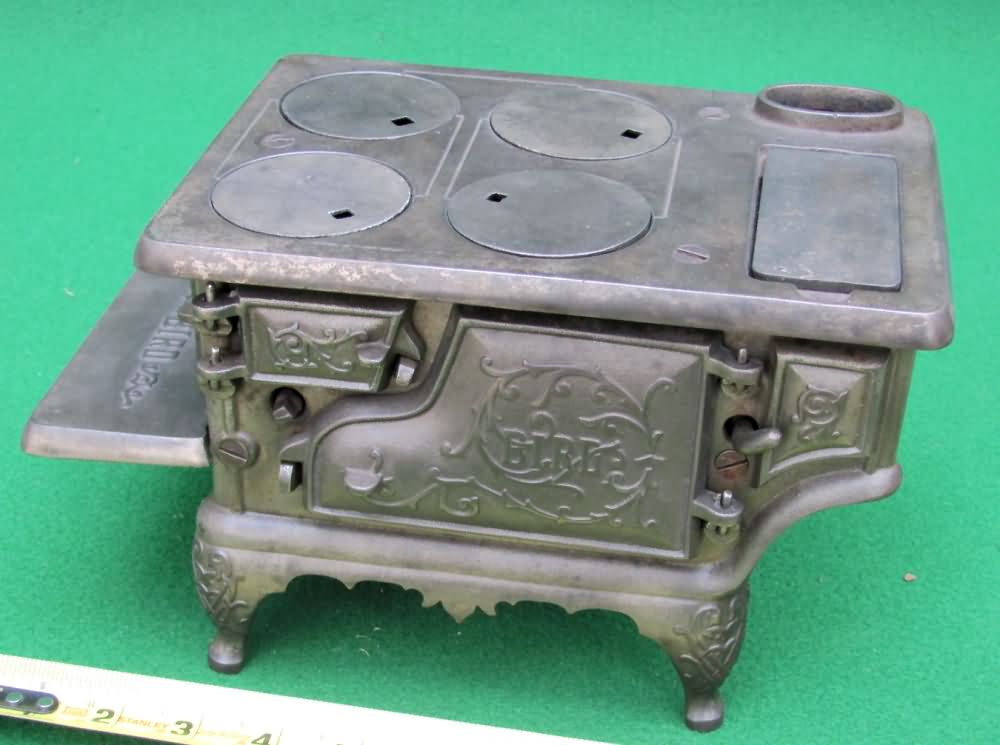 Bird
Toy Stove
I am not sure who the maker of this is. Ford pictures 2 of these and
each has a different base than this one. He says Ideal or Kenton for those.
A nicely made little stove!
Bird
Toy Stove
I am not sure who the maker of this is. Ford pictures 2 of these and
each has a different base than this one. He says Ideal or Kenton for those.
A nicely made little stove!
Fine . . . . . . SOLD!
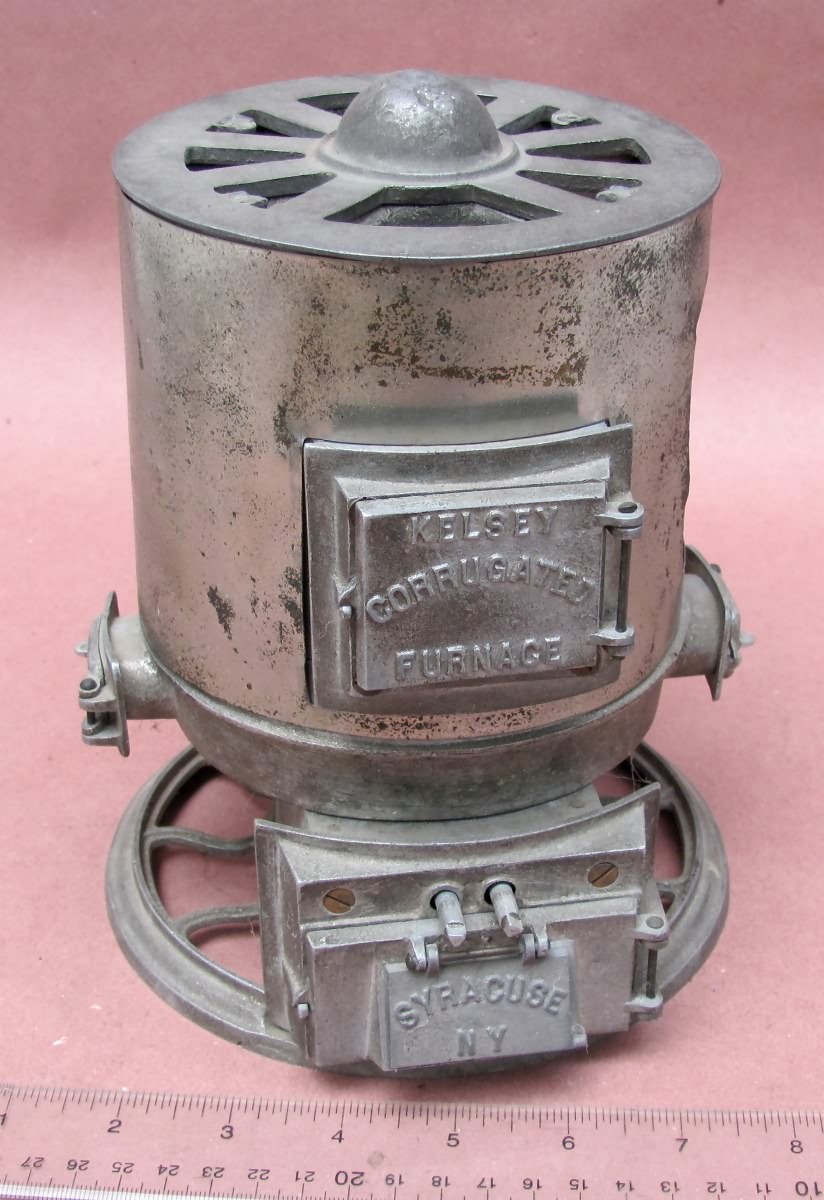 Salesman
Sample Kelsey Corrugated Furnace
/ Syracuse NY
Makers of furnaces and
heating contractors had to have a means to convince the prospective buyer to
replace their old furnace and buy a new furnace. The manufacturers obliged by producing samples like
these to adorn the contractors office or that of the point of sale distributer.Over
the years I have seen dozens of different versions, but none are real common.This
example
is made of aluminum and looking inside you can see it has all the features that the real
deal had. It looks to be coal or wood fired to me. I would guess this
interesting design furnace dates from
the 1950's or earlier.
Salesman
Sample Kelsey Corrugated Furnace
/ Syracuse NY
Makers of furnaces and
heating contractors had to have a means to convince the prospective buyer to
replace their old furnace and buy a new furnace. The manufacturers obliged by producing samples like
these to adorn the contractors office or that of the point of sale distributer.Over
the years I have seen dozens of different versions, but none are real common.This
example
is made of aluminum and looking inside you can see it has all the features that the real
deal had. It looks to be coal or wood fired to me. I would guess this
interesting design furnace dates from
the 1950's or earlier.Wonder what the efficiency was? How much were fuel costs back then? I went through over 3 cords of wood this winter @ 300 / cord and if priced right a salesman could sell me one of these if it was self loading.
All in all it is in great condition, and has a nice look to it. Different.
Very Good . . . . . . SOLD!
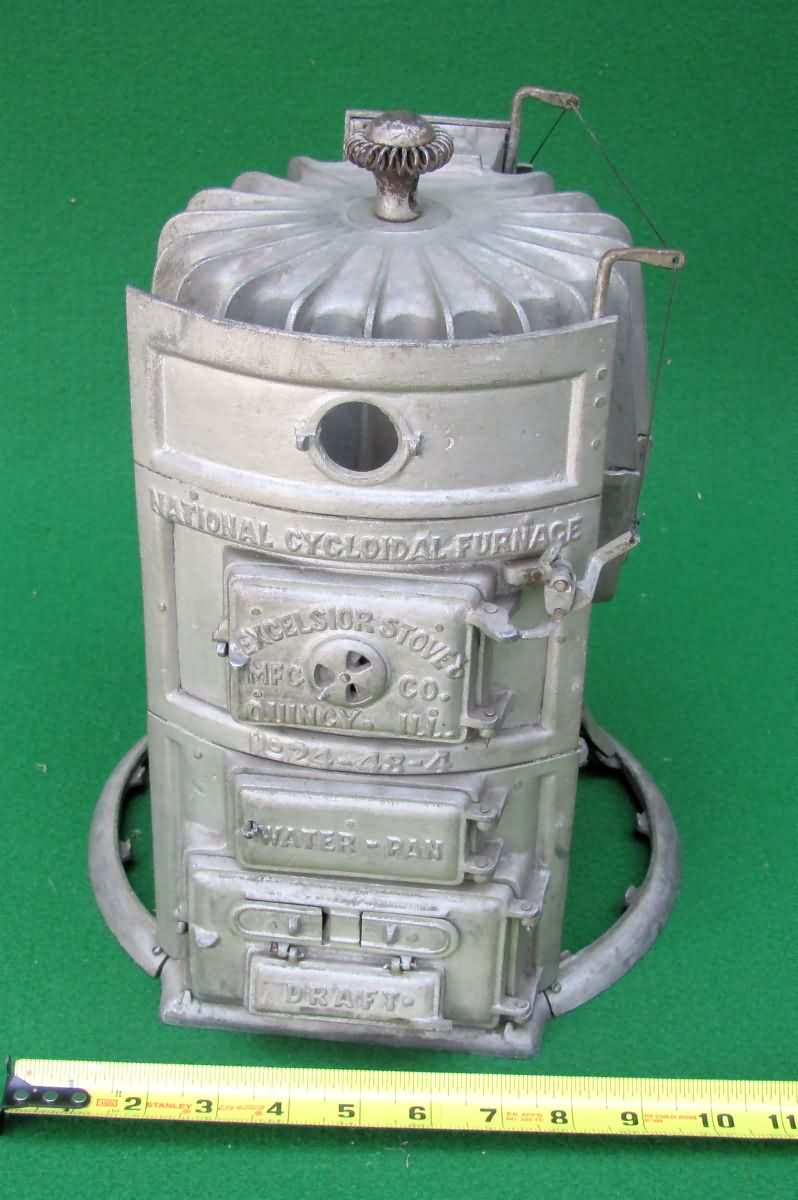 National Cycloidal
Salesman Sample Furnace by Excelsior Stove Works of Quincy ILL
This salesman sample furnace has all the maker info cast into the doors on
the front. It is a very detailed model with its ribbed design walls and appears to be complete.
The top lifts off to reveal the inner workings as well. The size is 9
1/2 Dia x about 14" tall.. A Google search reveals that Julia's
Auction has had several of them listed over the years with estimates in the
1500 - 2000 range. Very Nice!
National Cycloidal
Salesman Sample Furnace by Excelsior Stove Works of Quincy ILL
This salesman sample furnace has all the maker info cast into the doors on
the front. It is a very detailed model with its ribbed design walls and appears to be complete.
The top lifts off to reveal the inner workings as well. The size is 9
1/2 Dia x about 14" tall.. A Google search reveals that Julia's
Auction has had several of them listed over the years with estimates in the
1500 - 2000 range. Very Nice!
Fine . . . . . . SOLD!
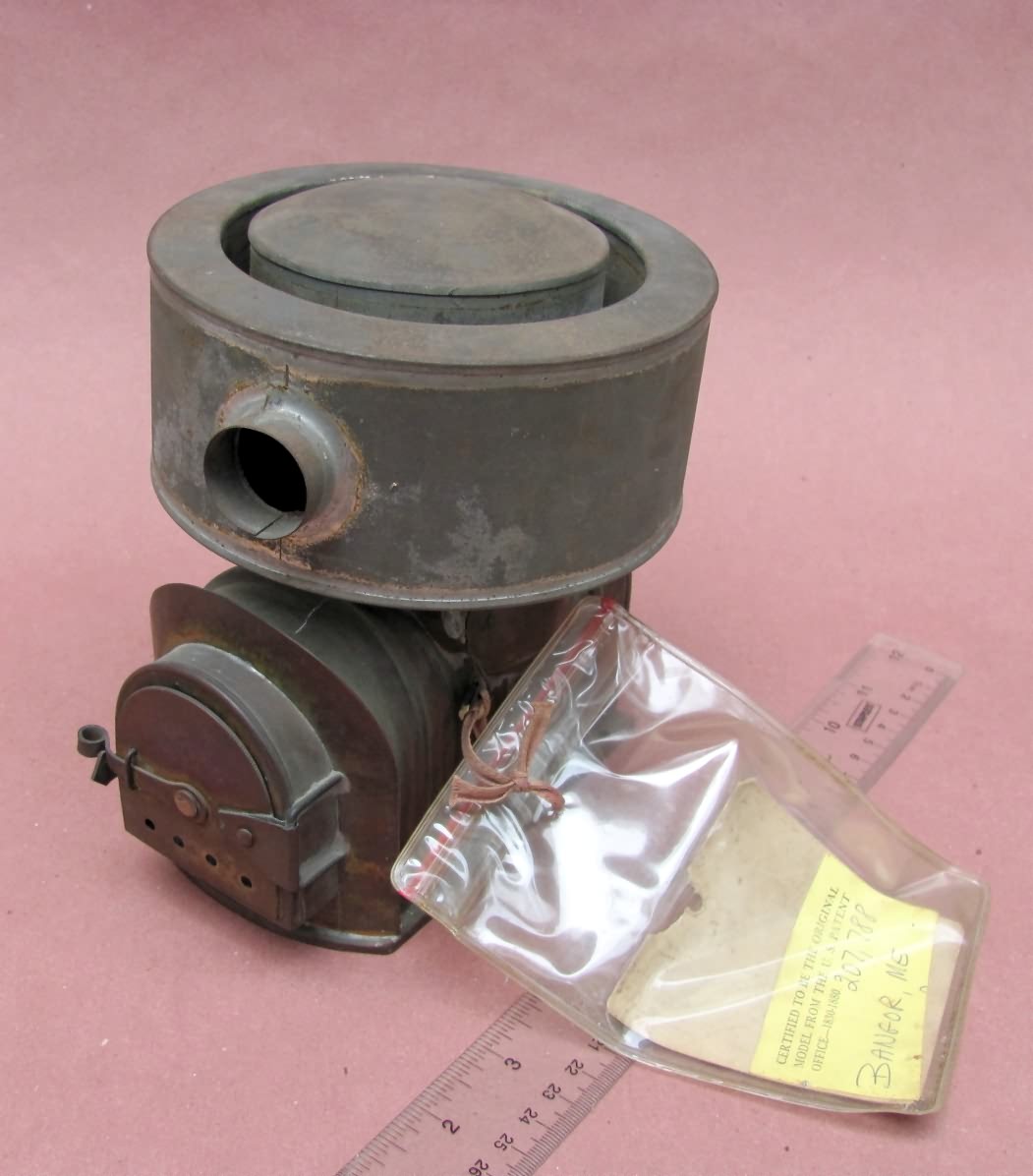 1878 Patent Model of Wood
Burning furnace by Henry A. Wood of Bangor Maine
This patent model has its original tag and a yellow authenticity
tag from O. Rundle Gilbert. Heating with wood was a big concern
in Maine during that bygone era. Mr. Woods idea looks to be a design to
try and extract as much heat from the burning wood in the lower combustion
chamber as possible before the heat was allowed to escape after rising up
into what he refers to as the dome, and before passing through the heat
exchanger that is mounted above the actual burner below and around the dome.
It actually looks like it would be a good idea.
1878 Patent Model of Wood
Burning furnace by Henry A. Wood of Bangor Maine
This patent model has its original tag and a yellow authenticity
tag from O. Rundle Gilbert. Heating with wood was a big concern
in Maine during that bygone era. Mr. Woods idea looks to be a design to
try and extract as much heat from the burning wood in the lower combustion
chamber as possible before the heat was allowed to escape after rising up
into what he refers to as the dome, and before passing through the heat
exchanger that is mounted above the actual burner below and around the dome.
It actually looks like it would be a good idea. This patent model is approx 6" wide x 6" tall. This model is a good match to the patent which can be viewed using Google Patents and a search for the number 142313.
This patent model furnace will display nicely, and the condition is excellent!! Nice!!
Excellent. . . . . . SOLD!
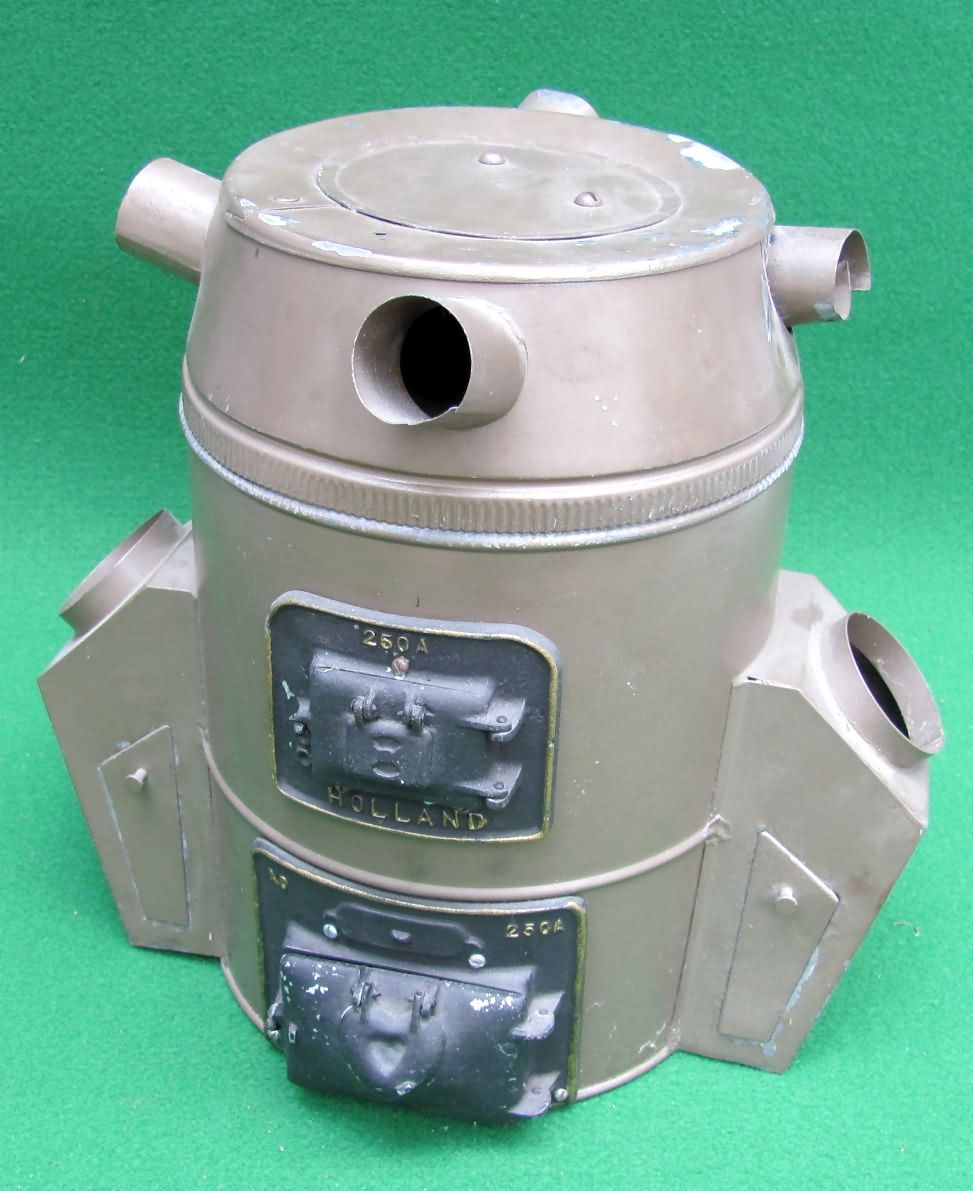 Holland
Salesman Sample Furnace
This salesman sample furnace was probably a point of sale display to show
contractors and prospective buyers the latest in technology in home or
industrial furnaces.
Holland
Salesman Sample Furnace
This salesman sample furnace was probably a point of sale display to show
contractors and prospective buyers the latest in technology in home or
industrial furnaces.
Good + . . . . . . SOLD!
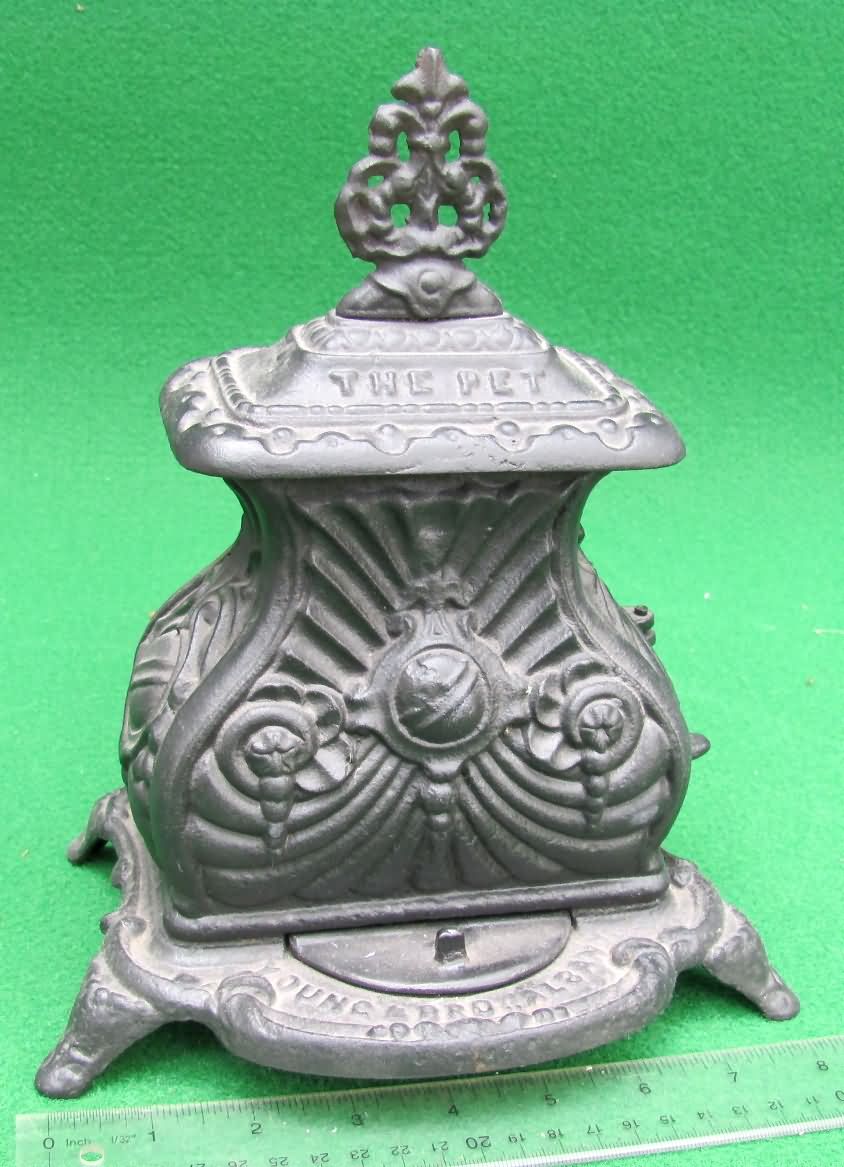 "The
Pet" Cast Iron Toy Parlor Stove by Young & Bros Albany NY
This is a early cast iron toy stove by a recognized maker of stoves in early
New York. It is marked on the top lid Pat'd 1857. The hearth is
marked with the name Young & Bros Albany. It measures 8" across the
front. These could well have been made as display models to sit in a
store on the counter to entice prospective customers without eating up a lot
of valuable floor space.
"The
Pet" Cast Iron Toy Parlor Stove by Young & Bros Albany NY
This is a early cast iron toy stove by a recognized maker of stoves in early
New York. It is marked on the top lid Pat'd 1857. The hearth is
marked with the name Young & Bros Albany. It measures 8" across the
front. These could well have been made as display models to sit in a
store on the counter to entice prospective customers without eating up a lot
of valuable floor space.
Fine . . . . . . SOLD!!
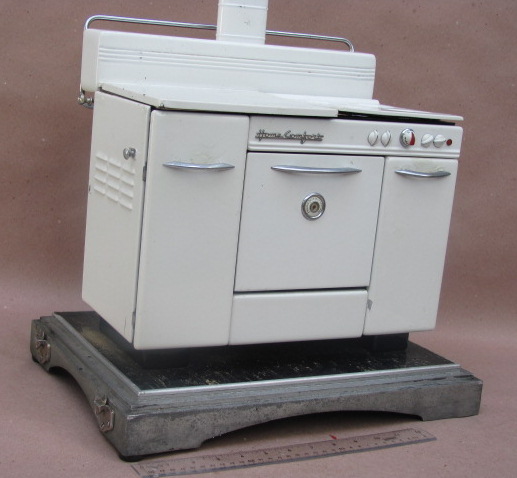 Wrought Iron Range Co. / Home Comfort Salesman Sample Combination Gas / Wood
Range
This salesman sample "Home Comfort" brand combination wood
fired / Gas Cookstove / Kitchen Range by the Wrought Iron Range Co. of St Louis MO.
is a very good piece. This is a true salesman sample / display model
stove with its box. It is not a toy stove. The base of the outer box measures 12 3/4 x 16 1/2"
The stove itself measures approx 14" across the front by 7" deep and is about 16"
tall to the top of the chimney.
Wrought Iron Range Co. / Home Comfort Salesman Sample Combination Gas / Wood
Range
This salesman sample "Home Comfort" brand combination wood
fired / Gas Cookstove / Kitchen Range by the Wrought Iron Range Co. of St Louis MO.
is a very good piece. This is a true salesman sample / display model
stove with its box. It is not a toy stove. The base of the outer box measures 12 3/4 x 16 1/2"
The stove itself measures approx 14" across the front by 7" deep and is about 16"
tall to the top of the chimney. Salesman Sample Stoves like this would actually be carried by a salesman door to door or from shop to shop in an effort to sell the full size version to individuals, or store keepers. This salesmen sample stove dates from after the turn of the century and into the 20's or as late as the 40's.
It is set up with removable decorative sheet steel enameled lids that set over both sides of the top when not in use. The left side of the stove is wood fired and the oven and burners on the right are gas fired. On the top left there are places for 3 cast iron lids for the wood burner areas. Two of these cast iron lids are missing. One is shown in the pics. They are the same size so new ones can remade or cast from the original that remains.
The fire chamber is complete with its cast iron fire box and the door has the Home Comfort name cast into it. Each internal part of the fire box is individually cast just like in a real stove. The shaker grates are there and operable. Below that is the ash drawer. The backsplash is original as is the exhaust chimney. On the right are four gas burners with their tiny trivets, and the tiny spider burner assemblies. The little knobs to control them are present, operable and nice. Below is the large gas fired oven. This area has removable sheet metal sides and bottom just like the real stove. The gas burner for the oven is also visible under one of the plates.
The exterior is finished in white enamel, There has been some touchup around the door handles and there is one chip on the right door. The inside is a black graniteware or enamel. The outer blue colored box is pretty nice, and shows some wear and tear.
This stove is not to be confused with the later toy electric stoves by Lionel or others. This Home Comfort combination wood and gas stove is a true salesman sample. Over the years I have seen just a few of these offered for sale,. A few years back one of these stoves was sold for the incredible price of $9,000 at "Theriault's, the auction house best known for their doll auctions. I believe it was the top lot of the antique stove auction they held that day. This is a rare piece and a rare opportunity.
Good + . . . . . . SOLD!
Antique
Toy & Salesman Sample
Washers /
Washing Machines
The
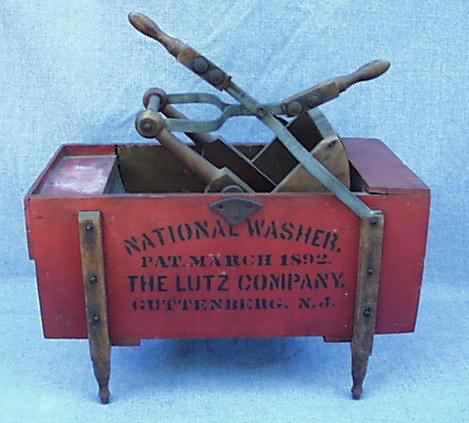 Lutz
Salesman Sample Washing Machine We
bought this antique salesman sample washing machine at the Atlantic City Antique
Show a while back, an antique show which we use to do. It is in near mint
condition and was a welcome addition to the collection. It is interesting
to note just how many different versions / variations of these salesman samples
and patent models of washing machines and other laundry devices that there are.
There must have been a very strong market after the Civil War and into the turn
of the last century for so many to have been made and to have survived.
It would make one wonder just what the early housewife used to do before these
marvels were introduced, and not wonder at all at how she must have rejoiced
when Maytag came on the scene with its new- fangled approach to this age old
problem!
Lutz
Salesman Sample Washing Machine We
bought this antique salesman sample washing machine at the Atlantic City Antique
Show a while back, an antique show which we use to do. It is in near mint
condition and was a welcome addition to the collection. It is interesting
to note just how many different versions / variations of these salesman samples
and patent models of washing machines and other laundry devices that there are.
There must have been a very strong market after the Civil War and into the turn
of the last century for so many to have been made and to have survived.
It would make one wonder just what the early housewife used to do before these
marvels were introduced, and not wonder at all at how she must have rejoiced
when Maytag came on the scene with its new- fangled approach to this age old
problem!
Good + . . . . . $2795.00 SOLD
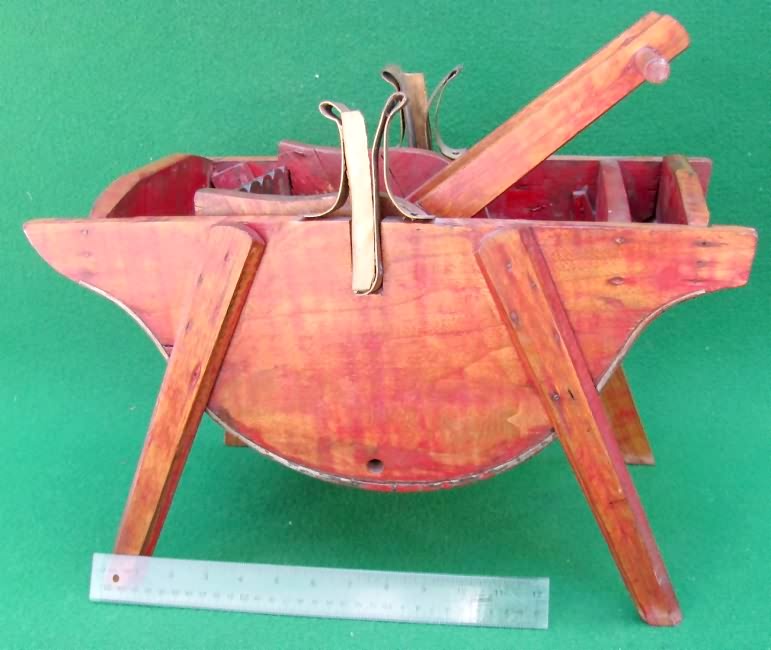 Rocker
Style Salesman Sample / Toy Washing Machine / Washer
This is a great looking early salesman sample / toy washing machine that dates
from near the turn of the century or before from the construction details and
style of the agitators. Washers like this had their heyday beginning in
the `1880's and were made right up till the depression and WWII for some rural markets.
Rocker
Style Salesman Sample / Toy Washing Machine / Washer
This is a great looking early salesman sample / toy washing machine that dates
from near the turn of the century or before from the construction details and
style of the agitators. Washers like this had their heyday beginning in
the `1880's and were made right up till the depression and WWII for some rural markets.It is unmarked, and I do not see any indication that it ever was.The red wash finish looks good. The agitators in both the bottom and on the rocker portion are very primitive and interesting looking. It also has an unusual spring loaded feature to help hold the rocker in place and allowing it to rise as you loaded in more clothes. Different and interesting!!
Good .. . . $395.00 SOLD
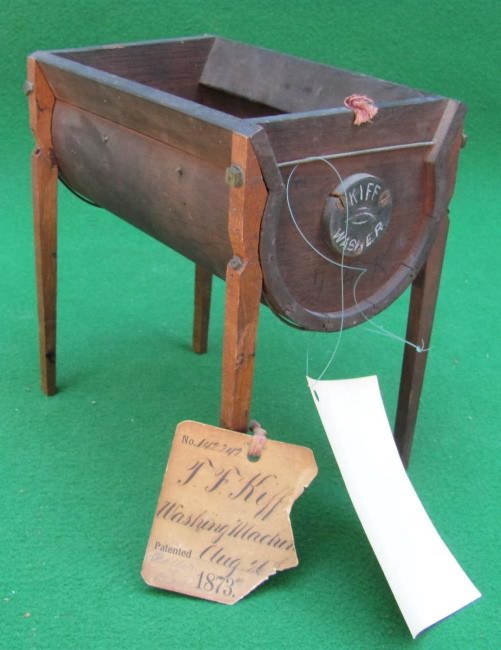 1873
Patent Model Washing Machine Thomas Kiff of
Cincinnati Ohio was granted a patent for his washing machine
on August 26th 1873. The patent number is 142,242.The patent
will come up with a Google search. This model came from the Mr. & Mrs. O. Rundell
Gilbert collection and has the original Patent Office
tag that is chipped.
1873
Patent Model Washing Machine Thomas Kiff of
Cincinnati Ohio was granted a patent for his washing machine
on August 26th 1873. The patent number is 142,242.The patent
will come up with a Google search. This model came from the Mr. & Mrs. O. Rundell
Gilbert collection and has the original Patent Office
tag that is chipped.This model has a few issues. One leg has been repaired. The wire and bolt to hold it in place is a replacement.The crank to turn the inner drum is missing. Finally it looks like some rollers are missing inside the 1/2 drum if the drawing is to be trusted. A restorable project.
Fair - . . . . . . $150.00 SOLD!!
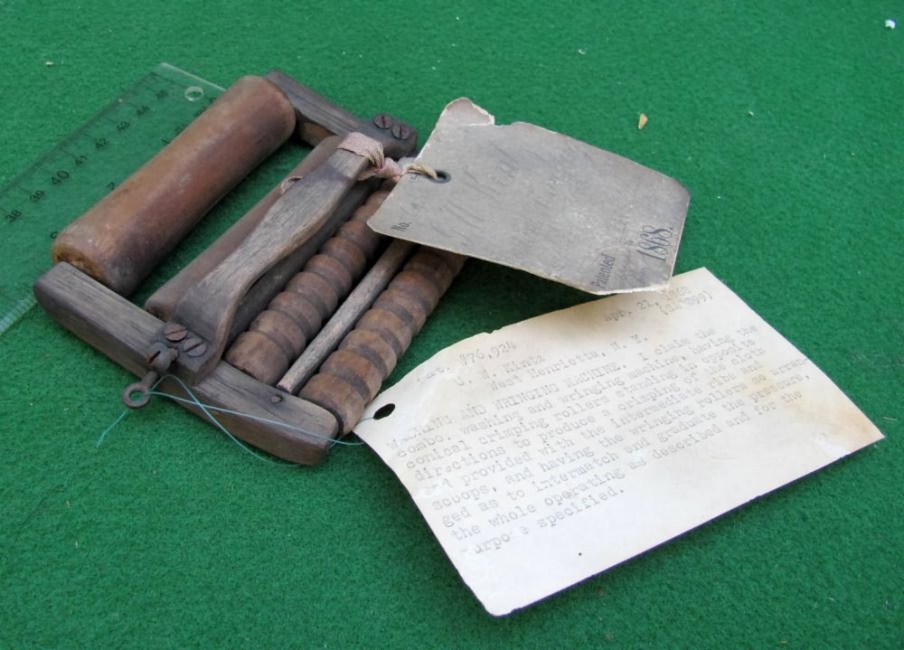 1868
Patent Model Wringing / Washing Machine Washboard
George Kitz of Henrietta NY was granted a patent for his washing machine
wringer
on April 21 - 1868. The patent number is 76,924.The patent
will come up with a Google search.This model came from the Mr. & Mrs. O. Rundell
Gilbert collection and has the original Patent Office
tag that is chipped worn and faded.
1868
Patent Model Wringing / Washing Machine Washboard
George Kitz of Henrietta NY was granted a patent for his washing machine
wringer
on April 21 - 1868. The patent number is 76,924.The patent
will come up with a Google search.This model came from the Mr. & Mrs. O. Rundell
Gilbert collection and has the original Patent Office
tag that is chipped worn and faded.This small patent model measures approx. 4" square. The patent image calls for this to be used with a large typical looking washboard. This smaller version of what looks like a washboard in its own right would be attached to the larger washboard with a flexible or articulated arm and swung back and forth as the rubber, or wringer against the large washboard. It is likely that this, the smaller board / washer, was all he submitted for the patent. It is interesting that it appears to have seen heavy use / testing. Different!! .
Fair . . . . . . $100.00 SOLD!!
 Primitive Washing Machine Patent
Model / Salesman Sample
There
is no patent tag with this one, but there is little doubt in my mind what it
is or was intended as. And as with many patent models from this era and
their inventors, this fellow had a lot of time, energy, and imagination but
came up a bit short in the common sense design division. The action is
great---turn the main wheel on the outside and once you get it going what you
have is one of the noisiest up and down and back and forth rocking contraptions
ever imagined. All at once you would have a large corrugated laundry pounder
scrubbing and pounding the cloth clean on the end of the large articulated
arm, while just behind that, going up and down at the same time, was the suds-making
agitator / plunger. And to top it off, the tub is rocked back and forth
and up and down by another mechanical arm which operated from underneath at
the same time. This fellow's friends and advisors for this project must
have been real dreamers or worse, as it is such a wildly stupid idea that it
never had a hope of getting into production, much less into the wife's laundry
room. Give me a Maytag she said!
Primitive Washing Machine Patent
Model / Salesman Sample
There
is no patent tag with this one, but there is little doubt in my mind what it
is or was intended as. And as with many patent models from this era and
their inventors, this fellow had a lot of time, energy, and imagination but
came up a bit short in the common sense design division. The action is
great---turn the main wheel on the outside and once you get it going what you
have is one of the noisiest up and down and back and forth rocking contraptions
ever imagined. All at once you would have a large corrugated laundry pounder
scrubbing and pounding the cloth clean on the end of the large articulated
arm, while just behind that, going up and down at the same time, was the suds-making
agitator / plunger. And to top it off, the tub is rocked back and forth
and up and down by another mechanical arm which operated from underneath at
the same time. This fellow's friends and advisors for this project must
have been real dreamers or worse, as it is such a wildly stupid idea that it
never had a hope of getting into production, much less into the wife's laundry
room. Give me a Maytag she said!
Good + . . . . . $2495.00 SOLD
Queen Washer . . . . Left . . . Good + . . . . .
$1295.00
SOLD Toy Washer . . . . .Good + . . . . . $295.00
SOLD Good + . . . . . $1295.00
SOLD Good + . . . . . $695.00 SOLD Good + . . . . . $1495.00
SOLD Current value . . . .$500.00 - 1000.00 Good + . . . . . $1695.00
SOLD Current value . . . .$500.00 - 1000.00 Good + . . . . . $895.00
SOLD Current value . . . .$500.00 - 1000.00 Good + . . . . . $175.00 SOLD Good + . . . . . $395.00 SOLD Good + . . . . .
SOLD Current value . . . .$500.00 - 1500.00 Good + . .
. . . SOLD Current value . . . .$500.00 - 1000.00 Good + . . . . .$495.00
SOLD Good + . . . . .$1295.00
SOLD Good + . . . . .$695.00
SOLD Good + . . . . .$795.00
SOLD Good + . . . . .$495.00
SOLD Good + . . . . .
SOLD Good + . . . . .$95.00
SOLD Good + . . . . .$895.00
SOLD Good + . . . . .$895.00 SOLD Good + . . . . .$895.00 SOLD Good + . . . . .$1295.00
SOLD Very Good . . . . . .$1095.00
SOLD! Excellent. . . . . . $2495.00 SOLD!! Excellent. . . . . .$695.00 SOLD!! Good + . . . . . . .$1695.00 SOLD!! Good + . . . . .$795.00
SOLD Good . . . . .$795.00
SOLD Good . . . . . . SOLD!
Good + . . . .$595.00 SOLD! Good . . . . $495.00 SOLD! Good + . . . . $795.00 SOLD! Good + . . . . $2495.00 SOLD! Good + . . . .$495.00 SOLD! Good + . . . . . . . $1895.00 SOLD! Excellent. . . . . . SOLD!! Excellent. . . . . . SOLD! Excellent. . . . . . $895.00
SOLD!! Excellent. . . . . . $295.00
SOLD!!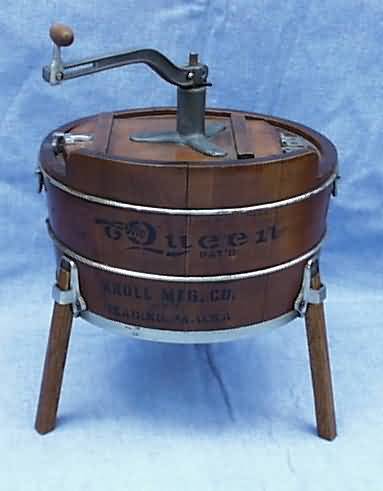 The Queen Salesman Sample Washing
Machine It is very exciting when you get a super
original piece like the washer on the left in condition
this nice. They are rarely seen and even more rarely offered for sale,
but we just got this wonderful piece this spring. The detail and execution
are superb, and the removable agitator in the center was certain to have been
a prime selling feature when the traveling salesman was displaying this device
to the new potential customer. I am going to show you another picture
of a similar washer, on the
The Queen Salesman Sample Washing
Machine It is very exciting when you get a super
original piece like the washer on the left in condition
this nice. They are rarely seen and even more rarely offered for sale,
but we just got this wonderful piece this spring. The detail and execution
are superb, and the removable agitator in the center was certain to have been
a prime selling feature when the traveling salesman was displaying this device
to the new potential customer. I am going to show you another picture
of a similar washer, on the
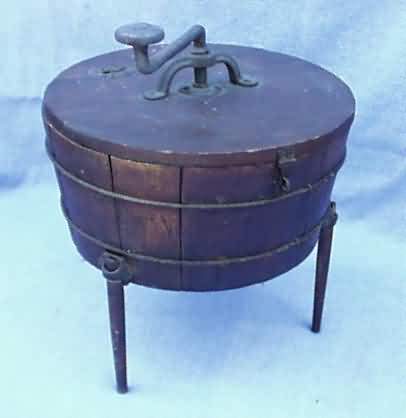 right, that is basically the same size and design, but when looked at side by
side it is easy to see why one would be excited by this and also graphically
demonstrates the differences between what I consider a toy, and the overall
value and beauty in a true salesman sample. Both are nice, but I paid
8 times the amount for the one on the left that I did for the second one.
right, that is basically the same size and design, but when looked at side by
side it is easy to see why one would be excited by this and also graphically
demonstrates the differences between what I consider a toy, and the overall
value and beauty in a true salesman sample. Both are nice, but I paid
8 times the amount for the one on the left that I did for the second one.
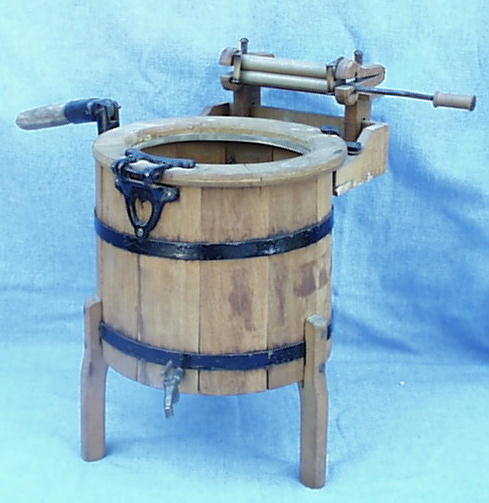 The
Kooks Washer This particular
example is unmarked and may even have been made as a toy, but given the degree
of detail and the quality of workmanship I am going to call it a salesman sample.
I saw a similar one offered on eBay awhile back that someone had put something
that looked like a stove pipe cover in the top and since the writing was in
German and it was a bit rusty nobody could tell exactly what it said.
We acquired this washer at a meeting / show aimed at Kitchen Collectibles put
on by the club known as Kooks.
The
Kooks Washer This particular
example is unmarked and may even have been made as a toy, but given the degree
of detail and the quality of workmanship I am going to call it a salesman sample.
I saw a similar one offered on eBay awhile back that someone had put something
that looked like a stove pipe cover in the top and since the writing was in
German and it was a bit rusty nobody could tell exactly what it said.
We acquired this washer at a meeting / show aimed at Kitchen Collectibles put
on by the club known as Kooks.
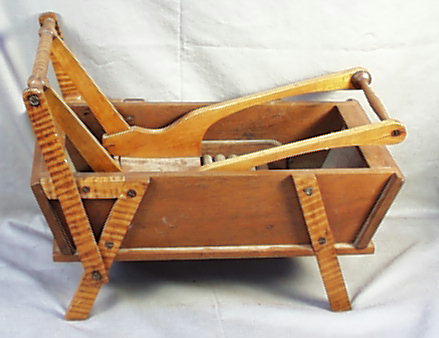 Salesman
Sample Tiger Eye Maple & Mahogany Washing Machine
I am not sure exactly why this super model
of a washing machine was made. It is a bit larger than most patent
models at 14" long, but I have seen oversized ones before, so...... Or
perhaps it was just the inventors working model as he was designing his invention
and preparing to make the larger version. It does not have the look or
feel of a toy, so the final possibility is that it is a salesman sample of a
full size model that was produced back when by the inventor in preparation of
the marketing phase of his endeavor, when salesmen would carry a model from
town to town trying to interest the buyers in the general stores, or just the
general public. I have seen an identical one in much lesser condition
with the end stamped "Patent Pending By J. Potts & Sons" and can not explain
why this one that is in near mint condition would be unmarked. The choices
of fine woods and the use of birds-eye maple for all of the supports,
legs and mechanical arms certainly give it a flair and sense that it would not
have had with the use of lesser soft woods. The mahogany body has
the look and feel that many of the patent models from the mid to late 1800's
had. It has great action as well, allowing for both back and forth and
up and down at the same time of the moveable portions. It also has a provision
for the water to go through the slats in the bottom to further agitate and suds
up the water for the perfect washing effect. All in all a very advanced
design and undoubtedly constructed with pride and a greater sense. It
was sure to have impressed those it was shown to back then as well as those
who get to view it today.
Salesman
Sample Tiger Eye Maple & Mahogany Washing Machine
I am not sure exactly why this super model
of a washing machine was made. It is a bit larger than most patent
models at 14" long, but I have seen oversized ones before, so...... Or
perhaps it was just the inventors working model as he was designing his invention
and preparing to make the larger version. It does not have the look or
feel of a toy, so the final possibility is that it is a salesman sample of a
full size model that was produced back when by the inventor in preparation of
the marketing phase of his endeavor, when salesmen would carry a model from
town to town trying to interest the buyers in the general stores, or just the
general public. I have seen an identical one in much lesser condition
with the end stamped "Patent Pending By J. Potts & Sons" and can not explain
why this one that is in near mint condition would be unmarked. The choices
of fine woods and the use of birds-eye maple for all of the supports,
legs and mechanical arms certainly give it a flair and sense that it would not
have had with the use of lesser soft woods. The mahogany body has
the look and feel that many of the patent models from the mid to late 1800's
had. It has great action as well, allowing for both back and forth and
up and down at the same time of the moveable portions. It also has a provision
for the water to go through the slats in the bottom to further agitate and suds
up the water for the perfect washing effect. All in all a very advanced
design and undoubtedly constructed with pride and a greater sense. It
was sure to have impressed those it was shown to back then as well as those
who get to view it today.
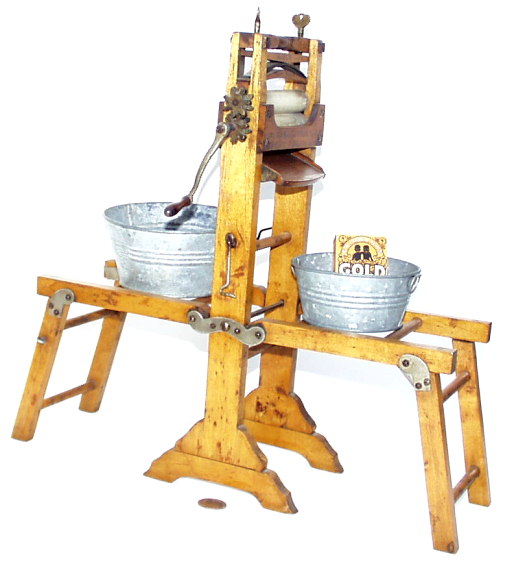 Antique
Salesman Sample of a Wash Tub / Wringer Bench
This antique salesman
sample washstand / wringer has incredible eye appeal
That is a quarter in the picture to give you a sense of the scale of this diminutive
piece of Americana. Amazingly constructed to look just like the real thing,
this small size laundry bench would have sat as a display on the store countertop
or in the general store window, or they were carried around door-to-door by
the salesman to show the prospective buyer exactly what the full-size bench
would look like. All of course with the intention to convince them to
buy one. Take a look at all the details and at the super condition of
the stenciling and lettering. Note how it folds up and extends out, just
like the real one. Included with this antique sample are the two little
galvanized wash tubs you see in the photos as well as the sample-size new old
stock package of Gold Dust washing powder. This is a super piece of early
Americana!
Antique
Salesman Sample of a Wash Tub / Wringer Bench
This antique salesman
sample washstand / wringer has incredible eye appeal
That is a quarter in the picture to give you a sense of the scale of this diminutive
piece of Americana. Amazingly constructed to look just like the real thing,
this small size laundry bench would have sat as a display on the store countertop
or in the general store window, or they were carried around door-to-door by
the salesman to show the prospective buyer exactly what the full-size bench
would look like. All of course with the intention to convince them to
buy one. Take a look at all the details and at the super condition of
the stenciling and lettering. Note how it folds up and extends out, just
like the real one. Included with this antique sample are the two little
galvanized wash tubs you see in the photos as well as the sample-size new old
stock package of Gold Dust washing powder. This is a super piece of early
Americana!
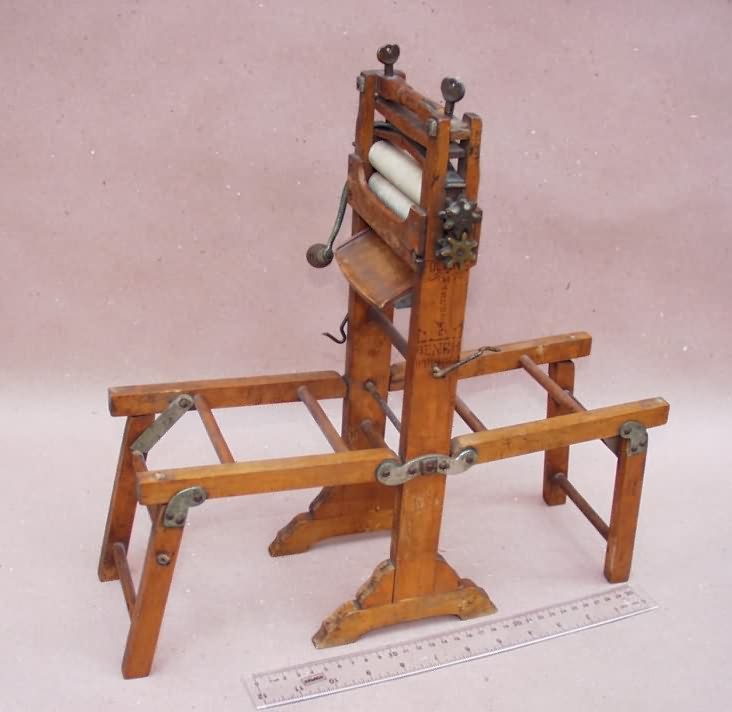 Antique
E. Gately & Co. Salesman Sample of a Wash Tub / Wringer Bench
To give you a sense of the scale of this
diminutive piece of Americana there is a clear ruler at the base in the foreground.
Amazingly constructed to look just like the real full size wash stand / wringer,
this miniature size laundry bench would have sat as a display on the store countertop
or in the general store window, or would have been carried around door-to-door
by the salesman to show the prospective buyer exactly what the full-size bench
would look like.
Antique
E. Gately & Co. Salesman Sample of a Wash Tub / Wringer Bench
To give you a sense of the scale of this
diminutive piece of Americana there is a clear ruler at the base in the foreground.
Amazingly constructed to look just like the real full size wash stand / wringer,
this miniature size laundry bench would have sat as a display on the store countertop
or in the general store window, or would have been carried around door-to-door
by the salesman to show the prospective buyer exactly what the full-size bench
would look like.
Take a look at all the details
and at the nice condition of the stenciling and lettering. This example
is by the E. Gately Co. of Boston. From the side we can see that it was
called the Folding Mascott Wringer / Bench. I believe they were
predecessors of the Anchor Horseshoe company who were the leaders in the field
of wringers and wash stands during the late 19th century and later. I
have seen this same style sample with their name and logos several times, but
his is the first I have ever seen by Gately.
Note how it folds up and extends
out on both sides just like the real ones you can find. The wringer portion
still works and it is marked at the top that this is a model of the # B size
wringer. Note also the neat heart shaped thumbscrews on top of the wringer.
The one apology is a sliver of wood missing on the top right hand side.
This is a super piece of early Americana and they make for great displays in
special settings, or with special miniatures displayed on or near them!
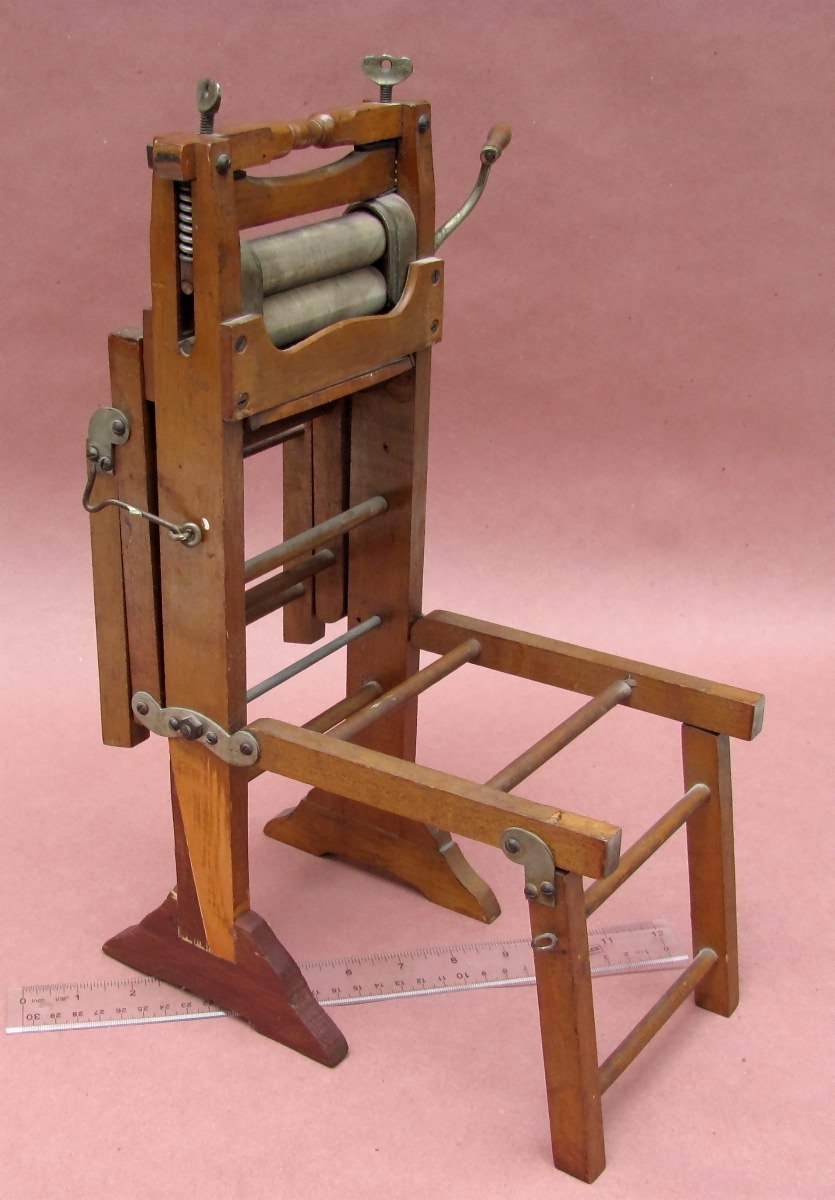 Antique Salesman Sample Wash Tub / Wringer Bench
This one has some leg damage and old repair. Priced accordingly.
Antique Salesman Sample Wash Tub / Wringer Bench
This one has some leg damage and old repair. Priced accordingly.
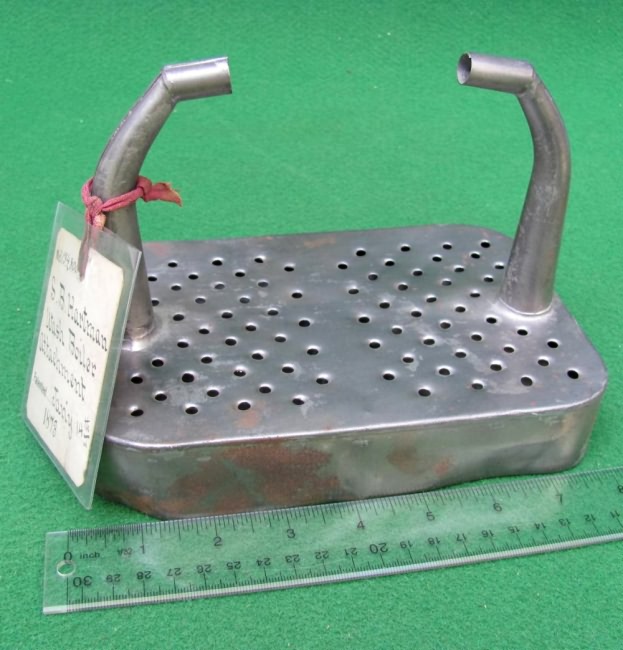 Patent Model Wash Boiler Agitator
Interesting.
Patent Model Wash Boiler Agitator
Interesting.
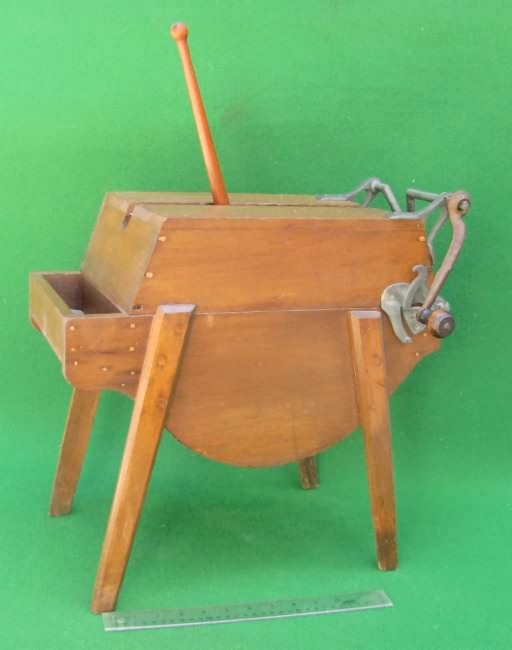 Salesman
Sample Washing Machine / Washer
It has been refinished but is very nice. Interesting.
Salesman
Sample Washing Machine / Washer
It has been refinished but is very nice. Interesting.
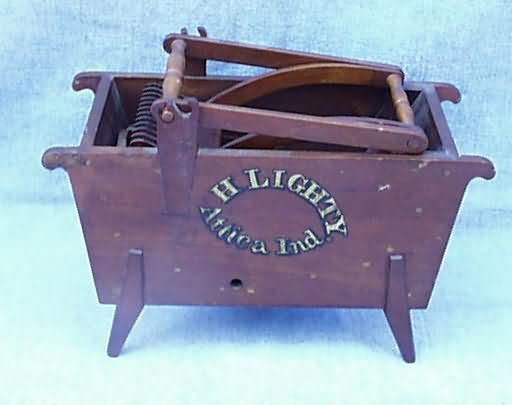 H.
Lighty Patent
Model Washing Machine This
well-constructed and interested model is made of mahogany.
H.
Lighty Patent
Model Washing Machine This
well-constructed and interested model is made of mahogany.
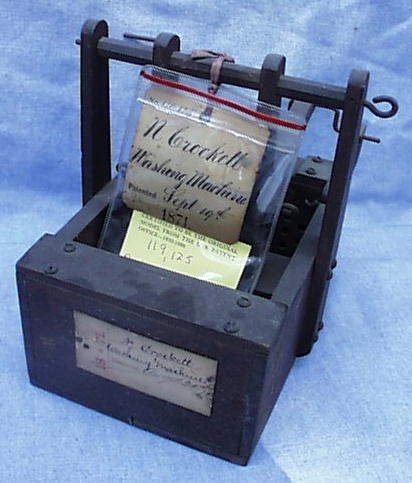 1871 Crockett
Patent Model Washing Machine This
is a thumper style. Beat the dirt out.
1871 Crockett
Patent Model Washing Machine This
is a thumper style. Beat the dirt out.
A. H. Calkins July 15, 1876 Patent
Model of Washing Machine This well-constructed
and interested model is made of mahogany and illustrates Mr. Calkins' idea for
an improvement on the typical wringer device commonly seen over the wash bucket.
His idea incorporates a spring loaded roller affair overtop of the fluted main
roller, which I assume the lady of the house would run the dirty wet clothes
through to loosen up the dirt. Oftentimes models like this are considered
to be incomplete, but the fact is that only that part of the invention for which
the patent was being drawn was usually submitted. It is not improper that
the wash bucket and holder for this device are not present. The remains
of the original receiving tag are here and there is writing on the cross bar
identifying it as well. There is a second set of rollers included that
I believe are just a replacement for the set that are in place. There
is no provision for both to be incorporated or used at the same time.
1878
Patent Model of Washing Machine Here
is another patent model that dramatically shows where America was 125 years
ago, and that was out in the laundry Room doing the chores, certainly not sitting
in front of a computer or the tube. We have about a dozen or so of these
models of our own, and we have seen dozens of others that were designed and
submitted during this expansive time in America's history. I find it amazing
that life was so simplistic, and yet as evidenced by this model, and all the
other inventions of the day, just how complicated and thoughtful these fellows
were about making improvements in the lives of their fellow man. I look
at these models and the statements they make from a hundred years ago, and it
just seems so different and remote from the types of things that we are exposed
to today. What model mouse are they selling this year, or what is the
latest in toothbrush technology? This model was done by a Mr. J. F. Pond
of Cleveland Ohio. What looks to be a rather simplistic and boring mangle
style washer is in reality a quite complicated and interesting invention.
Not only are there 2 bottom rollers instead of the typical one, they are suspended
and floating, being held in place by the 4 springs that you can see at the edges.
They have the ability to rock and oscillate as Mr. Pond put it, and even more
important, and this is what it seems the patent is actually for, Mr. Pond has
incorporated a clutch mechanism into the design that is activated by hitting
the lever that the crank goes through. I wonder if they just granted this
one, or if they asked Pond why he felt it needed a clutch? This is all
explained on the small tag that is included and is in one piece, but has a crease,
and the original tag is here also but it is in two pieces, but still readable.
Different / One of a Kind, and there isn't another one out there, so stop looking!
Feb. 24th 1879 Patent Model of
Washing Machine & Tub by W. K. Taylor
This is a very nice looking Patent Model. Research has shown that what
we really have here is a marriage of an original tagged Patent Model and a replaced
wringer mechanism. This model carries not only its original patent tags
with the pink ribbon, but also the receiving tag on the side of the tub that
authenticates that his is the original model that was submitted to the patent
office for this new and wonderful idea back in 1875. The bad news
is the the wringer portion of this model must have been lost sometime in the
past and that the one now attached to the tub is a later replacement that although
similar to the drawings does not match them. I bought this model
at auction this way, and that is the way it is going to be sold, a good representation,
but not the complete original model that matches the drawings.
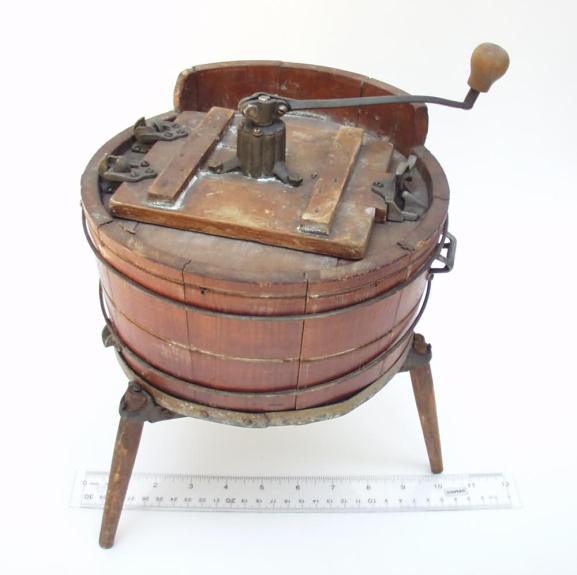 Salesman
Sample / Patent Model or Toy Wooden Washing Machine Over
the years I have owned and sold dozens of toy child
size washers, including a number of Patent model washers. I have had ones
very similar to this example, but never this exact same configuration.
It has a few differences which lead me to believe it is a model or salesman
sample rather than just a toy.
Salesman
Sample / Patent Model or Toy Wooden Washing Machine Over
the years I have owned and sold dozens of toy child
size washers, including a number of Patent model washers. I have had ones
very similar to this example, but never this exact same configuration.
It has a few differences which lead me to believe it is a model or salesman
sample rather than just a toy.
The first difference is the quality
of the hinges and fittings. They are castings rather than just stamped
steel or plain brass hinges. It is the same for the way the base was made.
The typical model has little fittings the legs slide into, not this removable
triangular base with cast metal corners. The top gear mechanism is also
different and more detailed than the more typical and common toy washers you
do see. It to has cast parts.
Looking inside another difference
I see is the set-up for the agitator. The typical toy has only four pegs
while this one has 6. And lastly is the way the inside and bottom are
machined with ridges just like a full size washer would have been. And
probably a feature not called for in a toy. An interesting note is that
there is evidence of this having been tested and used with soap residue in the
cracks.
Ok, now with all of that being
said I believe this is either a patent model, or a salesman sample as opposed
to a toy. I can not prove that, but it is just too nice, and too detailed
to be just a toy. Very Nice, and a super display piece!!
Child-Size Mechanical "KiddieWasher"
This great little washer, complete with
its wringer, is marked pat applied for. Standing about 14" tall it undoubtedly
was meant to teach a child to launder her doll clothes. Wind it up and
the tub agitates back and forth in its stand to a rhythm reminiscent of a cradle
rocking to a lullaby!
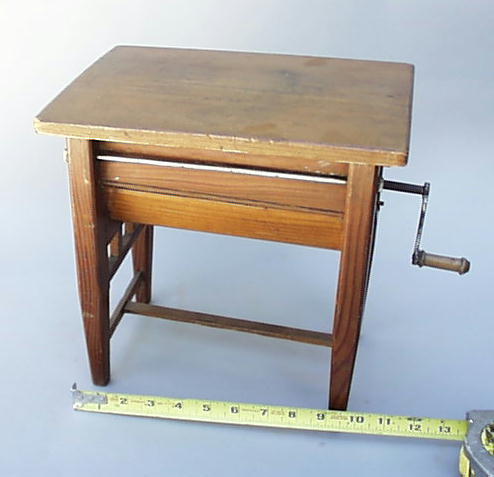 Salesman Sample Washer / Kitchen Table
This is nicely done. It is European /
German I believe and demonstrates the need for multiple use appliances
for use in tight quarters. Kind of neat!
Salesman Sample Washer / Kitchen Table
This is nicely done. It is European /
German I believe and demonstrates the need for multiple use appliances
for use in tight quarters. Kind of neat!
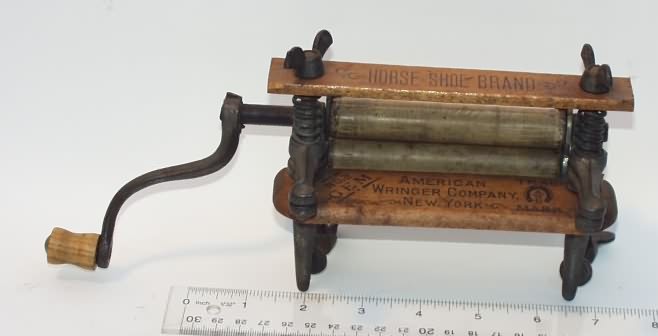 Horse
Shoe
Brand Salesman Sample / Toy Washer / Wringer by American Wringer Co. This is nicely done. Kind of neat!
Horse
Shoe
Brand Salesman Sample / Toy Washer / Wringer by American Wringer Co. This is nicely done. Kind of neat!
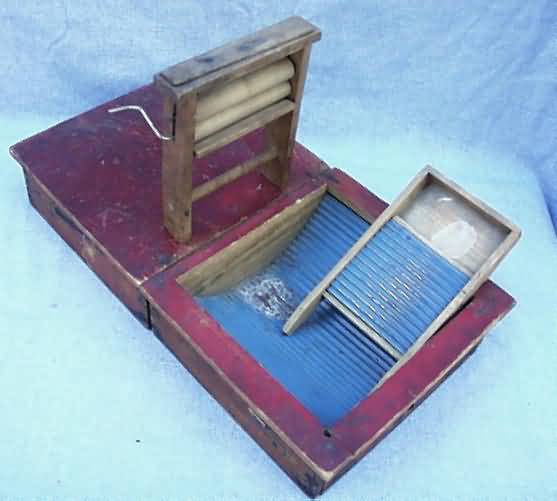 Child's
"Excelsior" Toy Washer / Wringer / Washboard If you like the look of country antiques with original
paint, this great toy washing set is sure to fit the bill. Certainly the
child that it belonged to must have thought herself quite grown-up and helpful
using the same type of laundry devices as her Mom. The set consists of
a folding wooden box, with original red paint and decorative black stenciling,
which opens up to make into the wash tub and bench. Then it serves to
store all the pieces inside when it is in the closed-up position. The
tub itself is country-blue painted corrugated tin, which matches the tin on
the accompanying little wooden washboard / scrub board. The wooden wringer
has dowels on the bottom of the legs to set into the "bench" part and stand
upright for use. This piece is simply yet thoughtfully constructed and
has a really nice early country look. When opened up the tub and bench
measure about 16 1/2" wide x 9" deep x 2 1/2" high. The washboard
is about 7 1/2" tall and the wringer is just under 7" tall. It appears
that the tub / bench unit originally had 4 removable round wooden "legs" which
could have been inserted to stand it up a few inches off the table. These
have gotten separated from the piece over the years, but could easily be replicated
by using plain wooden dowels. The overall condition is very good with
minor scuffs to the paint here and there and a little bit of surface corrosion
on the tin parts. The set makes for a nice display to compliment a variety
of antique collections.
Child's
"Excelsior" Toy Washer / Wringer / Washboard If you like the look of country antiques with original
paint, this great toy washing set is sure to fit the bill. Certainly the
child that it belonged to must have thought herself quite grown-up and helpful
using the same type of laundry devices as her Mom. The set consists of
a folding wooden box, with original red paint and decorative black stenciling,
which opens up to make into the wash tub and bench. Then it serves to
store all the pieces inside when it is in the closed-up position. The
tub itself is country-blue painted corrugated tin, which matches the tin on
the accompanying little wooden washboard / scrub board. The wooden wringer
has dowels on the bottom of the legs to set into the "bench" part and stand
upright for use. This piece is simply yet thoughtfully constructed and
has a really nice early country look. When opened up the tub and bench
measure about 16 1/2" wide x 9" deep x 2 1/2" high. The washboard
is about 7 1/2" tall and the wringer is just under 7" tall. It appears
that the tub / bench unit originally had 4 removable round wooden "legs" which
could have been inserted to stand it up a few inches off the table. These
have gotten separated from the piece over the years, but could easily be replicated
by using plain wooden dowels. The overall condition is very good with
minor scuffs to the paint here and there and a little bit of surface corrosion
on the tin parts. The set makes for a nice display to compliment a variety
of antique collections.
Toy
or Salesman Sample Wood Barrel Washing Machine This washing machine is a hard call as to whether
it is a toy or a salesman sample. I had another version that is the same
shape, basic size and basic design, but it had much more detail and there is
information stenciled on it about the manufacturer and location. It is
called the Queen. This model has some very specific details, ie. the brackets
to hold the feet are nearly identical, but no name or other information and
it is not the same overall quality by any means. Perhaps this can be explained
by just different levels of quality in the actual product, and perhaps the Queen
salesman also carried one of these around to show how inferior the competitions
product was to theirs, much like the Kirby vacuum guy does today. In any
case, this is in nice condition and shows some great patina and age to its old
crusty surface.
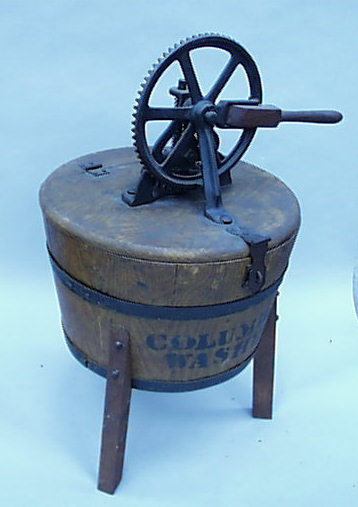 Round
Wooden Toy Columbia Washer When do you ever see
these realistic and detailed mechanical toy washers anymore? This example came out of a large collection of ironing and
laundry-related antiques that we purchased a few years ago. There
were several versions of the Columbia washer, this being the model with
the round barrel-design tub. Although many people refer to it
as a salesman sample because it is so realistic, well-made, and almost
replicates the style and design of many popular washing machines of the
day, I believe that this was made as a toy and not a salesman sample.
Perhaps they were used as displays in shops, but I doubt this was
actually carried around as a sample by a salesman. In any case, it
has great mechanical action with a horizontal and a vertical geared
wheel on top operated by a lever which turns a 4-prong agitator inside
the corrugated tub. The back and forth action of the gearing turns
the agitator first clockwise, then counter-clockwise, etc. The tub
has a diameter of about 11" and it stands just 11" from the bottom of
the legs to the top of the barrel, not including the wheel. In
practice it probably did the job of cleaning Dolly's clothes just as
well as Mom's full-size one did for the family laundry!
Round
Wooden Toy Columbia Washer When do you ever see
these realistic and detailed mechanical toy washers anymore? This example came out of a large collection of ironing and
laundry-related antiques that we purchased a few years ago. There
were several versions of the Columbia washer, this being the model with
the round barrel-design tub. Although many people refer to it
as a salesman sample because it is so realistic, well-made, and almost
replicates the style and design of many popular washing machines of the
day, I believe that this was made as a toy and not a salesman sample.
Perhaps they were used as displays in shops, but I doubt this was
actually carried around as a sample by a salesman. In any case, it
has great mechanical action with a horizontal and a vertical geared
wheel on top operated by a lever which turns a 4-prong agitator inside
the corrugated tub. The back and forth action of the gearing turns
the agitator first clockwise, then counter-clockwise, etc. The tub
has a diameter of about 11" and it stands just 11" from the bottom of
the legs to the top of the barrel, not including the wheel. In
practice it probably did the job of cleaning Dolly's clothes just as
well as Mom's full-size one did for the family laundry!
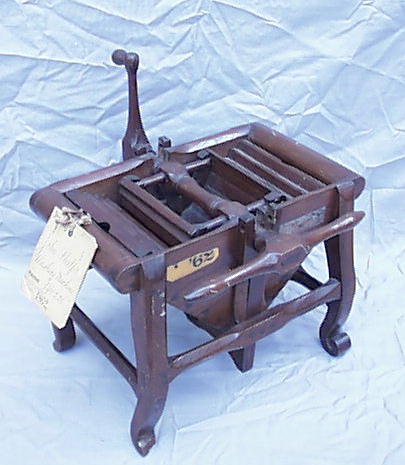 1862 Patent Model of Washing Machine by
John Phelps This idea for a washing machine was pretty involved
and as noted by the design of the cabriole style legs probably not an
idea that was developed out in the backcountry. Pre Civil War patent
models are harder to come buy than some of the later ones and so this
example is kind of special. I have not pulled the papers to read up on
all of ideas this fellow had or where he was from, but I would bet that
the furniture in his house had similar designed feet. (
Note
that two of the feet do have some damage.) This model has more moving
parts than many similar ones do, and has one great idea that many lesser
designs never dealt with. Note at the bottom the rod that runs from the
center to the outside leg with what appears to be a doughnut on it.
This was meant to allow the entire rocker device in the center to ride
up and down, and to be kind of spring loaded if you will to generate
more action as the rocker moved over the clothes during operation. As
can be seen in the pics the stepped washboards on the two ends were
removable for either cleaning, or more likely for a genteel wash when
the dainties were done. There is a different design handle on each side
allowing you a range of choices depending on what part of your body you
were looking to work out on that early Monday morning as well..
1862 Patent Model of Washing Machine by
John Phelps This idea for a washing machine was pretty involved
and as noted by the design of the cabriole style legs probably not an
idea that was developed out in the backcountry. Pre Civil War patent
models are harder to come buy than some of the later ones and so this
example is kind of special. I have not pulled the papers to read up on
all of ideas this fellow had or where he was from, but I would bet that
the furniture in his house had similar designed feet. (
Note
that two of the feet do have some damage.) This model has more moving
parts than many similar ones do, and has one great idea that many lesser
designs never dealt with. Note at the bottom the rod that runs from the
center to the outside leg with what appears to be a doughnut on it.
This was meant to allow the entire rocker device in the center to ride
up and down, and to be kind of spring loaded if you will to generate
more action as the rocker moved over the clothes during operation. As
can be seen in the pics the stepped washboards on the two ends were
removable for either cleaning, or more likely for a genteel wash when
the dainties were done. There is a different design handle on each side
allowing you a range of choices depending on what part of your body you
were looking to work out on that early Monday morning as well..
In any case this piece is in very nice condition and
measures approx 8" x 11". It has its original tag, as well as the
receiving tag, and a small brass plaque with the inventors name on it as
well. This model will make a super piece to add to the collection or to
the display of important laundry related devices.
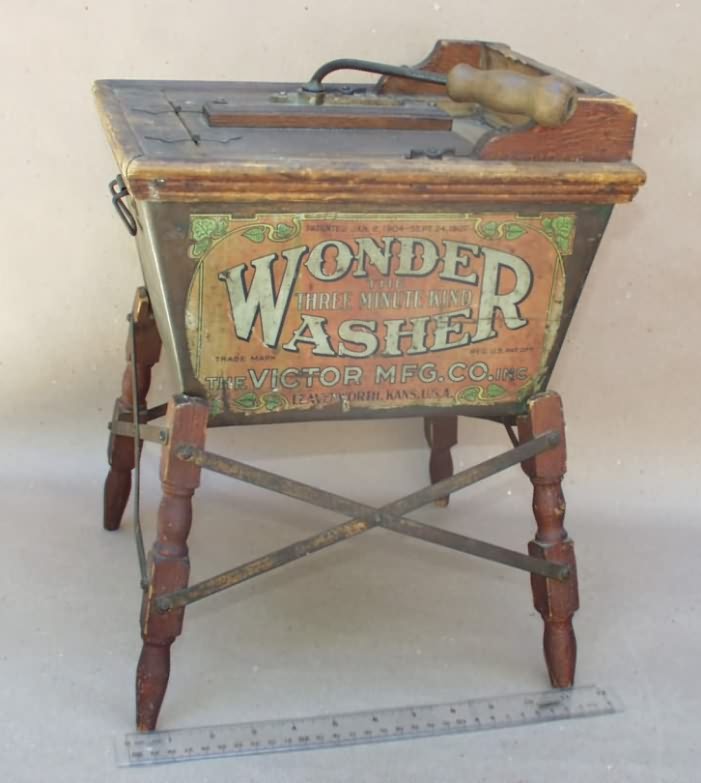 Salesman Sample "The Three Minute Kind / Wonder Washer" Washing Machine
This antique salesman sample washing machine is a wonderful piece of
Americana and a graphic look back into the way it use to be. Just look
at the new designs of Washing machines offered today and think what your Granny was faced with.
Salesman Sample "The Three Minute Kind / Wonder Washer" Washing Machine
This antique salesman sample washing machine is a wonderful piece of
Americana and a graphic look back into the way it use to be. Just look
at the new designs of Washing machines offered today and think what your Granny was faced with.
This washer has a look and presence to it with its colorful litho decorations that
many of the other sample size washers simply do not have. I have seen
several full size versions of this washer and all were very plain and with
just a simple name "Wonder" stenciled onto the sides.
The sample size washing machine stands approx 16" tall w/ the stand, and is
12" square.
It is the first one like it that I have seen or had, and I have had a lot of
these sample size washers over the years. It is very similar in design to "The Dewey
Washer", a washing machine I had a sample size of and sold a few years back.
It is possible that the two companies were related in some way, with one
buying out the other or trying a new advertising approach, or ........... I saw that
sample size Dewey washer being appraised by Noel Barrett on the Antiques Roadshow
a while back with the new owner making like she had just walked up on it at
a garage sale or flea market, implying she gotten it for a song. I wondered
if it was staged or .......... That example was nice, but it had almost no decoration other than the name
Dewey, and it was not nearly as
impressive looking as this one. It was appraised on the Roadshow for about
what
I am offering this one for.
The printed patent info of Jan 2 1904 on the label is wrong. It was actually patented on
January 26th 1904, and that date it
is a good match. The inventor's name was Elmer Victor Allen, and hence
the Victor Mfg. Co. name. He actually hailed from Hiawatha, KS. which I bet was pretty close to Leavenworth. I could find nothing
related to that name or a similar washer for the second date marked on the
label. That
could be explained any number of different ways and a bit more research
would probably turn that patent up as well.
The inside of the washer, and the agitator are set up just like the patent
pictures,
and it is clear that either the salesman, or his children, gave this washer a
few test runs.
Take a look at all the details
and construction of this washer. The tin tub lifts off of the stand whose turned legs
are finished
in old red paint and has X'd metal cross braces to help make it rigid.
There is one apology at this point where the inside of one of the legs is
chipped. It does not affect the way the tub sits in the stand, and would be
a pretty simple and straight forward fix, but it is there. The top has a lot
of original reddish brown finish remaining as well.
The applied litho /decal on two sides is really special. One side is better than the
other, and the good side is about 90% very nice, and has good color.
The other side is mostly there, but faded a bit, and there is some pencil
marks throughout from a child no doubt being a child. It
has all the information on it that anyone could need, but by far the best
part is the way they did the name Wonder Washer using the W & R for both
words, and then filling in the middle w/ the slogan "The Three Minute Kind"
implying there a 10 or 20 minute model before this one and that this is the
"New" improved model.
A Great Piece!
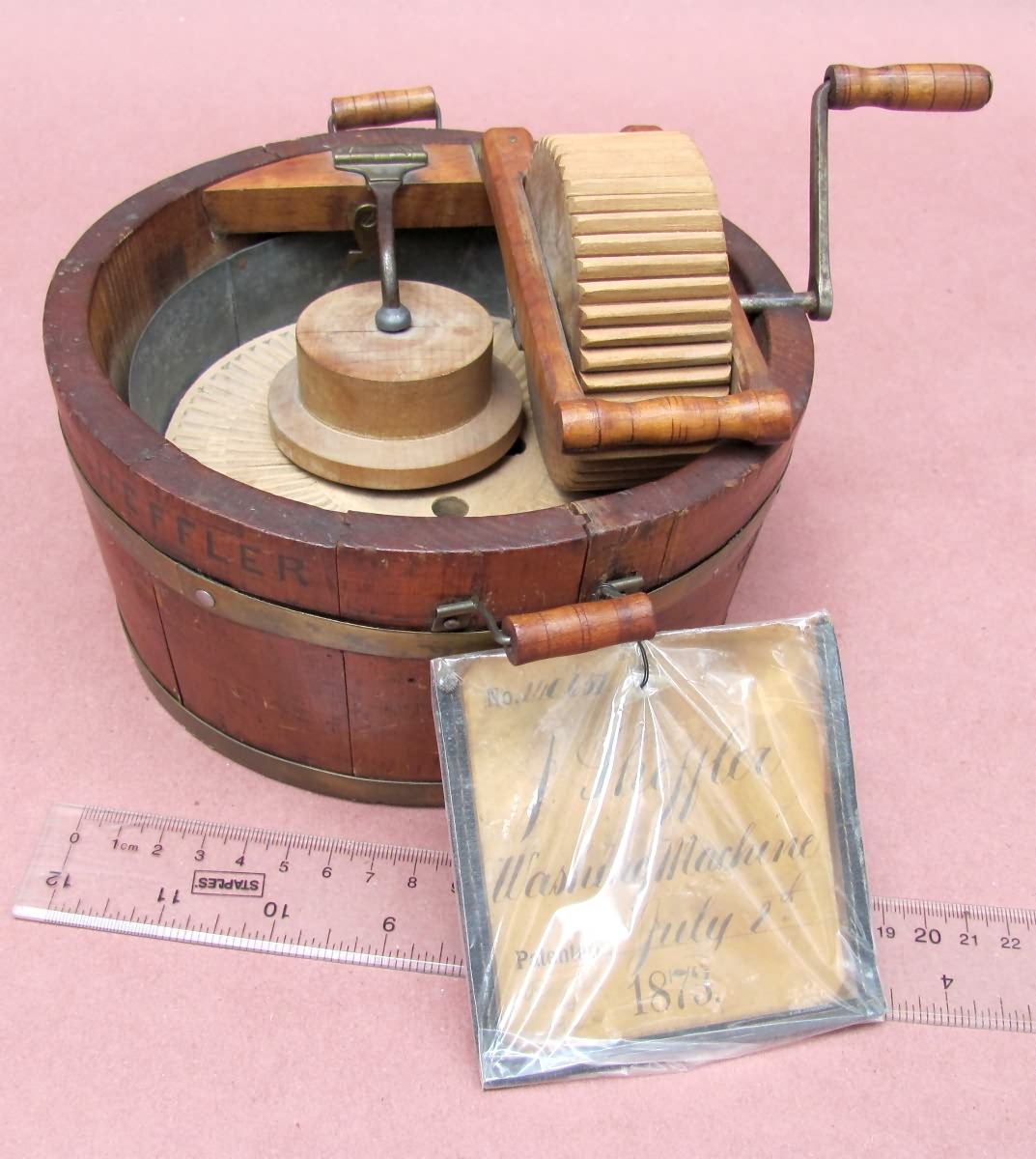 1873 Patent Model of Washing Machine by
Jacob Sheffler of Deslem IL
This washing machine patent model has its original tag and is in a holder
that I believe indicates it predates either O. Rundle Gilbert or Cliff
Peterson two of the better known owners and sellers of the patent models
sold by the government. After the US Patent Office sold their collection of
models they changed hands several times and small amounts were sold off to
finance each owners dreams of opening a museum. Some were sold from
street corners in NY or even from Department stores like Macy's and the
like.
1873 Patent Model of Washing Machine by
Jacob Sheffler of Deslem IL
This washing machine patent model has its original tag and is in a holder
that I believe indicates it predates either O. Rundle Gilbert or Cliff
Peterson two of the better known owners and sellers of the patent models
sold by the government. After the US Patent Office sold their collection of
models they changed hands several times and small amounts were sold off to
finance each owners dreams of opening a museum. Some were sold from
street corners in NY or even from Department stores like Macy's and the
like.
This patent model is approx 6" wide x 5"
or so tall. The patent was granted on July 8th 1873 and is number 140651. This model is a good match to the patent which can be viewed
using Google Patents search for the number 140651.
The patent
calls for the use of a standard wooden wash tub of the period that was to
then be fitted with this questionably better idea to make your life easier
and at the same time do a better job. It consisted of a bottom with
rollers, the large roller with crank, and the center gizmo that was there to
help the process along. I doubt it worked, did a good job or was even
produced.. The gizmo itself eats up half or more of the
given space in the tub just for starters. The idea was you held down
on the lever to engage the gears with one hand, then turned the crank with
the other hand. With your third had you were to manage the other disk
like piece, and with your fourth you were to - - - - -
A
great remembrance of how it use to be that would fit nicely in a display
related to laundry and wash day chores.
The condition is
excellent!! Best patent model washer I have had in years!!
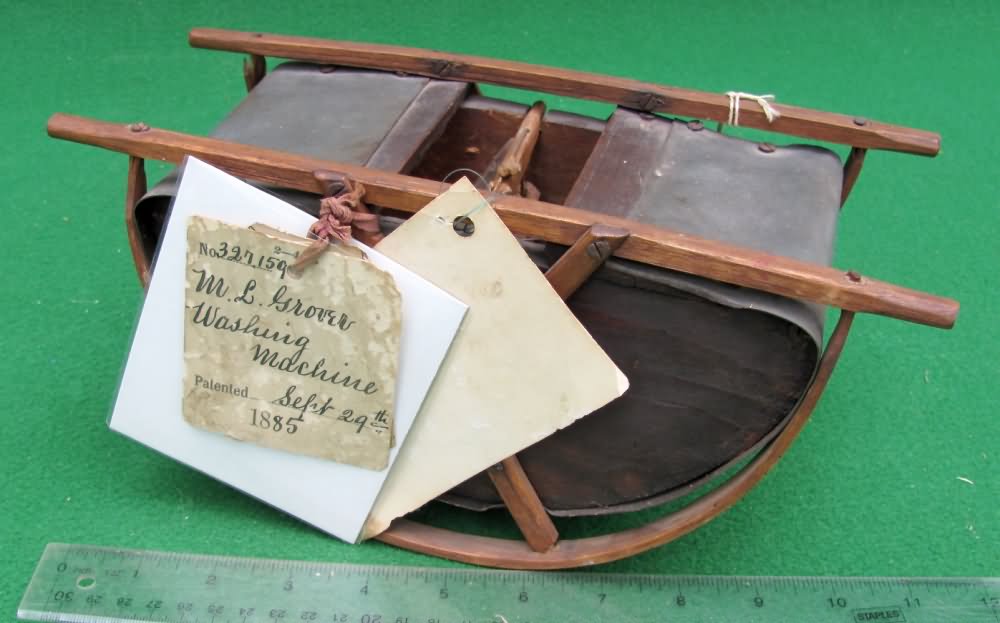 1885 Patent Model
Washing Machine Kind of a
wacky idea, and given the late date a bit primitive looking. A
great remembrance of how it use to be that would fit nicely in a display
related to laundry and wash day chores.
1885 Patent Model
Washing Machine Kind of a
wacky idea, and given the late date a bit primitive looking. A
great remembrance of how it use to be that would fit nicely in a display
related to laundry and wash day chores.
The condition is
excellent!!
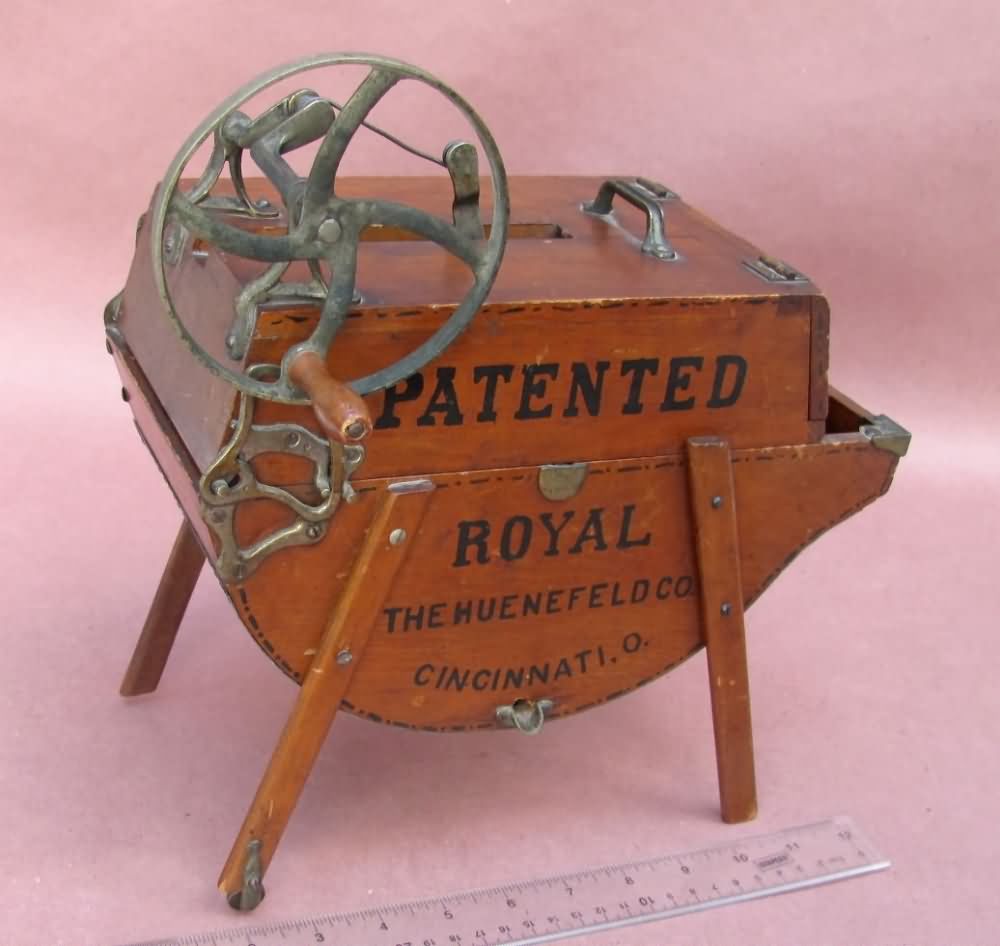 Salesman
Sample Royal Washing Machine by Huenefeld Co. of Cincinnati OH
This is a great looking salesman sample of an early washing machine that
dates from near the turn of the century. The side is marked with the maker name Huenefeld, and the information that it is patented, but there is no date. It is
in cosmetically great looking condition but does have an issue with the drive
mechanism. A Google search turns of a series of patents that look
like this washer issued to a fellow from Kentucky right around the turn of the
century. It appears from looking at those patents that the connecting rod
idea for the agitator motion is missing from this sample / example.
Each of those patents show a connecting rod with a rotating eccentric mechanism
between the large wheel and rocker arm coming up through the top. This one
has a piece of wire connecting the two. I am not sure if this example
predates the introduction of that piece, or more likely if the idea was flawed
and it broke and was discarded when put to use. Those patent numbers are
730538, 760612, 843734 and 724431 if you care to see what I am talking about.
Also one leg looks to be a nice replacement, and there is only one leg that has
a roller wheel on it. All in all though, this is a great looking salesman
sample washer in great overall condition that will be the highlight of the
display in the wash or laundry room. Different and interesting!!
Salesman
Sample Royal Washing Machine by Huenefeld Co. of Cincinnati OH
This is a great looking salesman sample of an early washing machine that
dates from near the turn of the century. The side is marked with the maker name Huenefeld, and the information that it is patented, but there is no date. It is
in cosmetically great looking condition but does have an issue with the drive
mechanism. A Google search turns of a series of patents that look
like this washer issued to a fellow from Kentucky right around the turn of the
century. It appears from looking at those patents that the connecting rod
idea for the agitator motion is missing from this sample / example.
Each of those patents show a connecting rod with a rotating eccentric mechanism
between the large wheel and rocker arm coming up through the top. This one
has a piece of wire connecting the two. I am not sure if this example
predates the introduction of that piece, or more likely if the idea was flawed
and it broke and was discarded when put to use. Those patent numbers are
730538, 760612, 843734 and 724431 if you care to see what I am talking about.
Also one leg looks to be a nice replacement, and there is only one leg that has
a roller wheel on it. All in all though, this is a great looking salesman
sample washer in great overall condition that will be the highlight of the
display in the wash or laundry room. Different and interesting!!
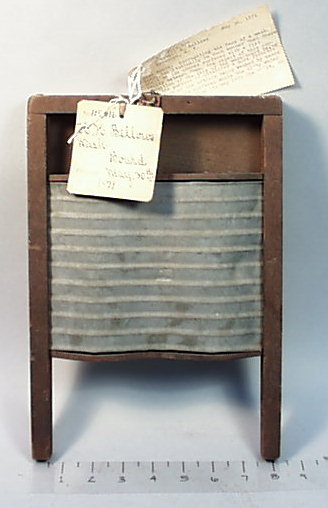 1871
Patent Model of Washboard This idea for a washboard was
granted to H. H. Bellows on May 30th 1871. His better idea for this
washday necessity in the late 1800's was to make the scrub face not only
corrugated, but to have a "wave or convex / concave surface with a flat
valley thus obtaining a more forcible friction." Or so he states in his
write-up. It is funny and interesting to note that by this period of
time there were many other far more "advanced" ideas for washers being
promoted, and that this idea seems to be a bit dated or backward, but
then I suppose that I or we do not really know exactly what it was like
living out in the woods or in the country back then, and just how far
out of touch that last ten miles may have put you with news about the
latest developments in washer technology. As an example where I live
the local paper here was just recently touting the the introduction of
the coming of electricity here.
1871
Patent Model of Washboard This idea for a washboard was
granted to H. H. Bellows on May 30th 1871. His better idea for this
washday necessity in the late 1800's was to make the scrub face not only
corrugated, but to have a "wave or convex / concave surface with a flat
valley thus obtaining a more forcible friction." Or so he states in his
write-up. It is funny and interesting to note that by this period of
time there were many other far more "advanced" ideas for washers being
promoted, and that this idea seems to be a bit dated or backward, but
then I suppose that I or we do not really know exactly what it was like
living out in the woods or in the country back then, and just how far
out of touch that last ten miles may have put you with news about the
latest developments in washer technology. As an example where I live
the local paper here was just recently touting the the introduction of
the coming of electricity here.
 1860
Patent Model of Yellow-ware / Bennington / Rockingham Washboard Here is a great example of a wonderful and graphic Patent Model of a
Washboard. You never see the full size ones and I guarantee you
will never see this one again as it is a one of.
1860
Patent Model of Yellow-ware / Bennington / Rockingham Washboard Here is a great example of a wonderful and graphic Patent Model of a
Washboard. You never see the full size ones and I guarantee you
will never see this one again as it is a one of.
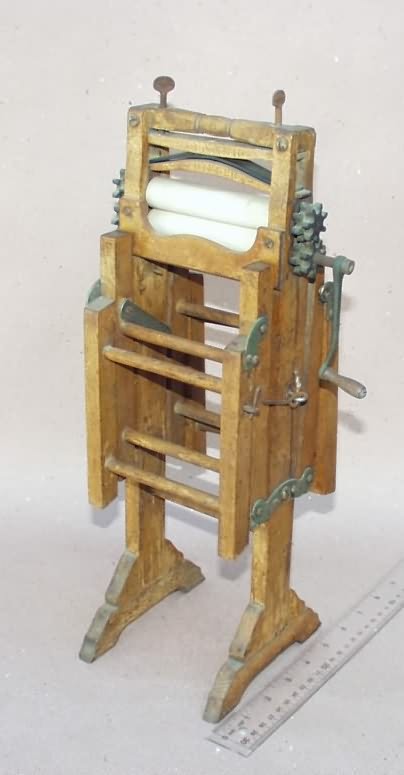 Antique Salesman Sample of a Wash Tub / Wringer Bench
This antique salesman sample washstand / wringer is a wonderful piece of Americana.
To give you a sense of the scale of this
diminutive piece of Americana there is a clear ruler at the base in the foreground.
Amazingly constructed to look just like the real full size wash stand / wringer.
This miniature size laundry bench wringer would have sat as a display on the
store countertop or in the general store window. It may have also been
carried around door-to-door by salesmen to show the prospective buyer exactly
what the full-size bench would look like.
Antique Salesman Sample of a Wash Tub / Wringer Bench
This antique salesman sample washstand / wringer is a wonderful piece of Americana.
To give you a sense of the scale of this
diminutive piece of Americana there is a clear ruler at the base in the foreground.
Amazingly constructed to look just like the real full size wash stand / wringer.
This miniature size laundry bench wringer would have sat as a display on the
store countertop or in the general store window. It may have also been
carried around door-to-door by salesmen to show the prospective buyer exactly
what the full-size bench would look like.
Take a look at all the details
and construction. I believe this was made by the Anchor Horseshoe company
who were the leaders in the field of wringers and wash stands during the late
19th century and later. I have seen this same style sample with their
name and logos several times but most of the writing has disappeared on this
example.
Note how the table on each side
folds up and extends out just like the full size ones. The wringer portion
still works. Note also the primitive thumbscrews on top of the wringer.
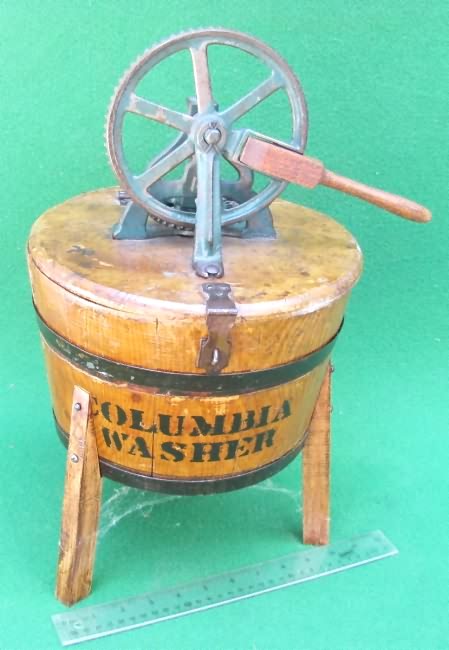 Round
Columbia Salesman Sample / Toy Washing Machine / Washer
This is a great looking early salesman sample / toy washing machine that dates
from near the turn of the century. These came in two different styles,
round and square, and are pretty exact copies of the large full size washers
that were produced. They were probably used as both display models in
shops, and offered for sale as toys. All original and nice!!
Round
Columbia Salesman Sample / Toy Washing Machine / Washer
This is a great looking early salesman sample / toy washing machine that dates
from near the turn of the century. These came in two different styles,
round and square, and are pretty exact copies of the large full size washers
that were produced. They were probably used as both display models in
shops, and offered for sale as toys. All original and nice!!
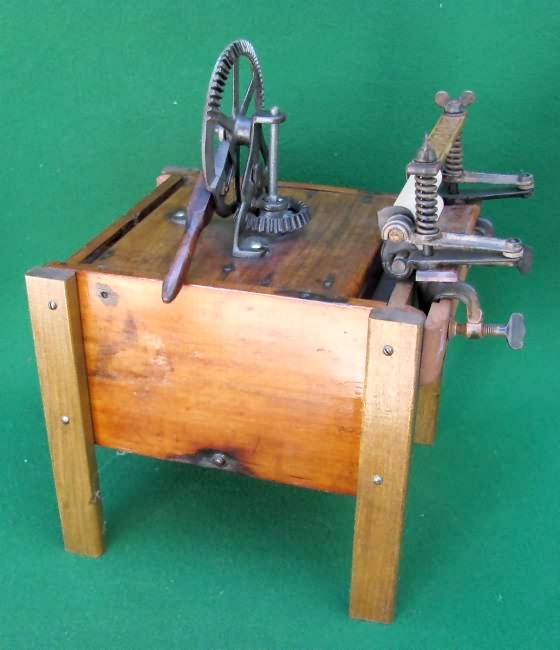 Square
Salesman Sample / Toy
Columbia Washing Machine / Washer
This is a nice looking early salesman sample / toy washing machine that dates
from near the turn of the century. It is a copy of the large full size washers
that were produced by the Benbow Mfg. Co. of St Louis Mo. These were probably used as both display models in
shops, and offered for sale as toys. The wringer is a "GEM" buy the
American Wringer Co. It looks as though the legs have been redone,
and the stencil info on the side may have been enhanced where the makers name is
miss-spelled on this example!!
Square
Salesman Sample / Toy
Columbia Washing Machine / Washer
This is a nice looking early salesman sample / toy washing machine that dates
from near the turn of the century. It is a copy of the large full size washers
that were produced by the Benbow Mfg. Co. of St Louis Mo. These were probably used as both display models in
shops, and offered for sale as toys. The wringer is a "GEM" buy the
American Wringer Co. It looks as though the legs have been redone,
and the stencil info on the side may have been enhanced where the makers name is
miss-spelled on this example!!
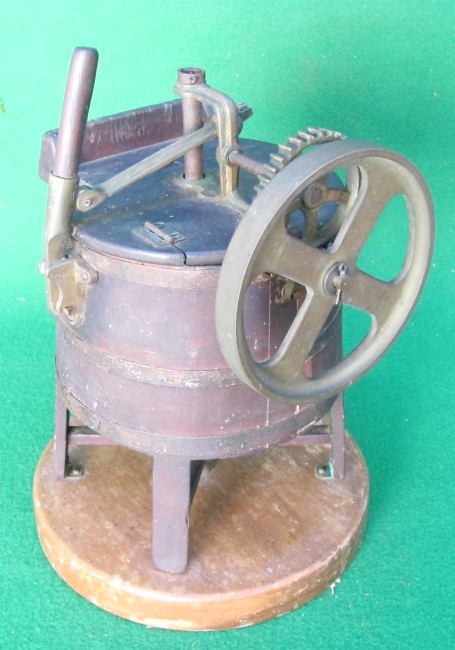 Salesman Sample / Patent Model Washing Machine
This is a nice looking model of an early Washing Machine. It is either a
Patent Model w/ no tags or an unmarked salesman sample. It is a
bit of a mystery as to why there is no writing, patent info, maker name,
etc. anywhere to be seen. It
is a classic style washing machine whose basic design was first introduced back in the 1860's or
so and continued in production into the first quarter of the 20th century.
Salesman Sample / Patent Model Washing Machine
This is a nice looking model of an early Washing Machine. It is either a
Patent Model w/ no tags or an unmarked salesman sample. It is a
bit of a mystery as to why there is no writing, patent info, maker name,
etc. anywhere to be seen. It
is a classic style washing machine whose basic design was first introduced back in the 1860's or
so and continued in production into the first quarter of the 20th century.
The basic
design of the washer is
a 1/2 wooden barrel w/ 4
of the staves running past the bottom thus acting as the legs also. This
was a popular design used by a number of different makers
including Maytag back near the turn of the century. Some other brands with similar designs were White Rose, Munger, Ocean Wave, Horton, Bramer
and others. While all those different brands used the same style
wooden barrel container, each had a different
style agitator or drive mechanism. It is interesting to note that all
of the companies mentioned were either in Iowa or MO. I would bet Maytag
of Newton Iowa bought out, or otherwise put
most of them out of business before coming out on top. Now look at
where they are.
This washers agitator mechanism and drive system are quite ingenious and
different enough from others that this could well
be a Patent Model. It is roughly the correct size as well. Figuring out the design of the gearing and gears, the agitator
motion, drive shaft / crank design, and how to make it all work together,
while not infringing upon
a competitors patent / design would have been a challenge. In this case
the design has a large flywheel which is driven by cranking a short
stroke lever back and forth. This works well and is a good idea. The lever is attached to a crank
shaft like rod that while turning the smaller gear wheel is also able to rotate
the agitator back and forth. It is set up so that it allows the
agitator to move up and down at the
same time it is going back and forth. A good idea - - - simple, efficient and
effective. In fact, it would seem to have several patentable ideas in
the design.
The entire washer is uniform dark brown color, and I
see no places where there ever was writing on the body. The auxiliary base measures 10" dia.
Holes in the base indicate that this was a lamp at some point in the
past.Close examination shows that the washer barrel was lightly restored. One short stave
near the flywheel has been replaced, and some slack
in the barrel was taken
up with a tapered wedge. Both were stained to match the rest but
are a few shades lighter. It stands just
under 15" tall to the top of the handle w/ the lamp base. Nice, Different and interesting!!
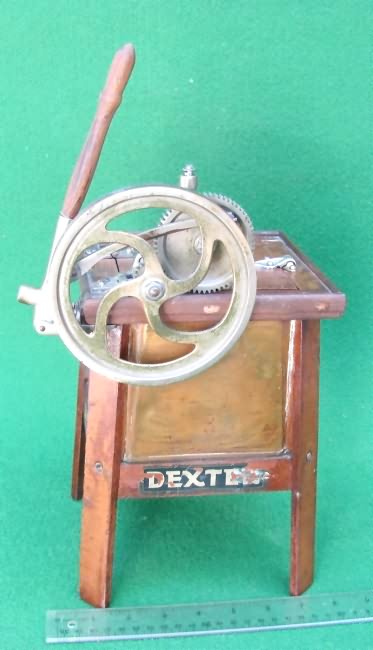 Dexter Salesman Sample Washing Machine / Washer
This is a great salesman sample washer. It is a true antique salesman sample and has a
great look and action. The square-ish copper tub is constructed from a sheet of
solid copper, with clipped and then formed corners, having nice details to the construction. The dasher / agitator
inside is nickel plated and looks like a suction type plunge washer w/ vents and added
agitators. Cutting edge technology for its time. The washing
action is super when operated. Not only does it drive the agitator up and
down, but through an ingenious ball and socket joint it also makes the agitator
go back and forth to really stir things up. Look over all the pictures to see all
the detail and features of this wonderful piece.There has been some minor
repair to the wood along the top edge. It was well done. This is a good one!! Recommended!!
Dexter Salesman Sample Washing Machine / Washer
This is a great salesman sample washer. It is a true antique salesman sample and has a
great look and action. The square-ish copper tub is constructed from a sheet of
solid copper, with clipped and then formed corners, having nice details to the construction. The dasher / agitator
inside is nickel plated and looks like a suction type plunge washer w/ vents and added
agitators. Cutting edge technology for its time. The washing
action is super when operated. Not only does it drive the agitator up and
down, but through an ingenious ball and socket joint it also makes the agitator
go back and forth to really stir things up. Look over all the pictures to see all
the detail and features of this wonderful piece.There has been some minor
repair to the wood along the top edge. It was well done. This is a good one!! Recommended!!
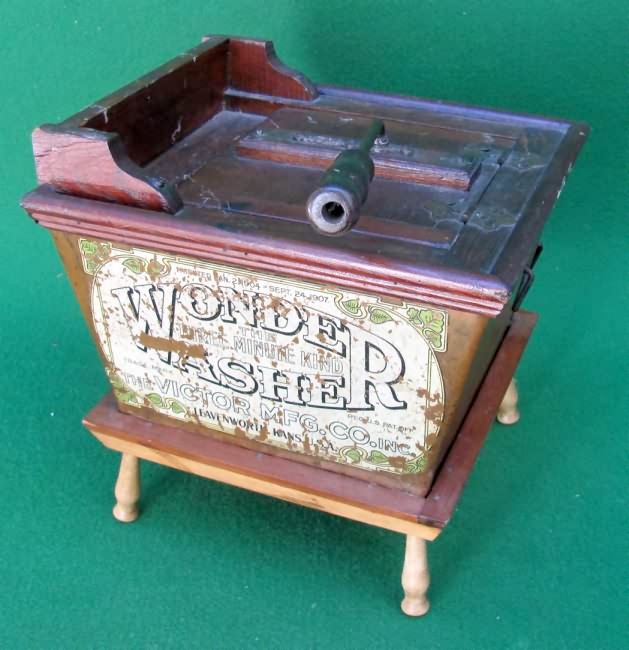 "Wonder
Washer" Salesman
Sample Washing Machine
This is a nice looking example of this salesman sample washing machine. This better idea for washing clothes
hails from Leavenworth KS and was manufactured by the Victor Mfg. Co. It is
called the Wonder Washer, and the writing says it is the 3 minute kind. There are two
patent dates above the name on the side of the washer from 1904 and 1907.
"Wonder
Washer" Salesman
Sample Washing Machine
This is a nice looking example of this salesman sample washing machine. This better idea for washing clothes
hails from Leavenworth KS and was manufactured by the Victor Mfg. Co. It is
called the Wonder Washer, and the writing says it is the 3 minute kind. There are two
patent dates above the name on the side of the washer from 1904 and 1907.
This one is on a low base I have not seen before. It would make it
suitable for use on a table top. I have seen them on folding tall bases
and without any base as with the one at the top of the page. A Google
search turns up versions with and without bases, and
I think that this washer was offered as either a stand alone on a wooden leg
base, or as a table top washer with and without a base.
Overall, the
condition is very nice, the decals and painted logo's on the side are nice
but faded. The interior of the washer and the agitator are
very nice. I have seen a few of these over the years, and it seems that a lot
of salesman sample washers were put to the test given the wear and tear that
many show. This one is no exception. Different and interesting!!
A nice early display piece.!!
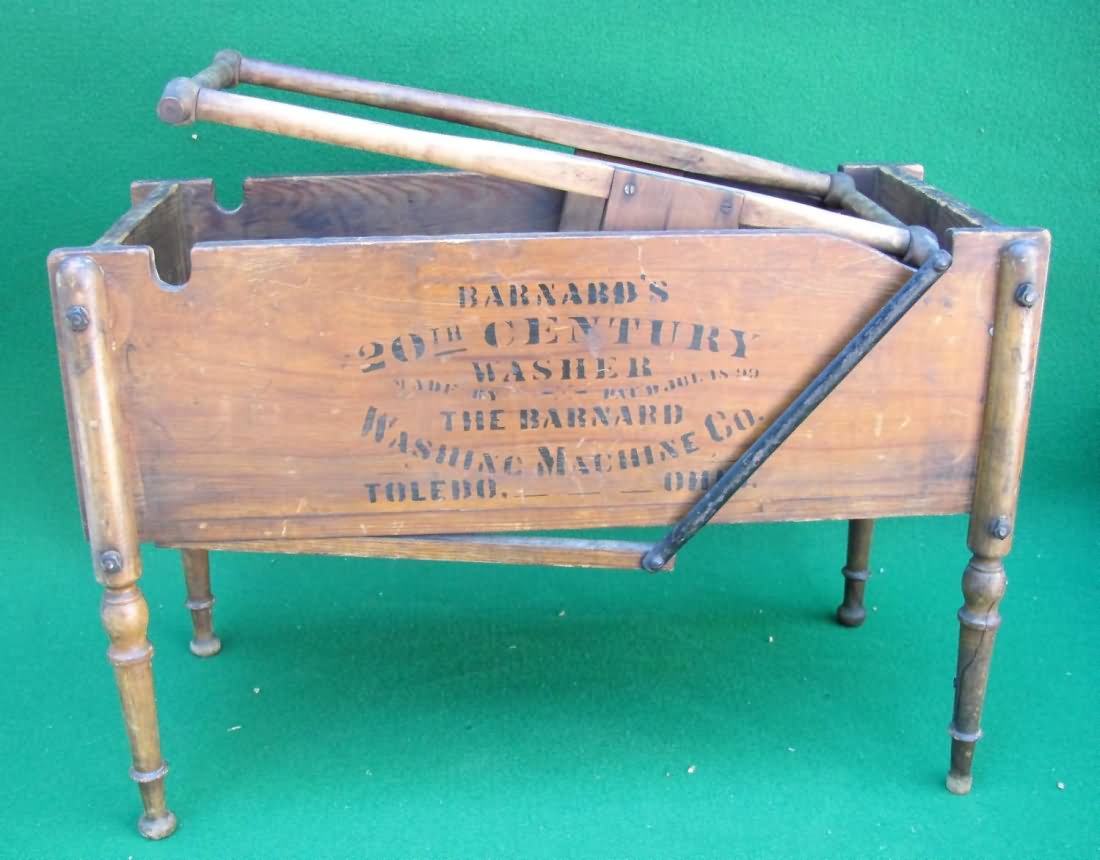 Barnard's Salesman Sample 20th Century Washing Machine
This is a great looking salesman sample of an early washing machine that dates
from near the turn of the century.
The patent was granted in 1899 and the # is 6290024. It is viewable using
Google Search. Mr.
Barnard was forward thinking enough to name his invention the 20th Century, implying that his idea was way ahead of its time.
Barnard's Salesman Sample 20th Century Washing Machine
This is a great looking salesman sample of an early washing machine that dates
from near the turn of the century.
The patent was granted in 1899 and the # is 6290024. It is viewable using
Google Search. Mr.
Barnard was forward thinking enough to name his invention the 20th Century, implying that his idea was way ahead of its time.
An interesting idea in the design is the soap holder / dispenser built into
the upper arm which the operator pushed back and forth to wash the clothes. The patent gives
very detailed instructions on the proper operation, including how to activate and
preserve the soap in the upper container by using the proper technique.
This model is much larger than most sample size washers. It is close to 20" long
and stands almost 14" tall on its turned spindle legs.There is an early repair
to one leg which I have pictured. The stencils on both sides with the
maker name and patent info are in excellent condition. This salesman sample
washer has a very commanding look to it when on display. In addition to
the patent info the location of Toledo, Ohio is given. Part of the
lower rubber portion that sat in the bottom of the washer has been restored and
is a good representation of the
patent illustration / drawing. This piece was designed to be removed so
you could clean the dirt catching area after washing a load of clothes and to
make room for the handle to store better when not in use. All of the rest
of this rare salesman sample washer is original and in good condition.
I recently saw a current auction result out of Indiana for this exact same
washer, in lesser condition, and missing the part I just mentioned for just
under 4K Don't let this one get away. Different and interesting!!
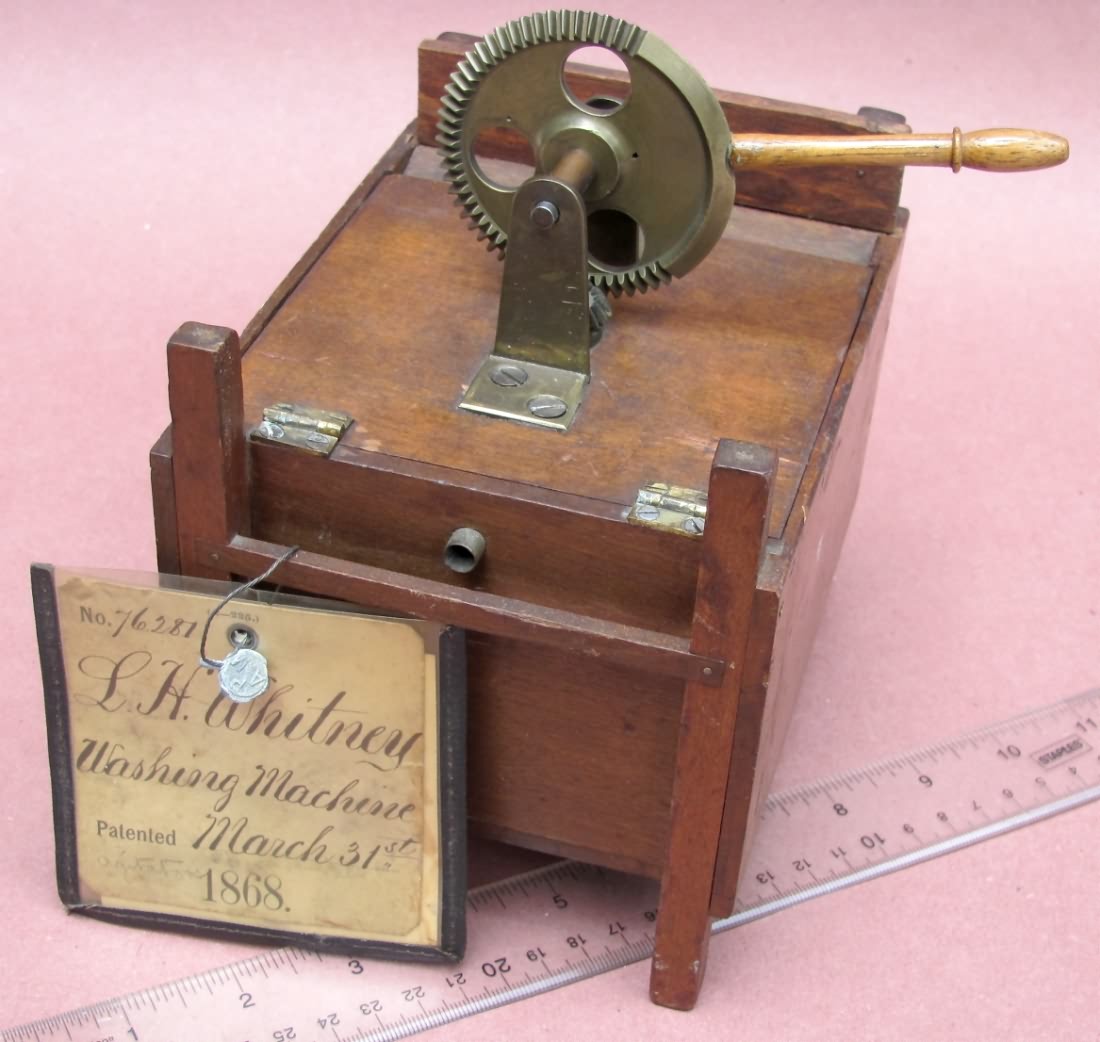 1868 Patent Model of Washing Machine by
Levi Whitney of Washington / District of Columbia
This washing machine patent model has its original tag and is in an early
holder.
This washing machine patent model is approx 6" square. The patent was granted on
March 31st 1868 and is number 76281. The washer itself is a good match to the patent which can be viewed
using Google Patents Search. The patent drawing illustrates a boiler / steam generator
off to the side which is not here. The washer itself is complete and
has an interesting action in addition to the geared crank you see on top.
1868 Patent Model of Washing Machine by
Levi Whitney of Washington / District of Columbia
This washing machine patent model has its original tag and is in an early
holder.
This washing machine patent model is approx 6" square. The patent was granted on
March 31st 1868 and is number 76281. The washer itself is a good match to the patent which can be viewed
using Google Patents Search. The patent drawing illustrates a boiler / steam generator
off to the side which is not here. The washer itself is complete and
has an interesting action in addition to the geared crank you see on top.
The interesting
feature on this washer is the agitator arrangement Mr. Whitney developed.
In the bottom of the washer are a series of round holes and round balls that
will be in constant motion when the handle is rocked back and forth.
There are also ports in the chamber for the hot steamy water to flow through. The
perfect washer for 1868. I have had or seen other models with
similar ideas where loose balls or marble like balls did the hard work.
Interesting and nice!!
Another
great piece of early Americana with a history, provenance, and a purpose.
The condition is
excellent!! A good one!
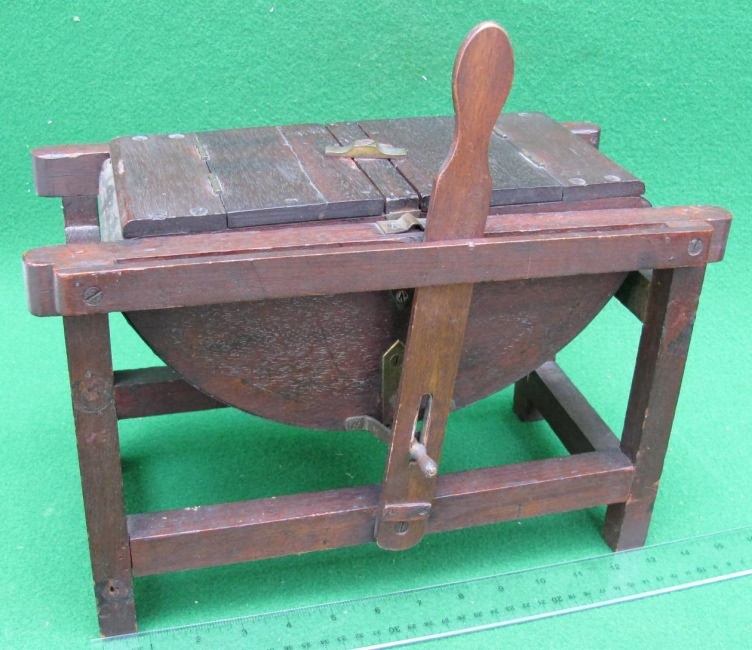 Patent
Model / Salesman Sample Washing Machine
This rocking cradle style washing machine is unmarked. It has the look
and feel of a patent model, but there is no tags or other maker info.. It originates from the Glissman Iron
Collection who were buying patent models from Cliff Peterson who lived nearby them
back in the 70's / 80's in southern California.
Patent
Model / Salesman Sample Washing Machine
This rocking cradle style washing machine is unmarked. It has the look
and feel of a patent model, but there is no tags or other maker info.. It originates from the Glissman Iron
Collection who were buying patent models from Cliff Peterson who lived nearby them
back in the 70's / 80's in southern California.
This washer model is
approx 6" tall x 13"
long and in very nice condition. It is an interesting design that the inventor put a lot of thought into.
It is balanced so that making it rock back and forth to agitate the contents
is almost effortless. The condition is excellent!! An
nice one!!
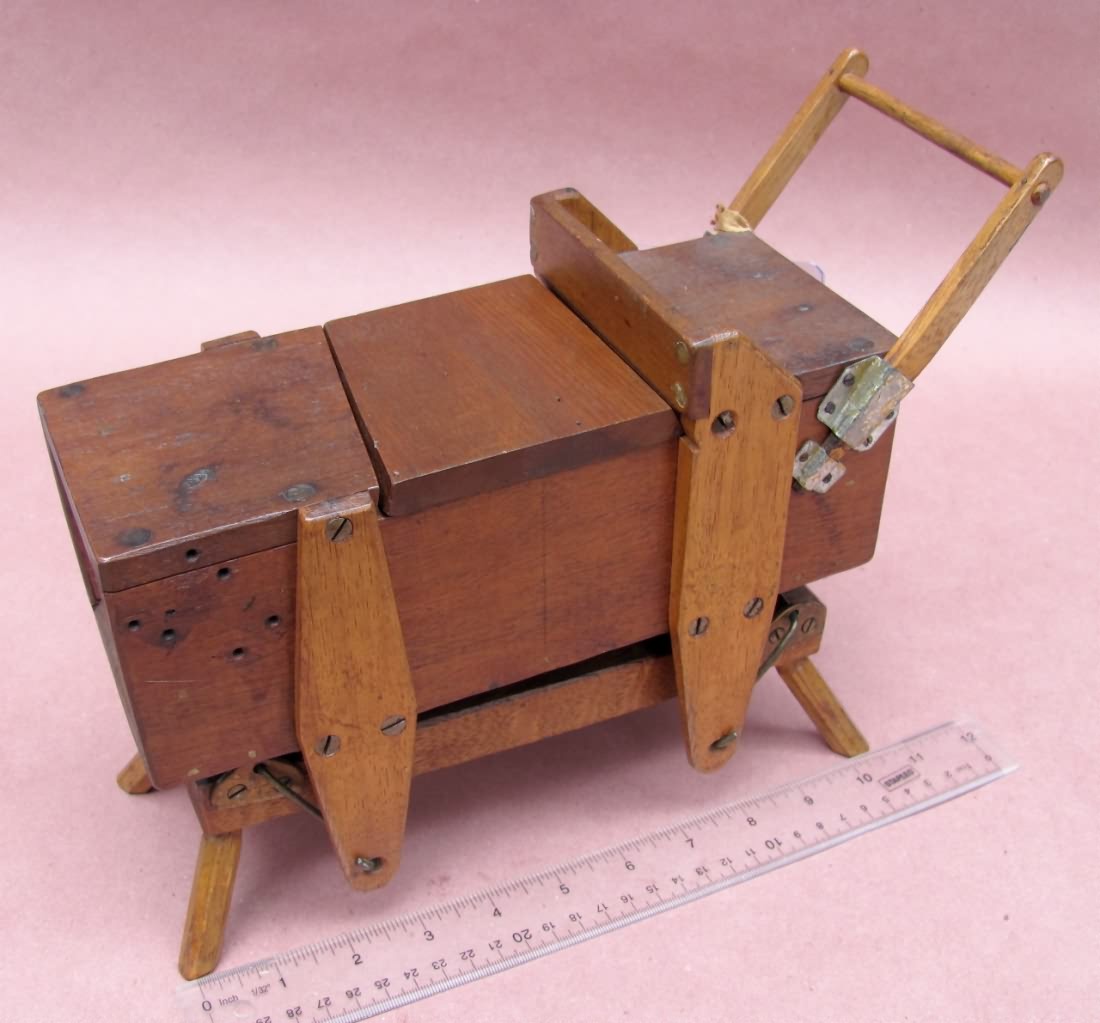 1877 Patent Model of Washing Machine by
George Buchanan of Washington PA
This washing machine patent model has its original tag.
This patent model washing machine is approx 10" long x 5"
or so tall. The patent was granted on October 23rd 1877 and is number 196427.
It is a good match to the patent which can be viewed
using Google Patents Search.
1877 Patent Model of Washing Machine by
George Buchanan of Washington PA
This washing machine patent model has its original tag.
This patent model washing machine is approx 10" long x 5"
or so tall. The patent was granted on October 23rd 1877 and is number 196427.
It is a good match to the patent which can be viewed
using Google Patents Search.
This is another great action model and
the inventor had a great idea here for the agitator that was believed to be
so important to getting a good job done. The idea here was that
you rocked the box back and forth on its swinging carriage like frame to
agitate the soapy water. But that alone was not enough and in addition
to that, inside the large wooden box is a wooden block with rollers on
the bottom and mesh perforated ends would move
back and forth acting as both an agitator and rubber. It seems to work
perfectly when empty. Not sure how it would go with a load of clothes
in the way.
A
great piece of early Americana with a history, provenance, and a purpose.
The condition is
excellent!! A good one!
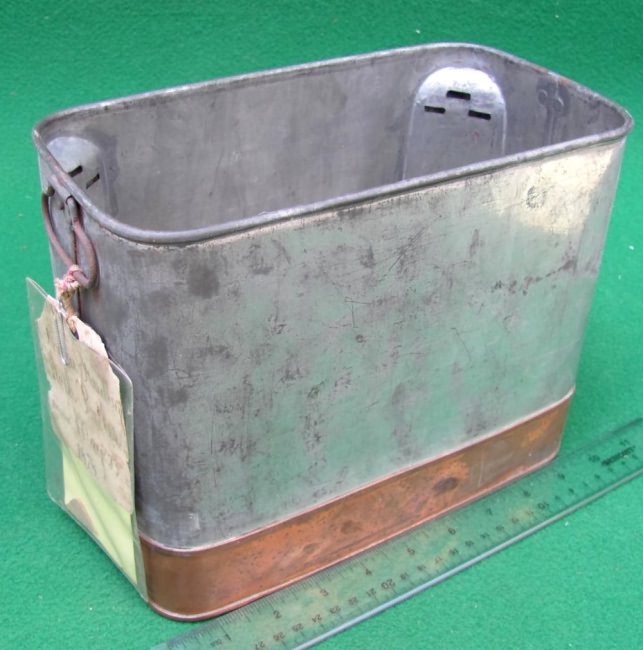 1878 Patent
Model Wash Boiler w/ Built in Agitator
The patent number is 204311. The patent was granted to
Andrew Friedley of Lamont Illinois on
May 28 1878. It is a good match to the patent which for some
reason was
difficult to find and pull up. The model measures approx. 10"
long by 8" tall and 6" wide. It has its original tag, and an
additional tag that says it was once part of the O. Rundle Gilbert
collection of patent models.
1878 Patent
Model Wash Boiler w/ Built in Agitator
The patent number is 204311. The patent was granted to
Andrew Friedley of Lamont Illinois on
May 28 1878. It is a good match to the patent which for some
reason was
difficult to find and pull up. The model measures approx. 10"
long by 8" tall and 6" wide. It has its original tag, and an
additional tag that says it was once part of the O. Rundle Gilbert
collection of patent models.
This is far more than just a
copper bottom wash boiler. The boiler has a false bottom and
the inventor has built passageways into each of the corners so that when the water
began to get hot in the bottom compartment of the boiler it would flow up and out of the
provided passages in the corners acting as a steamer or agitator of sorts. Neat idea. I am not sure if this idea ever made it
into production as I have never seen a full size one with this feature. I
can imagine that the added features would have greatly increased the cost to make and so
too the final cost to the consumer I have seen other versions where one would
put a device inside a standard wash boiler to achieve the same sort
of action. An
nice one!!
BACK to Patent Models / Salesman Samples
This is just a sample of the many
antique Patent Models & Salesman Samples we have sold.
Click link to see other
Sales Archive Pages on this Site.
We Buy Quality Antiques Similar to those
shown
Contact Us at
AntiqBuyer@gmail.com
Our current offering of Antiques for sale are at our sister Website Patented-Antiques.com.