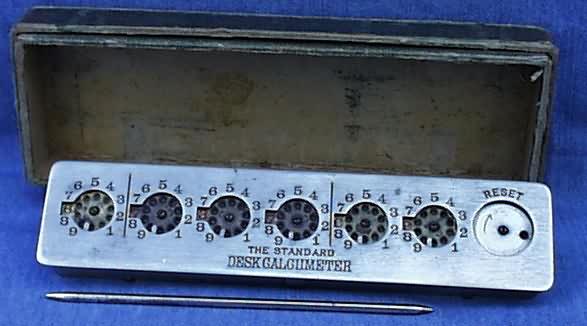
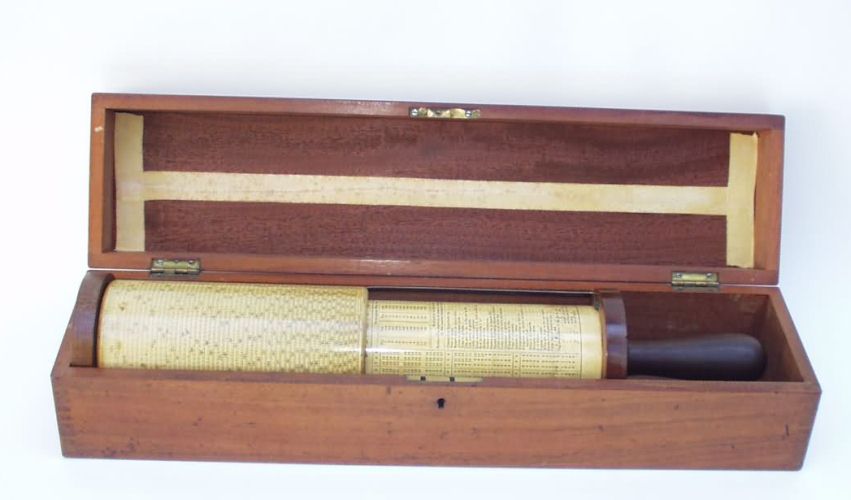
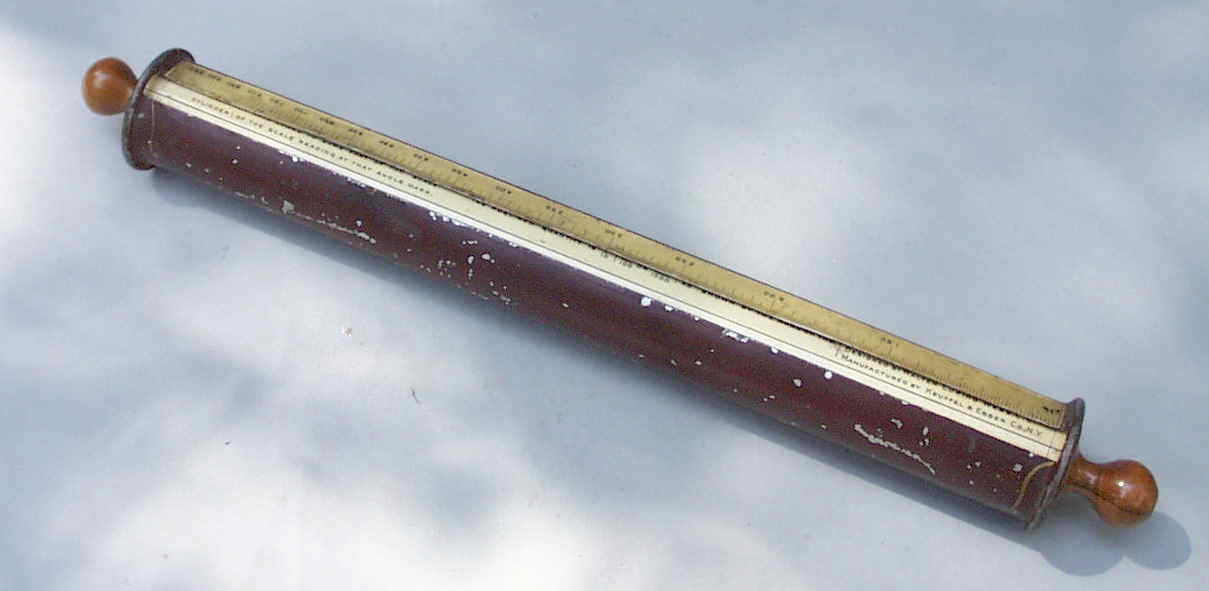
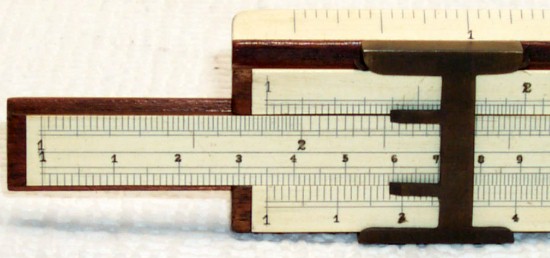
We buy, sell, and deal in early and unusual slide rules,
calculators and other early patented calculation
devices. We also buy many
 other office
related antiques and collectibles. We specialize in tools and technology related antiques from the home, shop, farm, or office.
We are full time antique dealers of early scientific and technology related antiques and
actively deal in a broad range of related antiques, collectibles and related advertising.
other office
related antiques and collectibles. We specialize in tools and technology related antiques from the home, shop, farm, or office.
We are full time antique dealers of early scientific and technology related antiques and
actively deal in a broad range of related antiques, collectibles and related advertising.
This site, www.Antiqbuyer.com is our informational and past sales results website.
There are links on the left to informational pages, and on the right are
links to past sales results for many scientific related antiques we have
 sold.
sold.
Our antique sales site for these and other types of antiques and collectibles is
www.Patented-Antiques.com
Please visit it that site if you are looking to buy these types of
antiques and collectibles.
Please contact us by email at AntiqBuyer@gmail.com if you have interesting technological or scientific
related antiques you want to sell.
Curta Calculators
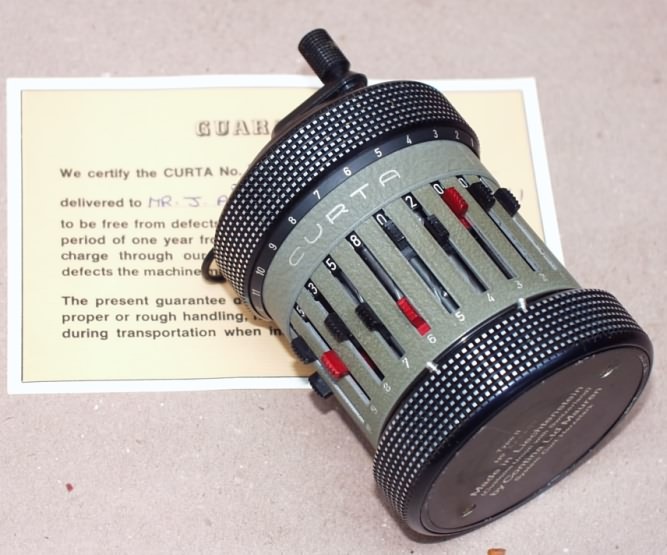
Pictured are two versions of the ever-popular Curta calculator. On
the left is a Type II Curta and below is a Type I Curta.
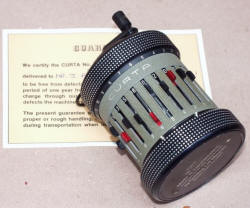 The main difference is type 2 Curta calculator has a larger capacity. These calculating devices were first designed
during WWII and were introduced shortly after the Second World War. They were still being made right
up to the time the hand-held electronic calculator caused their popularity to wane
and production to end in the 70's.
The main difference is type 2 Curta calculator has a larger capacity. These calculating devices were first designed
during WWII and were introduced shortly after the Second World War. They were still being made right
up to the time the hand-held electronic calculator caused their popularity to wane
and production to end in the 70's.
They originally retailed for about
$150.00. For most of the 70's and into the 80's examples sat on
shelves and in back storerooms of drafting supply shops as dead stock. After word got out that they were being
collected and a constant supply and demand became available on the internet, prices
 skyrocketed to $1000.00 or more.
Years ago these devices could be had for a couple hundred dollars and there were
more than enough to go around. The supply seemed endless, and the demand scant. The Internet auctions came and the
market changed with a new group of collectors entering the market.
They are a popular collectible and demand is pretty constant with prices for them ranging anywhere from $600-2500.00 or so
depending on a few variables. I have a nice Curta II listed for sale on
Patented-Antiques.com for around $1200.00.
Results for French and German examples sold on eBay generally sell for
$1500.00 - 2500.00 if you believe what you see. I do not.
Antique Calculator Values
The prices of most later modern
electronic calculators also took off for a while and reached unheard
of
 values
when demand rose right after the internet came into vogue. The market
for electronic hand-held calculators from our school
days evolved during this period. Many of those values dropped
considerably after the tech bubble burst.
values
when demand rose right after the internet came into vogue. The market
for electronic hand-held calculators from our school
days evolved during this period. Many of those values dropped
considerably after the tech bubble burst.
The one caveat being the rare of
the rare still do well with the prime example being the Apple 1 computers selling
for half a million or so. Results like that are explained by some folks simply having too much money.
I like, and still look for these handheld electronic calculators, but rarely do I want the
larger later and more typically seen modern 10-key
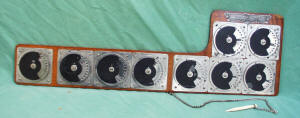 model calculators or adders, electric or mechanical, like those from the 30's or 40's or later. Including
large Victors, Burroughs, and a host of the other later 10-key heavyweight adding machines that seem to be in every garage and in
every antique booth and even at the end of some ropes in the bottom of
people's boats acting as ballast or anchors. There are people who do collect and are looking for
these later machines, but I do not know them and have no market to sell them.
Check eBay past sale results, not sellers asking prices to see what most of these later 20's - 60's era calculators /
adding machines / adders actually sell
for and you will see what I mean.
model calculators or adders, electric or mechanical, like those from the 30's or 40's or later. Including
large Victors, Burroughs, and a host of the other later 10-key heavyweight adding machines that seem to be in every garage and in
every antique booth and even at the end of some ropes in the bottom of
people's boats acting as ballast or anchors. There are people who do collect and are looking for
these later machines, but I do not know them and have no market to sell them.
Check eBay past sale results, not sellers asking prices to see what most of these later 20's - 60's era calculators /
adding machines / adders actually sell
for and you will see what I mean.
Early Calculation Devices
Antique and vintage calculating devices have had an interesting and varied period of
development through the years.
Every
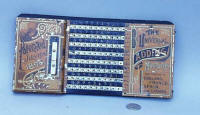 one is familiar with the abacus,
one of the earliest of all calculating devices.
one is familiar with the abacus,
one of the earliest of all calculating devices.
Another early form of a calculator first developed for Western civilizations was known as Napier's Bones. These were cubes
or dice-like in shape, and were made from bones or ivory
and real examples are extremely rare and collectible. They are being
reproduced today and sold at various internet sites and auctions, at times with no
indication of their true vintage. Be aware.
Logarithmic scales found on slide rules were first introduced by Routledge in the early 1800's and were incorporated into
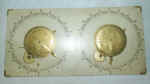 the various forms of rules and other devices that were the forerunner to the slide rule as we know
it today. These scales were typically found on rules during
the early to mid 1800's primarily for use by merchants and trades people
who needed a viable way to run larger calculations for their business.
the various forms of rules and other devices that were the forerunner to the slide rule as we know
it today. These scales were typically found on rules during
the early to mid 1800's primarily for use by merchants and trades people
who needed a viable way to run larger calculations for their business.
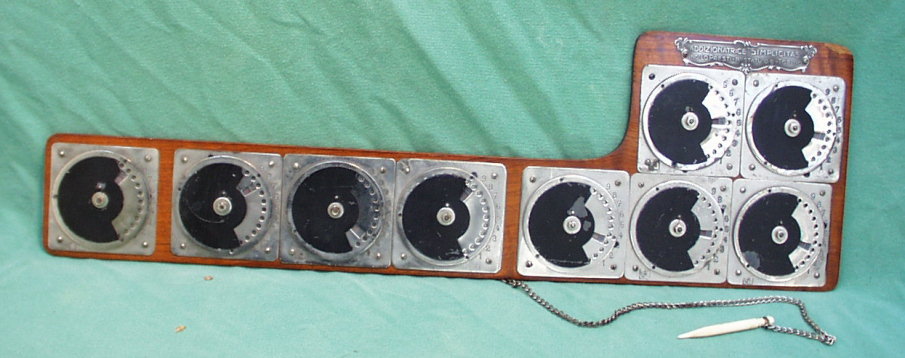
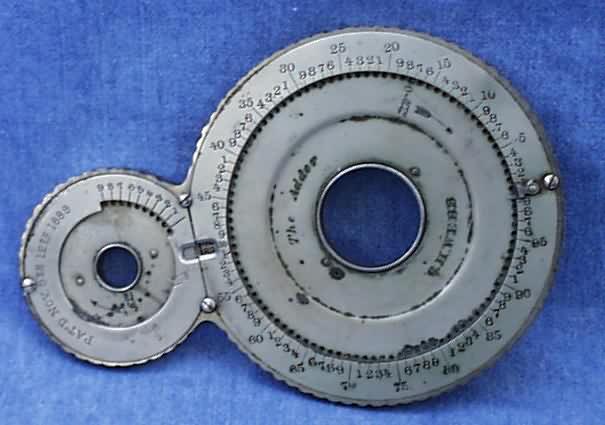
One of the first types of mass produced calculating devices that still survive in numbers today
are paper tables with wheels and dials similar to the adder that is pictured
above on the right. The Palmer's Computing Scale (not shown) is
the best known and most commonly seen of these types of early paper calculators.
Early Dial type calculators / adders were around pretty
much during the same period. The best known of this style machine
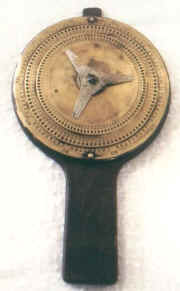 is
the well known Webb Adder which was patented in the
late 1800's. These were produced in a few different configurations
throughout the years, with the earliest versions having a wooden back.
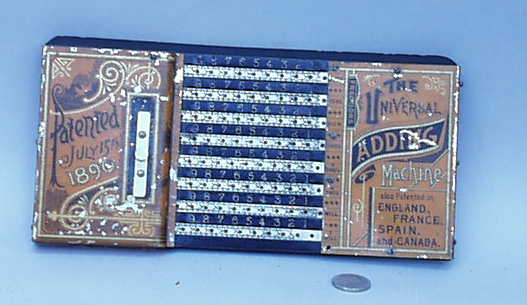
Below is a later version marked with the
maker's
is
the well known Webb Adder which was patented in the
late 1800's. These were produced in a few different configurations
throughout the years, with the earliest versions having a wooden back.
Below is a later version marked with the
maker's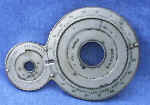 name and patent date. There
are early knockoffs of this calculator / adder that are not marked that can found as well. They were produced to
compete with the real things, much as the pirated tapes and CDs that abound in today's
markets.
name and patent date. There
are early knockoffs of this calculator / adder that are not marked that can found as well. They were produced to
compete with the real things, much as the pirated tapes and CDs that abound in today's
markets.
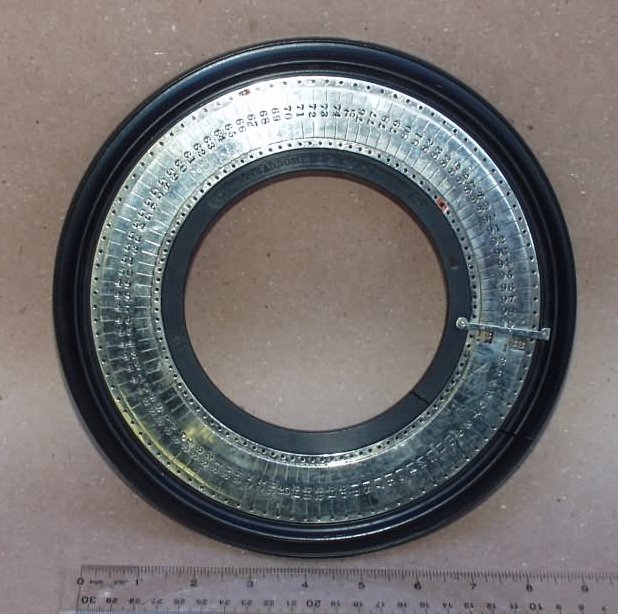
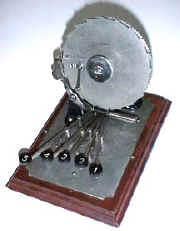
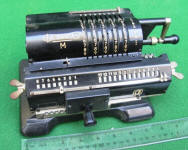
On the left is a pretty rare and earlier model
adder / calculator with this same basic
configuration as those above. It is known
as the Hart Patent Adder.
I am an active antique
dealer in early or antique calculation devices and looking to add nice
examples to the sale pages on our sales website located at
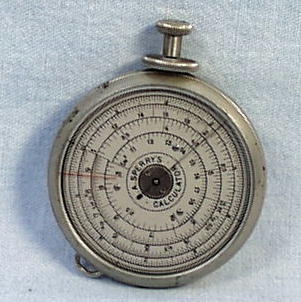
www.Patented-Antiques.com I am interested in any of these kinds of
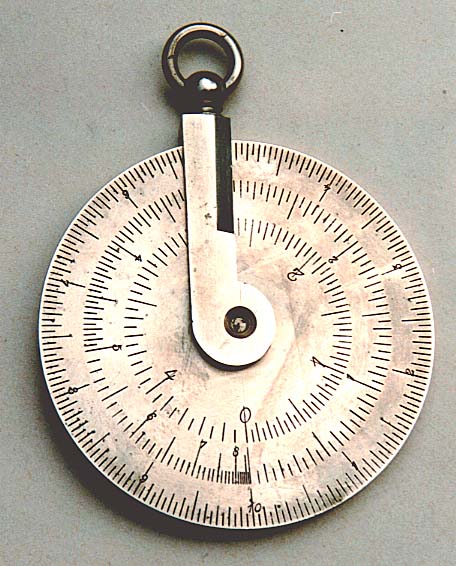
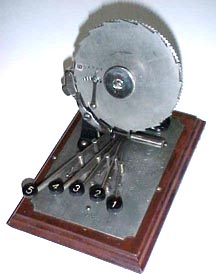
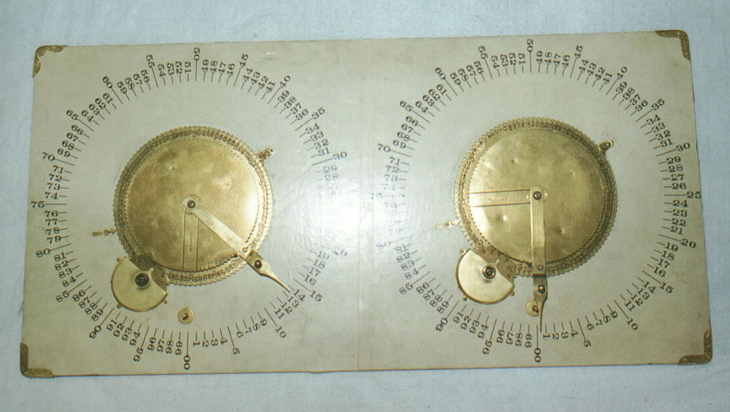
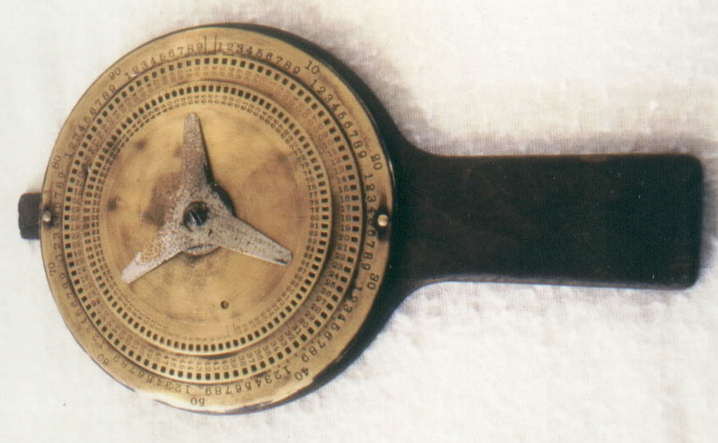
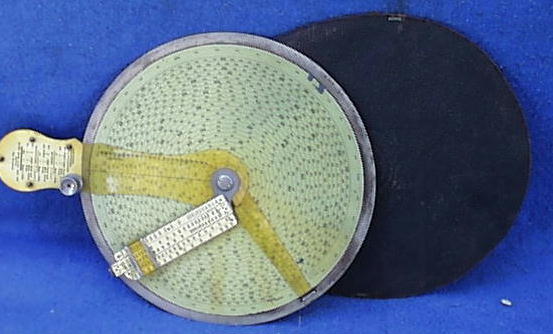
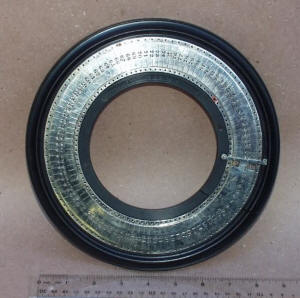
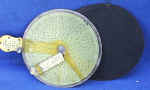
early dial calculators, sliding style calculators, or circular calculators like the one in the
top left corner.
Key Type Calculation Devices
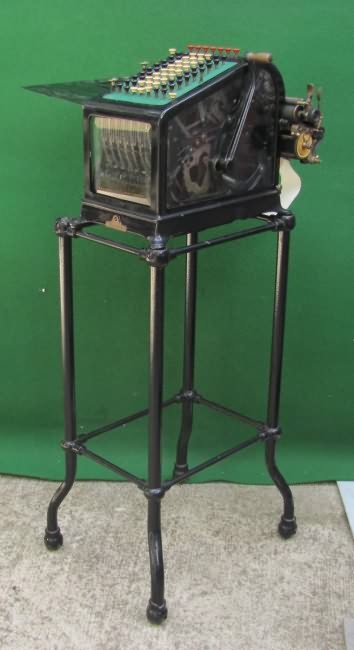
Near the turn of the century dials began to give way to
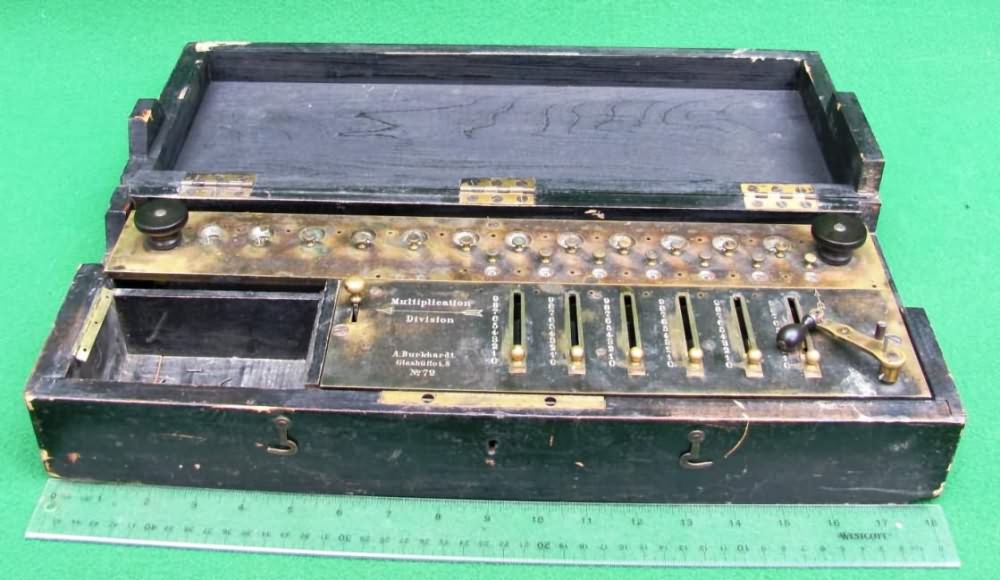
key type adders and calculators, or those with stepped drum and
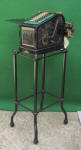 pinwheel style mechanisms, and when these stepped drum and pin-wheel models
became more economically feasible to manufacture, even though they
were invented years earlier they soon dominated the market.
pinwheel style mechanisms, and when these stepped drum and pin-wheel models
became more economically feasible to manufacture, even though they
were invented years earlier they soon dominated the market.
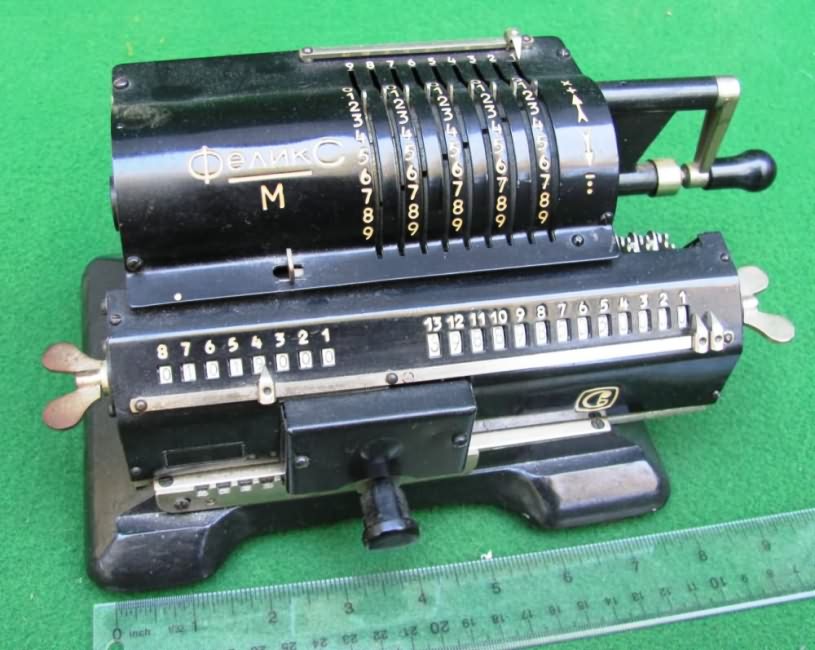
This style calculating machine, which quickly and easily performed four functions,
became the standard. Shortly thereafter calculators became electrified and all of these old style calculators
were pretty much relegated to the status of obsolete but not necessarily collectible.
Millions had been produced and they are still readily available.
There is a very informative and well done site that is primarily focused
on the history of the Hewlett Packard line of calculators, but they also
have a very nice and well done history of earlier calculation devices
leading up to the HP line.
 A more detailed history of this period can be
found at The Museum of HP Calculators. It is interesting reading and should be looked into if
you are trying to identify your calculator.
A more detailed history of this period can be
found at The Museum of HP Calculators. It is interesting reading and should be looked into if
you are trying to identify your calculator.
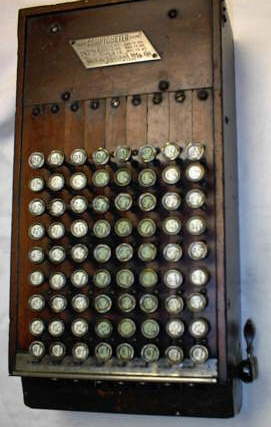
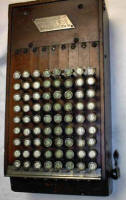
The most famous, and most commonly found early key style calculating machines is the
Comptometer. It was a very popular machine in its day, as attested to by the
sheer number still available. The most common versions are found in a tan metal case and sell for under $100 in most cases.
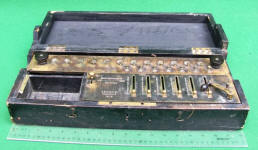
The earliest version came housed in a wooden case like the one pictured on the right and is much harder to find. These
1st model comptometers have been known to sell for several thousand depending on condition, serial number, and other factors.
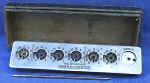
Other non electric calculators considered collectible operated with the
stepped drum or
pin-wheel mechanism. Some of the names of these style machines
are the Marchant, Odhner, Time is Money (TIM), The Millionaire Calculator, The
Peerless Reckoning Machine which was sold by K & E, as well as a host
of others that were being produced early on. In general the earlier
the better, with some selling for 1000.00 or more and others 100 or
less.
Slide
Rules, Calculators
& Other Scientific
Related Antiques
Below are some pictures of the
types of scientific antiques and vintage calculation devices and slide
rules that we
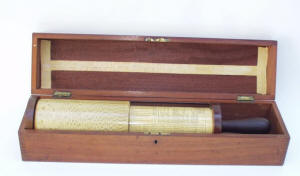 deal in and are seeking to
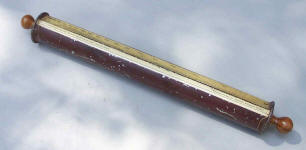 buy. I am an
active antique dealer interested in antique and collectible slide rules and other calculation devices that date from the
early 20th century and before. This page is a basic
primer describing the different and various types of scientific and
calculation devices we buy, sell, deal in.
buy. I am an
active antique dealer interested in antique and collectible slide rules and other calculation devices that date from the
early 20th century and before. This page is a basic
primer describing the different and various types of scientific and
calculation devices we buy, sell, deal in.
Keuffel & Esser Slide Rules
A Basic K & E Slide Rule
Cursor Lesson or Beginning Primer for the Curious
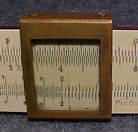
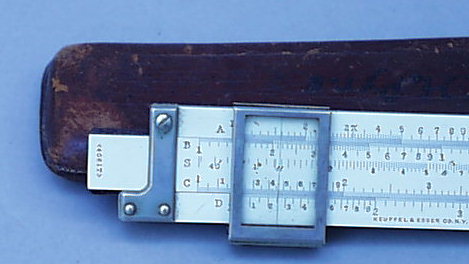
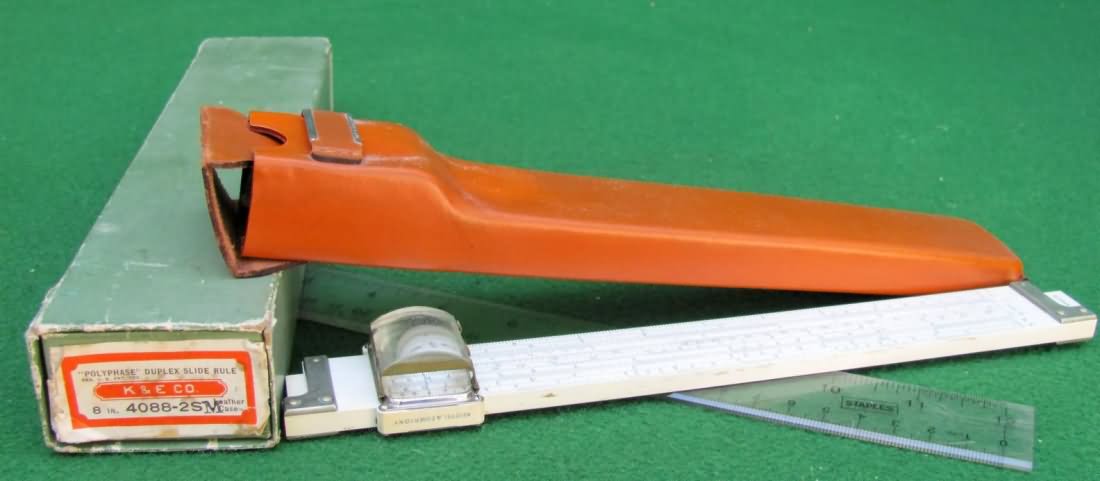
The next three pictures give views of different early cursors (the sliding window portion)
employed by Keuffel & Esser or K & E and represent the transition
or changes that slide rule cursors have gone through. This is by no means
the full story, and there are variations and other designs by other
companies that are not covered here.
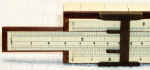
The first picture of the all brass cursor on the right is referred to
as the Christmas tree or chisel point cursor. This style cursor is considered the first model K
& E used and dates from a bit before the 20th century.
It is rare and desirable. It can cause what is otherwise a $10.00
sliderule to sell for several hundred to $1000.00 or more.
It has no glass window like later model slide rule cursors do. You
would work off of one of the tips to do your calculations. Some are
like this one with the points going out to just one side and other K & E
cursors have points on both sides of the center post or upright.
The second
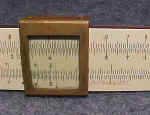 picture shows what is known as a clamshell cursor.This was the
second cursor employed by K & E.Some examples are
picture shows what is known as a clamshell cursor.This was the
second cursor employed by K & E.Some examples are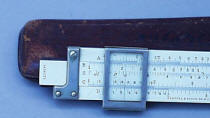 pretty rare, others on
common rules, are not.
pretty rare, others on
common rules, are not.
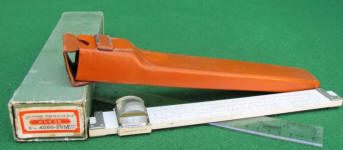
The clamshell design was replaced by the interesting looking and difficult
to find column column cursor which is pictured below on the right. The column cursors
still show in the 1913 catalogs, but were phased out shortly after that.
This cursor style was only used for a few short years and affects the value upward for most examples.
The next cursor to be used after the column cursor was the short lived frameless cursor.
(not pictured here) This design was an attempt to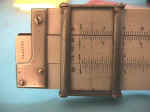 save money and material
and give the slide rule cursor a sleeker look over the earlier
designs. It was a disaster as they were very fragile and
prone to break at the connection points in the corners that had holes
drilled through the glass. This style cursor does not add much of premium even though it is hard to find them not broken or damaged.
save money and material
and give the slide rule cursor a sleeker look over the earlier
designs. It was a disaster as they were very fragile and
prone to break at the connection points in the corners that had holes
drilled through the glass. This style cursor does not add much of premium even though it is hard to find them not broken or damaged.
K & E
shortly thereafter introduced the standard framed cursor that most slide rules found today have. After K & E introduced
their standard framed cursor, that basic design was used until production of slide rules ended in the
late 60's or early 70's.
Slide Rules Wanted
I am interested in any slide rule with one of these early all brass cursors pictured
above, or slide rules with any other
 unusual cursors that some other companies used. Some of these had small decimal keepers
or counters on them, or moveable arrows, or in one case a small
abacus to help you along with your calculations and in keeping track of where the
decimal point belonged. Some also had magnifiers built into the cursor. K & E offered clip on magnifiers.
unusual cursors that some other companies used. Some of these had small decimal keepers
or counters on them, or moveable arrows, or in one case a small
abacus to help you along with your calculations and in keeping track of where the
decimal point belonged. Some also had magnifiers built into the cursor. K & E offered clip on magnifiers.
I am also interested in any special use slide rules. Slides Rules with scales
especially designed for surveying, chemicals, electrical calculations, aviation, radios, and others are
sought.
Slide Rule Values
On the right is a relatively common collectable
slide rule put out by K & E or Keuffel & Esser. It is known as
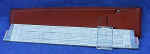 the Deci-Lon and was one of the last sliderules K & E made or offered.
It is all plastic and was produced for a number of years. The last models being designated by the model number 68-1100.
Before the Internet this rule could be had routinely for $20 or less and
was passed over by collectors and those in the "know" who were
looking for earlier and rarer examples of slide rules.
the Deci-Lon and was one of the last sliderules K & E made or offered.
It is all plastic and was produced for a number of years. The last models being designated by the model number 68-1100.
Before the Internet this rule could be had routinely for $20 or less and
was passed over by collectors and those in the "know" who were
looking for earlier and rarer examples of slide rules.
For a while this rule routinely sold for $100 or so, not because they
are important or scarce, but rather because they are popular. The
 collecting frenzy over them and
the resulting prices they bring is largely driven by
the same impulse that has created a desire for collectibles like GI Joes
and Barbie dolls, that being the current generation buying back their
childhood, and their memories, rather than anything resembling scarcity or the historical significance.
collecting frenzy over them and
the resulting prices they bring is largely driven by
the same impulse that has created a desire for collectibles like GI Joes
and Barbie dolls, that being the current generation buying back their
childhood, and their memories, rather than anything resembling scarcity or the historical significance.
In this case nerds as opposed to cheerleaders
or jocks. As of 2021 the laws of supply and demand have taken
hold, and Deci-Lons are selling for half or less of their highs.
Bottom line, those who cared got filled up.
The point is that there are many earlier and somewhat rarer slide rules
that are not having a lot of attention paid to them these days
that have potential to be worth more in the long run, and these are the rules that I am
interested in.
Please Contact
AntiqBuyer with any early and unusual slide rule that you have and
want to sell.
 To see examples of many slide rules and
calculators I have sold in the past go to our sister site at
www.Patented-Antiques.com see examples that we currently have for
sale.
To see examples of many slide rules and
calculators I have sold in the past go to our sister site at
www.Patented-Antiques.com see examples that we currently have for
sale.
If you have or know of one of these
earlier and interesting adders / calculators that you want to sell please
contact me at LCM@AntiqBuyer.com
 Larry & Carole Meeker