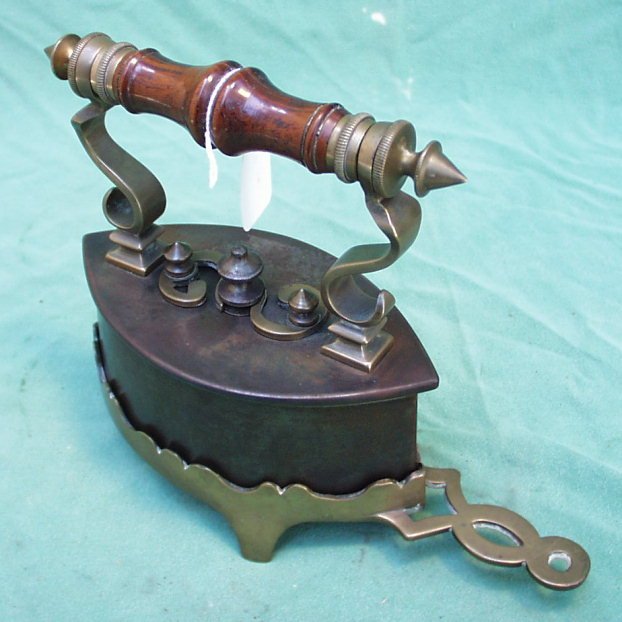
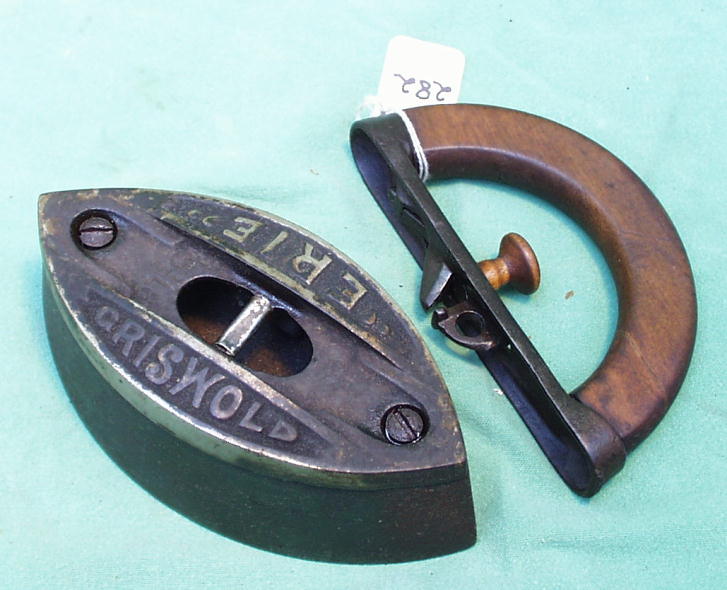
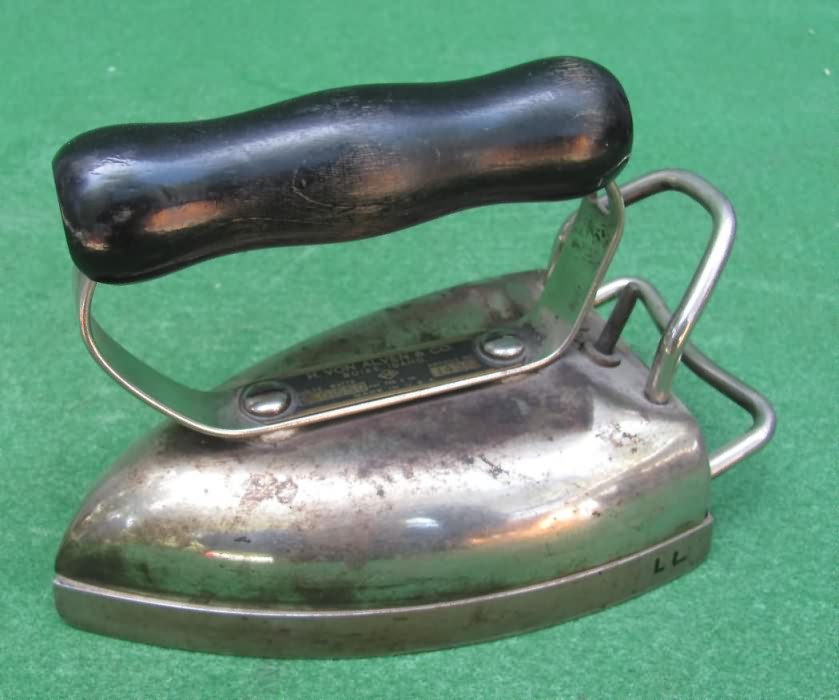
I buy vintage & antique
sad or pressing irons and laundry related antiques. I sell antique
on our sisters website
http://www.patented-antiques.com
Nobody has bought or sold more antique
sad or pressing irons than we have. We have
 handled
several
collections of antique pressing irons numbering in the thousands. We have sold pressing irons for world record prices.
Over the last 20 years we have handled and sold well over 10,000
irons.
handled
several
collections of antique pressing irons numbering in the thousands. We have sold pressing irons for world record prices.
Over the last 20 years we have handled and sold well over 10,000
irons.
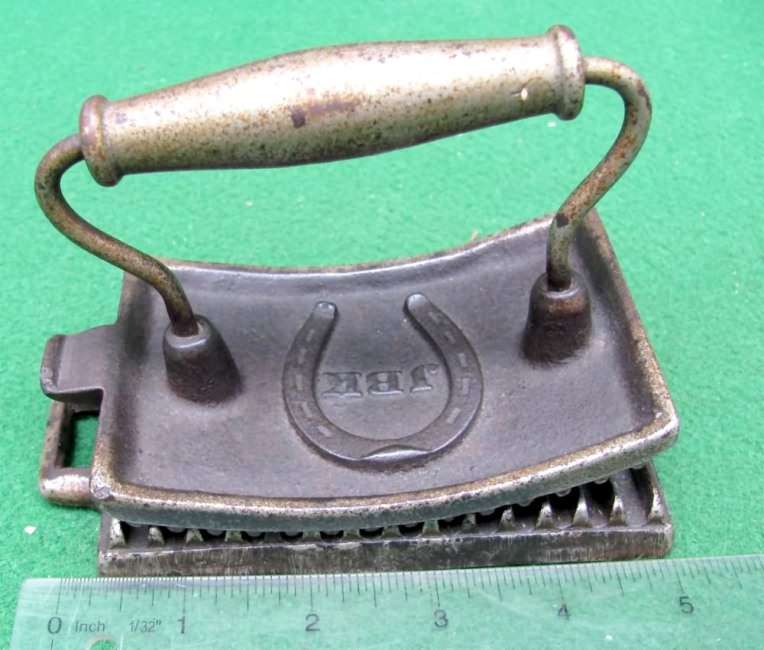
We are primarily interested in rare and
unusual examples of antique pressing irons, and especially irons
with unusual or patented features. These can be found on antique fluting
irons, gas or liquid fuel irons, alcohol irons, revolving or reversible
irons, combination irons w/ fluters, pre 1900 electric irons, and
most any other type of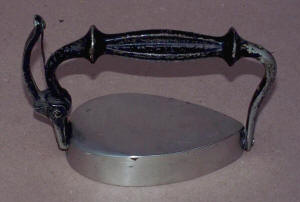 unusual
antique pressing irons.
unusual
antique pressing irons.
Both American & European irons can have
features that make them very desirable. We are always interested in unusual fluting irons, goffer irons, and gas or fuel heated irons. We are always looking
for unusual patented antique flat irons or sadirons that have unusual features or handles. We are also interested in any ironing related advertising or early store
displays for ironing devices.
If you have any unique or unusual
antique pressing irons that are for sale contact
us via email at AntiqBuyer@gmail.com giving us as many details as possible
and we will get back to ASAP.
If you are interested in buying
or want to see antique pressing irons we have for sale
please visit our sister site at
www.Patented-Antiques.com to view our current offerings of vintage & antique irons.
Machine Fluting Irons
Fluting irons are were designed
 to crimp, ruffle and press little pleats into starched fabric. Fluters were used for collars, cuffs, etc. and these vintage tools were
an invention that saw their heyday in America from the 1860's through
the 1880's. Some very rare and unusual electric fluting
irons were made into the 1920's for the movie & costume
industry.
to crimp, ruffle and press little pleats into starched fabric. Fluters were used for collars, cuffs, etc. and these vintage tools were
an invention that saw their heyday in America from the 1860's through
the 1880's. Some very rare and unusual electric fluting
irons were made into the 1920's for the movie & costume
industry.
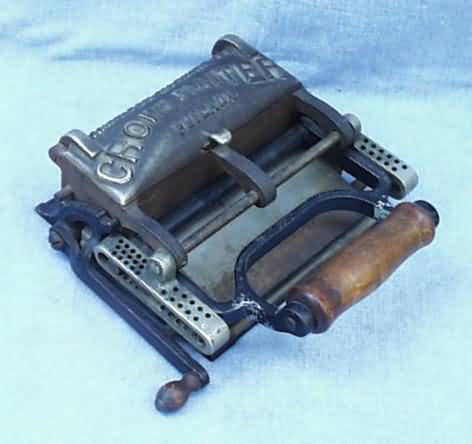
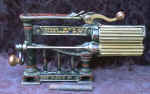
Pictured above is the Holly Patent machine fluter--- it
operates by means of a hand crank which crimps the fabric as it transports
it between the two fluted rollers. Machine fluters are also referred
to as pleaters, or pleating irons, crimpers, crimping irons, or rufflers
and came in a myriad of designs---some had pedestal or tripod bases,
some were clamp-on models etc.
Rocker & Roller Fluting
Irons
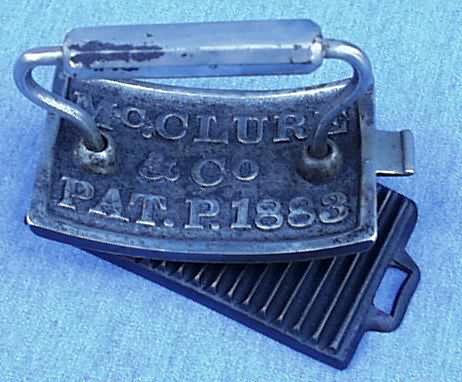
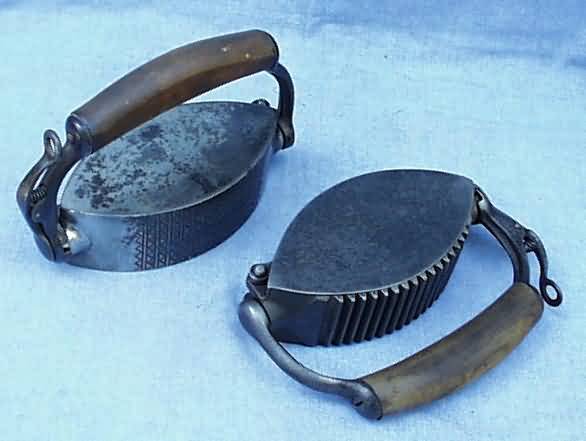
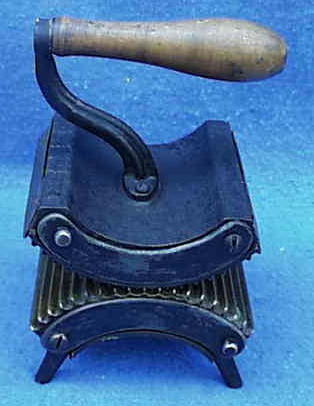
The McClure fluting iron is an example
of a rocker fluter. It is the name and the makers name of this
fluter that make it rare, not the form or style, which is
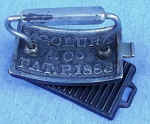 common. With this rocker
style of antique fluting iron the ironer would manually rock the top
half of the iron over the bottom half with the fabric in-between.
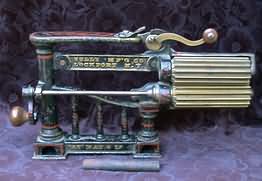
The iron pictured in the very top left corner of this page is another
example of a desirable and interesting antique rocker fluter known as
the Dion, and like the McClure it too is named after the inventor who
patented it.
common. With this rocker
style of antique fluting iron the ironer would manually rock the top
half of the iron over the bottom half with the fabric in-between.
The iron pictured in the very top left corner of this page is another
example of a desirable and interesting antique rocker fluter known as
the Dion, and like the McClure it too is named after the inventor who
patented it.
The Dion fluting iron was patented in
1868 and 1870 and is a highly sought after example that in the past
has sold for as much as 5K. At the other end of the value spectrum
is the common Geneva Fluter.
When offered on eBay the Geneva routinely sells for 20.00 or less. The moral being there can be a huge difference in value for a given
style of fluting iron.
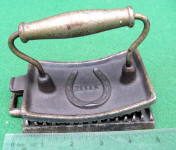 A third style of fluting iron is the roller style fluter where the
top piece is manually rolled rather than rocked over the bottom to
press the fabric into the flutes.
Unusual irons of this style would be
those with unique handle designs or other odd features. There is one rare
versions called the "Indicator" because it has a thermometer built into
the fluting plate. Another unusual one that has a double roller
on the handle.
A third style of fluting iron is the roller style fluter where the
top piece is manually rolled rather than rocked over the bottom to
press the fabric into the flutes.
Unusual irons of this style would be
those with unique handle designs or other odd features. There is one rare
versions called the "Indicator" because it has a thermometer built into
the fluting plate. Another unusual one that has a double roller
on the handle.
If you have unusual irons that you think we would
be interested in, please contact us at AntiqBuyer@gmail.com
with the details.
Gas / Liquid Fuel Irons
Another category of antique pressing
irons are fuel irons, antique irons
that were heated by whale oil, gasoline, kerosene, alcohol, natural gas, carbide-acetylene,
or over a gas-jet or lamp, etc.
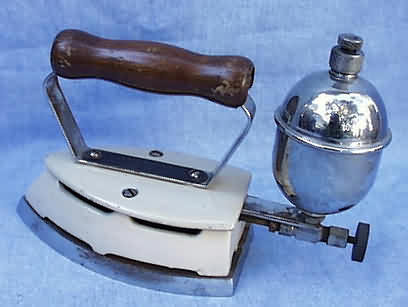
Perhaps the best known and most commonly
found or offered for sale of this style of
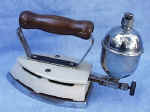 iron is the Coleman gasoline iron. Blue is by far the most
commonly seen color, but Coleman also made irons in many other
colors that are more desirable---turquoise, red, green, tan, etc. Other manufacturers, such as American Machine Co., also made colored
enamel irons.
iron is the Coleman gasoline iron. Blue is by far the most
commonly seen color, but Coleman also made irons in many other
colors that are more desirable---turquoise, red, green, tan, etc. Other manufacturers, such as American Machine Co., also made colored
enamel irons.
Fuel irons from Sears and Montgomery
Wards are considered very common, and even when found in like new the box
sell typically sell for under 100. These companies were still selling
gas
irons well after WWII to regions that had not been incorporated into
the "grid". Coleman was manufacturing irons into the 60's in Canada
for that market and the Amish, who are still big buyers of them.
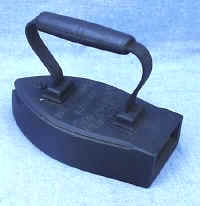
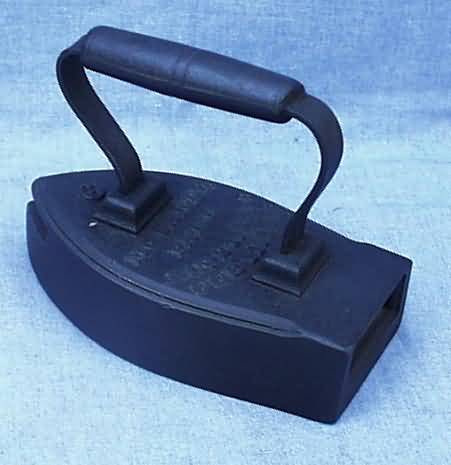
Another type of gas heated pressing iron is
the gas jet style. This style of antique iron resembles a
common cast iron "doorstop" sadiron but closer inspection
reveals a hollowed out body.
These irons were heated directly by a kerosene lamp
or by a wall-mounted gas jet apparatus and were hung on the
apparatus so the interior of the iron could be directly exposed to
the hot flame. The iron
shown here is McCarty's patent, which was granted in 1879.
 Examples of smaller gas jet irons are the Acme and the Sultana.
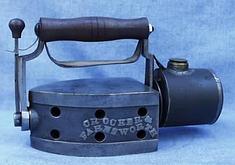
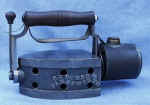
One example of a very interesting early
fuel iron is the c.1870 Crocker Farnsworth reversible iron pictured
here. This is an alcohol
or oil burning iron which is recognizable from the style and shape of the fuel
tank. Others from this early time used whale oil as their fuel
source. The most interesting feature of this antique fuel
iron is that it revolves. The theory behind the revolving iron was that heat rises and
therefore the top of the iron body would retain its heat longer than
the bottom, so that if you kept turning the iron over you would
always get to work with the hotter side.
Unusual Patented Irons
Other antique revolving irons were heated
by means of a slug that was inserted into
the body. Revolving slug irons often featured two,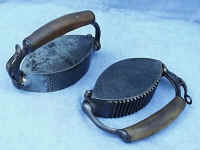 three, or even
four
different ironing surfaces. The body could be revolved and the handle locked into place so that the top
bottom, or either of the edges of the iron body could be used.
three, or even
four
different ironing surfaces. The body could be revolved and the handle locked into place so that the top
bottom, or either of the edges of the iron body could be used.
Oftentimes one or more of the surfaces were specially designed for
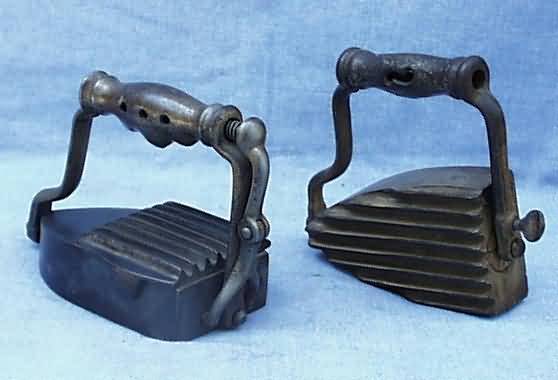
fluting, polishing, glossing, or embossing designs into the fabric. The Carver patent pressing irons pictured here are an example of
this type of iron. These irons were manufactured with a
variety of names such as the Family Laundry Iron, Victor,
Majestic, etc. The rotation mechanism and the door itself as
well as the latch for it are all very fragile on these irons and
often found broken or damaged.
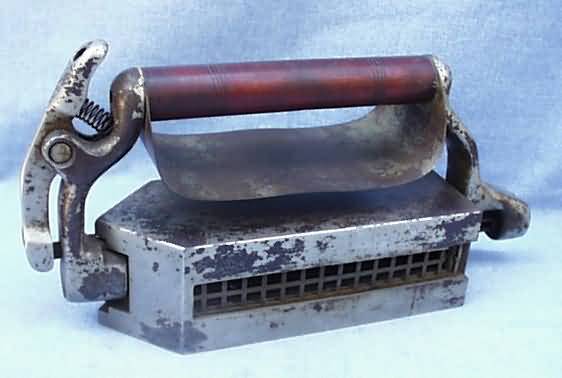
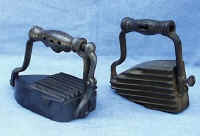
Other revolving antique irons were patented
by inventors named Hewitt and Mann, and two of these unusual antique
combination fluting / pressing irons are pictured here.
Revolving
irons were also used by tailors and in commercial applications.
The unusual revolving iron pictured here was heated by means of natural
gas and weighs a whopping 24 or more pounds and is about 15 inches
long. The weight of the iron was thought to make for an
easier job in the pressing of wool suits and
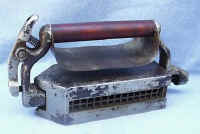 coats and other heavy garments. This huge tailors iron could be flipped over by means
of a handle release so that the second side of the iron could be put
to use.
coats and other heavy garments. This huge tailors iron could be flipped over by means
of a handle release so that the second side of the iron could be put
to use.
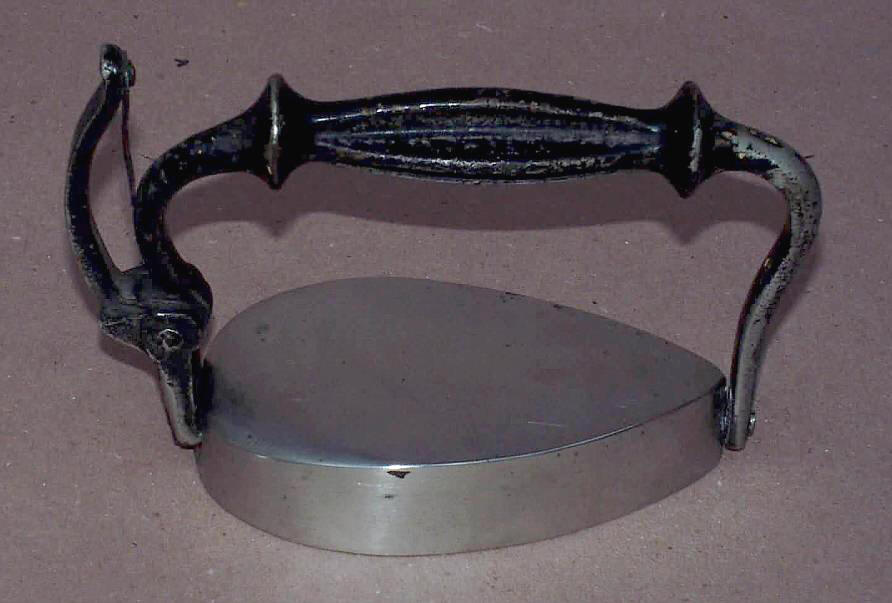
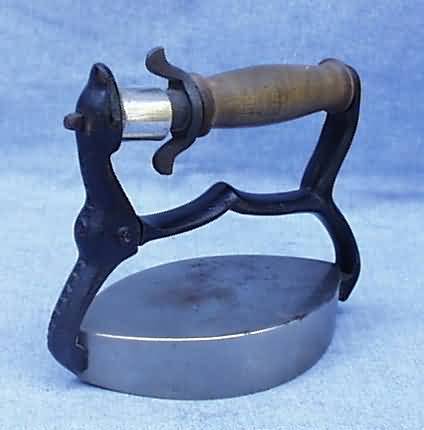
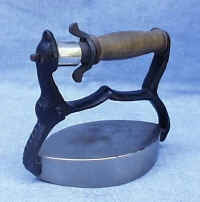
Another unusual revolving pressing iron is the Avery
patent sadiron that is pictured here. This design
permitted the iron to be turned on any of its four surfaces by
loosening the wing nut built into the handgrip. The serious drawback
of this idea was that the handle not only unlocked from the body to
allow it to rotate, it actually released completely from the body if
loosened.
 I
am sure his idea was meant to make life easier, but the truth is it
takes three hands to reattach and tighten the handle in place, and
that is when it is cold. Unusual Patented Irons like this,
that were really "lousy ideas" and were only manufactured for a
short period of time if at all are the type of irons that we are
most interested in buying.
I
am sure his idea was meant to make life easier, but the truth is it
takes three hands to reattach and tighten the handle in place, and
that is when it is cold. Unusual Patented Irons like this,
that were really "lousy ideas" and were only manufactured for a
short period of time if at all are the type of irons that we are
most interested in buying.
Please let us know if you have an antique fluting irons, any type of
vintage fuel iron, antique child-size or salesman sample
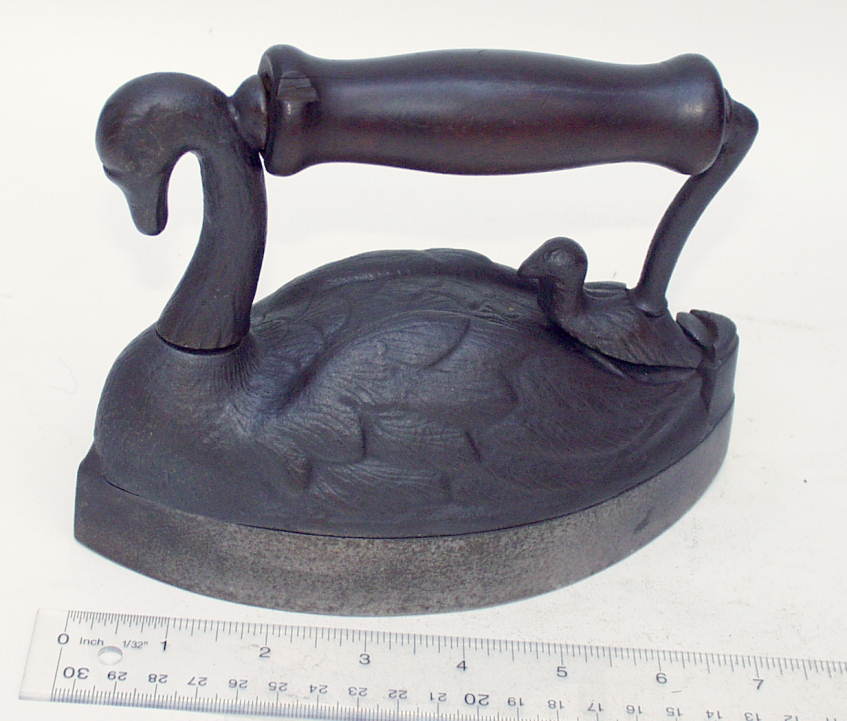
irons, special purpose irons of any sort, figural irons such as
swans, goats, trains, flower irons or leaf irons, early electric
irons (1907 or earlier) or patented antique irons in unusual shapes
that you want to sell.
Please note: The antique pressing irons pictured above are
examples of the caliber, condition and quality that we are
primarily interested in buying.
Please check the Iron Past Sales Archive on the right to see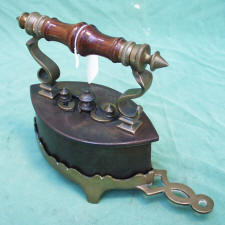 some of
the Irons we have sold in the past.
some of
the Irons we have sold in the past.
If you have similar irons to those seen here
that you are looking to sell, please email us at AntiqBuyer@gmail.com
To see other examples of antique pressing
irons that we currently have for sale please go to our sister site at
www.Patented-Antiques.com and
visit the antique iron sale pages you will find there.
Thank You!
Larry & Carole
Please Note:
The reason
you do not see any doorstop variety irons, or simple / common fixed
handle irons without any
special features, or
 later electric irons from the 50's -70's
discussed here is because we do not buy them or deal in
them.
later electric irons from the 50's -70's
discussed here is because we do not buy them or deal in
them. Later common irons sell for little more than scrap values these days.
If you have these types
of more common sad irons and are looking to sell them simply look at eBay for a while
to see what common
irons actually sell for, if at all. On any given day or week
there are approx. 4K listed there. Take a look, and you will then understand.
 Larry & Carole Meeker