If you have old mine
lighting devices or other mining related antiques that are for sale please contact me at AntiqBuyer@gmail.com with as many details as possible.
I buy, sell, and deal in mining related items
from the California Gold Rush Era and those mining
antiques that are
related to
 the gold and silver mining that went on in this area from the
period spanning roughly from the late 1840's to the first quarter of the
20th century. We are also interested in mining related artifacts
and lighting devices from other parts of the country. Especially
carbide mining lights, oilwick lights, and miners safety lamps.
the gold and silver mining that went on in this area from the
period spanning roughly from the late 1840's to the first quarter of the
20th century. We are also interested in mining related artifacts
and lighting devices from other parts of the country. Especially
carbide mining lights, oilwick lights, and miners safety lamps.
We use to live in the foothills of California, outside of
Placerville and Coloma, where John Marshall first discovered gold in
1849 at Sutter Mill.
It is an area that is rich in history and old lore, but like the gold it
is most famous for, now near depleted of
all antiques related to its rich mining heritage. I am seeking all
sorts of mining related artifacts having to do with this historic era and locale for
inclusion on our antique sales pages at
www.Patented-Antiques.com.
Below I will briefly discuss and picture a few
mine lighting devices and give you a
general outline of the sorts of mining related antiques we are interested in.
Mine Lighting
Lighting in mines was both a vital
 necessity and dangerous proposition. Through the years several different types of mine lighting evolved, and then
disappeared. After the introduction of electricity and battery powered
lighting most live flame related ideas were obsolete and relegated to the realm of
collectability. The use of live flames from candles used in candlesticks,
oil in oilwick lamps, carbide lamps, or even the light provided by
Safety or Davey lamps came to an end.
necessity and dangerous proposition. Through the years several different types of mine lighting evolved, and then
disappeared. After the introduction of electricity and battery powered
lighting most live flame related ideas were obsolete and relegated to the realm of
collectability. The use of live flames from candles used in candlesticks,
oil in oilwick lamps, carbide lamps, or even the light provided by
Safety or Davey lamps came to an end.
All forms of earlier
mine lighting are of interest. From the earliest miners candlesticks, to candlesticks that have unusual patented
features, or examples with ornate file work or other decoration on them.
There are so many different variations that books have been written on the
subject. There is also a large reference book covering all forms of Mine
Lighting in general by a fellow named Pohs. It is considered the bible in
the field of mine light collecting.
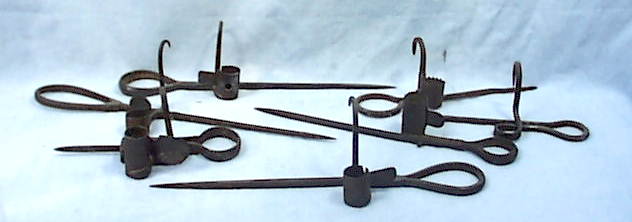
Miners Candlesticks can be marked with
the maker or mine name. Candlesticks were often
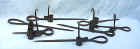 made by blacksmiths and so there are many
many unique and different examples that can be found. Some are very
crude and utilitarian, while others are
superb pieces of
workmanship and
are considered pieces of art. Unusual candlesticks can have fuse
cutters
built in to them, or can fold up to be more compact, or even those that
come apart (known as take-downs) for easier transport and storage.
made by blacksmiths and so there are many
many unique and different examples that can be found. Some are very
crude and utilitarian, while others are
superb pieces of
workmanship and
are considered pieces of art. Unusual candlesticks can have fuse
cutters
built in to them, or can fold up to be more compact, or even those that
come apart (known as take-downs) for easier transport and storage.
There are also
examples with different means to hold the candle, or candlesticks that have storage
area for matches, and even one variety or type that has an
area in the loop handle to try and hide a little bit of gold from the mine owners on the way out of the
mine. These are called High Graders. Values for
candlesticks can range from as low as 25.00-50.00 for common generics to
thousands for rare patented examples or other one of a kind examples.
There are fakes in the world to contend with as well.
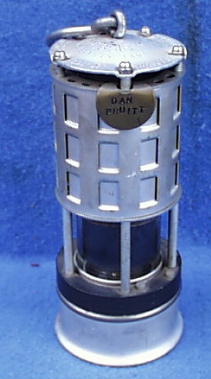
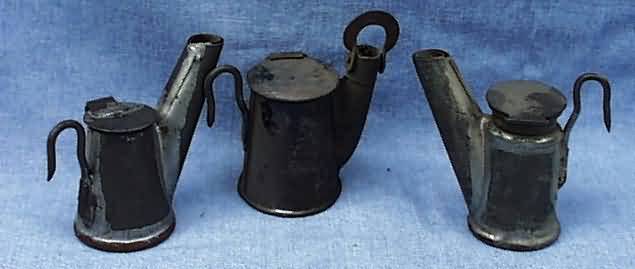
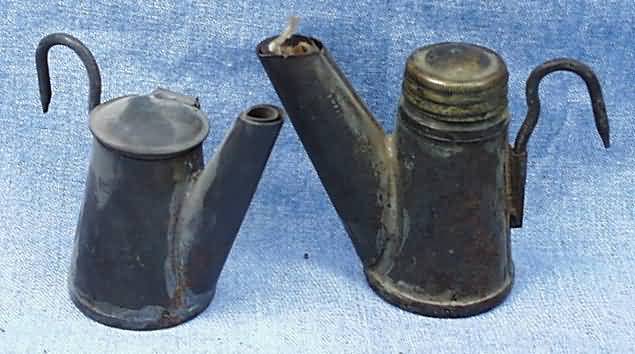
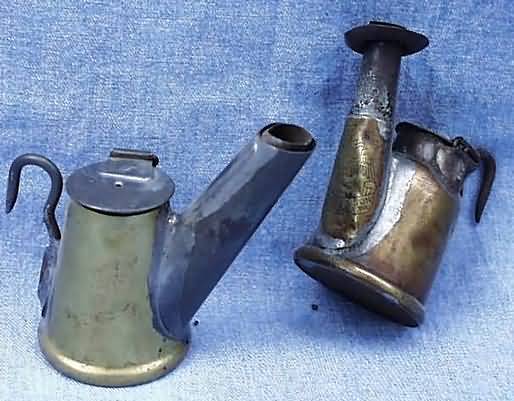
Early mine lighting devices
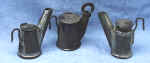 known as oil wick
lamps or teapots are associated with coal mines. Oil wick lamps came in a
myriad of different materials, shapes, sizes, and designsExamples made of different
materials from the normal ---- tin or
known as oil wick
lamps or teapots are associated with coal mines. Oil wick lamps came in a
myriad of different materials, shapes, sizes, and designsExamples made of different
materials from the normal ---- tin or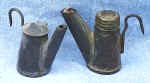 sheet steel, usually command a
premium. Lamps made from
materials such as aluminum, brass, copper, cast iron
and other materials are
eagerly sought. Some of these antique lighting
devices have interesting designs etched into them, and others have ID plaques from the mine, or from mining organizations such as
the Mineworkers of America - MWA. . Those that are different from
the norm are of particular interest and can still bring good money while
common or typical ones sell for $50.00 or less.
sheet steel, usually command a
premium. Lamps made from
materials such as aluminum, brass, copper, cast iron
and other materials are
eagerly sought. Some of these antique lighting
devices have interesting designs etched into them, and others have ID plaques from the mine, or from mining organizations such as
the Mineworkers of America - MWA. . Those that are different from
the norm are of particular interest and can still bring good money while
common or typical ones sell for $50.00 or less.
If you have any old mine
lighting devices or other mining related antiques that you want to sell contact me at AntiqBuyer@gmail.comwith as many details as possible.
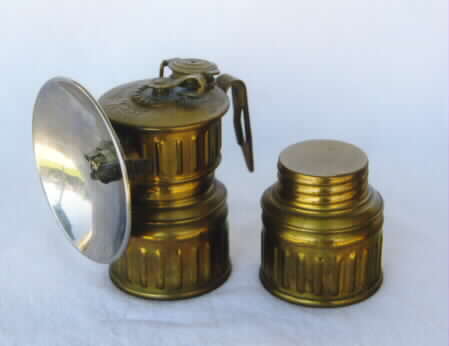
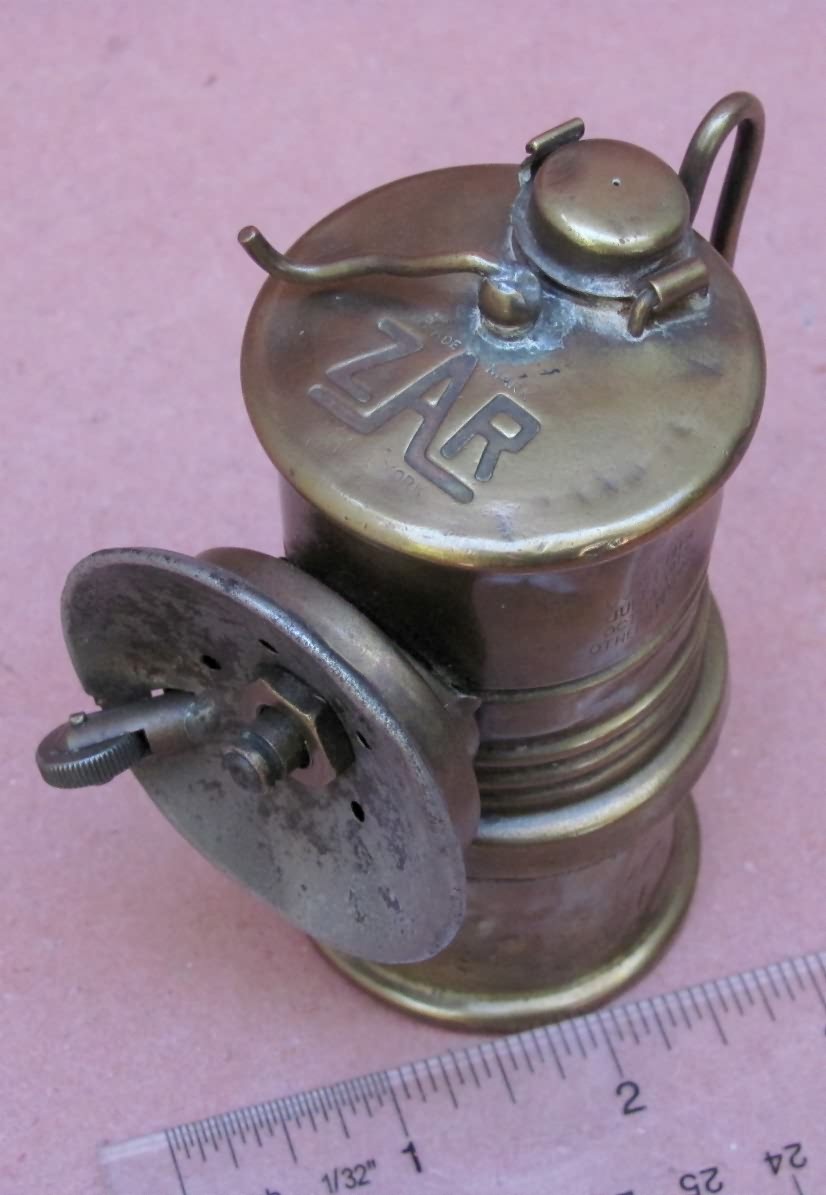
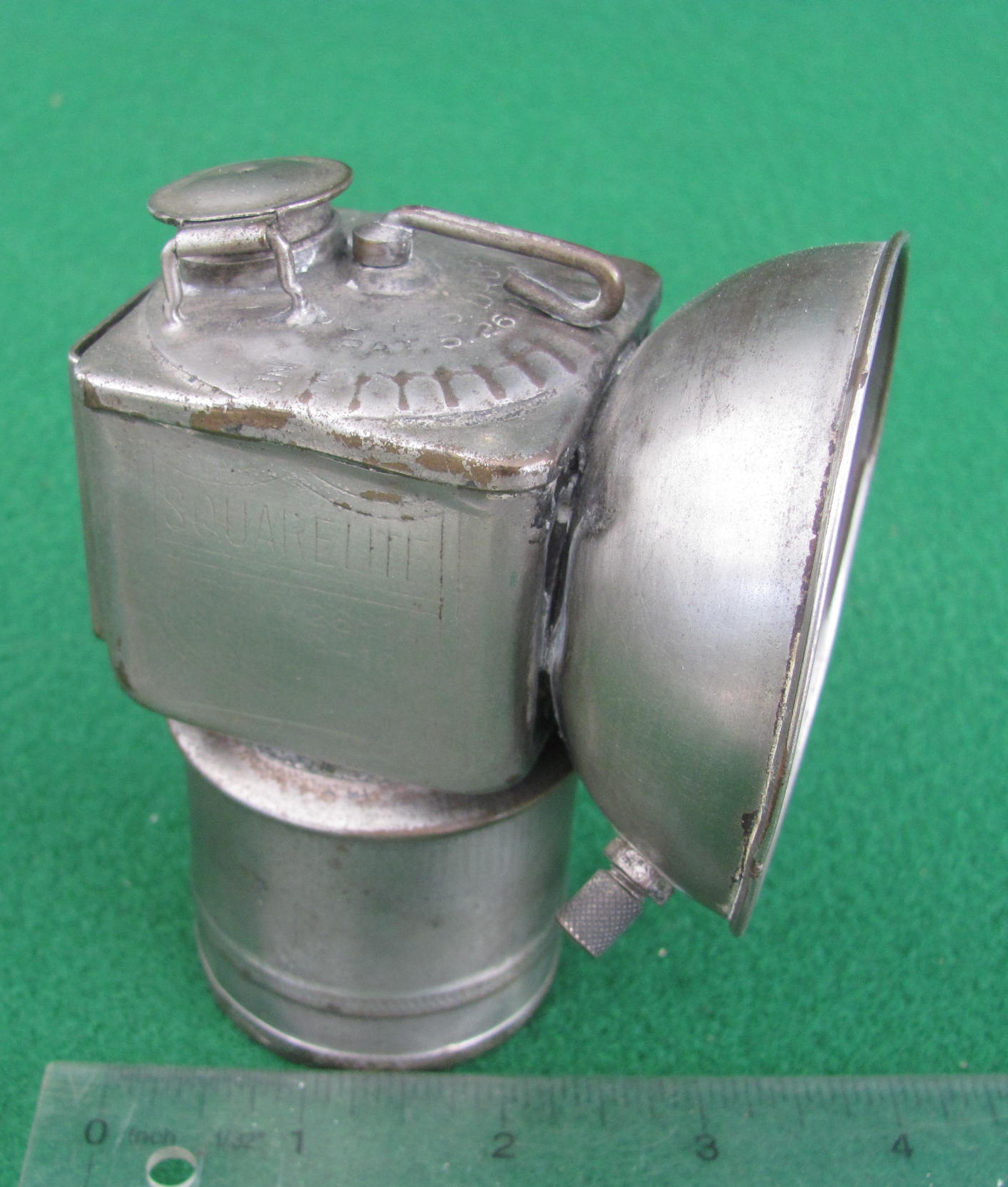
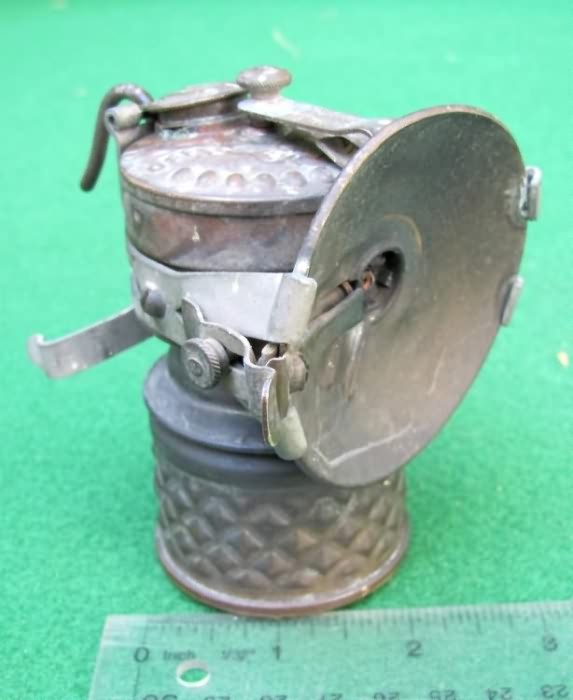
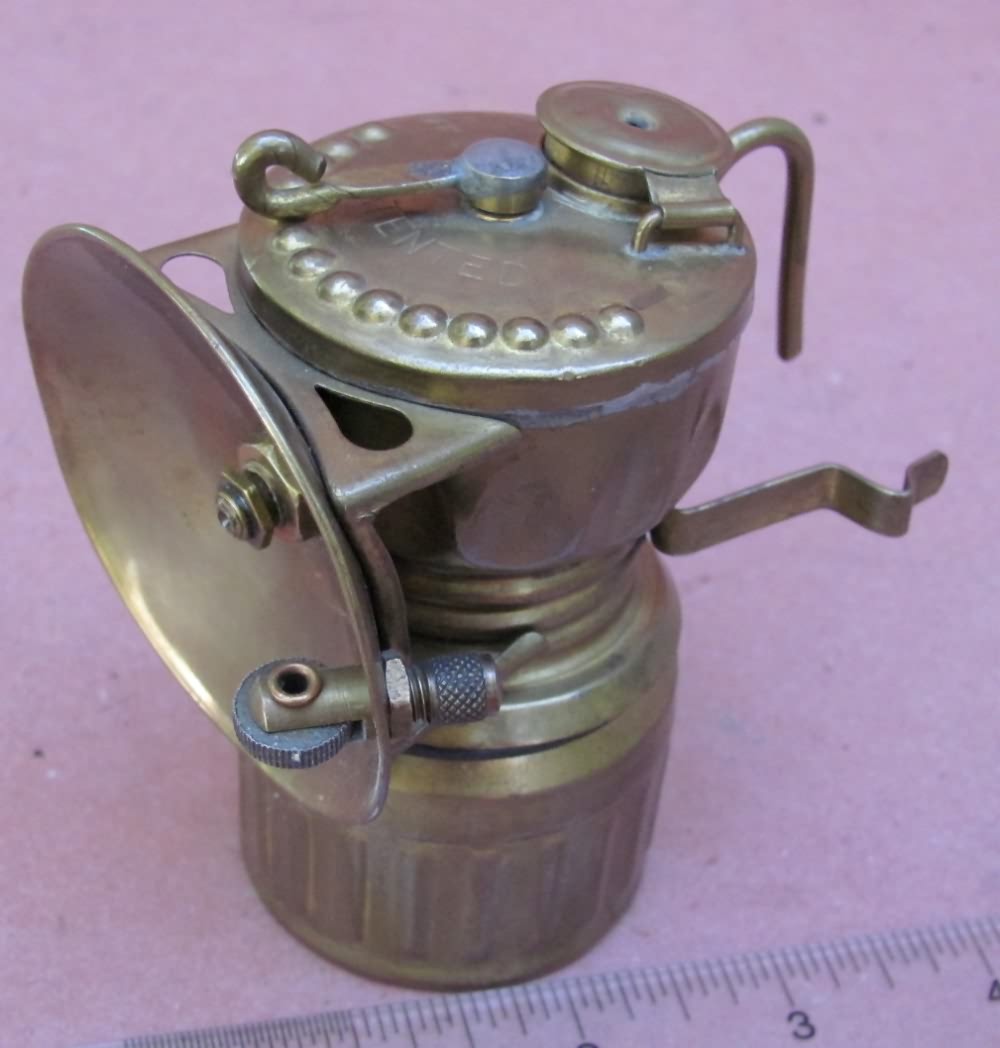
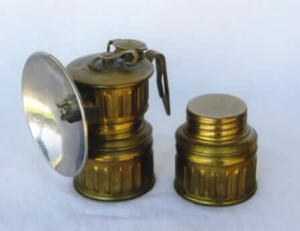
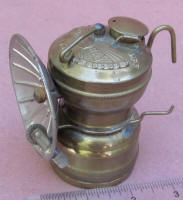
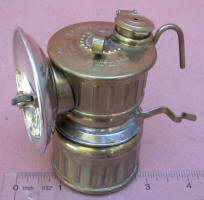
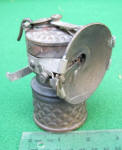
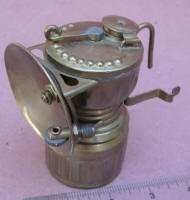
Carbide mining lamps were the next source of light to be
introduced. It was a means still being used long after electrical
lighting was available, but for various reasons was still being developed and used in mining.
This source of light was relatively
short lived but during their heyday, near the turn of
the last century and
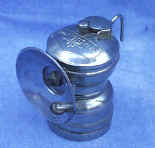 up until about the 20's there were many
different varieties patented and put on the market.
Some of these lamps are quite rare
today, while others such as those by the three most common
makers---Justrite,
Auto-Lite, and Guys Dropper---can be found in nearly every antique shop or at
every flea market in
the country on any given day for $20.00 - $40.00 or so. You can even find
modern day Butterfly brand carbide lamps that are made in Hong Kong or China.
up until about the 20's there were many
different varieties patented and put on the market.
Some of these lamps are quite rare
today, while others such as those by the three most common
makers---Justrite,
Auto-Lite, and Guys Dropper---can be found in nearly every antique shop or at
every flea market in
the country on any given day for $20.00 - $40.00 or so. You can even find
modern day Butterfly brand carbide lamps that are made in Hong Kong or China.
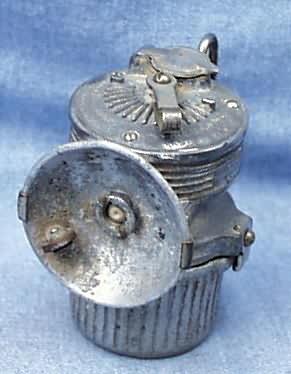
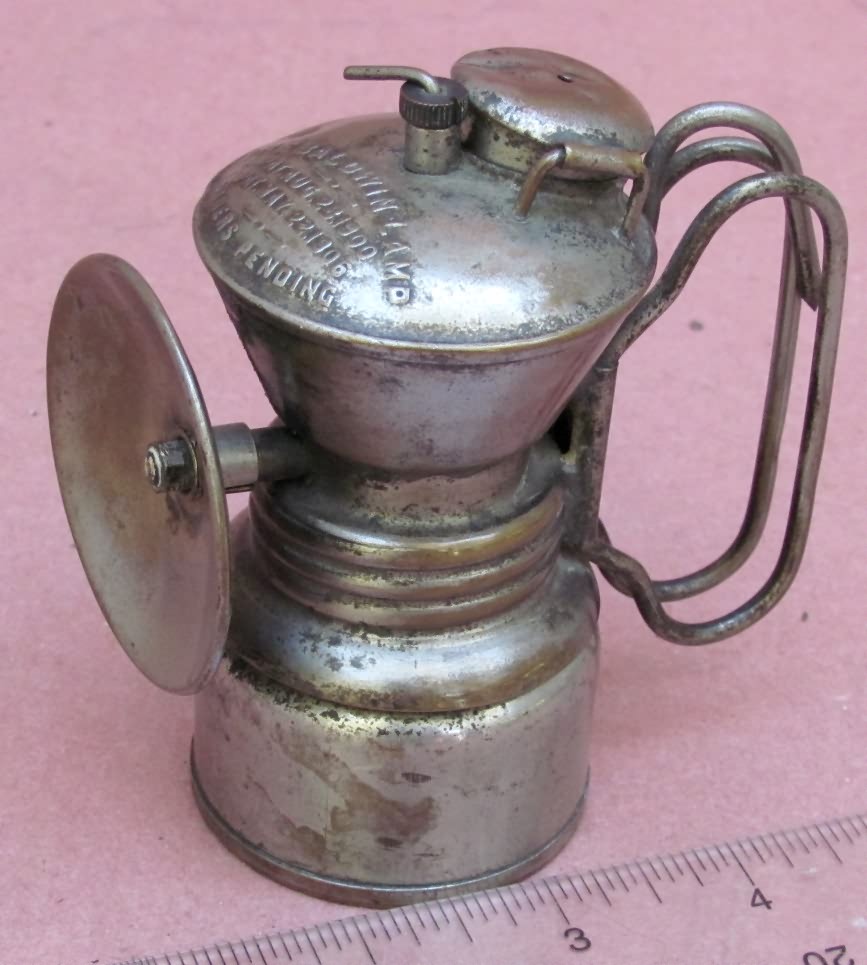
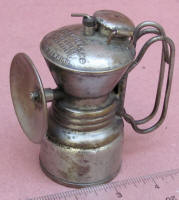
There are scores of other much less common names available. Pictured on the left is an example of a fairly hard
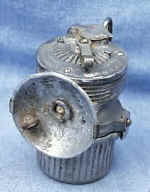 to find
carbide that
is made of aluminum called the Lumi-Lamp. These aluminum carbide lamps, unless
unfired
or unused, are usually in rough
condition because of the tendency to corrode from the effects of the carbide
gas, moisture, and the corrosive nature of the mixture and the gas that they
produced when the water was added to the carbide to generate the acetylene
gas that was then lit to produce the light. The basic
idea was right, looking for a material that was strong, light, and would not
rust, but I suppose they did not count on the nature of the gas that was
going to be created, and obviously the choice of material was not studied enough.
to find
carbide that
is made of aluminum called the Lumi-Lamp. These aluminum carbide lamps, unless
unfired
or unused, are usually in rough
condition because of the tendency to corrode from the effects of the carbide
gas, moisture, and the corrosive nature of the mixture and the gas that they
produced when the water was added to the carbide to generate the acetylene
gas that was then lit to produce the light. The basic
idea was right, looking for a material that was strong, light, and would not
rust, but I suppose they did not count on the nature of the gas that was
going to be created, and obviously the choice of material was not studied enough.
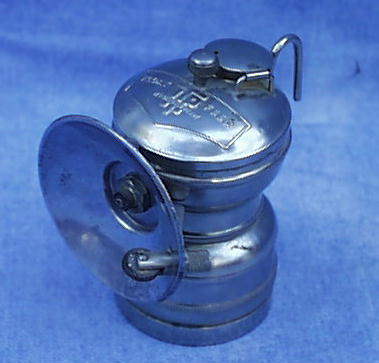
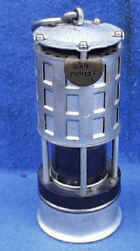
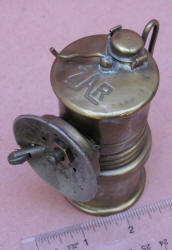
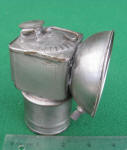
Just above is a nickel plated lamp marked T I P that is a bit different as well.
That really stands for It's Trouble Proof.
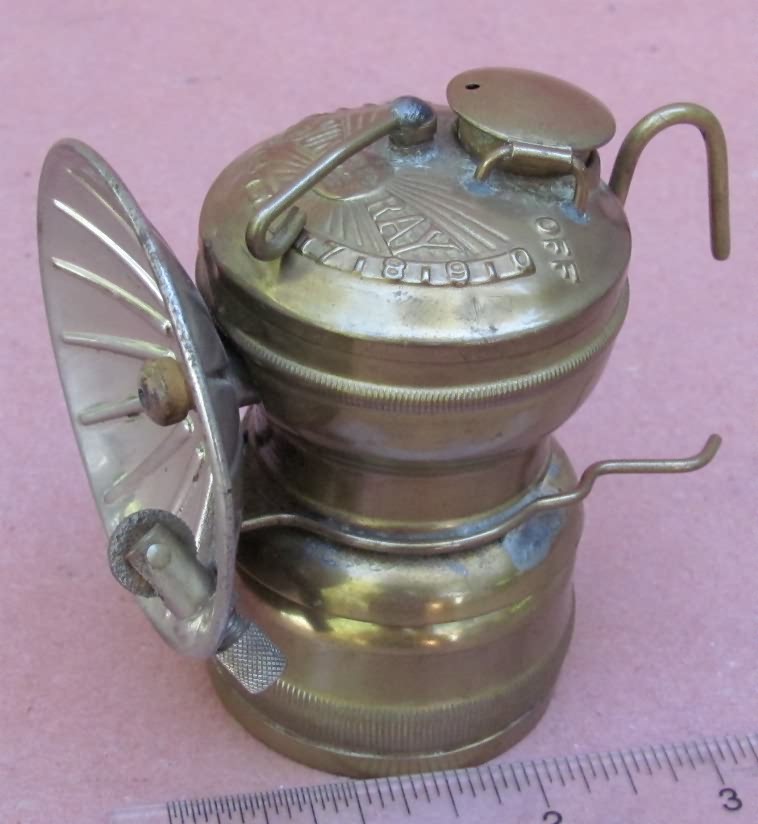
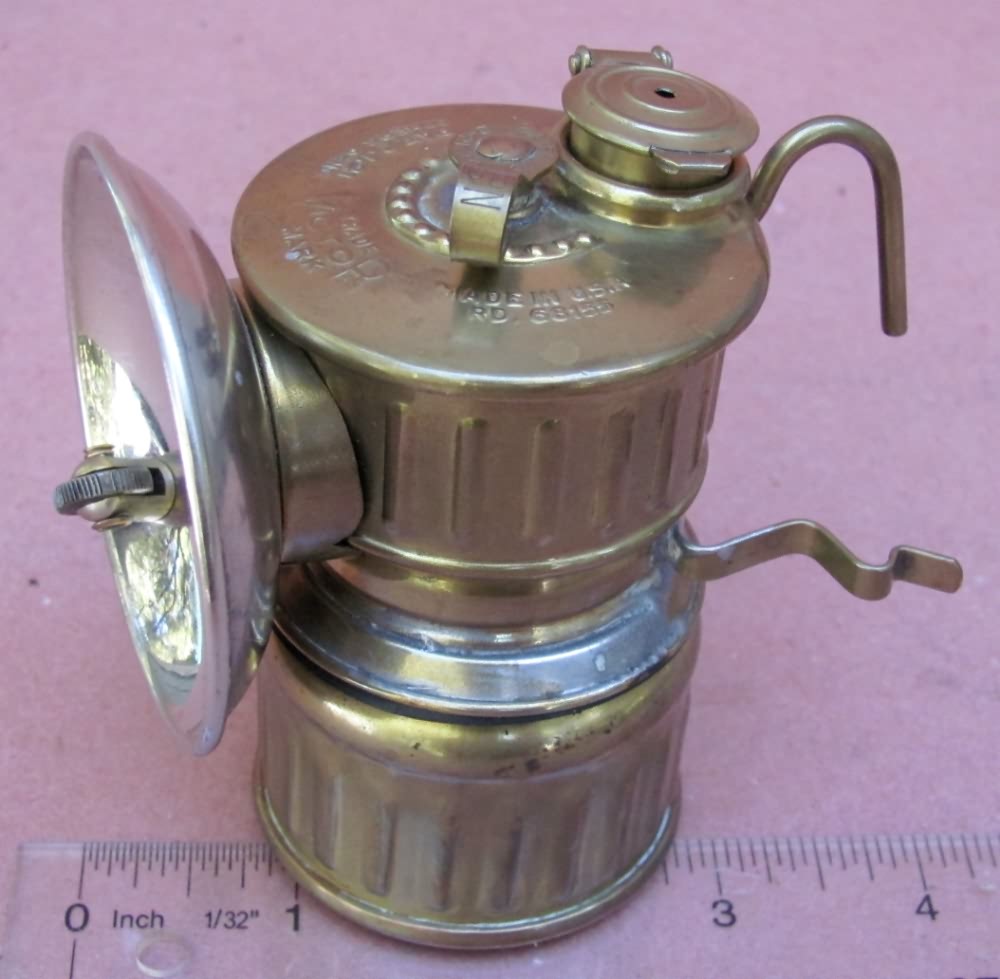
Names of some other good carbide lamps are Wolf, Anton, Funk Bros, What Cheer, X-ray, Victor, and many
others. Some of these lamps can sell for many hundreds of dollars if
in nice condition.
Other
mining related antiques that we are interested in buying would
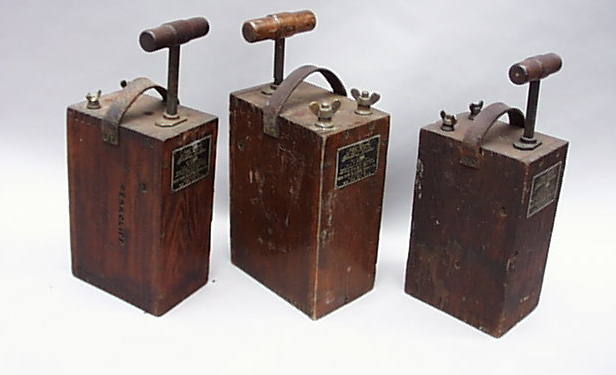
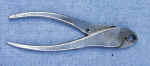 be dynamite
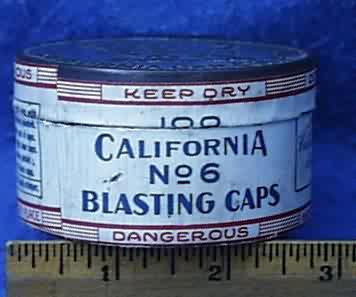
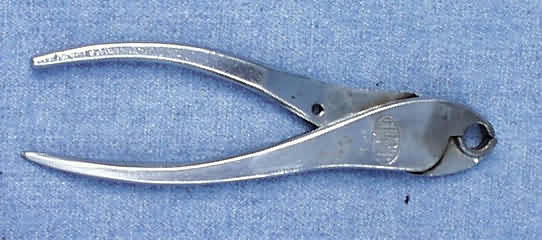
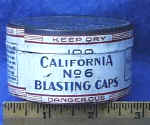
boxes, dynamite blasting boxes, what are referred to as dynamite cap tins, as well as
dynamite crimpers, and other blasting / mining related
antiques. I am also interested in antique surveying tools that
are related to mining such as unusual plumb bobs or plummets, dip needles
or compasses, as well as mining transits with auxiliary scopes,
inclinometer levels, and other devices used in the construction
and layout of mines.
be dynamite
boxes, dynamite blasting boxes, what are referred to as dynamite cap tins, as well as
dynamite crimpers, and other blasting / mining related
antiques. I am also interested in antique surveying tools that
are related to mining such as unusual plumb bobs or plummets, dip needles
or compasses, as well as mining transits with auxiliary scopes,
inclinometer levels, and other devices used in the construction
and layout of mines.
The above mining related antiques are examples of the
caliber, condition and quality of these types of antiques that we are primarily interested in. To see some examples of
past sales in this category please go to our
Mining Past Sales Page
If you have quality antique mining
related antiques and Old West related antiques that you want to sell, please contact us at
AntiqBuyer@gmail.com providing me with as many details as possible. Thank you!!
To see many other examples of mining or old west related antiques that we
currently have for sale, please go to our sister site
at www.Patented-Antiques.com and
visit the numerous sale pages you will find there.
Thank you!!
Larry & Carole
 Larry & Carole Meeker