We Buy or Can Help You Sell
Patent Models,
Antique Salesman Samples and Models of Antique Farm
Equipment
and related Farm Antiques!!
Antique salesman samples or patent models of
farm machinery, windmills, and other vintage farm implements and tools used on the farm are of
 special
interest to us. These antique salesman samples are currently very popular,
demand is high, and their values have skyrocketed in the past few years.
special
interest to us. These antique salesman samples are currently very popular,
demand is high, and their values have skyrocketed in the past few years.
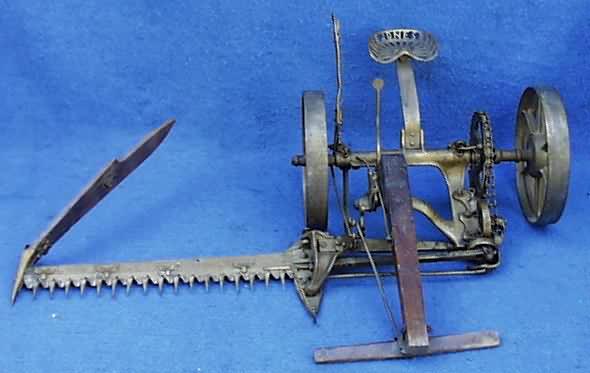
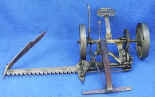
Just above is a very detailed and well constructed
salesman sample / model of a Jones Field Mower (the name can be seen in
the cutout letters in the cast iron seat). I have seen other versions
without the cut-out seat, and the name and patent info on the main
frame.
We would be interested in buying any similar form model or salesman
sample. Please contact us at AntiqBuyer@gmail.com .
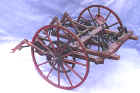
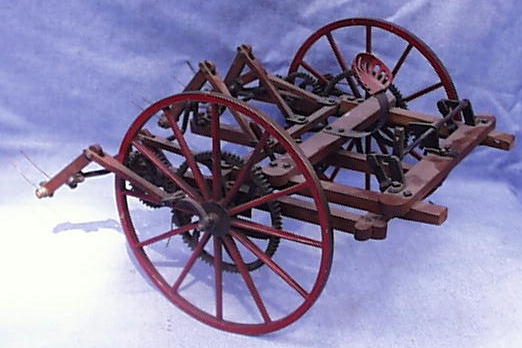
On the right is a model or salesmen sample of
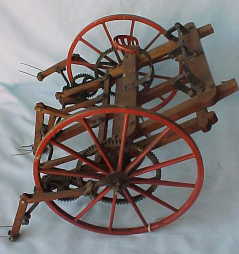
a Hay Tedder. This farm machine sample has a series
of articulated wire prong arms that move up and down, and in and out, at
the same time. This salesman
sample hay tedder exhibits a
high degree of craftsmanship and detail.
Hay Tedders were used to stir or fluff mown hay as it was drying in the
field before it was baled.
This model was purchased from one of the largest and best known auction
houses in America. It was an example of the
right piece being sold in the wrong venue at the wrong time. It
sold for under 500 that day. In today's market it could sell for
up to 10x that.
Models such as this were made to show the rural farmer the latest in
technology and were carried around by traveling salesmen or used as
counter or
storefront window displays in an attempt to persuade the farmer that he
needed an implement like it. The detail and precision exhibited in these different farming related patent models, farm machinery models or
salesman samples of farm machinery would have been sure to impress the
early farmer when the traveling salesman pulled it out of its
case.
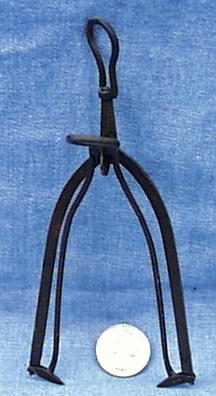
The device on the left is a salesman
sample or model of a Hay Fork from the late 1800's.
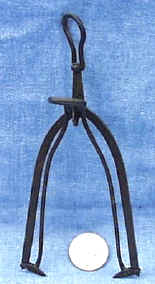 There is patent info engraved in stylistic font on the legs telling the important
details such as the date and the inventor's name. This is one of those
pieces that looks like a patent model, but because of the information that
is inscribed into the arms on
the actual piece, and
lack of papers or patent tag, it is in reality a salesman sample or model for other
purposes rather than the actual patent model that was submitted to the US Patent Office
for a patent.
There is patent info engraved in stylistic font on the legs telling the important
details such as the date and the inventor's name. This is one of those
pieces that looks like a patent model, but because of the information that
is inscribed into the arms on
the actual piece, and
lack of papers or patent tag, it is in reality a salesman sample or model for other
purposes rather than the actual patent model that was submitted to the US Patent Office
for a patent.
It seems too small to have been very impressive for a salesman to be
carrying around to show to prospective customers, but the detail and
construction of this little hay fork model are very nice, and whatever
the original intended purpose, it is evident that the creator was proud
of his invention / device, and wanted the viewer to be impressed as
well. This exact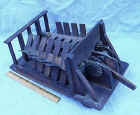 design of this miniature hay fork can be found
full size, and the patent is real, so the idea was in production and it
was utilized.
design of this miniature hay fork can be found
full size, and the patent is real, so the idea was in production and it
was utilized.
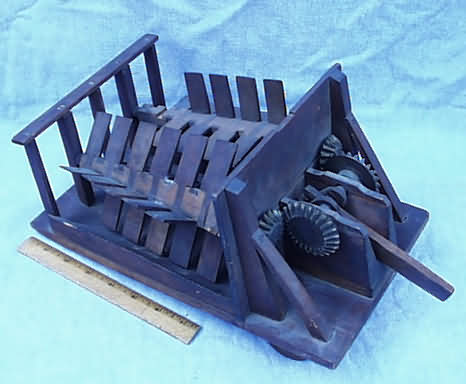
Sometimes you find things that you just know are patent models either
from experience, circumstance, or by the size and construction details,
intuition, or gut feeling. Without a tag
or other
documentation it is near impossible to prove in most
cases.
I have been to auctions where tables full of tagless patent models were
offered.
This model looks to be
some sort of a farm machine for separating seed.
Other guesses were a sort of water turbine. I know it is a patent
model, but could never prove it, even if I found
 the
patent info.
the
patent info.
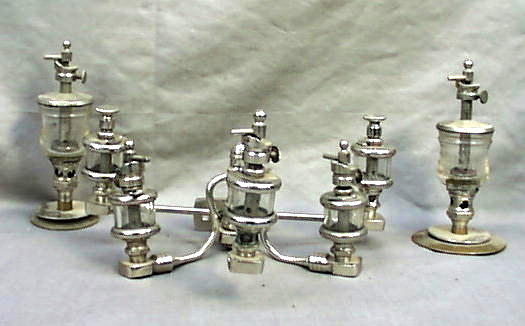
On the left is a salesman sample of different size and style oilers for
machinery for things like early one lung gas engines or steam engines.
I have had and sold a number of models like you see
above, and more examples are shown in the past sales archives linked
below and on the right.
Such salesman samples and models
are desirable and interesting pieces that I would love to buy outright if you have one or know where some are.
Click this link if you would like to see past sales results
for
Salesman Sample Farm
Machines. Past Sales Results for other types of Farm Related Antiques
are linked on the right under tools.
If you have similar antiques you would like to sell,
please contact us at
AntiqBuyer@gmail.com with details.
Farm Tools / Wrenches & Other Patented Devices from the Farm
Rope Winders
We are also active dealers in other unusual antique patented and
mechanical devices used on the farm, in the
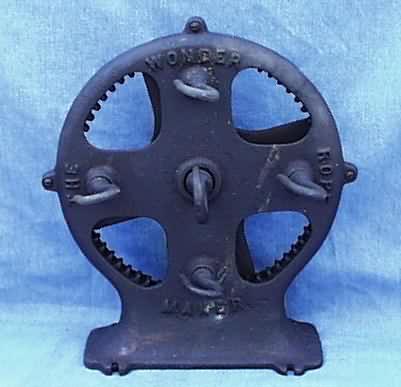
 fields and farmhouses of early rural America. Antique and vintage farm related devices like rope winders / makers are
a good example. There are all cast iron versions and all wood primitive
versions that can be found as well. They are 3 strand, 4 strand, 5
strand, and more versions that can be found. I have seen collections
with at least 50 different versions of rope makers in them.
fields and farmhouses of early rural America. Antique and vintage farm related devices like rope winders / makers are
a good example. There are all cast iron versions and all wood primitive
versions that can be found as well. They are 3 strand, 4 strand, 5
strand, and more versions that can be found. I have seen collections
with at least 50 different versions of rope makers in them.
Click this link if you would like to see past sales results
for
Rope Winders /
Makers. Past Sales Results for other types of Antique farm
related tools
are linked on the right.
Hand Held Corn Shellers
I am also interested in buying antique hand held corn shellers. There are so many
different shellers available and so much interest that a book
has been written on them. Shellers come in a myrid of
 different
sizes shapes and forms. The smallest of these are known as
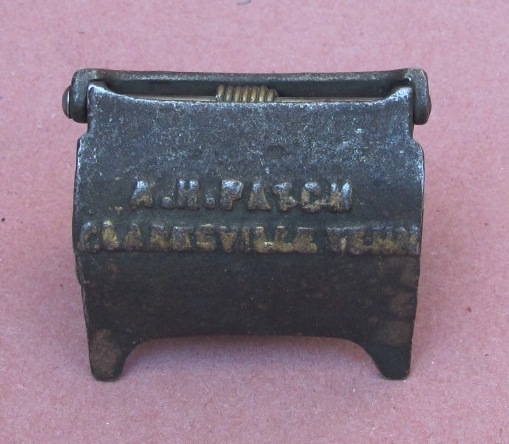
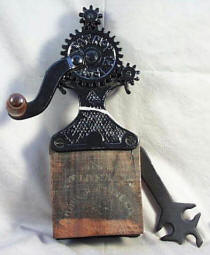
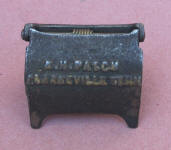
popcorn shellers. One hard to find version is the A. H. Patch
popcorn sheller pictured on the left. A. H. Patch made a number of other size
and design corn shellers as well.
different
sizes shapes and forms. The smallest of these are known as
popcorn shellers. One hard to find version is the A. H. Patch
popcorn sheller pictured on the left. A. H. Patch made a number of other size
and design corn shellers as well.
Some table-top or bench mounted corn
shellers are also of interest. We do not typically deal in large floor model corn shellers because of the size and weight factors that are involved.
There are a few of these large early shellers that are very rare. One example would be the corn sheller patented by
the prolific inventor Rufus
Porter a designer who also made / designed a great inclinometer /
level.
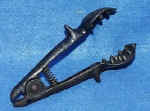
Antique hand
held shellers like the 50 Cent Sheller pictured on the right are a good example of the type
sheller we seek. The name
of this cast iron squeeze type sheller coming from the
fact that is what it cost new and that info is cast into the body. It is
from Ohio and dates from the late 1800's.
Hand held corn shellers come in a variety of shapes and sizes, and
some are hard to recognize. Occasionally people try and sell things like
fish scalers, meat tenderizers or shoe shine brush handles as corn shellers.
Hand corn
shellers were generally used to separate seed corn from the cob for seed corn as opposed to
feed corn. It was a process where you saved the best corn kernels from an ear of corn
for next years crop as opposed to larger shellers
used for
feed corn where you just feed the whole ear into the opening and the
machine would strip all the kernels for feed. The earliest
shellers were patented
and manufactured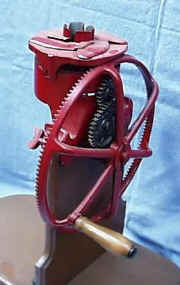 on the
East coast, and later as farming spread to the Midwest many shellers were
introduced and patented from that region as well. They are such a
popular and valuable collectible that there are reproduction shellers being made and
on the
East coast, and later as farming spread to the Midwest many shellers were
introduced and patented from that region as well. They are such a
popular and valuable collectible that there are reproduction shellers being made and
 offered for sale.
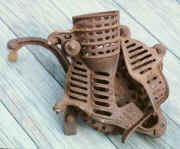
Of the larger table mounted varieties there are
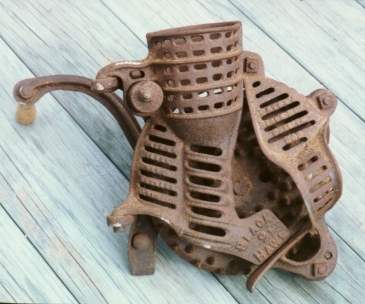
several very common ones, like the Black Hawk pictured on the left,
and the similar looking Red Devil. Larger corn shellers of interest would include shellers with
names like the Right Speedy or the Peerless, or ones that are much
smaller and aimed at popcorn size kernels. The red sheller to the
right is an example of a desirable form larger mechanical corn sheller.
We are
also interested in buying authentic
windmill weights, steam whistles, unusual adjustable
wrenches and
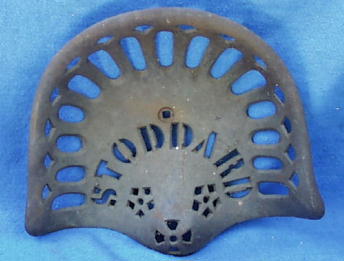
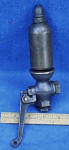 buggy wrenches. We buy cast iron tractor seats with cut out names or cast
out in the
buggy wrenches. We buy cast iron tractor seats with cut out names or cast
out in the
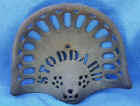 seat
like the Stoddard seat shown on the left.
We buy & sell a lot of other types of vintage and antique tools, stove pipe warmers,
pressing iron trivets, that have this cutout letters feature within the casting.
seat
like the Stoddard seat shown on the left.
We buy & sell a lot of other types of vintage and antique tools, stove pipe warmers,
pressing iron trivets, that have this cutout letters feature within the casting.
Click this link if you would like to see past sales results
for
some of the hand held and table mount
Corn Shellers we
have handled.
If you have similar antiques you would like to sell,
please contact us at
AntiqBuyer@gmail.com with details.
NOTE: I do not buy full size farm
implements, or floor model shellers, I simply do not have the room or means, and have little or no
information about them.
If you have farm related antiques described above to sell please
contact us. If you are looking to buy these types of antiques,
please visit our sister site
www.Patented-Antiques.com where we conduct our internet antique sales from.
Antique
Wrenches
Buggy - Patented - Mechanical
- Quick Adjust - Cutout & More
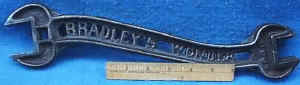
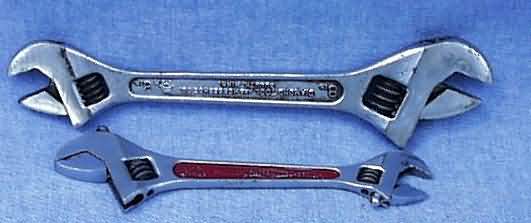
We buy unusual patented antique wrenches that
date from the early to mid 1800's right up to about 1930 or so.
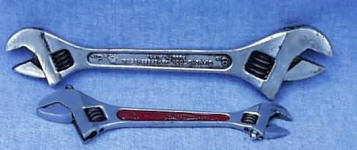 We
also buy antique adjustable buggy wrenches with names embossed
in them or with cutout letters.
We
also buy antique adjustable buggy wrenches with names embossed
in them or with cutout letters.
We are interested in patented pipe or monkey wrenches that
have unusual quick adjust features from the
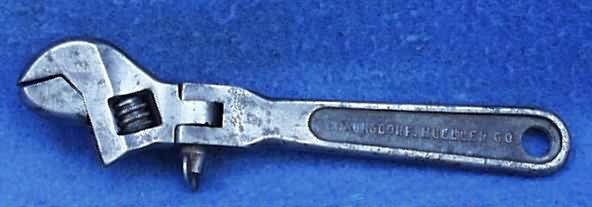
mid 1800's to just after the turn of the century. We also buy small
vintage 4" and 6" adjustable bicycle wrenches that have unusual
patented features such as pumps or spoke tools incorporated into the
design. And finally
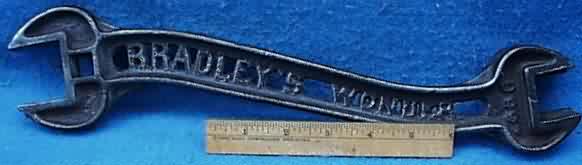
we are interested in any and all wrenches that have names
"cutout" in the handle like the International Harvester or Bradley's Wonder
cutout wrenches pictured.
If you have antique wrenches that you want to sell please contact us at
AntiqBuyer@gmail.com
with complete details including a picture, the size and any other written
information that is on them, and we will get back to
you ASAP
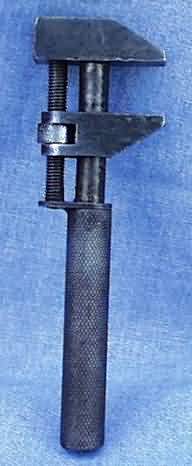
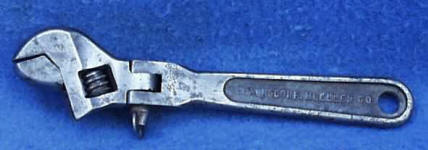 We like
antique wrenches with features like the swivel head feature pictured here. There are a number
of variations on this theme. Wrenches like this can come in sizes from 4" long to 20" or so.
We like
antique wrenches with features like the swivel head feature pictured here. There are a number
of variations on this theme. Wrenches like this can come in sizes from 4" long to 20" or so.
We buy and
sell small bicycle wrenches that date from near the turn of the
century when the bicycle was first being introduced in
America.
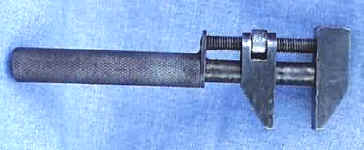
The bicycle wrench above may look like the rest, but it is different with
the adjustment feature on the backside, and has a picture of a high wheel
bicycle logo stamped into the head.
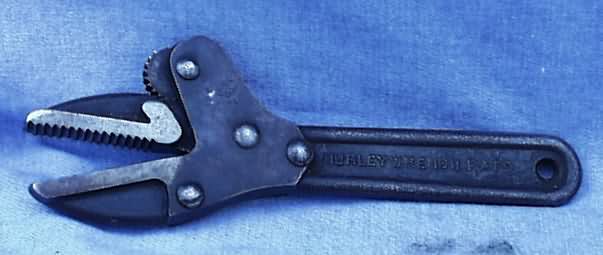
Another
category of vintage wrenches that is of interest and that we are always buying are
commonly referred to as
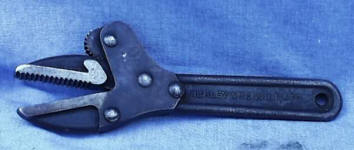 quick
adjusts. Many quick
adjust alligator style wrenches like the one to the left are uncommon.
This particular model is very late (post 1900) and
is from the West Coast. A similar model quick adjust alligator
wrench is named the
Shark.
quick
adjusts. Many quick
adjust alligator style wrenches like the one to the left are uncommon.
This particular model is very late (post 1900) and
is from the West Coast. A similar model quick adjust alligator
wrench is named the
Shark.
Antique
Buggy
wrenches are also of interest.
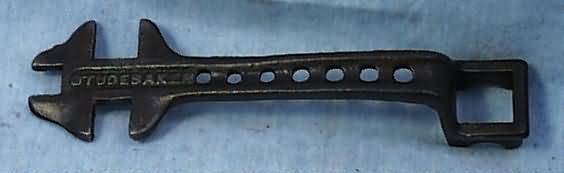
These are usually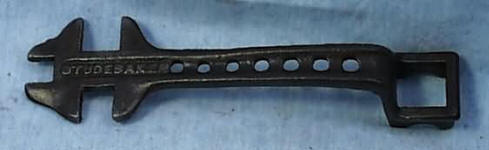 recognizable buy the square nut
holder on one end. There are hundreds of different varieties of these
in both fixed and adjustable models. The fixed one on the right is a
Studebaker, which is from the fellow who first made his fortune
in Placerville, California supplying early miners with his new improved
version of the wheelbarrow.
recognizable buy the square nut
holder on one end. There are hundreds of different varieties of these
in both fixed and adjustable models. The fixed one on the right is a
Studebaker, which is from the fellow who first made his fortune
in Placerville, California supplying early miners with his new improved
version of the wheelbarrow.
Adjustable buggy wrenches come in an array of variations and sizes. We are interested in buggy wrenches that have
any oil can or oiling feature incorporated into their design. Other
desirable designs have twist handles, are lever actuated quick adjusts,
or even self adjusting.
 Another
category of vintage wrenches that are of interest are known as combination
wrenches. Examples abound of these unusual devices with the
most
frequently found being those that have both hammers and wrenches, or drill
/ braces and wrenches, or those that are both a boot
jack and a wrench, or some that incorporate a wrench and a
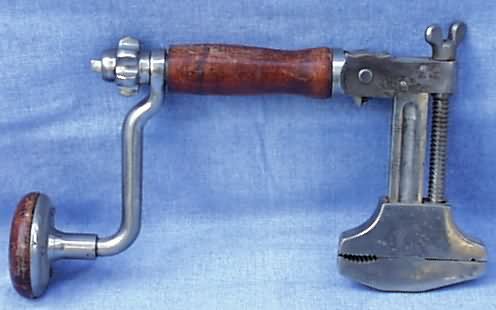
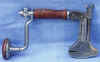
knife in the design. The example on the left is called the Prince,
an unusual patented brace / wrench
which was
patented right near the turn of the century. There are several other
varieties of this wrench that are available the most common being the Lowentraut which you often find just half of as it just pulled apart
instead of being bolted together as this one is.
Another
category of vintage wrenches that are of interest are known as combination
wrenches. Examples abound of these unusual devices with the
most
frequently found being those that have both hammers and wrenches, or drill
/ braces and wrenches, or those that are both a boot
jack and a wrench, or some that incorporate a wrench and a
knife in the design. The example on the left is called the Prince,
an unusual patented brace / wrench
which was
patented right near the turn of the century. There are several other
varieties of this wrench that are available the most common being the Lowentraut which you often find just half of as it just pulled apart
instead of being bolted together as this one is.
If
you have interesting and good condition farm related antiques you want to sell please contact me by email at
AntiqBuyer@gmail.com .
Click this link
if you would like to see past sales results
for
Antique Wrenches. Past Sales Results for other types of Antiques
are linked on the right.
To see farm related and other antiques
that I have for sale now please go to our sister site
at www.Patented-Antiques.com.
and
visit the numerous sale pages you will find there.
 Larry & Carole Meeker