We own
and operate the antique sales website
www.Patented-Antiques.com
in addition to this  informational
website www.AntiqBuyer.com.
It is one of the largest and
best known sources for antique planes and tools on the internet. If you are looking to buy
vintage and antique tools please visit that site.
informational
website www.AntiqBuyer.com.
It is one of the largest and
best known sources for antique planes and tools on the internet. If you are looking to buy
vintage and antique tools please visit that site.
If you have antique woodworking tools similar to those
you see on this page that you want to sell, please contact us at
AntiqBuyer@gmail.com with details and we will get back to
you ASAP.
On this page are a series of pictures and basic information
about types of vintage & antique woodworking
tools and planes that I buy, sell, and deal in. The following pictures of vintage and antique woodworking planes
speak to some of the subtle differences that occur in
antique tools that affect values and prices from a
few dollars to many hundreds of dollars for an antique tool or plane.
They may all look the same upon first glance to
the casual observer but that is not what antique
collectible tools and their values are all about. It is all about
the details.
Rarity & Demand
Condition, rarity, and desirability all
play a part in the value of antique tools.
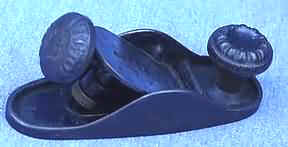
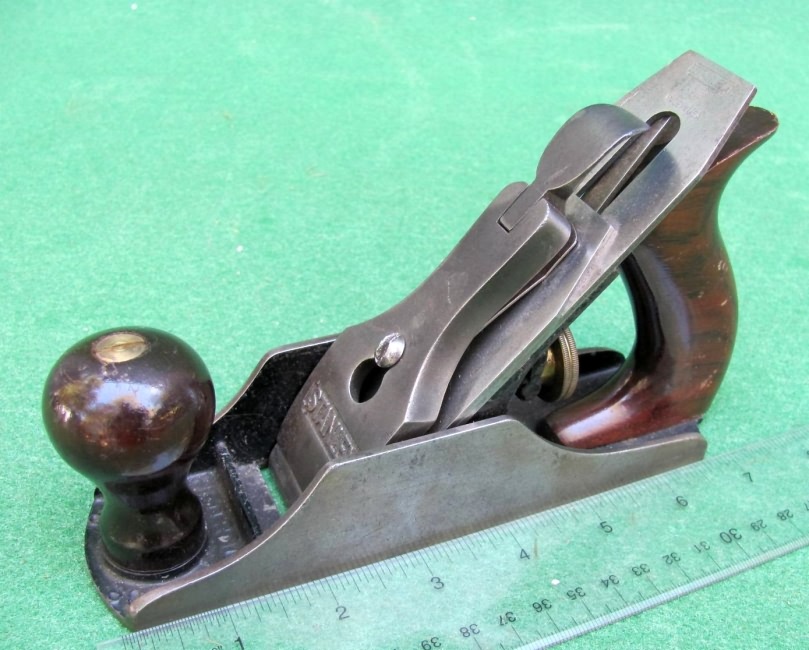
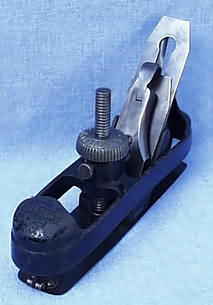
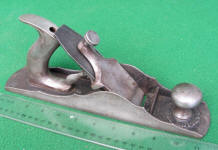
 This first plane shown is known as a Victor
block plane. This plane dates from the late 1800's and is a popular
and desirable collectible plane for several different reasons. It was designed by Leonard Bailey and its value can run from a couple of hundred
dollars to about $1000 depending on condition, finish, and other
subtle differences.
This first plane shown is known as a Victor
block plane. This plane dates from the late 1800's and is a popular
and desirable collectible plane for several different reasons. It was designed by Leonard Bailey and its value can run from a couple of hundred
dollars to about $1000 depending on condition, finish, and other
subtle differences.
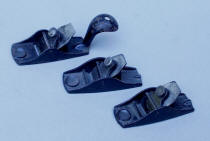
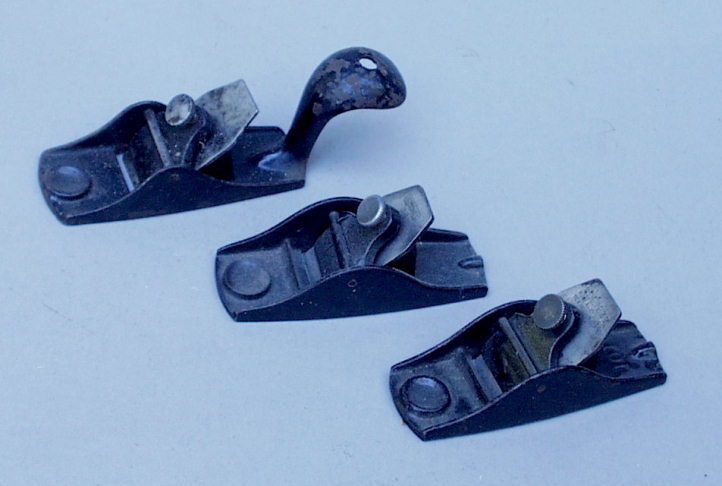
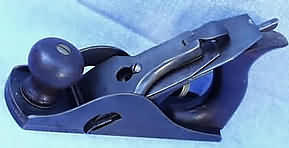
A Stanley #101 block plane
like those on the right, which is about the same size, somewhat
similar in appearance, and can date from just about the same era to
right up to about 1980 have trouble getting to $40.
Whether you are looking to buy or attempting to sell
antique tools,
I can
help. At our sister website
www.Patented-Antiques.com we have many quality antique tools and
other antiques
currently listed for sale, and I am always looking for new
additions to add to those sale pages.
You can check prices of misc. tools we
have sold in the sales archives or past
sales prices / Planes should you be looking for a value for your
planes or tools prior to selling them.
I am always looking to
refresh my stock of antique woodworking tools and planes. If you have antique
tools
and planes you want to sell please contact me at AntiqBuyer@gmail.com
The
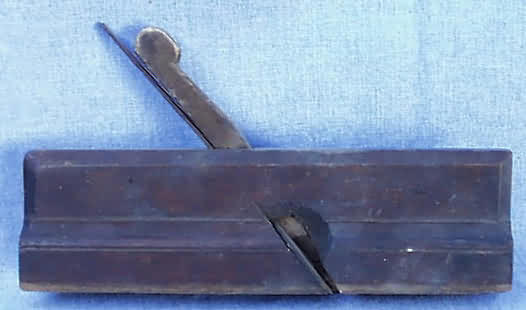
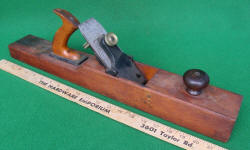
next photo shows an example of a desirable form of wooden molding plane. This plane
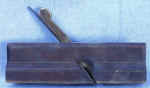 exhibits the
proper characteristics that would lead one to believe that it is
an 18th century American plane dating from the mid to late 1700's.
The clues include the shape of the wedge, the heavy chamfers, yellow birch
as the wood, being over 9 1/2" long, etc.
When properly marked with a documented and desirable maker's names like Chelor or Nicholson, documented 18th century wooden molding plane
makers, a plane like
this can bring
from several hundred to several thousand dollars in the antique tool marketplace.
exhibits the
proper characteristics that would lead one to believe that it is
an 18th century American plane dating from the mid to late 1700's.
The clues include the shape of the wedge, the heavy chamfers, yellow birch
as the wood, being over 9 1/2" long, etc.
When properly marked with a documented and desirable maker's names like Chelor or Nicholson, documented 18th century wooden molding plane
makers, a plane like
this can bring
from several hundred to several thousand dollars in the antique tool marketplace.
The bad news here is that this example, even though
it is made of yellow birch, is in good condition, has a proper looking wedge, and the characteristic heavy
chamfers of a 18th century plane, is unmarked and thus worth $20 or less if you can
find a buyer. I have seen the author of the books on this type of plane selling unmarked examples for $10.00 and less
to move them along at antique tool swaps and auctions.
I sold my 20 best molding planes for approximately $10,000 a number of
years back, and have not had the opportunity to obtain many more as the
supply of rare wooden planes has pretty much dried up. The days of
them coming out of the barn, or from the attic are about over. Again, they
may all look the same to the casual observer, but when it comes time to
sell yours, you better know which is which. It is all in the details.
Changing Values
The antique tool market and the values for a given tool
can change
over time leaving a trail
of short-lived wildly
high prices and sharply spiked price swings in its wake. Way back when, tool
collectors wanted primitive
and hand forged tools.
Tastes changed and next
 everybody wanted patented or manufactured tools and
planes, driving those prices to new highs while prices for those primitive
tools fell. Then folding
rules were hot, or plumb bobs, then marking gauges, levels and
inclinometers had their day, and before that it was wrenches,
and next year it will be ??? and so on.
everybody wanted patented or manufactured tools and
planes, driving those prices to new highs while prices for those primitive
tools fell. Then folding
rules were hot, or plumb bobs, then marking gauges, levels and
inclinometers had their day, and before that it was wrenches,
and next year it will be ??? and so on.
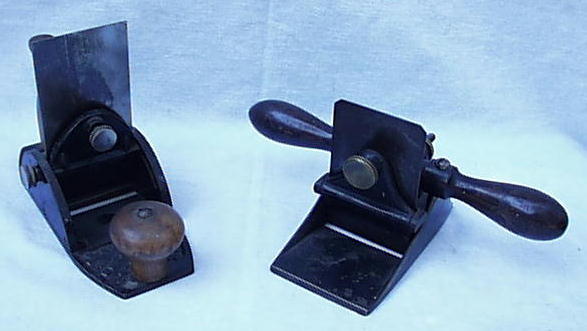
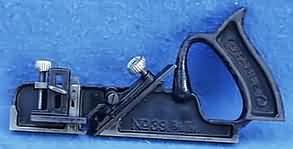
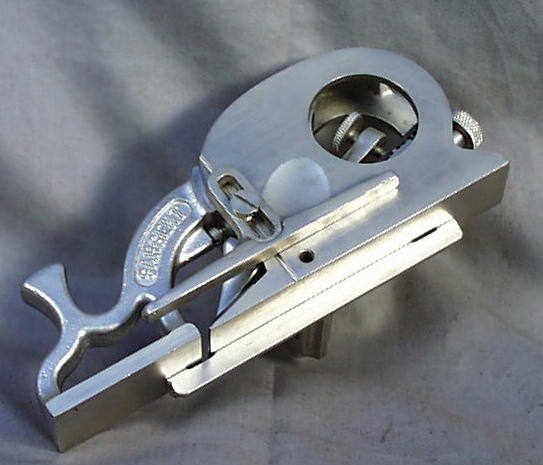
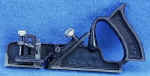
The #39 Dado plane pictured on the right is prime examples of patented metallic specialty
planes offered by Stanley. # 39s can be had in 2022 for
less than they bought 15-20 years
ago during the heyday of Stanley plane collecting.
There are examples of patented antique planes and other woodworking tools that
are not worth half of what was paid for them 20 years ago, and others that are bringing
10-20 times or more than what they used to back
then.
It is all in the details, and knowing what is "hot" or
desirable now. Added to that, there is no telling what will be hot
or desirable next year.
Stanley Bedrock Planes
The next pictures are some more examples of popular and desirable patented
metallic planes that we typically deal in and are always looking for.
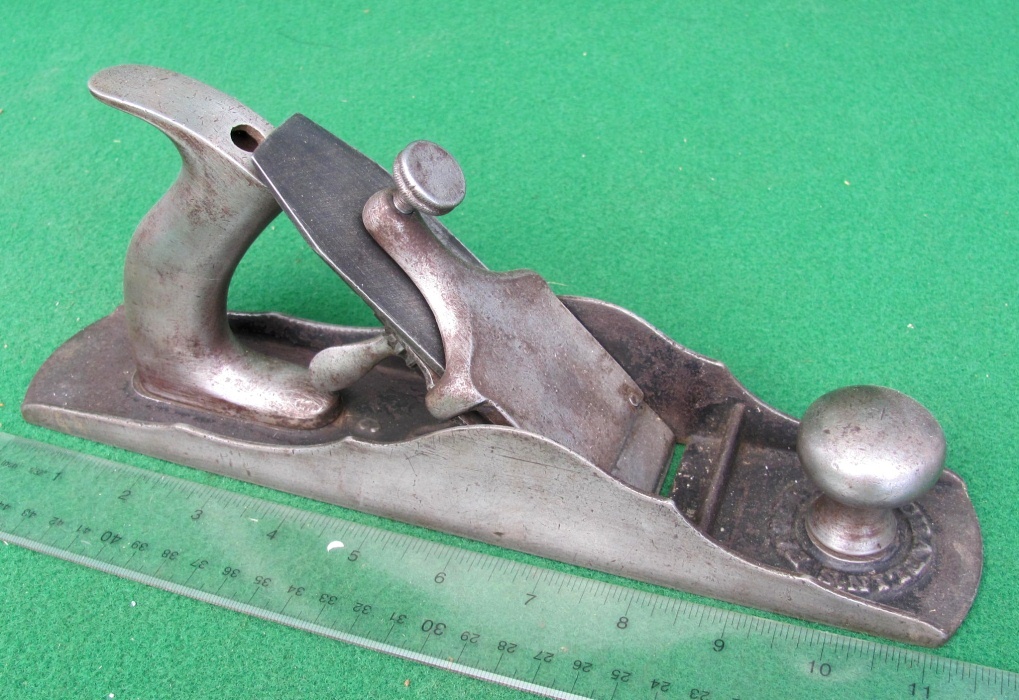
Condition is crucial. On the right is a Stanley #602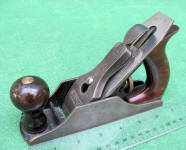 Bedrock. This
is a later model and commonly referred to as a flat-top because of its
distinctive side rail design. These are considered the king of bench
planes and their appeal runs from the current day user to the advanced
collector for some of the rarer versions or model numbers.
Bedrock. This
is a later model and commonly referred to as a flat-top because of its
distinctive side rail design. These are considered the king of bench
planes and their appeal runs from the current day user to the advanced
collector for some of the rarer versions or model numbers.
Values can run from a low of $40 or so for a broken up
parts plane to $1000 or more for a choice example in a hard to find size
such as the # 602 C Bedrock plane. Other desirable size Bed Rocks are the
6051/4 C, and the 604 1/2.
When Bedrock planes were being produced between approx. 1898 and 1940 they cost
only a quarter to a dollar more than the standard Stanley / Bailey #2-8
size bench plane counterparts. Today Stanley Bedrocks # 602 - 608
are worth double or more than their more common Stanley counterparts.
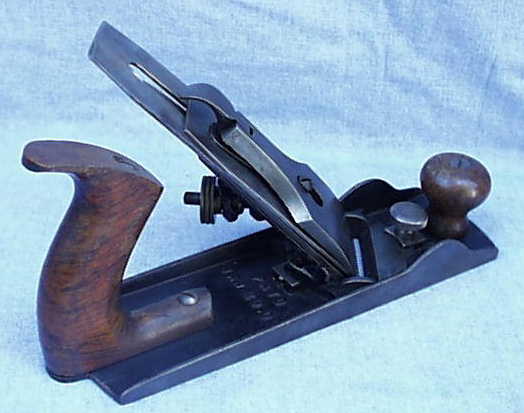
The plane on the left is an early model Stanley #10 rabbet plane. This adjustable throat model adds
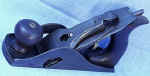 considerably
to its value over a later version #10 or 10 1/2 rabbit plane. It is the
size of a standard #4 plane, but has cut out sides to make them
rabbit planes.
The first model #10 plane's distinguishing feature is that the
front sole piece has the ability to move to adjust the throat opening for
different types of wood.
considerably
to its value over a later version #10 or 10 1/2 rabbit plane. It is the
size of a standard #4 plane, but has cut out sides to make them
rabbit planes.
The first model #10 plane's distinguishing feature is that the
front sole piece has the ability to move to adjust the throat opening for
different types of wood.
There have been exhaustive type studies done
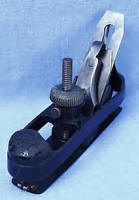 on antique
planes and their features, and this
research has created a knowledge base which has led to the ability to closely
determine the year of manufacture for various planes or other
woodworking tools. This knowledge has allowed for the precise dating of various tools
that to the untrained or uncaring eye all look the same. At times
these details can seem tedious and unimportant, but a planes value can be
greatly affected by these details.
on antique
planes and their features, and this
research has created a knowledge base which has led to the ability to closely
determine the year of manufacture for various planes or other
woodworking tools. This knowledge has allowed for the precise dating of various tools
that to the untrained or uncaring eye all look the same. At times
these details can seem tedious and unimportant, but a planes value can be
greatly affected by these details.
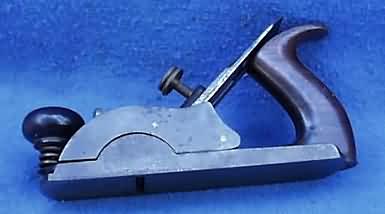
Next is a compass or circular plane that was made by
Sargent Tool Co., thus
making it vastly more rare than its counterpart the Stanley #20 compass
plane. It is
rarer, and harder to find, but not worth all
that much more, and in fact until recently most sold for far less. This
is explained by demand. In this case, demand, not supply determines the
value. This is not always the case though, and sometimes
two planes that are nearly identical in appearance can command a price
difference that is 10-fold or more.
 A case in point, in reverse. I have had folks offer
me Sears marked planes (Fulton, Dunlop) claiming they are far rarer because fewer were made, but if no one cares, and no one does, they are worth just a
fraction of the same plane made by and
A case in point, in reverse. I have had folks offer
me Sears marked planes (Fulton, Dunlop) claiming they are far rarer because fewer were made, but if no one cares, and no one does, they are worth just a
fraction of the same plane made by and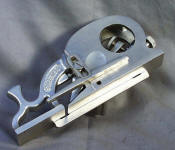 marked Stanley in today's market. FACT.
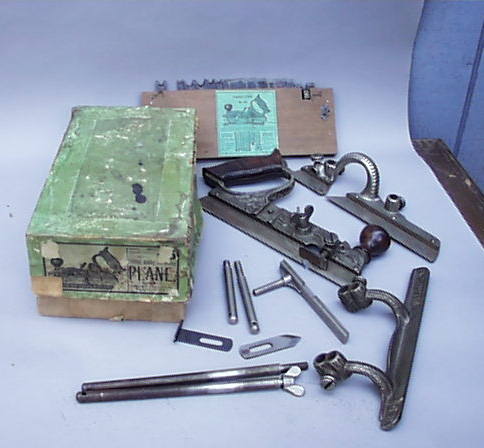
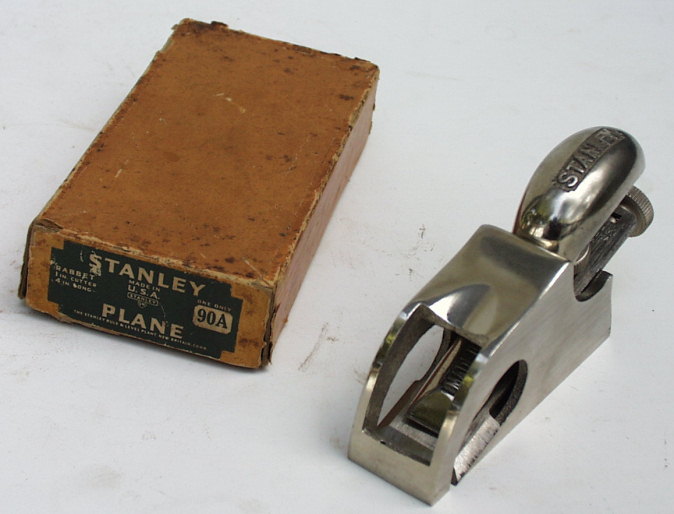
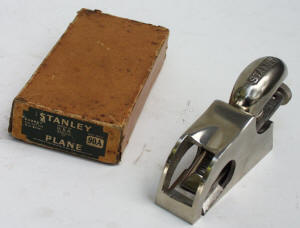
And finally, just above is what is considered a very rare Stanley rabbet plane. It is a Stanley 90A in the original box.
One time about 20 years ago now, in one auction, on one day, a 90A in the box sold for over 10K. I have this one listed for sale on my
page for under 3K for years and it never sells. There are several
morals or stories that go with that fact, and the same stories or
situations repeat time after time in all categories.
The above planes and tools are an example of the
caliber, condition and quality of antique tools that I am primarily interested in
buying.
 If you have quality antique tools or
vintage planes that you want to sell, please contact us at
AntiqBuyer@gmail.com providing me with as many details as possible.
If you have quality antique tools or
vintage planes that you want to sell, please contact us at
AntiqBuyer@gmail.com providing me with as many details as possible.
To see examples of past sales and values for
antique tools
I have previously sold visit the past sales archive pages from the right
column.
To see examples of antique
or vintage tools
that I currently have for sale please go to our sister site
at www.Patented-Antiques.com.
Thank you!!
Larry & Carole
 Larry & Carole Meeker